Listening to Books
An essay on audiobooks.
An essay on audiobooks.
A diary of the author’s visit to Palestine.
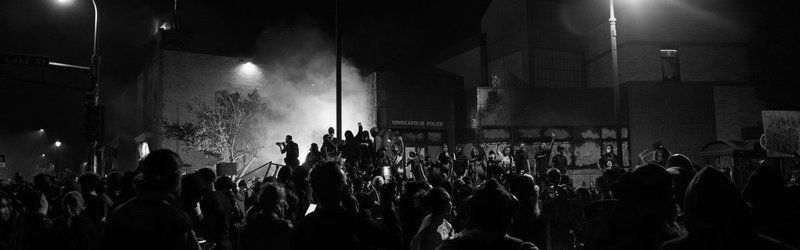
Looking back on the George Floyd rebellion.
Armed only with their psychotic courage, they were running, dancing, singing, smashing, burning, screaming, storming heaven: all rapturous varieties of Baraka’s “magic actions.” I listened to 19-year-olds talk nonstop throughout the night we spent in jail, as they howled insults at the officers and swapped stories of humiliation by police. It struck me that they were too young to have seen even the initial phase of BLM. Though well-acquainted with power and violence, they were tasting “politics” for the first time. Whatever the fate of the movement, I suspect that much of their future thinking will be measured against the feelings that filled the nights of 2020: the vastness and immediacy, the blur and brutal clarity.
On the Capitol assault.
Some people may treat the appearance of a Confederate flag as another bit of absurdity, but I’ve never had the luxury of taking it in any way other than literally and seriously.
A discussion of the “limited but important” power of Occupy Wall Street’s open blog, “We Are the 99%.”
We all die immediately of a Brazilian butt lift.
On the fraught relationship between Bolivia’s Evo Morales and the indigenous activists who support him.

A visit to the massive Northern California surf break.
I was asked about labor protections for adult-film performers. I said: You have to recognize how complicated this is. The things that sex workers do to stay safe are almost always the things civilians want to pass laws to stop. Everything looks different depending on the distance from which you’re looking.
An interesting side effect of reading the report is to feel that anyone who claims to have understood its arguments, purposes, and consequences within twenty-four or forty-eight hours of encountering it is likely untrustworthy.
Toward a materialist history of the blockbuster movie.
Organizing the tech sector.
The DVD is still king in Lagos’ Alaba International Market for Electronics.
Excerpted from Nollywood: The Making of a Film Empire.
Life as a Syrian refugee in Germany.
From the Translator’s Note:
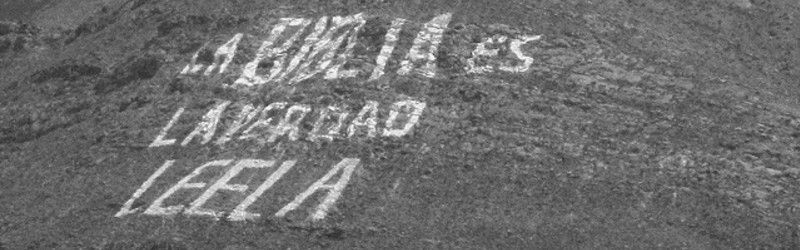
Just over two weeks ago, on April 3, the renowned Mexican writer and investigative journalist Sergio González Rodríguez unexpectedly passed away from a heart attack at age 67. [His book] Bones in the Desert is a far-reaching investigation into the still-unsolved murders of hundreds of women and girls in the communities surrounding Mexico’s Ciudad Júarez, on the US border with El Paso, Texas. In the years since its publication in 2002, Bones in the Desert has left an indelible imprint on the modern literature of the Americas, both through its own merits and its foundational influence on Roberto Bolaño’s 2666. In crafting a fictionalized version of Ciudad Júarez, Bolaño collaborated directly with González Rodríguez, relying on him for substantial “technical help” in answering questions about the nature of the murders, and eventually including him as a character in the novel.
An excess of people and an excess of desert.
The hallmarks that would come to characterize the official narrative surrounding the serial murders were already being established.
A primer.
A cabbie and a passenger discuss Chinese economics and generational gaps.

Life with chronic migraines.
On Elena Ferrante:
Different names, every time, but the reaction is the same: a momentary light in the listener’s eyes that fades to bored disappointment. An Italian woman from Naples, whose name you wouldn’t know. Who did you expect?
Donald Trump and the fall of Atlantic City.
How the Library of Congress failed to adapt to the 21st century.
Living and working in the tech world.
On heroin and harm reduction.
On the appeal of astrology.
An oral history of the disaster:
Someone said to me, or maybe I read it, that the problem of Chernobyl presents itself first of all as a problem of self understanding. That seemed right. I keep waiting for someone intelligent to explain it to me.

