A profile of the late critic.
Arts & Culture
How the CIA used a fake science fiction film to sneak six Americans out of revolutionary Iran. The declassified story that became Ben Affleck’s Argo.
Reverse engineering the details of a murder that took place in St. Louis on Christmas Night in 1895 from over a century of popular song.
A “crude table-tennis arcade game” called Pong and the birth of the video game industry.
“It’s the American view that everything has to keep climbing: productivity, profits, even comedy. No time for reflection. No time to contract before another expansion. No time to grow up. No time to fuck up. No time to learn from your mistakes. But that notion goes against nature, which is cyclical.”
He came home from Vietnam, wrote the novel that became Full Metal Jacket, was nominated for an Oscar and riding high. Then he got thrown in jail for stockpiling stolen library books, started drinking, cut off his friends and fled to a remote Greek island. He never made it back.
An interview with the Japanese artist, who has resided in a mental institution since committing herself in 1975.
A field report from Electric Daisy Carnival, a three-night bacchanal in the Las Vegas desert attended by “100,000 wasted hedonists scantily dressed in furry underwear.”
In the Swiss town of Meiringen, where an obsessed group of ‘pilgrims’ painstakingly recreate the death of Sherlock Holmes.
The backstory of “The Duke in His Domain,” Truman Capote’s 1957 New Yorker profile of Marlon Brando.
A profile of Marlon Brando, 33, holed up in a hotel suite in Kyoto where he was filming Sayonara.
My guide tapped at Brando's door, shrieked "Marron!," and fled away along the corridor, her kimono sleeves fluttering like the wings of a parakeet.
What’s an engineer’s worst nightmare? To realize right before hurricane season that the support columns he designed for a newly built skyscraper in Manhattan are flawed.
Life at Marvel Comics in the mid-1960s.
An excerpt from Marvel Comics: The Untold Story.The Drugstore Cowboy star candidly discusses the characters who defined her career.
I can’t ask anything. Once in a while if I’m forced into it I will conduct an interview, but it’s usually pro forma, just to establish my credentials as somebody who’s allowed to hang around for a while. It doesn’t matter to me what people say to me in the interview because I don’t trust it.
The tragi-comic career of a nobody comedian from the 1940s who ditched his wife, child, and eventually his own name.
A conversation on the “bedeviling sorts of indeterminacies one encounters the deeper one drills.”
A profile of Kermit Oliver, a reclusive, critically acclaimed artist who designs scarves for Hermès and works nights at the Waco post office.
The story of Edward Deeds, a state mental hospital patient and artistic genius.
How the museum-quality 55,000 film collection that an East Village video store gave away ended up in a small, possibly mob-run village in Sicily.
The rise and fall of Lisette Lee, the self-proclaimed “Korean Paris Hilton,” who was busted for drug trafficking.
“Reg Smythe was the greatest British newspaper strip cartoonist of the 20th Century – and second only to Peanuts’ Charles Schulz on a global scale. So why don’t we treat him that way?”
Creators, gatekeepers, and the future of the comedy business.
A transcript of Oswalt's keynote at last week's Just For Laughs conference.“Transforming into an Administrative Jekyll for a certain amount of time every day limits the amount of time my Creative Hyde can come up with content to market and sell. Luckily, amphetamines have that problem tackled as well: when you’re using them, you don’t have to sleep… at all.”
When U.S. customs law met abstract art in the form of a bird, “shimmering and soaring toward the ceiling while the lawyers debated whether it was an ‘original sculpture’ or a metal ‘article or ware not specially provided for’ under the 1922 Tariff Act.”
The director on Obama, the state of black cinema, the Knicks, the Nets, the tragedy of public education in America, gentrified New York and why he lives on the Upper East Side.
His book panned in the New York Times after being misread by the critic, an author responds.
On the surprising radicalism of library music – “music that has been composed and recorded for commercial purposes.”
An interview with Pavement’s Bob Nastanovich on his career afterlife as a “a clocker and chart-caller” and occasional breeder at an Iowa race horse track.
The curious case of SpongeBob SquarePants illustrator Todd White, three ninjas, and an art caper.
Remembering George Plimpton’s old-fashioned style.
Above all, he was a gentleman, one of the last—a figure so archaic, it could be easily mistaken for something else. No, my father’s voice was not an act, something chosen or practiced in front of mirrors: he came from a different world, where people talked differently, and about different things; where certain things were discussed, and certain things were not—and his voice simply reflected this.
On Jenny Craig’s European expansion and how dieting differs in France and the States.
A profile of the Hollywood star-maker behind Vanna White, Pamela Anderson and Jenny McCarthy.
How Google’s utopian/dystopian plan to scan the world’s books failed and the Harvard-led team that’s picking up the pieces.
A profile of fashion designer Nudie Cohn, who made clothing for Elvis, Glen Campbell, Johnny Cash, and others.
The author recounts playing herself – best-selling author Sloane Crosley – on an episode of “Gossip Girl.”
“Being Justin Bieber means having an endless number of T-shirts to destroy.” A profile of the pop star just after his 18th birthday.
With flash, hip-hop echoes rock’s golden age.
When rock was at its peak in 1972, Americans earning the equivalent of $1m a year took just over 1 per cent of national income. In 2010, this group’s share of national income had grown to almost 10 per cent. At the same time, the average tax paid by these top earners almost halved. The rise of Jay-Z’s “new black elite” reflects the growth in numbers of the super-wealthy. But the opulence that he and West flaunt also reflects the growing estrangement of those at the top from the rest.
The Beastie Boys on tour in Los Angeles shortly after the release of their debut album, Licensed to Ill.
The author muses on the markers we use to identify ourselves and other people – from names to photographs to fingerprints.
A free-ranging conversation between music writers Simon Reynolds and Greil Marcus.
On Norman Bel Geddes, pioneer of miniatures and maker of the “most iconic World’s Fair exhibit of all time.”
Inside the color forecaster.
There are no analytics measuring success of color forecasting—how would one even accurately measure such a thing? To play it safe most companies rely on a range of color forecasts. Eiseman says Pantone’s effort, and perhaps color forecasting in general, suffers from two misconceptions. The first is that there is some kind of “evil cabal” that “schemes to get the colors out there.” The second is “let’s just throw a dart and wherever it lands is what’s going to be the hot color for next year.”
A profile of the hardworking Samuel L. Jackson, whose movies have grossed more than any actor’s ever.
On office chairs.
In the 1950s and '60s, the distinctions between rank found blunt expression in chair design, naming and price point; Knoll, for example, produced "Executive," "Advanced Management," and "Basic Operational" chairs in the late 1970s. Recall the archetypal scenes where the boss, back to the door, protected by an exaggerated, double-spine headrest, slowly swivels around to meet the eyes of his waiting subordinate, impotent in a stationary four-legger.
On the trade school’s business model and its founder, a former movie producer named Jerry Sherlock.
An interview with the experimental filmmaker and Hollywood chronicler Kenneth Anger, 85.
Neal punctuated Jack’s riffing with his “yesses” and “that’s rights,” head bobbing on his neck like a novice prizefighter’s. After four years of New York nihilism and intellection, Neal – wiping Jack’s face with his handkerchief – Neal – who looked so much like Jack himself, an athlete like Jack – celebrated lover of women and sharer of Allen’s passionate dark soul – finally the long-lost brother who said, “Go ahead, everything you do is great” – “a Western kinsmen of the sun” – “a wild yea-saying over-burst of American joy.”
The life and myth of Neal Cassady, Beat companion and muse for Kesey, Wolfe, Kerouac, Ginsberg, The Grateful Dead and more.
A profile of Robert Caro, who’s been working on a biography on Lyndon Johnson for nearly 40 years.
BARR: What makes you laugh? BERNHARD: Well, it's really a myriad of things, but usually it's something that's very organic. It's something that happens on the street. BARR: Like fat people falling down? BERNHARD: No, no . . . [laughs] BARR: That really cracks me up. It's terrible.
He’s their hero, but he’s also their soulmate, the one person in the world who understands them. That’s why Stephen Wesley and the legions of fans like him can’t get enough of the Mountain Goats. And that burden is crushing Darnielle.
On the passionate relationship between fans and John Danielle of the Mountain Goats.
How reality TV has changed tattooing.
Tattoos and tattoo artists have an undeniable power to attract, repulse, and intimidate. But when confronted with all this life and color, reality TV steamrolls it into the familiar “drama” of preening divas and wounded pride. “Everybody thinks they’re gonna change it,” said Anna Paige, an artist who said she’d turned down her chance at TV stardom. “Everybody thinks they’re gonna have some power.” But wait, isn’t she profiting from tattooing’s mass appeal? “I would have made money anyway.”
This interview with Kurt Vonnegut was originally a composite of four interviews done with the author over the past decade. The composite has gone through an extensive working over by the subject himself, who looks upon his own spoken words on the page with considerable misgivings . . . indeed, what follows can be considered an interview conducted with himself, by himself.
When we form our thoughts into speech, some of it leaks through our hands. Gestures are thoughts, ideas, speech acts made tangible in the air. They can even, for a moment, outlive the speaker.
What hand motions can teach us about language, ethnicity and assimilation.
“My name is Jackie and I am addicted to waitressing.” An essay on waiting tables.
The making of the “five-thousand-page, five-volume book, known formally as the Dictionary of American Regional English and colloquially just as DARE”:
What joking names do you have for an alarm clock? For a toothpick? For a container for kitchen scraps? Or an indoor toilet? Or women’s underwear? When a woman divides her hair into three strands and twists them together, you say she is_____her hair? What words do you have to describe people’s legs if they’re noticeably bent, or uneven, or not right? What do you call the mark on the skin where somebody has sucked it hard and brought blood to the surface?
Jimmy McNulty, Mike Daisey, and the problems with skirting the system to get to the greater truth.
A profile of thriller writer Harlan Coben and what it takes to succeed as a novelist even when the literary establishment doesn’t acknowledge your existence.
Jane Jacobs has a somewhat ambiguous legacy—or at least one that's contested by different factions in the present-day debate over cities and urbanism—but to me her most important idea is encapsulated in the title and spirit of this piece. It's old and, I think, utterly prescient about what successive waves of planning fads miss. The purpose of urban space is for people to use it. A great place is a place where people want to be.
A profile of Suge Knight, 29 and the C.E.O. of Death Row Records, before the deaths of Tupac and Notorious B.I.G.
An essay on craft, excerpted from Writing About Architecture: Mastering the Language of Buildings and Cities.
The strange saga of a 2009 Gary Oldman profile that his manager, Douglas Urbanski, aggressively sought to kill.
"Mr. Heath's motives are dishonest in the least...supposed 'journalism' at its very lowest...while Mr. Heath may find his sloppy reporting cute, in fact it is destructive, and he knows it...his out of context and uninformed pot shots...out of context swipes at me...stretching the most basic rules of journalism...in certain ways has aspects of a thinly disguised hit piece... a hole filled swiss cheese of wrong facts, misleading insinuations, and in general lazy, substandard, agendized non-reporting...again and again Mr. Heath attempts to turn the piece into a political piece...GQ has allowed Heath to go for the cheap shot..."
On the difficult challenges faced by an auteur in Nigeria’s burgeoning Nollywood film economy.
Two Houston performance artists faux-marry an oak. Controversy ensues about the live installation’s relationship to the gay marriage debate.
It didn't matter if these clubs were in Cleveland, Portland, Corpus Christi or Baton Rouge—if it was a nightclub, the owners were the Mob. For a good forty years the Mob controlled American show business.
Contemplating Gaudi’s unfinished masterpiece, the Sagrada Familia church, as the controversial finishing work is completed.
On House Xtravaganza and the life and death of its house mother Angie Xtravaganza, one of the stars of the documentary Paris is Burning, which brought vogueing and New York City’s transgendered ball culture into the spotlight.
A profile of Quentin Rowan, a.k.a. Q. R. Markham, ‘author’ of last fall’s short-lived spy novel hit Assassins of Secrets, which was pieced together using more than a dozen sources.
Idleness is not just a psychological necessity, requisite to the construction of a complete human being; it constitutes as well a kind of political space, a space as necessary to the workings of an actual democracy as, say, a free press.
As the hip-hop group Odd Future rose to fame, their sixteen-year-old breakout star Earl Sweatshirt mysteriously disappeared.
(After a stretch at a school in Samoa, he seems to have reappeared yesterday.)
On literary tourism:
Dickens World, in other words, sounded less like a viable business than it did a mockumentary, or a George Saunders short story, or the thought experiment of a radical Marxist seeking to expose the terminal bankruptcy at the heart of consumerism. And yet it was real.
On the Balkan musical genre Turbo-Folk, its ties to Serbian ultranationalism, and the strongman nightclub owner who brought it to Croatia.
A profile of Harold Ramis, director of Groundhog Day, and his estrangement from former friend Bill Murray.
A fifteen year history of the music site Pitchfork detailing its prescient take on the relationship between culture and consumption.
On the French urban exploration group UX—”sort of like an artist’s collective, but far from being avant-garde—confronting audiences by pushing the boundaries of the new—its only audience is itself.”
"I don't know if I was as angry as much as I was misunderstood. A lot of the things we did contained a lot of humor that went over people's heads."
A critical look at the contemporary art marketplace.
The trouble is that a business model has come to drive the entire art world, and like the corporate executive who regards the launch of each new product as a challenge to the success of the last one, because you must keep growing or you will die, the arts community finds itself in a state of permanent anxiety. There always has to be a new artist whom the media will embrace as enthusiastically as they embraced Warhol; there always has to be a show that will top the excitement generated by the last blockbuster at the Modern or the Met.
Didion’s genius is that she understands what it is to be a girl on the cusp of womanhood, in that fragile, fleeting, emotional time that she explored in a way no one else ever has. Didion is, depending on the reader’s point of view, either an extraordinarily introspective or an extraordinarily narcissistic writer. As such, she is very much like her readers themselves.
JW: You’ve talked about how you’ve had to explain moral lessons to your daughters, but do it in an inarticulate, catchy way. It’s almost as though you’re writing material for them. What’s the place of morality and ethics in your comedy? I think those are questions people live with all the time, and I think there’s a lazy not answering of them now, everyone sheepishly goes, “Oh, I’m just not doing it, I’m not doing the right thing.” There are people that really live by doing the right thing, but I don’t know what that is, I’m really curious about that. I’m really curious about what people think they’re doing when they’re doing something evil, casually.
The main thing that attracts me to Buddhism is probably what attracts every artist to being an artist—that it’s a godlike thing. You are the ultimate authority. There is no other ultimate authority. Now, for some artists that’s difficult, because they want to have the art police. They want to have the critic who hands out tickets and says, “That’s too loose.”
A suburban dad. A fictional television blowhard. And now a political money launderer. How one funny guy became three.
A memory of interviewing the late great songwriter Townes Van Zandt shortly before his death.
The dissolution of Brooklyn softcore skin-mag Jacques and the marriage of the couple that created it.
The phrase “knew how to wear clothes” is a loaded one. To “know how to wear clothes” is another way of saying that Cary Grant embodied class, which is to say high class: Grant wore well-tailored clothes, and he knew how to hold himself in them. But he came from nothing, and the way he wore clothes was just as much of a performance as his refined trans-Atlantic accent, his acrobatic slapstick routines, and his masterful flirtation skills.
On “If You Are the One”, the smash hit Chinese dating show that raised the ire of censors.
There is so much talk now about the art of the film that we may be in danger of forgetting that most of the movies we enjoy are not works of art.
Why little has changed in popular American style in the last 20 years.
Why is this happening? In some large measure, I think, it’s an unconscious collective reaction to all the profound nonstop newness we’re experiencing on the tech and geopolitical and economic fronts. People have a limited capacity to embrace flux and strangeness and dissatisfaction, and right now we’re maxed out.
James Wood on Saul Bellow:
One realizes, with a shock, that Bellow has taught one how to see and how to hear, has opened the senses. Until this moment one had not really thought of the looseness of a lightbulb filament, one had not heard the saliva bubbling in the harmonica, one had not seen well enough the nose pitted with black pores, and the demolition ball’s slow, heavy selection of its victims. A dozen good writers–Updike, DeLillo, others–can render you the window of a fish shop, and do it very well; but it is Bellow’s genius to see the lobsters “crowded to the glass” and their “feelers bent” by that glass–to see the riot of life in the dead peace of things.
In the fantasy and superhero realm, the most chilling and compelling villain of the year was surely Magneto, who in X-Men: First Class is more of a proto-villain, a victim of human cruelty with a grudge against the nonmutants of the world rooted in bitter and inarguable experience. Magneto is all the more fascinating by virtue of being played by Michael Fassbender, the hawkishly handsome Irish-German actor whose on-screen identity crises dominated no fewer than four movies in 2011. Magneto, more than the others, also evokes a curious kind of self-reproach, because his well-founded vendetta is, after all, directed against us.
The ascendant breed of grown-ups who are redefining adulthood.
This is an obituary for the generation gap. It is a story about 40-year-old men and women who look, talk, act, and dress like people who are 22 years old. It’s not about a fad but about a phenomenon that looks to be permanent.
An essay drawn from the introduction of Davidson’s iconic book Subway, first published in 1986:
To prepare myself for the subway, I started a crash diet, a military fitness exercise program, and early every morning I jogged in the park. I knew I would need to train like an athlete to be physically able to carry my heavy camera equipment around in the subway for hours every day. Also, I thought that if anything was going to happen to me down there I wanted to be in good shape, or at least to believe that I was. Each morning I carefully packed my cameras, lenses, strobe light, filters, and accessories in a small, canvas camera bag. In my green safari jacket with its large pockets, I placed my police and subway passes, a few rolls of film, a subway map, a notebook, and a small, white, gold-trimmed wedding album containing pictures of people I’d already photographed in the subway. In my pants pocket I carried quarters for the people in the subway asking for money, change for the phone, and several tokens. I also carried a key case with additional identification and a few dollars tucked inside, a whistle, and a small Swiss Army knife that gave me a little added confidence. I had a clean handkerchief and a few Band-Aids in case I found myself bleeding.
"Of course, sexuality has never only been about reproduction, obviously, with human beings, anyway. But at the moment it's almost cut free to kind of float wherever it will float. And sexuality has been mixed with many things that I think the ancients would have been surprised to find it mixed with."
Enlightened is probably the sharpest satire of modern white-collar work since the original British version of The Office, and its skewering of this world intertwines with its portrait of individual personalities so deftly that you can’t separate them. Creator Mike White captures the unsettling blandness of office protocol, politics and jargon, from the chill that workers feel when Human Resources calls them out of the blue to the impressive-sounding word salad labels that the company gives to its departments and projects. (The experimental department to which the newly demoted Amy is assigned is called “Cogentiva.”)
Creating an identity that’s no longer tied to the past.
Monsters occasionally assume a completely unexpected appearance. All of a sudden, Adolf Hitler is standing onstage wearing an Adidas tracksuit and flip-flops, and his name isn't Hitler; it's Oliver Polak. And the monster isn't really Adolf Hitler, either; it's the audience's laughter. It starts with a sputter, like something trying to break free from its restraints. But then it bursts out as if suddenly liberated.
Why Whitney is Lucy, only less lovable:
This may sound like blasphemy to anyone who loves Lucille Ball, the woman who pioneered the classic joke rhythms that Whitney Cummings so klutzily mimics. Cummings has none of Ball’s shining charisma or her buzz of anarchy. Yet she does share Lucy’s rictus grin, her toddler-like foot-stamping tantrums, and especially her Hobbesian view of heterosexual relationships as a combat zone of pranks, bets, and manipulation from below. “This is war,” Whitney announces, before declaring yet another crazy scheme to undercut her boyfriend, and it might as well be the series’ catchphrase.
Afternoons with Altman and Allen.
For a year or two during the mid-1970s, living in New York, I was a moviegoer. I was in my early 20s then, working off and on, driving a cab, setting up the stage at rock shows, writing occasional pieces for The Village Voice. But there were also long empty spells. I tried to write some fiction and couldn’t, tried to read and could—but only for so long. I ended up going to the movies.
A profile of Jim Henson before the release of the first Muppet movie.
A look at Andy Warhol’s enduring popularity and power in the art market.
Warhol’s art was not supposed to be a matter of emotion, introspection or spiritual quest; it was to be an image, pure and simple. “During the 1960s,” he wrote knowingly in 1975, “I think, people forgot what emotions were supposed to be. And I don’t think they’ve ever remembered.”
How the popular and controversial film critic has helped revive the film program at the L.A. County Museum of Art.
Journalists, filmmakers, random people on the street — it seems everyone has an Elvis Mitchell story. Both those who consider themselves Friends of Elvis and those whose relationships with him are sour or worse are happy to dish about him — albeit almost always off the record. Some are afraid of losing current or future jobs in the ever-more-tenuous world of film journalism. Others simply enjoy his admittedly fine company too much to risk losing it.
The battle to make The Godfather pitted director Francis Ford Coppola against producers including Robert Evans, and the production itself against the real life mob.
A profile of Ahmet Ertegun: son of the Turkish ambassador, teenage collector of ‘race’ music, producer and pseudonymous songwriter for records by Ray Charles and Big Joe Turner, founder of Atlantic Records, confidante to Mick Jagger, impeccable dresser.
Tracking down 40-odd members of the British band.
It's a Tuesday morning in December, and I'm ringing people called Brown in Rotherham. "Hello," I begin again. "I'm trying to trace Jonnie Brown who used to play in the Fall. He came from Rotherham and I wondered if you might be a relative." "The Who?" asks the latest Mr Brown. "No. The Fall - the band from Salford. He played bass for three weeks in 1978." "Is this some kind of joke?"
It's a glorious thing, hearing Eddie Murphy say "fuck" again. Few people ever said it better – and down here in the basement of the stone-and-marble mansion he built on a Beverly Hills cliff, it's coming from his lips often enough to make Shrek blush. "Come on, motherfucker," Murphy shouts, over the throb of James Brown's "Hot Pants" on a formidable sound system.
Considering the screen saver.
Even when napping, the computer seems beset by iterative nightmares of a deadline. The pipes come to represent, rather than imaginarily suspend, the clogging of the task queue when one is away. When the screen has become as dense as Celtic knot-work, the entire image cracks and dissipates, as if burned out from its involute frenzy—before beginning again in the dark.
A few years ago, before anyone knew his name, before rap artists from all over the country started hitting him up for music, the rap producer Lex Luger, born Lexus Lewis, now age 20, sat down in his dad’s kitchen in Suffolk, Va., opened a sound-mixing program called Fruity Loops on his laptop and created a new track... Months later, Luger — who says he was “broke as a joke” by that point, about to become a father for the second time and seriously considering taking a job stocking boxes in a warehouse — heard that same beat on the radio, transformed into a Waka song called “Hard in da Paint.” Before long, he couldn’t get away from it.
It’s 11 a.m. Cavalli has just risen from his wolf-fur-covered bed and said good morning to Boy, his tiger-striped Bengal cat, and Gino, his miniature monkey. At a breakfast table covered with a cloth of one of his swirling bird patterns, on which are placed four packs of cigarettes and two cigars, Cavalli sinks down on a leopard-print cushion. While he eats applesauce and drinks orange juice from Cavalli tableware, he is surrounded by his four parrots and three beautiful publicists. “Give me some bad questions,” he tells me, lighting a cigar. “I will try to be nice.”
A history of Grove Press and its publisher Barney Rosset.
A conversation with the 88-year-old abstract painter.
PALTROW: Did you design camouflage while in the army?
KELLY: I did posters. I was in what they called the camouflage secret army. This was in 1943. The people at Fort Meade got the idea to make rubber dummies of tanks, which we inflated on the spot and waited for Germans to see through their night photography or spies. We were in Normandy, for example, pretending to be a big, strong armored division which, in fact, was still in England. That way, even though the tanks were only inflated, the Germans would think there were a lot of them there, a lot of guns, a whole big infantry. We just blew them up and put them in a field.
Midtown Manhattan. The highest concentration of showbiz havens and hangouts in the whole entire world. The Chorus Girls. The Drunk Newsmen. The Jazz Hepsters. The Mob. They converge with the force of a fly against a windshield. This is where American popular culture is born. Its influence permeates the nation. Walk the streets and weave through the hustlers, the gangsters, the bookies, the rummies... and somewhere among that crowd - you'll walk past a nondescript artistic genius or twelve, indiscernible from the dregs, biding time until they transform the American landscape. And high-above the loud, syncopated beat of Midtown you can hear... The Comedians.
An orgy of free song-sharing seems to be exactly the kind of thing that the horrified labels would quickly clamp down on. But they appear to be starting to accept that their fortunes rest with the geeks. Or at least they’re trying to talk a good game. “I’m not part of the past—I’m part of the future,” says Lucian Grainge, chair and CEO of the world’s biggest label, Universal Music Group. “There’s a new philosophy, a new way of thinking.”
A Q&A:
My mother was called to school frequently because I was yelling out things in class, quips in class, and because I would hand in compositions that they thought were in poor taste, or too sexual. Many, many times she was called to school.
How Timothy Patrick Barrus, a white writer of gay erotica, reinvented himself a (wildly successful) Native American memoirist.
GQ: Your relationship with your biological father seems complicated. Lil Wayne: He don't give a shit about me. And I don't give a shit about him. I know his friends be like, "Damn, nigga. That is not your son. Stop lying. Nigga, you could be living in a motherfucking ranch right now, nigga." You know, whatever your father's into, if you're rich, you're gonna get him that shit. I would've got that nigga all kinda harnesses, ranches—you know what I mean? I saw the nigga recently—I had a show in New Orleans. And I ain't afraid to put this out there, 'cause this is just how much I don't give a fuck about a nigga, and I want people to see how you're not supposed to be. I was parked at the hotel, and I saw him walking outside the hotel. Just walking back and forth. I'm like, "Look at this nigga! You gotta be looking for me." If Lil Wayne got a show in New Orleans, the whole of New Orleans knows. Basically, you're not there for nothing else but me. So I call my man on the bus. I'm like, "Nigga, that's my daddy." He's like, "Word? Oh shit. That nigga looks just like you!" So I tell my man, "Go see what's up." So my man goes to holla at him. He tells my man, "Oh. I didn't know y'all was here. I'm here waiting for this little ho to get o¬ff. Get off¬ work from the hotel." For real? That's when I was like, "Typical Dwayne Carter." So that's what's up with me and my real father. I don't want to look like his ass, but I do.
A profile of Mike Judge, creator of the now-resuscitated Beavis and Butthead.
From his arrival in New York as a penniless 22-year-old Dutch stowaway through years of obscurity until emerging as a major artist in his 50s.
On the tangled early careers of Jonathan Franzen, David Foster Wallace, Mary Karr and Jeffrey Eugenides.
When a writer’s daily routine gets out of control.
One morning, as I gobbled my doughnut and slurped my coffee, thinking to myself, "What a fantastic doughnut, what an amazing coffee," I realised that I had not just thought this but was actually saying aloud, "What a fantastic doughnut! What a totally fantastic experience!", and that this was attracting the attention of the other customers, one of whom turned to me and said, "You like the doughnuts, huh?"
"Serial systems and their permutations function as a narrative that has to be understood. People still see things as visual objects without understanding what they are. They don’t understand that the visual part may be boring but it’s the narrative that’s interesting. It can be read as a story, just as music can be heard as form in time. The narrative of serial art works more like music than like literature."
On the then new phenomenon of dead downtowns:
It is not only for amenity but for economics that choice is so vital. Without a mixture on the streets, our downtowns would be superficially standardized, and functionally standardized as well. New construction is necessary, but it is not an unmixed blessing: its inexorable economy is fatal to hundreds of enterprises able to make out successfully in old buildings. Notice that when a new building goes up, the kind of ground-floor tenants it gets are usually the chain store and the chain restaurant. Lack of variety in age and overhead is an unavoidable defect in large new shopping centers and is one reason why even the most successful cannot incubate the unusual--a point overlooked by planners of downtown shopping-center projects.
Four unhealthy, bearded, mostly unknown comedians from Atlanta tour 3,020 miles in a van.
Gainsbourg decked out his home at 5 Rue de Verneuil in Saint Germain all in black, inspired by a time when he was younger when he'd somehow got the keys to Salvador Dali's house and made love to his first wife in every room while Dali was away. He even stole a small token souvenir in the form of a picture from Dali's porn collection. (Serge was obsessed with Dali and the pair later became friends. The title of 'Je T'Aime... Moi Non Plus' - roughly translated as 'I love you, me neither' - was inspired by something Dali was once supposed to have said: "Picasso is Spanish - so am I; Picasso is a genius - so am I; Picasso is a communist - me neither.")
Rick Ross was born William Leonard Roberts II in 1976, and he borrowed his stage name (and the associated big-time cocaine-selling hustler persona) from the legendary L.A. drug lord Freeway Ricky Ross. But the website MediaTakeout uncovered a photograph of William Leonard Roberts II when he was a Florida corrections officer. Most people thought that'd be the end of his career. Freeway Ricky Ross then sued him for stealing his name. None of it mattered. Rick Ross the rapper just sold more records.
An interview with Vanity Fair and Rolling Stone writer Vanessa Grigoriadis on the finer points of celebrity profiling.
Extracted from the author’s memoir, Life Itself.
The British satirist Auberon Waugh once wrote a letter to the editor of the Daily Telegraph asking readers to supply information about his life between birth and the present, explaining that he was writing his memoirs and had no memories from those years. I find myself in the opposite position. I remember everything. All my life I've been visited by unexpected flashes of memory unrelated to anything taking place at the moment. These retrieved moments I consider and replace on the shelf.
The author expounds on culture and crime in the early 90s:
Yes, I know there are sensational tabloid crimes everywhere and the closeness to the Manhattan media nexus tends to magnify everything. But even so, that was always true. There's just no denying that something has changed in the past decade, that, as our bard Billy Joel sings on his new album, there's "lots more to read about, Lolita and suburban lust." But why? Why is this Island different from all other islands? And why are so many Long Islanders suddenly running amok?
The web has revolutionized communications and commerce, but what does it mean for art?
Another look at a popular myth.
For the longest time blues fans didn’t even know what their hero looked like—in 1971, a music magazine even hired a forensic artist to make a composite sketch based on various first-hand accounts—until two photos of Robert Johnson finally came to light. The dapper young man pictured in the most famous photo, dressed in a stylish suit and smiling affably at the camera, hardly looks like a man who has sold his soul to Lucifer.
HEMINGWAY: You go to the races? PLIMPTON: Yes, occasionally. HEMINGWAY: Then you read the Racing Form . . . . There you have the true art of fiction.
The story of Levine’s father and his involvement in the legal battle over the 798 finished paintings Rothko had in his studio when he was discovered there in a pool of blood. The case spawned a feature film, Legal Eagles, and hinged on an unusual question; was Mark Rothko an artistic genius?
How the spirit became a billion-dollar business.
Michael Roper, owner of Chicago’s Hopleaf bar and restaurant, recalls what bartending was like in the early seventies. While Smirnoff was considered top shelf, he remembers lesser varieties such as Nikolai, Arrow, Wolfschmidt, and another brand that was then ubiquitous called Mohawk. “Mohawk was cheap, cheap, cheap,” Roper remembers. “Mohawk had a factory just outside Detroit along the expressway and . . . all their products were made there. It’s almost like they turned a switch—whiskey, vodka, gin. And it was all junk.” Still, by 1976, vodka had surpassed bourbon and whiskey as the most popular spirit in America. Roper attributes vodka’s rise partially to women, who started drinking more spirits and ordering them on their own: “Women were not going to like Scotch—that was for cigar-smoking burly men,” he speculates. “And . . . it was unladylike to drink Kentucky whiskey. But it was considered somewhat ladylike to have a fancy cocktail with an olive in it.” He also remembers when a salesman first brought Miller Lite into his bar, explaining “it’s for women.” In a similar vein, Roper considers vodka a low-calorie option with “a less challenging flavor.”
Smigel: Louis comes up with, "What if he says, 'I'm the nurturing president,'and I've developed the ability to breastfeed!" And I'm like, "Yeah, that's great! And then let's have him open the shirt and he's got eight nipples and he can breastfeed dogs and cats." Colbert: We had already lost a lot of sponsors. [Starts singing] It's a beautiful root beer day, the folks from Mug Root Beer have agreed to stay. But you better not breastfeed any puppies today, or you sure as hell will be on your way. So be careful you little punk, Dana Carvey! Even I think it's odd I remember all of the lyrics. I am very impressive...remembering reasons why shows I'm on failed.
A profile of an up-and-coming director:
Well, according to Woody, his ascent has been a series of painful falls. Success hasn't changed him, Allen insists: he's still a schlemiel. "I'm afraid of the dark and suspicious of the light," he says. "I have an intense desire to return to the womb—anybody's." Ineptitude, Woody goes on, is a family curse.
"Hi," she said on the telephone, a week after the announcement. "This is Toni, your Nobelette. Are you ready for Stockholm?" Well, since she asked, why not? I left town for Greek light, German sausage, Russian soul, French sauce, Spanish bull, Zen jokes, the Heart of Darkness and the Blood of the Lamb. Toni Morrison's butter cakes and baby ghosts, her blade of blackbirds and her graveyard loves, her Not Doctor Street and No Mercy Hospital and all those maple syrup men "with the long-distance eyes" are a whole lot more transfiguring. Where else but Stockholm, even if she does seem to have been promiscuous with her invitations. I mean, she asked Bill Clinton, too, whose inaugural she had attended, and with whom she was intimate at a White House dinner party in March. (He told Toni's agent, Amanda "Binky" Urban, that he really wanted to go but... they wouldn't let him.) Salman Rushdie might also have gone except that the Swedish Academy declined officially to endorse him in his martyrdom, after which gutlessness three of the obligatory eighteen academicians resigned in protest, and can't be replaced, because you must die in your Stockholm saddle.
Jerry Lewis has had a spectacular sex life. On the road, of course, girls were everywhere—in his dressing room, back at his hotel. But even at home, when he was directing a film, sometimes he'd get to the set early for "a little hump," just to get the day started right. Joseph Levitch, as he was named upon his birth in Newark, New Jersey, had his first sexual experience seventy-three years ago, when he was 12. It was backstage at a club where his father, a singer and dancer who called himself Danny Lewis, was performing. The temptress was a twentysomething stripper named Trudine who lured the boy into her dressing room. "Whatever we did, I remember it took only a minute," Lewis recalls fondly. "She was a piece of work. She danced with a snake." He married his first wife, Patti, a singer with Jimmy Dorsey's band, when he was 19. They'd met after he dropped out of high school to go on the road, starting at the bottom in burlesque houses where comics took the stage in between strippers. These were the kinds of dives that were patronized by "guys in the front with the newspapers in their laps and the trench coats—a tough room, but you had to do it."
The former Perfect Strangers star cheerfully slags Tom Cruise, Eddie Murphy and Denzel Washington, among others.
From the start, it sounded ridiculous. Find Marlon Brando. Go to Tahiti and find Marlon Brando. Yeah? And then what? You'll know. I'll know? Hmmm. What else was I going to do? It was December. It was cold. There was promise of little. Contra-gate, snowplows, New Year's. Suicide season. I needed a mission, a real, choice mission. A quest.
A profile of Vogue Creative Director André Leon Talley.
From our guide to haute couture genius at Slate.
An oral history.
Tom Freston: We knew we needed a real signature piece that would look different from everything else on TV. We also knew that we had no money. So we went to NASA and got the man-on-the-moon footage, which is public domain. We put our logo on the flag and some music under it. We thought that was sort of a rock ’n’ roll attitude: “Let’s take man’s greatest moment technologically, and rip it off.”
On the history and study of pica:
Indeed, we have long defined ourselves and others by what we do and do not eat, from kashrut dietary restrictions described in Leviticus to the naming of Comanche bands (Kotsoteka—buffalo eaters, Penateka—honey eaters, Tekapwai—no meat) to insults—French frogs, English limeys, German krauts. But poya seemed to beg a different question: what was one to make of people who ate food that wasn’t food at all?
The story of Asa Earl Carter, aka Forrest Carter, the best-selling author of The Education of Little Tree, an autobiographical novel about “communion with nature and love of one’s fellow man.” He was also a Klansman, penning the famous George Wallace line, “Segregation now! Segregation tomorrow! Segregation forever!”
The perspective-bending art of identical twins Trevor and Ryan Oakes.
A youth set to the shifting sounds of CCM, Christian Contemporary Music:
This, by the way, is considered the ultimate sign of quality CCM, even amongst Christians: the ability to pass as secular. Every band’s goal was to have teenagers stop their grooving mid-song and exclaim, like a soda commercial actress who’s just realized she’s been drinking Diet, “Wait, this is Christian?”
An essay on poetry and madness.
People still think of poets as an odd bunch, as you’ll know if you’ve been introduced as one at a wedding. Some poets spotlight this conception by saying otherworldly things, playing up afflictions and dramas, and otherwise hinting that they might be visionaries. In the past few centuries, of course, the standard picture of psychopathology has changed a great deal. But as it’s often invoked, the idea of the mad poet preserves, in fossil form, a stubbornly outdated and incomplete image of madness. Modern psychiatry and neuroscience have supplanted this image almost everywhere else.
Is the streaming Swedish music service, now making its U.S. debut, the best shot the industry has at staying profitable and relevant?
To this day, no one (outside of the movie's own crew) knows how the Muppets rode bicycles in The Great Muppet Caper, the classic Henson movie from 1981. In that scene, Kermit stands up on one frog-leg on the seat of his bicycle to impress Miss Piggy, and then the whole gang joins them on their bikes, doing circles and figure eights, singing “Couldn’t We Ride?” It's a wonderful piece of filmmaking, and still a complete delight to watch because the effect relied on the ingenuity and bravado of the puppeteers and crew, not CGI wizardry. Contrast the joy and ebullience of this scene to the elegant chiaroscuro slickness of the post-Henson Muppet Christmas Carol in which we see old fogies Statler and Waldorf, as the Marley brothers, floating in mid air. No viewer is impressed; no one really thinks about it at all. And that's because when a then 29-year-old Brian Henson directed that film, he threw the rules out the window. Statler and Waldorf “float” because Goelz and Nelson, the men working the old guys, were standing behind them during filming and then were removed in post production. It’s an elegant fix—a cutting of the Gordian knot—but it is a complete break with an aesthetic 35 years in the making.
At work with Jean-Claude Carrière, screenwriter of choice for an entire generation of top-flight directors.
How a musical subculture evolved alongside a technological subculture:
Rave's rise mirrors the Web's in many ways. Both mixed rhetorical utopianism with insider snobbery. Both were future-forward "free spaces" with special appeal to geeks and wonks.
A profile of the hard-living, cop-dodging artist Dash Snow, published two years before his death of an overdose.
His friends remembered when Richard became famous. It was the year the hippies came to San Francisco. Richard had published one novel, A Confederate General from Big Sur, but it had sold miserably 743 copies and his publisher, Grove Press, had dropped its option on Trout Fishing in America. Donald Allen was the West Coast representative of Grove and the editor of the Evergreen Review, which had introduced the Beat Generation. Allen had a small nonprofit press called the Four Seasons Foundation, and he decided to publish the book himself. Allen sold 29,000 copies of the book before Delacorte bought it. Eventually, 2 million copies were sold. It was the kind of book that captured the spirit and sound of a generation. Soon there was a commune and an underground newspaper and even a school named after Trout Fishing in America. His short stories and poems appeared regularly in Rolling Stone, often beneath a photograph of him in his broad-brimmed hat. His face became a hippie icon. "For three or four years, he was like George Harrison walking down Haight Street," remembered Don Carpenter, a novelist and scriptwriter and a longtime friend of Richard's. His image infuriated what Richard called the East Coast literary mafia.
Three interviews with John Gardner, author of Grendel and The Art of Fiction, conducted over the last decade of his life.
A visit to the Museum of Broken Relationships.
Olinka and Drazen are artists, and after some time passed, they did what artists often do: they put their feelings on display. They became investigators into the plane wreck of love, bagging and tagging individual pieces of evidence. Their collection of breakup mementos was accepted into a local art festival. It was a smash hit. Soon they were putting up installations in Berlin, San Francisco, and Istanbul, showing the concept to the world. Everywhere they went, from Bloomington to Belgrade, people packed the halls and delivered their own relics of extinguished love: “The Silver Watch” with the pin pulled out at the moment he first said, “I love you.” The wood-handled “Ex Axe” that a woman used to chop her cheating lover’s furniture into tiny bits. Trinkets that had meaning to only two souls found resonance with a worldwide audience that seemed to recognize the same heartache all too well.
Because of what happened in Georgia, Ms. Grace has said over and over, she knows firsthand how the system favors hardened criminals over victims. It is the foundation of her judicial philosophy, her motivation in life, her casus belli. And much of it isn’t true.
"I’m not familiar with books on style. My role in the revival of Strunk’s book was a fluke—just something I took on because I was not doing anything else at the time. It cost me a year out of my life, so little did I know about grammar."
A profile of Justin Timberlake:
This need to succeed, to become his generation’s multi-talented Sammy Davis Jr., is part of what makes him appealing to filmmakers. “I needed someone who could be a Frank Sinatra figure, someone who could walk into the room and command all the attention,” says David Fincher, of casting Timberlake as Sean Parker, the Facebook investor and rogue, in The Social Network. “I didn’t want someone who would just say, ‘I know how to play groovy.’ You can’t fake that stuff. That’s the problem with making movies about a rock star—actors have spent their lives auditioning and getting rejected, and rock stars haven’t.”
When James Brown died on Christmas Day 2006, he left behind a fortune worth tens, maybe hundreds, of millions of dollars. The problem is, he also left behind fourteen children, sixteen grandchildren, eight mothers of his children, several mistresses, thirty lawyers, a former manager, an aging dancer, a longtime valet, and a sister who’s really not a sister but calls herself the Godsister of Soul anyway.
Four dispatches from the 100th anniversary of Bloomsday:
In most places in the world, June 16 is just another day on the calendar, but here in Dublin, the day that James Joyce earmarked for Ulysses is celebrated with a fervor not seen here since the days of the druids when, if you really wanted to party, you needed a couple skeins of wine and a grove full of virgins.
A profile of Chris Evans, star of the upcoming Captain America:
At this point, which was a…number of drinks in, it was easy to forget that it really was an interview, and I'd be lying if I said it didn't cross my mind that something might happen (and that we'd go to the Oscars and get married and have babies forever until we died?). But there was always the question of how much of it was truly Chris Evans, and whom I should pretend to be in response.
On George Plimpton and the founders of the Paris Review:
Early in the fifties another young generation of American expatriates in Paris became twenty-six years old, but they were not Sad Young Men, nor were they Lost; they were the witty, irreverent sons of a conquering nation.
The name Shecky can vacillate from noun to verb to adjective. The opinion of every comedian during that gilded age of show business, whether they were Republican Bob Hope or hipster Lenny Bruce, is that Shecky Greene was the the wildest of them all. The craziest of them all. Most importantly - the funniest of them all.
John Ross, rebel reporter, became the sort of devoted gringo scribe who would give up drugs and drinking in order to better write about the native revolutionaries; the sort of man who used dolls to preach armed revolution to high schoolers in the weeks after September 11th.
A profile of filmmaker Pedro Almodóvar during the 2004 Cannes International Film Festival.
"For example, I remember reading Hemingway and loving his work so much—but then at some point, realizing that my then-current life (or parts of it) would not be representable via his prose style. Living in Amarillo, Texas, working as a groundsman at an apartment complex, with strippers for pals around the complex, goofball drunks recently laid off from the nuclear plant accosting me at night when I played in our comical country band, a certain quality of West Texas lunatic-speak I was hearing, full of way off-base dreams and aspirations—I just couldn’t hear that American in Hem-speak. And that kind of moment is gold for a young writer: the door starts to open, just a crack."
On comics and journalism:
Now, when you draw, you can always capture that moment. You can always have that exact, precise moment when someone’s got the club raised, when someone’s going down. I realize now there’s a lot of power in that.
A rare interview with Gene Hackman, who says Welcome to Mooseport was his last movie, unless he “could do it in my own house.”
These were the people I lived with, these were my friends, these were my family, this was myself. I’d photograph people dancing while I was dancing Or people having sex while I was having sex. Or people drinking while I was drinking.
On the eve of the release of The Tree of Life, a look back at the turbulent making of Terence Malick’s debut.
An interview on craft:
Writing The Subs in three nights was really a fantastic athletic feat as well as mental, you shoulda seen me after I was done...I was pale as a sheet and had lost fifteen pounds and looked strange in the mirror.
On the unlikely friendship between Nelson Algren and the young writer during the final years of Algren’s life.
It was June of 1980 when Nelson called me breathlessly from the highway.
A profile of silent film comedian Buster Keaton:
The story of his life seems in its twists and dives borrowed from his movies, survival demanding a pure lack of sentiment.
On the strange ethics of Stieg Larsson’s Millenium trilogy:
What matters instead is the division of the world into good and evil, a division that begins with splitting sex into positive and negative experiences, then ripples out from that in fascinating ways.
TM The only other time I saw you was in Bleecker Bob’s in the ‘70s. You walked in eating pizza and wearing aviator glasses and Bleecker Bob showed you an Ian Dury picture sleeve and you said, “I don’t listen to music by people I don’t wanna fuck.” PS (laughter) Yeah, that was me.
Joyce Hatto, unknown to even the most ardent classical music collectors until late in her life, released a string of incredible performances of great works, distributed by her husband’s mail-order CD business. But how was it possible for her to record difficult works at such a dizzying rate? And if wasn’t her playing, who was it?
“Winning” in Hollywood means not just power, money, and complimentary smoked-salmon pizza, but also that everyone around you fails just as you are peaking.
Ah yes, you should also know that most of your colleagues are some of the biggest neurotics in the country, so you might as well get used right now to the way they're gonna be writing you five and ten page single spaced inflammatory letters reviling you for knocking some group that they have proved is the next Stones.
When I hear music as a fan, I see fields. I see landscapes. I close my eyes and see an entire universe that that music and the voice, or the narrative, create. A music video-and any other kind of visual reference-is created by someone else. For me, as a music fan, visuals kind of steal away the purity of the song.
On Edward Tufte, the great data visualization (read: charts and graphs) theorist and author of 1983’s The Visual Display of Quantitative Information, one of the most successful self-published books ever produced.
The discovery of 30,000-year old, perfectly preserved cave paintings in southern France offer a glimpse into a world that 21st-century humans can never hope to understand. The article that inspired Werner Herzog’s “Cave of Forgotten Dreams.”
Justin Vivian Bond found downtown fame as Kiki DuRane, decrepit drag chanteuse and comedic prophet of gay rage born out of the AIDS era. Then he killed Kiki to try to become the woman (and man) he always wanted to be.
In the past the only people who wrote autobiographies or memoirs were very important, those who had a crucial role in the history of their own country—Napoleon, Goethe—or were witness to major events or people who had singular, adventurous lives. Otherwise, it is ridiculous to write your autobiography.
On tragedy, mythology, and the spectacular crash of the Spider-Man musical and its creator, Julie Taymor.
A profile of Steve Carell, whose last appearance as Michael Scott in The Office airs tonight.
Henry Luce and Time vs. Harold Ross and The New Yorker. What was at stake in the epic magazine rivalry of the 20th century?
On the producer Timbaland, then best known for collaborations with Missy Elliott, Aaliyah, and Ginuwine.
The birth of the Beastie Boys—an oral history on the 25th anniversary of Licensed to Ill.
On Sebastian Junger’s War and the documentary Restrepo by Tim Hetherington, who was killed in Libya yesterday.
Time is speeding up. And to what end? Maybe we were told that two thousand years ago.
On the shortcomings of both reality and fiction.
A review/interview/profile:
Let's settle on the bald facts: Eminem has secured his place in the rap pantheon.
When they met, he was 45 and she was 17. In her 14 years as his mistress, she appeared in countless paintings, including Guernica.
It’s like when they fucking show—I know nothing about plays and shit, but sometimes they’ll show a play on TV, and it’s fucking shit, because you’re like, “What the fuck, am I supposed to think that’s a moon?” Like it’s a cardboard moon or some shit.
On Chuck Lorre, creator of the #1 (Two and a Half Men) and #2 comedy on American television, former cruise ship guitarist, composer of the Teenage Mutant Ninja Turtles theme song, and recently antagonist of Charlie Sheen.
The author attends a Tolstoy conference as a grad student. She wears flip-flops, sweatpants and a flannel shirt, and tries to determine if Tolstoy was murdered.
After a final film, Kevin Smith is going to retire to a life of podcasting and speaking tours. Or so he says.
The emergence of a radio phenomenon popular amongst young demographic believed lost to interactive distractions.
It was the middle of the day in the steamy Philippine jungle and the sun was merciless. Director Francis Ford Coppola, dressed in rumpled white Mao pajamas, was slowly making his way upriver in a motor launch.
Text from the books and Foster Wallace’s corresponding annotations:
Along with all the Wittgenstein, Husserl and Borges, he read John Bradshaw, Willard Beecher, Neil Fiore, Andrew Weil, M. Scott Peck and Alice Miller. Carefully.
On David Milch; Yale fraternity brother of George W. Bush, literature professor, longtime junkie, creator of NYPD Blue, Deadwood (which was in production when this profile was written), and the forthcoming racetrack-set HBO series Luck.
Why utopias are best understood as fiction games, and how they quickly become dystopias when realized.
The swinging life and boozy death of the original ladies man, and the story of “the coroner that tampered with his cold, lifeless venereal warts.”
A profile of Zack Snyder, director of Watchmen, Dawn of the Dead, and the upcoming Superman series.
On Johnny Carson, a cold man in a hot seat; I once asked a bright young Manhattan journalist whether he could define in a single word what made television different from theatre or cinema. "For good or ill," he said, "Carson.’”
A profile of Grace Coddington, creative director of Vogue and break-out star of The September Issue.
Barry Michels is Hollywood’s most successful therapist cum motivation coach with an approach that combines Jungian psychology, encouraging patients to embrace their dark side, and “three-by-five index cards inscribed with Delphic pronouncements like THE HIERARCHY WILL NEVER BE CLEAR.”
Peter Zumthor, who recently won the Pritzker Prize after a career of few buildings and mostly modest-in-size projects, on the “architecture of actually making things”
”Every Sunday at my house ... we watched The Ed Sullivan Show.... Whether we enjoyed it or not. That was my first lesson in show business. I don't think anybody in the house particularly enjoyed it. We just watched it. Maybe that's the purpose of television. You just turn it on and watch it whether you want to or not.”
A profile of the filmmaker Errol Morris as he prepared to release The Thin Blue Line after a decade of limited distribution, semi-poverty, and a side career as a private detective.
On Trey Parker, Matt Stone, and their new Broadway musical about Mormons, which “may just be their highest artistic achievement yet.”
Five years ago, Mel Gibson was one of Hollywood’s few genuine family-men and a leading box office attraction; inside his wild descent from star to pariah.
“By the time we got to Woodstock 99 …” In a grim finale, the nineties get their Altamont.
In 2001, a young Japanese woman walked into the North Dakota woods and froze to death. Had she come in search of the $1 million dollars buried nearby in the film Fargo?
On photographing the former Norma Jeane Mortenson. ”I think she was the best light comedienne we have in films today, and anyone will tell you that the toughest of acting styles is light comedy.”—Billy Wilder
Six months after playing an electric guitar at the Newport Folk Festival, a rambling Dylan holds forth on style, songwriting, and fame. “People have one great blessing—obscurity—and not really too many people are thankful for it.”
The Top Gun effect; how Hollywood became a factory for sequels, comic book and video game adaptations, and anything else easily marketed to under-25-year-old males.
On writing what you loathe. Leslie McFarlane, ghostwriter of the early Hardy Boys novels, was so ashamed of the work he couldn’t even bring himself to name the books in his diary. “June 9, 1933: Tried to get at the juvenile again today but the ghastly job appalls me.”
SNL in its grim twentieth season through the lens of first (and only) year cast-member Janeane Garofalo.
“You’re either with Korn and Limp Bizkit, or you’re against them.” The birth of nu-metal.
A trip to Kingston, Jamaica to track down Bunny Wailer, a reggae legend now living “in his own private Zion.”
On the Cairo knifing of 82-year-old Nobel Prize winner Naguib Mahfouz and its aftermath.
“What you say is very unclear, but I suppose you mean that since I find one of your remarks illogical and since I like your poems, that therefore I must like poems which are illogical. But I don’t find your poems either logical or illogical. If you want this interview to have the logic of a poem and not ordinary logic we will have to start over again.”
On Sam Cooke, theme parties, and the importance of McDonald’s-related jingles when street performing.
A year-by-year walk through of the decade that birthed a mainstream culture called ‘Alternative’ and the bands that were deified and destroyed by it.
J.D. Salinger on the beaches on D-Day, marching through concentration camps, and in liberated Paris.
On the young and ascendant Frank Sinatra, “who ruled crowds by seductive magnetism and surrounded himself with courtiers, but had once been an adolescent alone in his room listening to Bing Crosby on his Atwater-Kent.”
Searching for (and easily finding) Mark Augustus Landis, the man behind the “longest, strangest forgery spree the American art world has known.”
When (temporary) cities swell; a short history of the Burning Man festival.
A 2000 speech on the impossibility of all forms of exile, particularly literary.
On his 80th birthday; how Archie Leach, “the Bristol-born son of a part-Jewish suit presser,” became the greatest leading man of his generation.
On the late comedian Bill Hicks, just as a performance on Letterman is deemed unfit for network TV.
George Lois never actually worked at Esquire, he simply designed the most iconic magazine covers of the 60s as a moonlighting gig while revolutionizing (and, generally pissing off) the advertising industry by day.
How a burst blood vessel transformed the mind of a deliberate, controlled chiropractor into that of an utterly unfiltered, massively prolific artist.
On Huck Finn, the book Nigger: The Strange Career of a Troublesome Word, and the evolution of language and race in America.
“As we enter into a new age, maybe art will be free. Maybe the students are right. They should be able to download music and movies. I’m going to be shot for saying this. But who said art has to cost money?”
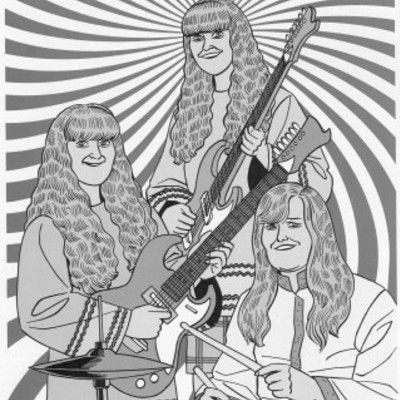
From 1968-1973, the three teenage Wiggins sisters, guided by a domineering father, played their strange music at New Hampshire ballrooms and recorded a single album. The Philosophy of the World LP goes for over $500 today, but the intervening decades were not kind to the Wiggins’.
On the evolution of Nigeria’s booming film industry, which produces 50 full-length features a week.
“Fiction writers are good people, usually. There’s a lot of pretenders, but I haven’t met a lot of sons of bitches.”
The uneasy dance of the architecture critic, the big-name architect, the towering new building, and the city beneath it.
A profile of video game artist Shigeru Miyamoto, the man behind Super Mario Bros.
The director of Slumdog Millionaire and 127 Hours on his aversion to America, the advantages of small budgets, and the challenges of directing the opening ceremony for the London Olympics.
An interview about why giving interviews is totally worthless.
A profile of the late artist and author Norris Church Mailer, who stayed with her husband Norman despite his notorious philandering.
Thoughts on an emerging brand of feminism and the ridiculousness of claiming that Tina Fey is unattractive.
A profile of Larry David, with a focus on his years as a struggling stand-up. “I was hoping that somehow I could get some kind of cult following and get by with that.”
On the BBC radio addresses of E.M. Forster: ”For one thing, he won’t call what he is doing literary criticism, or even reviewing. His are 'recommendations' only. Each episode ends with Forster diligently reading out the titles of the books he has dealt with, along with their exact price in pounds and shillings.”
James Frey is starting a publishing company, paying young writers (very poorly) to reverse engineer a Twilight-esque hit.
The story that certified Gehry as a genius and the Guggenheim Bilbao as the building of the late 20th century.
A “fanatical Lynch fan from way back,” David Foster Wallace visits the set of Lost Highway, never actually talks to the director, and writes a profile.
What happens when a decades old video, featuring the artist Larry Rivers’ prepubescent daughters bare-chested, is claimed both as child pornography and as an important part of the archive of a major American painter.
The macabre, ultra-violent plays put on at the Grand Guignol defined an era in Paris, attracting foreign tourists, aristocrats, and celebrities. Goering and Patton saw plays there in the same year. But the carnage of WWII ultimately undermined the shock of Guignol’s brutality, and audiences disappeared.
The difference between a social network and a movie about a social network, and what it says about the Facebook generation.
The young Woody Allen writes jokes for supper club comedians, decides he will never make it as a performer and then does, idolizes and is snubbed by Mort Sahl, and develops the comic persona which will make him a star.
If Annie Leibovitz sold her work through the traditional channels of the art world, she would have amassed a small fortune. But at the tail end of a career that has snubbed art galleries and collectors, she is destitute.
“I hate classical music: not the thing but the name. It traps a tenaciously living art in a theme park of the past. It cancels out the possibility that music in the spirit of Beethoven could still be created today.”
A single-page version of Shalhoup’s reporting on the Black Mafia Family, one of the largest cocaine empires in American history.
Booker winner Howard Jacobson on the bumper crop of hooker memoirs and what they say about our understanding of paid sex.
Tony Kushner and the burdens of being one of the last public intellectuals in American theater.
As CEO of HBO, Chris Albrecht was responsible for putting The Wire, The Sopranos, and Sex and the City on the air. Then he choked his girlfriend outside a Vegas casino, got fired, and took a job running Starz.
On a book of photographs shot by Leni Riefenstahl in the 1950s and 1960s depicting an African tribe.
The “Shaggy Defense,” the “Little Man Defense,” and more—live from R. Kelly’s 2008 child pornography trial.
The life and times of female comedy LP sensation Rusty Warren, whose bawdy hits like ‘Knockers Up’ commanded the charts and the lounges of the 1960s Midwest.
Tony Kaye was one of the biggest commercial directors of his time. Then he directed American History X and, by his own admission, completely lost his mind.
Four years after a disastrous MTV performance had led him to avoid the public, Rose was back on stage.
Eleven books into his planned thirteen book The Wheel of Time cycle, the most popular fantasy series since Lord of the Rings, Robert Jordan saw death on his own horizon and planned accordingly. A 31-year-old former Mormon missionary inherited his universe.
Ten years ago, Esquire did a piece about Harvard Law grads who had eschewed their degrees. One of them was the late comedian.
In this profile of the band, William Burroughs is interested in two things: big-time rock shows and random conversational tangents.
The world’s most renowned chef, Ferran Adrià, says that the only way he can push forward the art form of cooking is to close his own restaurant.
A mid-boom critique of New York City’s high-priced, mostly glass condo buildings.
Behind the scenes with Kenny Powers, on set filming the 2nd run of Eastbound & Down, probably the only American TV series that would set an entire season in Mexico.
A profile of Sorkin, who wrote The Social Network. “I don’t feel like a nerd,” he says, “but I think I understand them.”
An 1992 interview with Martin Scorsese. On Goodfellas, “I figured to do it as if it was one long trailer, where you just propel the action and you get an exhilaration, a rush of the lifestyle.”
At three NYC comedy theater/schools, students and students-turned-instructors (a “benign pyramid scheme”) pursue the elusive simulacrum of human interaction that is longform improvisation.
A 2006 profile of Mark Zuckerberg as Facebook opened from a college-only site to a public social network.
The writer (Aaron Sorkin), director (David Fincher), and actors (Jesse Eisenberg & Justin Timberlake) of The Social Network on dramatizing the real story of a 20 year old into “the Citizen Kane of John Hughes movies.”
Movies about the wars in Iraq and Afghanistan have failed to connect with viewers, but video games on the topic have broken sales records.
How a childhood gorilla-hunting safari and a string of sexless marriages led Alice Sheldon to become reclusive sci-fi legend James Tiptree Jr.
Mark Zuckerberg, the founder of Facebook, on the eve of the release of The Social Network, believed to be a deeply unflattering portrait of him and the genesis of his company.
Scenes from Madonna’s first major tour and an author struggling to explain the 26-year-old’s massive, surging appeal.
Our debt, conscious or unconscious, to what has come before, and what it can tell us about copyright, the public domain, and the complicated relationship between creators and consumers.
The immersive mise en scène of a Hollister flagship store, redolent of California beach towns that don’t exist, “lazy, hygienic sexuality,” and weed.
An interview with William Gibson on the “dark, dark world of marketing, advertising, and trend forecasting.”
Jimmy Lai, a Hong Kong tabloid tycoon, thinks he’s found the future of journalism: an animation assembly line that can crank out clips recreating–or anticipating, or imagining–breaking news.
A profile of Kanye West written in the style of an all-access magazine piece - using only quotes and statements that Kanye West has made on Twitter and other web outlets.
A 1993 profile of Ricky Jay, one of the world’s great sleight-of-hand conjurers, historian of unusual entertainments and confidence scams, and bibliomaniac; who rarely performs and never for children.
Horror-rap’s annual festival draws thousands of clown-makeup wearing Juggalos - devotees of Insane Clown Posse - for a weekend devoted to spraying Faygo soda, rioting, and discussions of the occult.
When Bob Dylan met Allen Ginsberg; a chapter from Sean Wilentz’s forthcoming Bob Dylan in America.
Soap operas, enrollment in multiple graduate programs at once, student films alongside Hollywood blockbusters. Is James Franco’s entire career a piece of performance art?
In the early 1960s, Middle Eastern guys in Brooklyn introduced America to Arabic rock-and-roll.
For nearly a decade, Laura Albert lived a double life as troubled teen turned cult writer J.T. Leroy, writing books, chatting constantly with celebrities, and convincing another woman to appear as J.T. Leroy in public.
A new Egyptian TV channel called 4Shbab—“for youth” in Arabic—aims to get young people interested in Islam through music videos and reality shows.
An interview with Greil Marcus on the songs of Van Morrison and why people are afraid of imagined things.
An excerpt from a new biography explores the trio of tragedies that struck Dahl’s family just as his career was taking off.
There is someone whose job it is to try to extract royalty money from anyone who plays music in a place of business. Most people do not react well to this request.
A Pynchon conference in Lublin, Poland may say more about the men (yes, only men) who attend Thomas Pynchon conferences than the works of the reclusive author.
Was the 1911 theft of the Mona Lisa from the Louvre actually a smokescreen to obscure an even more audacious art crime?
An interview with cinematographer Harris Savides on the enduring appeal of the visual style of films shot in the 1970s.
A Wisconsin basement gave birth to one of the most influential narratives of our times – Dungeons and Dragons – sending its creator, E. Gary Gygax, on a strange journey of his own.
How a dental equipment salesman from Germany named Klaus Teuber invented the perfect board game, Settlers of Catan.
What the great romantic novels of history can tell us about “seduction theory” and the cult of the pickup artist.
A writer for Conan O’Brien on how The Tonight Show really ended and on how his boss got screwed.
Bill Murray grants a rare interview and appears to admit, among other things, that he occasionally approaches strangers from behind on the streets of NYC, puts his hands over their eyes, and says “guess who.”
In March of 1991, Vanilla Ice had the #1 album in the country (To the Extreme), a movie about to be released (TMNT II: The Secret of the Ooze), and a dogged belief that his 15 minutes weren’t about to end.
An awkward journalist-Russell Crowe friendship turns even more awkward.
A interview with David Mitchell, author of the recent The Thousand Autumns of Jacob de Zoet and Cloud Atlas, on stretching a fictional universe across multiple novels and centuries of real history.
An interview with New Yorker critic Alex Ross about his book The Rest is Noise and why there’s really no such thing as “classical music.”
A 1988 profile of Bill Murray, then at the peak of his box office power and living in a secluded farmhouse in the Hudson River Valley.
The story of the most popular music video of all time, including memories of a then-25-year-old Michael Jackson on and off the set. Director John Landis: “I dealt with Michael as I would have a really gifted child.”
How Warren Beatty seduced the studios into making the comedy Ishtar, which set the modern bar for cinematic debacles. (An excerpt from Peter Biskind’s Star.)
Clay Shirky, writing in 1999 on the Web eclipsing TV’s reach: “We will always have massive media, but the days of mass media are over, killed by the explosion of possibility and torn into a thousand niches.”
An email dialogue between David Gates and Jonathan Lethem on writing fiction in the age of online experiences.
The 1979 Oscars pitted Hal Ashby’s Coming Home against Michael Cimino’s The Deer Hunter, wildly different films both on the the topic of the Vietnam War.
Born in Germany, raised in Montana, now living in New York, comedian Reggie Watts describes his style as “culture sampling.”
The head of the Social Security Administration’s secret life as a respected poet.
He was just another coked-up agent (repping the likes of Steven Soderbergh) when he disappeared into Iraq, shooting heaps of footage he would attempt to package into a pro-war documentary. And that was just the beginning.
In need of a new lead singer, Journey settled on an unknown 40-year-old from the Philippines whose clips they found online. Arnel Pineda was perfect: just a small-town boy, living in a lonely world.
In 2003, Gary Coleman ran for governor of California. But what he really wanted was to have never come to Hollywood in the first place.
Scott Storch was making six figures for beats he made in less than an hour, and was worth an estimated $70 million before he blew it all in a bizarre cocaine binge.
Lou Pearlman, the guy responsible for the Backstreet Boys and ‘NSync, bilked his investors of $300 million and fled the country. But the boys say he was interested in more than just money.
After his untimely death at age 50, prior to the publication of any of his novels, Larsson is posthumously at the center of a publishing empire built on the international success of The Girl with the Dragon Tattoo.
How a celebrated American artist was forced to trade his multimillion-dollar collection for a job selling donuts.
How the actor ended up with a house full of tourniquets and syringes, an unflinching belief in the restorative powers of “ozone,” and the brain scan of someone who has “experienced the equivalent of blunt trauma.”
Jung’s ‘Red Book’, a secret journal of dreams and drawings, has been in a Swiss vault for the better part of a century. The burden of its care has fallen on his descendants, who have reluctantly allowed it to be published.
The where-are-they-now stories of MC Ren, DJ Scatch, Sir Jinx, Kid Disaster, Candyman, and everyone else on the cover of 1987’s N.W.A. and the Posse.
In Austin in 1973, politicos and hippies could get together and create violent, visionary horror films for $60,000. So they did. The story of how The Texas Chainsaw Massacre got made.
How HBO went from sitcoms starring Delta Burke and O.J. Simpson to The Wire. The view from a former HBO employee who witnessed the channel’s rise to prominence firsthand.
The struggle behind the making of Terence Malick’s first movie in twenty years and the two producers who, depending on your source, either made it possible or nearly ruined it.
How did a pair of young rappers from Scotland, laughed off the stage for their accents, land a deal with Sony and start partying with Madonna? They pretended to be American.
“As a middle-aged queer, I could not break cover. And, as a middle-aged black man, I was embarrassed that these white boys from this melodrama mattered to me anyway.”
“Stanley Kubrick was a friend of mine, insofar as people like Stanley have friends, and as if there are any people like Stanley now.”
During the 90s, David Bazan was Christian indie-rock’s first big crossover star. Then he stopped believing.
“I think talk shows have kind of lost that. It’s mostly about super famous people telling long, dull stories about their swimming pools or something.”
Lawrence Weschler mediates an argument between two contemporary art big-hitters in this free ranging essay on the meaning of Cubism.
A review of Treme, the new HBO show about post-Katrina New Orleans from David Simon, creator of The Wire. “The series virtually prohibits you from loving it,” Franklin writes, “while asking you to value it.”
From Stefani Joanne Germanotta to Lady Gaga: the self-invented, manufactured, accidental, totally on-purpose creation of the world’s biggest pop star.
Tom Bissell was an acclaimed young writer when he started playing Grand Theft Auto. For the last three years he has been sleep deprived, cocaine fueled, and barely able to write a word—and he has no regrets.
As labels big and small attempt to gain traction in the world’s largest market, they’re learning that selling pop is never simple in the epicenter of piracy.
The secret history of the Wildensteins, the art world’s richest and most powerful family, whose legendary vaults likely include counterfeits and works stolen by the Nazis.