The human lives lost in exchange for cheaper goods.
Business
How an obscure Australian judge and a hard-charging lawyer put the S&P on trial for the global financial collapse.
The strange existence of the accused Internet pirate as he battles the U.S. government.
Frank Firetti, a 54-year-old pool salesman in Virginia, and his fading American dream.
JPMorgan Chase’s $6 billion mistake and the woman who took the fall.
What it’s like to be Enzyte’s “Smiling Bob,” and other tales of acting as a product’s public face.
The rise of the “wildly lucrative” herbal incense business, and the downfall of one company.
“Has anybody in Westchester County ever called the New York Times his or her ‘friend’? I realize that the rest of America, in its post-Katrina fatigue, is pretty tired of hearing New Orleanians, the city’s acolytes and defenders, always carrying on about how it’s the most unique city in America, but, the fact is, it is. Get over it.
And so, too, is its newspaper.”
"Before I met Ayn Rand, I was a logical positivist, and accordingly, I didn’t believe in absolutes, moral or otherwise. If I couldn’t prove a proposition with facts and figures, it was without merit. In the midst of a conversation, she said to me, “Do I understand the thrust of your position? You are not certain you exist?” I hesitated a moment, and I said, “I can’t be sure.” And she then said to me, “And who, by chance, is answering that question?” With that little exchange, she undermined the philosophical structure I had built for myself. "
“What could possibly be funnier than depositing a perfectly ridiculous, obviously false, fake cheque?”
The rise and fall of Bernard von NotHaus, the creator of the most successful (and some say illegal) alternative currency in the U.S.
What the health care industry can learn from how The Cheesecake Factory does business.
Creators, gatekeepers, and the future of the comedy business.
A transcript of Oswalt's keynote at last week's Just For Laughs conference.The history of the The City of London Corporation, a “prehistoric monster which had mysteriously survived into the modern world.”
How the former Bush advisor is “reengineering the practice of partisan money management in hopes of drumming Barack Obama out of the White House.”
“Good espresso depends on the fourM’s: Macchina, the espresso machine; Macinazione, the proper grinding of a beans; Miscela, the coffee blend and the roast, and Mano is the skilled hand of the barista, because even with the finest beans and the most advanced equipment, the shot depends on the touch and style of the barista.”
A look at Apple stores, where jobs are high stress, with low pay and little opportunity for advancement.
The international battle over 17 tons of coins discovered by an American deep-sea treasure hunting company.
“Jon Corzine had never had anything to do with the futures business, had never run a public company, and hadn’t worked on Wall Street for a decade. His time there had ended badly. But by any reasonable standard, the former Goldman chief seemed almost embarrassingly overqualified. Says Flowers: ‘It seemed like we had more CEO than company.’”
“Adaptation is one explanation of how a lot of executives stay alive. As the fish in the Silurian rivers began to develop swim bladders in order to live in shoal waters, so American executives have developed certain compensating features. The process can be observed particularly in the big cities where conditions are the most trying. Executives have developed an insensitivity to noise, an uncanny time sense (needed in commuting), and an attunement to the city’s terrifying rhythms. Instead of trying to escape the phenomenon of modern life they fling themselves at it.”
In the early ’90s, American Airlines began selling lifetime passes for unlimited first-class travel. It hasn’t worked out well for the airline.
The story of one man’s descent into lies and illegal activity – and why it could so easily happen to any of us.
As it approaches a public offering, how Glencore—founded by the legendary fugitive March Rich—cornered the market for just about everything by working with dictators and spies.
An uncertain future for the retailer.
"Sears was so powerful and so successful at one time that they could build the tallest building in the world that they did not need," says James Schrager, a professor of entrepreneurship and strategy at the University of Chicago's Booth School of Business. "The Sears Tower stands as a monument to how quickly fortunes can change in retailing, and as a very graphic example of what can go wrong if you don't 'watch the store' every minute of every day."
On office chairs.
In the 1950s and '60s, the distinctions between rank found blunt expression in chair design, naming and price point; Knoll, for example, produced "Executive," "Advanced Management," and "Basic Operational" chairs in the late 1970s. Recall the archetypal scenes where the boss, back to the door, protected by an exaggerated, double-spine headrest, slowly swivels around to meet the eyes of his waiting subordinate, impotent in a stationary four-legger.
Inside the investigation that broke the biggest case of insider trading in history.
How a scandal involving sex, money and a Wiccan coven brought down yogi John Friend.
Collusion, sabotage, violence—inside Montreal’s no-holds-barred snow removal racket.
The expansion of private-security contractors in Iraq and Afghanistan is well known. But armed security personnel account for only about sixteen per cent of the over-all contracting force. The vast majority—more than sixty per cent of the total in Iraq—aren’t hired guns but hired hands. These workers, primarily from South Asia and Africa, often live in barbed-wire compounds on U.S. bases, eat at meagre chow halls, and host dance parties featuring Nepalese romance ballads and Ugandan church songs. A large number are employed by fly-by-night subcontractors who are financed by the American taxpayer but who often operate outside the law.
In 1999, “original superagent” Leigh Steinberg represented 86 NFL athletes. His life today:
At age 63, Steinberg -- for years hailed as the real-life Maguire -- now finds himself a bankrupt, recovering alcoholic, plotting a comeback from the bottom. And before 10 p.m. tonight, as mandated by the California Bar Association, he must show that his urine is clean.
Why dealing with the IRS is so difficult – and the woman charged with making it easier:
[Nina] Olson noted that the IRS relied on computers to audit all but the highest-income brackets. “We’re getting to a situation where the only people who will get face-to-face audits are the 1 Percent,” she said. “For the majority of taxpayers, the IRS has become faceless, nameless, with no accountability and no liability.”
The breathable outerwear industry is at war with Bob Gore—the inventor of Gore-Tex.
A profile of Red Bull’s Dietrich Mateschitz, who wants to make his drink a lifestyle. Mateschitz’s co-founder, Chaleo Yoovidhya, died March 17.
Anyone who wants to know what the Occupy Wall Street protests are all about need only look at the way Bank of America does business. It comes down to this: These guys are some of the very biggest assholes on Earth. They lie, cheat and steal as reflexively as addicts, they laugh at people who are suffering and don't have money, they pay themselves huge salaries with money stolen from old people and taxpayers – and on top of it all, they completely suck at banking. And yet the state won't let them go out of business, no matter how much they deserve it, and it won't slap them in jail, no matter what crimes they commit. That makes them not bankers or capitalists, but a class of person that was never supposed to exist in America: royalty.
Interviews with modern travelling salesmen. The article inspired Kirn’s novel Up in the Air.
What makes this a truly military culture, besides its overwhelming maleness, its air of emotional deprivation and the lousy rations, is its obsession with rank and hierarchy. Like jungle gorillas, business travelers always know where they stand versus the rest of the group. In this parallel universe of upgrade vouchers and priority-boarding privileges, everyone has a number and a position, and who gets that open aisle seat in first class means even more on the road then who earns what.
A profile of the Bronx immigrant family on the other end of your Chinese takeout menu.
People know Krugman these days as a feisty political polemicist, but back when he was less politically engaged he was absolutely one of the very finest popularizers of economic ideas ever. This piece is a wonderful, brief introduction to the fundamental economic forces driving the world and a lot of my current thinking is preoccupied with the questions it raises. Reading it again, I realized that a point I like to make about the elevator being a great mass transit technology is almost certainly something I subconsciously picked up here.
The hunt for rare 1933 Double Eagle coins:
The U.S. Secret Service, responsible for protecting the nation’s currency, has been pursuing them for nearly 70 years, through 13 Administrations and 12 different directors. The investigation has spanned three continents and involved some of the most famous coin collectors in the world, a confidential informant, a playboy king, and a sting operation at the Waldorf Astoria in Manhattan. It has inspired two novels, two nonfiction books, and a television documentary. And much of it has centered around a coin dealer, dead since 1990, whose shop is still open in South Philadelphia, run by his 82-year-old daughter.
He was fired from the company he helped create, YouSendIt. Then the cyberattacks started.
Dotcom didn’t look like a criminal genius. With his ginger hair, chubby cheeks, and odd fashion sense—he often wore black suits and white-on-black wingtip shoes—he looked like he should be setting up a magic table.
How Kim Schmitz, the proprietor of Megaupload, made his fortune and landed in a New Zealand prison.
An industry responds to the recession by rebranding the carrot as anything but vegetable.
On Manoj Bhargava, who says he’s “probably the wealthiest Indian in America,” and his ubiquitous product.
Undercover as a student at Phoenix University, the largest for-profit higher education company in the country and the second-largest enroller of students (behind the SUNY system), where only 12 percent of first-time students graduate and the ad budget accounts for 30 percent of overall spending.
“We’re trying really hard to make things better,” said one former Apple executive. “But most people would still be really disturbed if they saw where their iPhone comes from.”
Previously: ”Apple, America and a Squeezed Middle Class”
A report from the oil boom in North Dakota, where unemployment is 3.4 percent and McDonald’s gives out $300 signing bonuses.
The story of Standard Motor Products, a 92-year-old family-run auto parts manufacturer, and the transformation of the U.S. manufacturing industry.
Lessons learned about white-collar crime from an economist turned bagel salesman whose business relied entirely on the honor system.
Con man turned pastor turned con man; a profile of a serial scammer and the movie he tried to make about himself.
On switching to the gold standard and a trip to the Yukon to witness the modern gold rush.
Steven Donziger, an American lawyer, headed up a successful lawsuit against Chevron on behalf of Ecuadorans. Then the legal tables turned on him.
A step-by-step proposal for fixing the broken economics of big-time college sports.
In the end, Zuckerberg says, quarrels over money rarely come up because money is not their priority. “We’re in a really interesting place because if you look at the assets we have, we’re fucking rich,” Zuckerberg adds. “But if you look at like the cash and the amount of money we have to live with, we’re dirt poor. All the stuff we own is tied up in random assets” like servers and the company itself. “Living like we do now, it’s, like, not that big of a deal for us. We’re not like, Aw man, I wish I had a million dollars now. Because, like, we kind of like living like college students and being dirty. It’s fun."
What makes soap interesting? Why choose one brand over another? Dichter’s first contract was with the Compton Advertising Agency, to help them sell Ivory soap. Market research typically involved asking shoppers questions like “Why do you use this brand of soap?” Or, more provocatively, “Why don’t you use this brand of soap?” Regarding such lines of inquiry as useless, Dichter instead conducted a hundred so-called “depth interviews”, or open-ended conversations, about his subjects’ most recent scrubbing experiences. The approach was not unlike therapy, with Dichter mining the responses for encoded, unconscious motives and desires. In the case of soap, he found that bathing was a ritual that afforded rare moments of personal indulgence, particularly before a romantic date (“You never can tell,” explained one woman). He discerned an erotic element to bathing, observing that “one of the few occasions when the puritanical American [is] allowed to caress himself or herself [is] while applying soap.” As for why customers picked a particular brand, Dichter concluded that it wasn’t exactly the smell or price or look or feel of the soap, but all that and something else besides—that is, the gestalt or “personality” of the soap.
In 2008, a 38-year old Oklahoma nurse whom I'll call Kelly adopted an eight-year old girl, "Mary," from Ethiopia. It was the second adoption for Kelly, following one from Guatemala. She'd sought out a child from Ethiopia in the hopes of avoiding some of the ethical problems of adopting from Guatemala: widespread stories of birthmothers coerced to give up their babies and even payments and abductions at the hands of brokers procuring adoptees for unwitting U.S. parents. Now, even after using a reputable agency in Ethiopia, Kelly has come to believe that Mary never should have been placed for adoption.
After decades of failed revitalization strategies, a town of 10,000 tries another.
Before the market crashed and home prices tumbled, before federal investigators showed up and hauled away the community records, before her property managers pled guilty for conspiring to rig neighborhood elections, and before her real estate lawyer allegedly tried to commit suicide by overdosing on drugs and setting fire to her home, Wanda Murray thought that buying a condominium in Las Vegas was a pretty good idea.
On the history, internal culture, and scandals of the consulting giant.
The demise of America’s favorite mega-bookstore and the factors beyond the e-book boom that fueled the book retail meltdown.
On Michael Lewis and the global financial crisis.
Previously: The Michael Lewis World Tour of Economic CollapseOn a pair of Israeli psychologists who between 1971 and 1984 “published a series of quirky papers exploring the ways human judgment may be distorted when we are making decisions in conditions of uncertainty.”
An investigative reporter goes undercover at a dealership to learn the tricks of the trade, of which there are many.
The world’s fastest growing economy isn’t China; it’s the “unheralded alternative economic universe of System D” aka the $10 trillion global black market.
An orgy of free song-sharing seems to be exactly the kind of thing that the horrified labels would quickly clamp down on. But they appear to be starting to accept that their fortunes rest with the geeks. Or at least they’re trying to talk a good game. “I’m not part of the past—I’m part of the future,” says Lucian Grainge, chair and CEO of the world’s biggest label, Universal Music Group. “There’s a new philosophy, a new way of thinking.”
Who simultaneously did business with the U.S. government, the besieged Syrian regime, and the Libyan rebels last month? The group of 16 trading houses that collectively are “worth over a trillion dollars in annual revenue and control more than half the world’s freely traded commodities.”
How Warren Buffett’s public image has aided his success.
As a successful investor, he merely moved markets; but as the charismatic, reassuring, quotable prototype of the honest capitalist (a sort of J. P. Morgan with a moral sense), he's capable of influencing elections, galvanizing rock-concert-size crowds, and in general defining how we Americans feel about the system that underlies our wealth.
On 20-somethings in America, or:
My screwed, coddled, self-absorbed, mocked, surprisingly resilient generation.
Built on a foundation of debt and trickery, where economic principles were sacrificed to romantic political visions, the Euro has become the world’s most dangerous currency. How the utopian dream of a common currency turned tragic.
On the life of illegal immigrant fruit pickers.
Without 1 million people on the ground, on ladders, in bushes—armies of pickers swooping in like bees—all the tilling, planting, and fertilizing of America's $144 billion horticultural production is for naught. The fruit falls to the ground and rots.
From Vallejo to San Jose, a tour of local government despair:
The relationship between the people and their money in California is such that you can pluck almost any city at random and enter a crisis.More Lewis: the complete financial disaster tourism series to date.
On the constantly evolving definition of insider trading and the lingering question of how inside traders should be punished.
How an Italian thug looted MGM, brought Credit Lyonnais to its knees, and made the Pope cry.
The original article on Billy Beane and the Oakland A’s, published a month before the release of Moneyball.
On the marriage of Ponzi schemer Ken Starr and his fourth wife, Diane Passage, whom he met while she was dancing at a strip club.
Hartwick College didn’t really mean to annihilate the U.S. economy. A small liberal-arts school in the Catskills, Hartwick is the kind of sleepy institution that local worthies were in the habit of founding back in the 1790s; it counts a former ambassador to Belize among its more prominent alumni, and placidly reclines in its berth as the number-174-ranked liberal-arts college in the country. But along with charming buildings and a spring-fed lake, the college once possessed a rather more unusual feature: a slumbering giant of compound interest.
The CEO of the US’s biggest bank doesn’t have much charisma or a track record, but he’s “doing as well as any little Dutch boy can—sticking his fingers in the dike.”
On the current state of the global economy and the inevitable decline of the U.K. and the U.S.:
A decade-long slowdown would accelerate this shift in global wealth and power and would be a grim thing to live through, but from a world-historical perspective it might not be a game-changer: it might just be the non-scenic route to the place we’re going anyway.
On September 11, 2001, three out of every four people who worked for Howard Lutnick died. The story of a recovery.
A profile of Ken Robinson, who earned minor fame and more than a few enemies for the controversial way he “bought” his house:
The week after Robinson moved into the tan-sided home with a faux stone entrance and maroon shutters, he was soaring, an Internet hero a few levels shy of Steven Slater, the JetBlue flight attendant who last summer cracked a beer and left work on a plane's emergency slide. For $16, Robinson had filed paperwork with Denton County staking his claim to the abandoned home through an obscure Texas law called adverse possession. Ever since, curious visitors, beginner real estate investors and people who want an ultra-cheap home to fulfill their version of the American Dream have been knocking on his door for advice and a handshake.
On the insurer’s insurer and calculating the risk of modern catastrophe:
Reinsurers are ultimately responsible for every new thing that God can come up with. As losses grew this decade, year by year, reinsurers have been working to figure out what they can do to make the God clause smaller, to reduce their exposure. They have billions of dollars at stake. They are very good at thinking about the world to come.
On “American Dream,” a mall under construction in New Jersey that will be the largest on Earth and feature an indoor skiing slope, a tropical area modeled on Hawaii, and a “TV screen that will make Times Square seem like a rec room from the seventies.”
According to a whistleblower, the SEC has been systematically destroying records of investigations for the last twenty years:
By whitewashing the files of some of the nation's worst financial criminals, the SEC has kept an entire generation of federal investigators in the dark about past inquiries into insider trading, fraud and market manipulation against companies like Goldman Sachs, Deutsche Bank and AIG. With a few strokes of the keyboard, the evidence gathered during thousands of investigations – "18,000 ... including Madoff," as one high-ranking SEC official put it during a panicked meeting about the destruction – has apparently disappeared forever into the wormhole of history.
As Europe, led by Greece and Ireland and followed by Portugal and Spain, tumbles towards economic catastrophe, only one nation can save the continent from financial ruin: a highly reluctant Germany.
By 2006, S&P was making its own study of such loans' performance. It singled out 639,981 loans made in 2002 to see if its benign assumptions had held up. They hadn't. Loans with piggybacks were 43% more likely to default than other loans, S&P found. In April 2006, S&P said it would raise by July the amount of collateral underwriters must include in many new mortgage portfolios. For instance, S&P could require that mortgage pools have extra loans in them, since it now expected a larger number to go bad. Still, S&P didn't lower its ratings on existing securities, saying it had to further monitor the performance of loans backing them. It thus helped the market for these loans hold up through the end of 2006.
Kindler could be remorseful after letting loose -- he'd send women flowers the day after bringing them to tears -- but that didn't prevent the next explosion. Says an executive who worked closely with him: "Don't call me at five o'clock in the morning and rip my face off, then call me at 11 o'clock at night and tell me how much you love me."
On the restauranteur behind New York’s Gramercy Tavern and Shake Shack.
On how search and advertising became indistinguishable, the finer points of not being evil, and why privacy is by nature immeasurable. How Google made us the product:
“Google conquered the advertising world with nothing more than applied mathematics,” wrote Chris Anderson, the editor of Wired. “It didn’t pretend to know anything about the culture and conventions of advertising—it just assumed that better data, with better analytical tools, would win the day. And Google was right.”
How Tim Durham funded a libertine lifestyle—dozens of luxury cars, Playboy-themed parties, a plethora of failed businesses—on the backs of unwitting Ohioans, many of them Amish.
Codenamed “Synapse”, the Match algorithm uses a variety of factors to suggest possible mates. While taking into account a user’s stated preferences, such as desired age range, hair colour and body type, it also learns from their actions on the site. So, if a woman says she doesn’t want to date anyone older than 26, but often looks at profiles of thirty-somethings, Match will know she is in fact open to meeting older men. Synapse also uses “triangulation”. That is, the algorithm looks at the behaviour of similar users and factors in that information, too.
In anonymous warehouses in Detroit, Goldman Sachs has hoarded a quarter of the world’s supply of aluminum, placing them firmly in control of trading on the London Metal Exchange.
Inside a transport service for “problem” children:
In his first year of business, [Rick Strawn] escorted eight teens to behavior modification schools. Since then, his company has transported more than 700 kids between the ages of 8 and 17.
Is the streaming Swedish music service, now making its U.S. debut, the best shot the industry has at staying profitable and relevant?
How Frank and Jamie McCourt bought the Dodgers for “for less than the price of an oceanfront home in Southampton” and eventually became entangled in one of the most expensive divorces in California history, which laid bare their finances and confirmed what many already knew: they had bankrupted one of the most storied franchises in baseball.
In all, the McCourts reportedly took $108 million out of the team in personal distributions over five years—a sum that Molly Knight, a reporter with ESPN who has extensively covered the story, notes is eerily similar to the cash payment that she says Frank McCourt has claimed he made for the team.
Next is "culture training," in which trainees memorize colloquialisms and state capitals, study clips of Seinfeld and photos of Walmarts, and eat in cafeterias serving paneer burgers and pizza topped with lamb pepperoni. Trainers aim to impart something they call "international culture"—which is, of course, no culture at all, but a garbled hybrid of Indian and Western signifiers designed to be recognizable to everyone and familiar to no one. The result is a comically botched translation—a multibillion dollar game of telephone. "The most marketable skill in India today," the Guardian wrote in 2003, "is the ability to abandon your identity and slip into someone else's."
A trip to the Cannabis Cup serves as a backdrop for the story of how the War on Drugs revolutionized the way marijuana is cultivated in America.
A profile of California congressman Darrell Issa:
A few days after we met in Las Vegas, Issa called me. He was concerned about all my questions regarding his early life and didn’t see why they were newsworthy. The conversation was awkward.
On the development of South Korea’s New Songdo and Cisco’s plans to build smart cities which will “offer cities as a service, bundling urban necessities – water, power, traffic, telephony – into a single, Internet-enabled utility, taking a little extra off the top of every resident’s bill.” The demand for such cities is enormous:
China doesn't need cool, green, smart cities. It needs cities, period -- 500 New Songdos at the very least. One hundred of those will each house a million or more transplanted peasants. In fact, while humanity has been building cities for 9,000 years, that was apparently just a warm-up for the next 40. As of now, we're officially an urban species. More than half of us -- 3.3 billion people -- live in a city. Our numbers are projected to nearly double by 2050, adding roughly a New Songdo a day; the United Nations predicts the vast majority will flood smaller cities in Africa and Asia.
A profile of new Ticketmaster CEO Nathan Hubbard, who in another life was a touring musician and hated Ticketmaster just like everyone else.
How what was once one of the most popular websites on Earth—with ambitions to redefine music, dating, and pop culture—became a graveyard of terrible design and failed corporate initiatives:
In retrospect, DeWolfe says, the imperative to monetize the site stunted its evolution: "When we did the Google deal, we basically doubled the ads on our site," making it more cluttered. The size, quality, and placement of ads became another source of tension with News Corp., according to DeWolfe and another executive. "Remember the rotten teeth ad?" DeWolfe says. "And the weight-loss ads that would show a stomach bulging over a pair of pants?"
On the brother of the Sultan of Brunei, Prince Jefri Bolkiah, who has “probably gone through more cash than any other human being on earth.”
This past Memorial Day weekend, Steven T. Florio, the president and CEO of Conde Nast Publications, made a dramatic change at The New Yorker, the most illustrious of the 17 magazines he runs for billionaire S.I. "Si" Newhouse Jr. He fired his own brother.
On animal cremation and burial in New York:
Riding around Manhattan on a delivery run with a car full of pet cremains, it's hard not to look at the world differently. The omnipresence of pets becomes glaringly obvious, and their inevitable fate is never far from the mind. It's easy to imagine the whippet being jaywalked across Eighth Avenue getting hit by a car. The cocker spaniel on 23rd Street? A bucket of cocker bones in the making.
The bitter rivalry within the aerospace industry to produce unmanned combat aircrafts.
Bob Rodriguez, the oracular mutual fund manager with the best record over the last quarter century and two correctly-predicted crashes under his belt, says another spectacular crash is on its way within five years.
On Forever 21 and the rise of “fast fashion”:
They have changed fashion from a garment making to an information business, optimizing their supply chains to implement design tweaks on the fly.
On Kimora Lee Simmons, then the head of the Baby Phat clothing company and wife of Russell Simmons.
“Let me take off my glasses,” she says, removing her large frames. “I want you to see my eyes. I will beat a bitch’s ass!”
What it means to be an entrepreneur in Argentina, where economic crashes are a way of life.
What happened when the U.S. Military decided to take its lead from America’s biggest brands.
The author gets a security guard job at this aging textile factory. Part of the City by City project.
Fred Wilpon, the owner of the hapless New York Mets, had more than $500 million tied up with Bernie Madoff when the Ponzi scheme was exposed. Now he may be forced to sell his beloved ballclub.
The downfall of a Goldman Sachs director:
"Now from, for the last three or four, I mean four or five years, I've given him a million bucks a year, right?" says Rajaratnam. "Yeah, yeah," says Gupta, who doesn't appear taken aback at all by Rajaratnam's next remark: "After taxes. Offshore. Cash."
On the investors betting big on the Iraqi economy, which they believe has nowhere to go but up.
A profile Mark Pincus, the founder and C.E.O. of Zynga—the company that created FarmVille, CityVille, and Zynga Poker, the most popular online poker game in the world.
On the economics of the booming Somali pirate business, which is up 177 percent over last year.
While much of the Levin report describes past history, the Goldman section describes an ongoing? crime — a powerful, well-connected firm, with the ear of the president and the Treasury, that appears to have conquered the entire regulatory structure and stands now on the precipice of officially getting away with one of the biggest financial crimes in history.
How automated ‘execution algorithms’ are taking the world’s markets on a wild ride that few economists can even understand, much less control.
The placebo response doesn't care if the catalyst for healing is a triumph of pharmacology, a compassionate therapists, or a syringe of salt water. All it requires is a reasonable expectation of getting better.
On internships at Disney World, where “labor is meant to have an almost invisible quality.”
How slot machines snuck into the mall, along with money laundering, bribery, shootouts, and billions in profits.
A look at the brave new world of privatized postal services, “optimized to deliver the maximum amount of unwanted mail at the minimum cost to businesses.”
An interview with James “Jimmy” Hoffa, president of the International Brotherhood of Teamsters which had recently been described by Attorney General Robert Kennedy as “the most powerful institution in this country—aside from the United States Government itself.”
On the shady underworld of door to door magazine sales teams, in which teens roam the country in vans, con locals with sob stories, party constantly in cheap motels, and leave behind a trail of rapes, fiery crashes, and new subscriptions.
On the “world’s largest social network that you probably haven’t yet heard of” and its enigmatic founder.
With fewer and fewer students having the income necessary to pay back loans (except through the use of more consumer debt), a massive default looks closer to inevitable.
On the emerging student loan bubble.
Despite no hurricanes in five years, Florida insurers are demanding yet more money from homeowners. At the same time, the capital that insurers have on hand to pay claims has shrunk. One reporter spent a year trying to figure out why.
A series on how some Wall Street bankers, seeking to enrich themselves at the expense of their clients and sometimes even their own firms, at first delayed but then worsened the financial crisis.
In eight malls spread across three continents, kids get to try out grown-up jobs in corporate-sponsored theme parks. Welcome to KidZania—coming soon to the U.S.
When Chicago’s Stevens Hotel opened in 1927, it was the biggest hotel in the world. By the time it was closed, it had bankrupted and caused the suicide of a member of the Stevens’ family (which included a seven-year-old future Justice John Paul Stevens), and changed the city forever.
At times, Mr. Hsieh comes across as an alien who has studied human beings in order to live among them.
A profile of the Zappos CEO.
An insider history of the fall of Myspace; from Rupert Murdoch calling Facebook a mere “communications utility” to the disastrous 2006 deal with Google that demanded huge pageviews and ads everywhere, and finally the present day ruins of a titan.
How Lalit Modi built a billion-dollar cricket empire—only to be exiled from his sport and homeland.
Five years after they leave the league, 60 percent of NBA players have nothing left. In the NFL, it’s closer to 80 percent after just two years. On the economics of professional sports.
A story written about Twitter and one its founders, Evan Williams, when the company’s chief source of revenue was subletting desks in their partially filled office.
In the late ’80s, Lewis went to Japan to research a hypothetical: what would the economic fallout be if a major quake hit?
An entrepreneurial primer from the founder of 37Signals. “So here’s a great way to practice making money: Buy and sell the same thing over and over on Craigslist or eBay. Seriously.”
On who will bear the burden of the financial crisis facing cities across America. “Will it be articulated in terms of bond defaults or larger kindergarten classes—or no kindergarten classes at all?”
A profile of Jack Dorsey, co-founder (and displaced CEO) of Twitter. Dorsey’s latest venture, a mobile credit card system called Square that only officially launched in February 2011, already processes more than a million transactions per day.
Relative to the total national income, American corporations are making more money than they have since 1947. The connection behind soaring profits and stagnant unemployment.
“One evening, my home phone rang. ‘You have a collect call from Bernard Madoff, an inmate at a federal prison,’ a recording announced. And there he was.”
An interview with Alan Stillman, who in 1965 founded T.G.I. Friday’s, the first singles bar in America.
“The entire system set up to monitor and regulate Wall Street is fucked up. Just ask the people who tried to do the right thing.”
How J.C. Penney gamed Google and became the top result for searches on everything from “area rugs” to “skinny jeans.”
A look at the legislative lobbying efforts of Michael Bloomberg’s $7 billion-per-year company. While the mayor has no specific day-to-day role at Bloomberg LP, he maintains “the type of involvement that he believes is consistent with his being the majority shareholder.”
Brooklyn, Illinois has one of the most dense clusters of strip clubs and rubdown parlors in the entire country, drawing patrons from nearby St. Louis and its suburbs. Inside the clubs with the dancers, a strip club scholar, the mayor, and the regulars whose dollars keep the depressed local economy afloat.
An opinion piece on the structural causes of unrest in Egypt; the business fraternity, globalization, and the fate of Egyptian women.
A newly minted, 34-year-old White House budget director gets a little too candid with a reporter profiling him during Ronald Reagan’s first year in office. Among Stockman’s many admissions: “None of us really understands what’s going on with all these numbers.”
On the group of friends who came to rule the bizarre, decreasingly lucrative world of Internet porn.
How a nation went bankrupt. “Ireland’s regress is especially unsettling because of the questions it raises about Ireland’s former progress: even now no one is quite sure why the Irish suddenly did so well for themselves in the first place.”
“I’m not the kind of guy who hears voices. But that night, as I passed the station, I heard a little voice coming from the back of my head…‘If you do it that way, if you use that algorithm, there will be a flaw. The game will be flawed. You will be able to crack the ticket. You will be able to plunder the lottery.’”
On the pair of entrepreneurs behind a Wal-Mart of weed in Oakland. The duo is talking IPO. “Everybody I was meeting was a little bit older, more a part of the hippie generation,” says one. “I was like, ‘I bet there’s so much room for innovation and new ideas.’”
Lockheed Martin is the largest government contractor in history. They train TSA workers and Guantanamo interrogators. Every American household pays them around $260 per year in taxes. The new military industrial complex is a single company.
Bruce Wisan received one of the toughest assignments ever thrust upon an accountant; to take control of the assets (and by proxy, followers) of the polygamist Mormon breakaway sect, F.L.D.S., after their prophet, Warren Jeffs, went on the lam and their compound was raided.
Obama’s presidency may well be defined by whether or not he can curb unemployment. Step One: find a decent idea.
A working definition of ‘net neutrality’, a bestiary of the major players, and why the issue isn’t a cut and dry case of good vs. evil.
On the gap between how the world sees Goldman Sachs and how Goldman Sachs sees itself.
It’s now routine for corporations to outsource the task of generating new ideas. A look at the consulting firms who meet that need.
Nick Denton is rebooting his entire Gawker empire—and his vision is drawn more from TV than blogs.
Where the actual online money is centralized, and where Google will have to go to continue chasing it.
What happened to the minds behind Napster, Gnutella, WinAmp, and BitTorrent after their creations irrevocably changed business and culture.
DecorMyEyes is a online eyewear store with an unusual business plan; the owner harasses and intimidates customers who complain in order to get negative reviews posted across the web, in turn making his website more visible to Google searchers.
How Cantor Fitzgerald is bringing the principles of day trading to sports betting in Vegas.
“For years, the most profitable industry in America has been one that doesn’t design, build, or sell a single tangible thing.” The case for why investment banking is socially useless.
A history of entrepreneurship in New York City, starting with shipping magnate Jeremiah Thompson’s big gamble in the 1820s: scheduled departures.
James Frey is starting a publishing company, paying young writers (very poorly) to reverse engineer a Twilight-esque hit.
The bizarre tale of how the hiring of a reality TV contestant to greet high-end customers led to the firing of a successful CEO. Plus: a follow-up article.
A review of several books on Rupert Murdoch first criticizes the authors for not grasping the many sides of their subject, then offers a thesis of its own. He’s “not so much a man, or a cultural force, as a portrait of the modern world.”
New technology has historically been a friend to the porn industry, first VHS, then online DVD sales. But free streaming sites like YouPorn have sent the establishment into a tailspin, and due to anonymous domain registration, they don’t even know who their competition is. Will the internet kill porn?
The article that spawned a school of thought; an elegy for the age of the megahit and a primer for the niche-based future.
If Annie Leibovitz sold her work through the traditional channels of the art world, she would have amassed a small fortune. But at the tail end of a career that has snubbed art galleries and collectors, she is destitute.
On Ayn Rand becoming a cult hero to Wall Street insiders and others items that make Matt Taibbi angry.
How virtual worlds like Ultima Online form economies and the sellers who make a living in digital goods.
When it comes to representing pharmaceutical companies, a doctor’s medical record is far less important than his or her ability to sell.
The world’s population is rapidly getting older. How China and other countries stocked with young workers are taking advantage.
Diapers.com has a stripped-down business model, a massive warehouse staffed by robots, and a legitimate chance to outsell Amazon.
In an elaborate FBI sting to expose corruption, four agents pose as futures traders in Chicago. The plan works–if you don’t count the hundreds of thousands in taxpayer dollars the agents lost in the process.
A mid-boom critique of New York City’s high-priced, mostly glass condo buildings.
Google’s founders and CEO as they moved from the search business into… everything.
Raffaello Follieri was young, handsome. He was Italian. He was dating Anne Hathaway, hobnobbing with Bill Clinton, and using contacts at the Vatican to launch a lucrative business in the States. Then he was in jail.
A 2006 profile of Mark Zuckerberg as Facebook opened from a college-only site to a public social network.
Movies about the wars in Iraq and Afghanistan have failed to connect with viewers, but video games on the topic have broken sales records.
A just-barred Pakistani-American attorney attempts to save a young family’s home from foreclosure and glimpses the contradiction-rich bureaucracy that has emerged in response to the housing crisis.
Riots in Athens, the shadowy Vatopaidi monastery, and a quarter million dollars in debt for every citizen. Welcome to Greece.
How misdirected incentives in the bewildering medical supply industry keep innovative, life-saving equipment from reaching hospitals.
The immersive mise en scène of a Hollister flagship store, redolent of California beach towns that don’t exist, “lazy, hygienic sexuality,” and weed.
It makes as much money as Whole Foods while stocking 90 percent fewer products. The Trader Joe’s business model explained.
An interview with William Gibson on the “dark, dark world of marketing, advertising, and trend forecasting.”
The Great Recession’s impact on the legalized prostitution industry in Nevada: more hookers, fewer johns.
A blow by blow account of the seizure of a French cruise ship by Somali pirates.
The boyish CEO of America’s largest and most controversial mercenary force, Blackwater, also happened to be a C.I.A. agent.
Christian Audigier is the man behind Von Dutch and Ed Hardy. The massive succes of his garish and expensive creations may say more about the power of celebrity than about fashion.
The number one item confiscated by U.S. customs for four years in a row: fake shoes. As brands continue to crack down, counterfeiters continue to up their game.
An American, born into privilege, became a bootleg DVD kingpin in Shanghai and then, in an unprecedented development, landed in Chinese prison.
Two sisters, heirs to the Bronfman fortune, may have blown $100 million supporting the cult-like group NXIVM.
There is someone whose job it is to try to extract royalty money from anyone who plays music in a place of business. Most people do not react well to this request.
A reporter heads to Nauru, a tiny island nation in the Pacific, to track down the hub of a worldwide money-laundering operation—a shack filled with computers, air-conditioners, and little else.
John Friend, who founded a new school of yoga, says the practice should be about both exercise and spirituality. Oh, and making money.
Erich Spangenberg is in the business of owning other people’s ideas. He makes a fortune.
A profile of Tom Donohue, CEO of the U.S. Chamber of Commerce and the sixth-highest paid lobbyist in the country. Since Obama took office, Donohue has scared-up tens of millions in new donations.
The Great Recession meant great things for Nick Popovich, who gets paid by banks to take planes back from hard-up millionaires.
On January 1st, 2011, the U.S. estate tax will jump from zero to around 50%, which gives a lot of very rich elders (or perhaps more accurately, their heirs) millions of dollars in incentive to expedite death.
An interview with Clay Shirky on “why no medium has ever survived the indifference of 25-year-olds.”
Nitrous balloon vendors clash in the parking lots of jam band festival across the Northeast.
In July 2008, the director of a Denver non-profit received a package containing house keys, a will, a $100,000 check and what appeared to be a suicide note. She didn’t go to the bank–or to the cops.
In 2007, Harrah’s made 5.6% of its total Las Vegas revenue off of a single person: Terrance Watanabe.
Mysterious, man-made “natural flavor” explains why most fast food—indeed, most of the food Americans eat—tastes the way it does. An early excerpt from Fast Food Nation.
How a French journalist recruited a posse of Brazilian parking lot attendants and pizza-delivery guys and created Hollywood’s most addictive entertainment product.
As of this year, more women than men are in the U.S. workforce. More women are managers and more women are earning college degrees. Here’s why.
“The problem is I’m older now, I’m 40 years old, and this stuff doesn’t change the world. It really doesn’t.” –Steve Jobs, 1996
Foursquare and Gowalla are in a VC-funded race to become the dominant location-based social network. But their founders say both companies have a larger purpose.
Profile of the flip-flop wearing 61-year-old ‘dude’ who turned around a dying company by selling all-American sex to teens – and isn’t apologizing.
Tadashi Yanai (“he is like Warren Buffett in Japan”) takes his Uniqlo brand stateside.
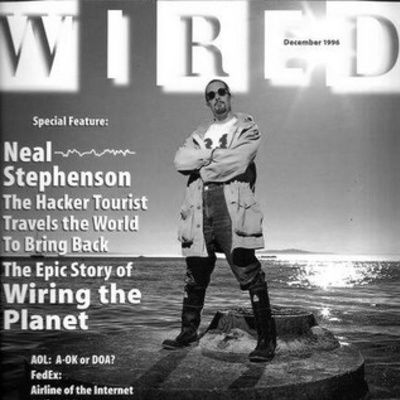
Neal Stephenson’s three continent spanning “hacker tourist” account of the laying of the (then) longest wire on earth, FLAG, fiber-optic link around the world. A 42,000+ word business/tech/history epic.
Using several email addresses and a lot of exclamation points, teenager Jonathan Lebed worked finance message boards in the morning before school and made almost a million bucks. Then he made the head of the S.E.C. look like a fool.

Craig Cunningham has a simple solution for getting bill collectors off his back. He sues them.
How Indians with the surname Patel came to own 1/3 of the motels in America.
China is securing sub-Saharan Africa’s natural resources at a staggering rate. With the buying spree comes contracts, workers, and of course, politics. (Part 1 of a 6 part series, rest here)
Sitting alone in his San Jose office, Michael Burry saw the bubble in the subprime-mortgage market before anyone else. So he convinced Wall Street to let him bet on it, even though few were betting on him.
A recent episode of This American Life was put together by reporters from Pro Publica based on this original reporting about the the bubble-profiteering hedge fund Magnetar.
Paul Krugman breaks down the basics of climate change economics, from Arthur Cecil Pigou to Capitol Hill.
As labels big and small attempt to gain traction in the world’s largest market, they’re learning that selling pop is never simple in the epicenter of piracy.