The motley gang of L.A. teens that cat-burgled celebrities, sometimes repeatedly, in search of designer clothes, jewelry, and something to do. The story that became The Bling Ring.
Crime
A series of mysterious, dangerous interactions in a Mexican bathhouse.
"In every public bath, there tends to be a fight from time to time. We never saw or heard any there. The clients, conditioned by some unknown mechanism, respected and obeyed every word of the orphan’s instructions. Also, to be fair, there weren’t very many people, and that’s something I’ll never be able to explain, since it was a clean place, relatively modern, with individual saunas for taking steam baths, bar service in the saunas, and, above all, cheap. There, in Sauna 10, I saw Laura naked for the first time, and all I could do was smile and touch her shoulder and say I didn’t know which valve to turn to make the steam come out."
In a fictionalized Haiti, a man explains the inner workings of the political landscape and his own shady rise to the role of Prime Minister.
"Yet…deciding to recount the entire tale, the whole historical record, as in order for events to work out as Richard wanted them to, then yes, he’d have to make good on his promise that everything would be made clear, revealed in one fashion or another—it’s probably best if I explain: Jean was once a senator in the Haitian senate, the second-youngest senator in Haiti’s history in fact, and as a senator, he was wildly inept. You can’t really find him totally at fault however, because Jean’s parents bought him his seat when he was fresh from school. I can’t fathom why, but my guess is that they knew he had no head for business and that there was nothing else he’d really be good for, so they had hoped that a career in politics would both keep him busy and allow them to control a portion of the country without too much effort. But well, Jean, Jean bloody fucked all that, what with his reckless politicking and all."
A man encounters the boundaries of knowledge while investigating his father's murder.
"This is maybe still too big for him to know right now, the image too hard for him to see, but eight days ago his father Gerald was found dead in Greenland. He hasn’t talked to his father in three weeks even though his apartment is a mile away, and Rob has no idea what he’d possibly be doing in Greenland. He has no idea why anybody would go to Greenland. Ever."
A Parisan eccentric and his friend analytically consider a horrific crime in this classic detective story.
"At the first dawn of the morning we closed all the massy shutters of our old building; lighted a couple of tapers which, strongly perfumed, threw out only the ghastliest and feeblest of rays. By the aid of these we then busied our souls in dreams—reading, writing, or conversing, until warned by the clock of the advent of the true Darkness. Then we sallied forth into the streets, arm and arm, continuing the topics of the day, or roaming far and wide until a late hour, seeking, amid the wild lights and shadows of the populous city, that infinity of mental excitement which quiet observation can afford."
A series of mysterious, interconnected explorations of misdeeds and criminal activities.
"Did we remember anything about the van? White. We knew the color of their van. We thought more about it. Paint. The little girl’s dress. Was the dress white? Check. Now we began to see something. And what else was white? The sneakers. Check. The men were wearing white sneakers. Nothing dark on their feet. The sneakers didn’t have a speck of dark, neither did the van, check, neither did the girl’s dress, check, no dark, these men opposed anything dark and the men were—but we stopped. Dead end. The sack was black. They had put a dark sack over the girl’s head. The sack. How did the dark sack fit together with the white sneakers, white van, white dress? So why wouldn’t they just use a white sack? Black tangled into so much white."
For New Year's Eve, a Times Square encounter chronicled by the author of Open City.
"Low and I stood under the cold blazing lights of Times Square, smoking, and I asked him what he had eaten. Oysters, he said, the pleasure coming back into his voice, in a row on a ridge of ice, eager to be eaten. Fluke, caviar, octopus, some champagne but not a lot."
Down in out in an unnamed Californian city: newly-translated Japanese noir from the 1920s.
"First, he was obliged to pretend to search through his pockets. Of course he knew he wouldn't find anything. All he had was the penny he'd found earlier. But if that penny were to show up now, it would only ruin his act. At times like this, Sakuzō could become quite the performer."
A Hanukkah story revolving around anarchists, crooks, and vandals. [Free registration required.]
"'Anyway, what's this talk about roots?' he said and immediately regretted it. He could see the magazine covers already. The Return to Religion: The New Tribalism. He liked it better when Wendy was insolent and yelled 'Death to the pigs!' at a couple of off-duty cops having a cup of coffee at a local diner before Frieda pulled her away."
A young couple, laying low in Maine, is menaced by the reappearance of a suspicious father.
"Jesse is small, but solid in the way some short men can be. He has thick hair, dyed black, parted distinctly in the middle of his head, and he is wearing slacks and a clean, white tee-shirt. In his small hand, he has my journal."
How an obscure Australian judge and a hard-charging lawyer put the S&P on trial for the global financial collapse.
“If I had been a straight-A student my whole life and had rapped about Jesus coming back to save us all, I wouldn’t get no media. The motherfuckers wouldn’t give a fuck about me. But since I’m telling the truth, and been through what I’m stressing and know what I’m talking about, I’m a threat.”
A community says its children are being targeted by a group of pedophiles. But did widespread sexual abuse actually take place?
He was a nobody who became a porn star, a porn star who became a destitute freebaser, an addict who set up his dealer to be robbed, and finally witness to a retaliatory massacre at the house they called Wonderland.
Trevell Coleman wasn’t sure whether he’d killed a man. But after 17 years, he needed to find out.
The decades-long saga of Michael Morton, who was wrongfully convicted of killing his wife.
On the experimental favela police force UPP (aka “The Big Skull”) and their efforts to clean Rio’s largest slum in advance of the World Cup and Olympics.
At various points, Thomas Mitchell was a novelist, an attorney, a scientist, a Hollywood dealmaker and a CIA higher-up. He was also a con man.
An essay on Jimmy Savile, British television and child sexual abuse.
He confessed to more than 30 murders. But Thomas Quick (also known as Sture Bergwall) may not have committed any of them.
How modernity – and an eruption of violence – changed “the most remote inhabited island on the Atlantic seaboard.”
As a 15-year runaway hitchhiker, a trucker nearly killed the writer. Twenty seven years later, she investigates whether her attacker was truck stop serial killer Robert Ben Rhoades, who often kept his victims chained in the back of his truck for weeks before killing and dumping them.
A woman's communications and interactions with a potential criminal.
"The beaten man lurches to his feet and pulls out a shape, a gun, from his pocket–somehow it must have escaped the notice of the other men before. He staggers backward into the porticos and I can no longer see him. But a minute later I can hear him yelling in English as he storms up the stairs of my building, calling, 'Help! Help!' and hammering on doors. There are several banging sounds as though he’s fallen."
The strange existence of the accused Internet pirate as he battles the U.S. government.
A jailhouse interview with Steve Washak, who made millions selling “natural male enhancement” pills.
How Tony Galeota went from mobbed-up teen on Long Island to legendary strip club manager in Miami to distraught prisoner in a Panamanian jail.
Ten years after D.C. area sniper shootings, an interview with Lee Boyd Malvo.
How a small-town comptroller became the biggest municipal embezzler in U.S. history.
Joe Arridy had an IQ of 46. In 1939, he was executed for a crime he neither understood nor committed.
Thirteen years ago, NFL wide receiver Rae Carruth conspired to kill the woman carrying his child. The woman, Cherica Adams, died. The child, Chancellor Lee Adams, did not.
It started as a bluebird New Year’s Day in Mount Rainier National Park. But when a gunman murdered a ranger and then fled back into the park’s frozen backcountry, every climber, skier, and camper became a suspect—and a potential victim.
Did a handsome young Green Beret doctor kill his pregnant wife and two daughters? Or, as he claims, did a group of candle-carrying hippies carry out a vicious home invasion while chanting “Acid is groovy, kill the pigs”? A mystery that spanned three decades.
A profile of Griselda Blanco, aka the “Black Widow,” who pioneered the cocaine trade in New York and Miami.
The rise and fall of Lisette Lee, the self-proclaimed “Korean Paris Hilton,” who was busted for drug trafficking.
An exposé of the New York Police Department’s Civilian Complaint Review Board.
Ervil LeBaron, the Mormon Manson, terrorized Mexico’s Mormon compounds, ordering the killing of enemies and relatives alike. Even after he was captured, followers continued treat the “Hit List” he left behind as the word of God.
A profile of Salvatore Strazzullo, who represents celebrities, whether major or minor, who get themselves in trouble in Manhattan after dark.
How the self-proclaimed “inventor of all things streaming” went from dot-com millionaire to crime ring accomplice.
How Bernardo Provenzano, “boss of all bosses of the Sicilian Mafia” and fugitive for more than 40 years, got caught.
The rise and fall of Bernard von NotHaus, the creator of the most successful (and some say illegal) alternative currency in the U.S.
In the late 90s, an American man adopted a 5-year-old from the Ukraine. A decade later, one of the two would be accused of molesting young boys. The other would be charged with murder.
A profile of “not just the toughest but the most corrupt and abusive sheriff in America.”
The underground routes by which drugs enter the U.S. from Mexico, and the officials who’ve found it almost impossible to curb their construction.
Darren Lumar lived in mansions he didn’t own, ran companies that didn’t make a dime, went to colleges that didn’t exist and slept with “any number of women” despite being married to James Brown’s daughter. When he was murdered, the cops had a problem: too many possible suspects.
Adam Wheeler lied on his college application. Lawrence Summers facilitated the destruction of the global economy.
Only one of these Harvard men was given jail time.
The hungry, woozy thoughts of a young hitchhiker.
"The time since our last bath has made us smell completely wanton, like we’re bad apples. That is why I am not allowed to faint, no matter how hungry I get. If I swoon, there won’t be help. My body will not be held in arms until it can be laid gently among the reeds. Rather, my skull will split against, and brains will spill great fountains on the sidewalk. The crowd will continue, too busy to observe the tableau by their feet. If anyone hears my splash, they’ll see the dark sky and be convinced that it’s somehow got to do with rain."
On the scene of the darkest games in Olympics history.
Part of our Olympics primer, on the Longform blog.Greg Ousley killed his parents and has been locked up for nineteen years.
Is that enough?
On the evening of November 7th 1974, the 7th Earl of Lucan, an inveterate gambler and Backgammon champion with a taste for power boats, snuck into his estranged wife’s basement. He then bludgeoned their nanny with a lead pipe and placed her in a canvas sack, before attempting to murder his wife. Recognizing his voice, she convinced him that she could him escape, then slipped out a bathroom window. Lord Lucan was never seen again.
An elderly couple attempts a series of adventurous forays into crime.
"She grinned back, but her heart was wilting. This crumbling of old values must be a sign of dementia, mustn't it. Perhaps his was an encapsulated dementia, confined to mild misbehavior. Maybe petty crimes would stave off worse senility. She knew some poor old fellows who tried to fondle waitresses."
An alternate take on Memento's amnesiac-detective concept, written by Christopher Nolan's brother.
"He is caught at the door to his room, one hand on the knob. Two pictures are taped to the wall by the door. Earl's attention is caught first by the MRI, a shiny black frame for four windows into someone's skull. In marker, the picture is labeled YOUR BRAIN. Earl stares at it. Concentric circles in different colors. He can make out the big orbs of his eyes and, behind these, the twin lobes of his brain. Smooth wrinkles, circles, semicircles. But right there in the middle of his head, circled in marker, tunneled in from the back of his neck like a maggot into an apricot, is something different. Deformed, broken, but unmistakable. A dark smudge, the shape of a flower, right there in the middle of his brain."
The rise and fall of the “most far-flung, most organized, and most brazen example of homosexual extortion in the nation’s history.”
What happens when a complete stranger becomes convinced you’re the Zodiac killer.
The murderous tale of Washington D.C. fabulist Albrecht Muth and his late wife Viola Drath.
How the author became tangled up with an international con man who may or may not have murdered several people.
John MacNeil was convicted by the state of Massachusetts of second-degree murder. He was given a life sentence. He escaped. He was caught. Through an incredible feat of jailhouse lawyering, he somehow got himself paroled and exiled to Canada. Then he came home.
What would drive a man to stand outside the Vatican embassy nearly every day for 14 years?
The curious case of SpongeBob SquarePants illustrator Todd White, three ninjas, and an art caper.
An aimless man forms a connection with a one-armed woman.
"Our date ended on that uncomfortable accusatory note and I didn’t see Lenore again for quite some time. Occasionally I would have these little fantasies, daydreams involving Lenore and her metal pincher hand. She’d stare at me with those light eyes while we made love and that other rubber hand would lie on a table next to us, feeling left out of the action."
How a Harvard-educated neurologist, a courtly southern gentlemen, and a Hollywood rent boy ended up at the center of an international manhunt that spread from the staid business community of Columbus, Ohio to the coffee shops of Amsterdam.
An American mystery writer and an Italian journalist join forces to identify a serial killer that targeted couples having sex in cars in the rolling hills above Florence.
The highest-ranking CIA officer to be convicted of spying passes the tricks of the trade along to his son.
In the remote wilderness along northern British Columbia’s Highway 16, at least 18 women have gone missing over the past four decades. Is it the work of a serial killer or multiple offenders?
The anatomy of a wrongful conviction in Texas.
The story of Christopher and Jeffrey George, the twin proprietors of a pain clinic empire.
New, eerie definitions and potential crimes surround a water park..
"Some say that when the Jesus of the Dakotas fed his blue ox Babe to the five thousand there were thirteen baskets of Babe-flesh left over, and the Babe-flesh was discarded beside a pond where it ossified or petrified or what have you, into a whale. A whale with a slide head and a diving board tail. But that's stupid. The oldsters want you to believe that it's the very whale that spit out Ishmael when President Action Jackson ordered him to go preach to the savages, which is theologically unsound and also why I wish we had not abandoned the practice of sacrificing our oldsters to the Great Teen Spirit."
“Strong-arm methods, including murder, are common in the illicit narcotics traffic. After a major international narcotics ring was broken up last year, two of the- twenty-four defendants were murdered before completion of the trial. One was shot down in the Bronx; the burned body of the other was found near Rochester, New York. The business executive, factory worker, and housewife never encounter the seamy side, but this is what their bets are financing. Again I ask, Is this really the way the American people want it to be?”
She was a thirteen-year-old from the Chabad Lubavitch community who would dip into a barbershop bathroom to swap her orthodox clothes for those of a streetwalker. Her pimping and rape allegations against a group of black men in their twenties, repeatedly recanted and then reaffirmed, would send the D.A.’s office into disarray.
A profile of former Liberian president Charles Taylor, who was sentenced to 50 years today after being convicted of committing crimes against humanity.
Personal histories and mysteries emerge when a woman stakes out the woman who may have cannibalized her boyfriend.
"Now she is hungry. I can tell by the way she moves. And her laughter isn´t real nor is that hair. It is a wig woven from the hair of all the men she has eaten. This has gone on for so long. I can tell. Her hair reaches her waist. Turning, she looks right at me, does not see me. Does not recognize the picture that must have been inside my lover's heart that she split open before boiling."
On the escape of hundreds of insurgents from Kandahar’s Sarposa Prison through a tunnel dug from the outside, and an unlikely suspect: the jail’s former warden.
A man living in the Boston suburbs learns he could be one of the only survivors of a 1982 massacre in Guatemala.
Haunted by the abuse of her former cellmate, a prison inmate seeks companionship with an inflatable Cell Buddy.
"Keeping one eye on the cell door, Amanda opened the box and pulled out the folded plastic figure, gently removing the sealed packaging, complete with a two-part pump system she assembled after a few minutes of difficulty. (Amanda was pretty handy but sometimes struggled with instructions.) Now with her back to the tier, hiding the plastic figure from view, Amanda slowly pumped up her Cell Buddy until it was fully inflated. She then stood back, admiring her new friend."
For 12 days she was tortured and raped by a former neighbor, who strung her up on a deer-skinning device. On the fourth day, she forgave him.
Twenty-one-year-old Briton Lucie Blackman came to Tokyo and found work in the Roppongi district hostess bars, where businessmen come to flirt with paid companions, and Western women draw a premium fee. Two months later, she disappeared. She would be found underneath a bathtub in a beachside cave.
A group of Long Island misfits with aspirations towards Satanic worship disappeared into the woods to take mescaline. One of them never came back.
A profile of former Bosnia Serb military commander Ratko Mladic, whose war crimes trial began, and was abruptly suspended, this week.
Carlos De Luna, convicted of murdering gas station clerk Wanda Lopez, was executed in 1989. But was another man named Carlos actually guilty of the crime?
How a convicted sexual predator emptied the bank accounts and ruined the lives of several women from behind bars.
A cop kills a fellow officer during a drug bust and claims it was an accident. Others suspect that it wasn’t.
The story of Trina Garnett, “one of approximately 470 prisoners in Pennsylvania serving life without parole for crimes they committed as teenagers.”
The story of one man’s descent into lies and illegal activity – and why it could so easily happen to any of us.
The author muses on the markers we use to identify ourselves and other people – from names to photographs to fingerprints.
The rise of the long-haul trucker/serial killer, as excerpted from Ginger Strand’s book Killer on the Road.
George Wright spent more time on the lam, 41 years, than any fugitive in American history. Last fall, after being caught in a rural Portuguese village, he told his story.
In 1981, Randall Smith murdered two hikers on the Appalachian Trail. Twenty-seven years later, he tried to do it again.
A fingerprint expert spends decades investigating the death of an unidentified boy found in the woods in 1957.
A profile of the Mexican newsweekly, a “lone voice” in reporting on the narcos.
On having sex with your high school girlfriend – and paying the price for years to come.
Alabama’s chemical-endangerment law was passed to protect kids from meth labs. But is the prosecution of about 60 mothers – and the definition of “child” extended to “unborn child” – pushing its boundaries too far?
Residents of a small New Hampshire town deal with various problems and hardships.
"I unchained my bike and rode out through the center of Carlisle towards Jack’s house. A couple of times, I had told Wesley that I was done being a thief. It was like when Jack decided to stop drinking. Quitting’s easy, Jack told me, I’ve done it hundreds of times. I was scared at night, when I would hear cars pull up, and wonder if someone I had ripped off was after me."
How a lonely, self-taught hacker found his way into the private emails of movie stars – and into the underworld of the celebrity-skin business.
On L.A.’s Homeboy Industries, which offers former felons—including at least one disgraced CEO—the chance to work.
An undercover cop infiltrates a group of British activists, befriending and then betraying them.
A grifter uncle visits his fundamentalist family.
"Uncle Skillet had stayed the same as he was in the stories my dad told. He had become a nomad, somebody my parents argued about in loud hisses, thinking they were whispering while they thought I was asleep. The idea of Uncle Skillet thrilled me. He was one of the bad guys from the Bible, a nomad on a permanent adventure, no agenda. Wild, dangerous, sinning all over the world, a life like the underside of the lawnmower."
She survived an evil, gruesome attack. Her partner did not. An account of a victim, a widow, telling her story on the witness stand.
Update, 4/16/12: This piece was just awarded the 2012 Pulitzer Prize for Feature Writing.An investigation of the county’s Tactical Narcotics Team and, in particular, a Christmas-themed sting dubbed “Santa’s Helper”:
A two-month investigation by New Times has found that Santa's Helper was a colossal waste of police resources. Of the 112 suspects arrested, 73 people were charged only with misdemeanor pot possession. The vast majority of the busted pot smokers were either released within 24 hours or avoided jail by promising to show up in court. Of the 73 alleged tokers, 68 of them — including Dante Level and his siblings — had no violent criminal record. If they were guilty of anything, it was smoking a joint on their own front porch.
The real-life events that inspired the new Richard Linklater dark comedy Bernie:
It’s a story about people believing what they want to believe, even when there’s evidence to the contrary. It’s a story about people not being what they seem. And it’s a story, as the movie poster says, “so unbelievable it must be true.” Which it is. I know this because the widow in the freezer was, in real life, my Aunt Marge, Mrs. Marjorie Nugent, my mother’s sister and, depending on whom you ask, the meanest woman in East Texas. She was 81 when she was murdered, and Bernie Tiede, her constant companion and rumored paramour, was 38. He’ll be eligible for parole in 2027, when he’ll be 69.
How did the most wanted man in America, the serial bomber behind the Atlanta Olympics explosion, survive for five years in the North Carolina woods? And was he helped?
A writer’s trip home to Hot Springs, Arkansas, and the racetrack inextricably linked with the histories of his family and his hometown.
The complicated case of Brigitte Harris, who, after years of abuse, accidentally killed her father by cutting off his penis.
A single father and his children examine and hypothesize the actions of his felonious, unstable ex-wife.
"They wanted possession of facts. And they each wanted in their own distinct ways that fit their own distinct lives, now forming and shaping in this new old-house, a clear and logical understanding of why she was the way she was, why she did those things, what sinister motives propelled her through those jagged movements that in turn transported her into legend."
Every year, more than $6 billion is raised by breast cancer charities. A look at how much of that money ends up in the hands of scammers.
After two people are found dead in Yellowstone National Park, a team of investigators tracks down the unlikely culprit: a grizzly bear.
Watkins: And then, all of a sudden, you notice that it appears that he is falling asleep and gasping for air—like he is snoring, basically. You could classify it as snoring or as gasping for air. You see his chest moving, and then I guess very quickly—maybe two minutes in—his chest stops moving. And we stand there, I guess, for another 10 minutes, and everybody is just kind of standing there. D Magazine: In total silence? Watkins: No one’s talking. No one’s saying anything. And then you notice that the condemned, he starts to turn this bluish color. So I guess that’s when all his functions have stopped. And then a doctor walks in and takes his vital signs and announces that the person is—he looks at the clock and announces, “The person died at 6:22.” And then they open the door and we all walk out.
"I was a member of a fraternity that asked pledges, in order to become a brother, to: swim in a kiddie pool of vomit, urine, fecal matter, semen and rotten food products; eat omelets made of vomit; chug cups of vinegar, which in one case caused a pledge to vomit blood; drink beer poured down fellow pledges' ass cracks... among other abuses."
How life has changed in the neighborhood where Trayvon Martin was killed.
How the CIA, under a program called MK-ULTRA, used a San Francisco apartment to dose johns with LSD.
Mary Ellen Johnson, a 48-year-old author, befriends a teenager convicted of murdering his parents.
In 1963, William Zantzinger was convicted of manslaughter in the death of Hattie Carroll and then immortalized – and somewhat defamed – by Bob Dylan. What’s he been up to since then?
A report from the trial of Ivan Demjanjuk—a.k.a. “The Last Nazi”—who died on March 17.
The long legal saga of Kerry Max Cook, who was convicted of murdering Linda Jo Edwards in 1977 and sent to death row. After three trials, two overturned convictions and a plea deal, Cook is out of prison but still has the crime on his record. He maintains his innocence.
His horror story is emblematic of a bigger problem that lawmakers in Florida and across the nation have only recently begun to recognize: Cops employ confidential informants — sometimes very young ones — to bust criminals. But there's little oversight, and the result of police carelessness can be horrific.
Anyone who wants to know what the Occupy Wall Street protests are all about need only look at the way Bank of America does business. It comes down to this: These guys are some of the very biggest assholes on Earth. They lie, cheat and steal as reflexively as addicts, they laugh at people who are suffering and don't have money, they pay themselves huge salaries with money stolen from old people and taxpayers – and on top of it all, they completely suck at banking. And yet the state won't let them go out of business, no matter how much they deserve it, and it won't slap them in jail, no matter what crimes they commit. That makes them not bankers or capitalists, but a class of person that was never supposed to exist in America: royalty.
Virginia authorities possess DNA evidence that may exonerate dozens of convicted men. Why won’t the state say who they are?
The life and times of two professional muggers in 1970’s lower Manhattan:
Hector and Louise usually work whatever neighborhood they’re living in. They knock over every old man on the block, every young man who follows Louise’s swinging hips and pocketbook, and every young girl attracted by Hector’s olive eyes. They rough up all of them, take whatever money is there, and then move on.
The noon chimes in the bell-clock tower rising above him to the building's 307-foot pinnacle sounded: pom-pom-pom-pom . . . 16 notes, high and sweet. Some say the chimes say a poem: "Lord, through this hour "Be Thou my guide, "For in Thy power "I do confide." After the chimes, there is a long pause -- 23 seconds if you hold a wristwatch on it -- time enough for a practiced man to reload three rifles and a shotgun.
“Doc” Quigg’s wire report on the 1966 Texas Tower shooting on the campus of UT-Austin.
Lance Butterfield was the captain of the football team, had a 4.0 GPA and a girl he loved. It wasn’t enough for his dad. And then his dad became too much for him.
Part of our guide to Skip Hollandsworth's true crime writing at Slate.
A group of teens allegedly create a violent game with a simple premise: “to knock out a stranger with a single punch.”
A profile of William Heirens, the convicted “Lipstick Killer” of Chicago, who died this week.
On solitary confinement:
"Two or three hundred years from now people will look back on this lockdown mania like we look back on the burning of witches."
Forty years ago, a man was killed in Chicago because he was black. The daughter he never met is still searching for clues about his death.
In an odd way, crime has fallen off the political landscape. To an extent it's been replaced on the agenda by concern about the dire consequences of mass incarceration. But violent crime itself remains a major area in which the United States lags behind other developed countries. To suggest that smarter management of the criminal justice system could make it less brutal while simultaneously creating large reductions in the quantity of crime sounds utopian. And yet the proposals for parole system reform found in this article are utterly convincing.
Dikembe Mutombo, humanitarian and former NBA center, and oil executive Kase Lawal arrange a ill-fated deal to buy $30 million in gold in Kenya.
The landmark article that changed the way communities were policed:
This wish to "decriminalize" disreputable behavior that "harms no one"- and thus remove the ultimate sanction the police can employ to maintain neighborhood order—is, we think, a mistake. Arresting a single drunk or a single vagrant who has harmed no identifiable person seems unjust, and in a sense it is. But failing to do anything about a score of drunks or a hundred vagrants may destroy an entire community. A particular rule that seems to make sense in the individual case makes no sense when it is made a universal rule and applied to all cases. It makes no sense because it fails to take into account the connection between one broken window left untended and a thousand broken windows.
Putin v. Khodorkovsky:
Almost a decade ago, Mikhail Khodorkovsky, then the owner of the Yukos Oil Company and Russia’s richest man, completely miscalculated the consequences of standing up to Vladimir Putin, then Russia’s president. Putin had Khodorkovsky arrested, completely miscalculating the consequences of putting him in prison. During his eight years in confinement, Khodorkovsky has become Russia’s most trusted public figure and Putin’s biggest political liability. As long as Putin rules Russia and Khodorkovsky continues to act like Khodorkovsky, Khodorkovsky will remain in prison—and Putin will remain terrified of him.
Murder in the Juarez Valley:
A few weeks after Saul Reyes and his family fled Mexico, I drove to an immigrant shelter in downtown El Paso to see him. As the former city secretary of Guadalupe, Saul had once been in charge of recording the births and deaths of everyone in his hometown. He’d taken it upon himself now to collect every single name of those who had died or disappeared in Guadalupe since the killing began in 2008. Through media reports and meetings with the many valley exiles now living in Texas, Saul had compiled a list of the town’s dead and disappeared. Showing me the book, he turned page after page of names. So far he had counted 180 dead, 26 disappeared, and eight unknown bodies dumped in his small town of 3,000 people. “There are a lot more, but these are the ones I’ve been able to collect,” he said. In his careful, spidery script, he had written on one page the names of his six family members.
REXML could not parse this XML/HTML: <blockquote>Jorge and Carmen Barahona are awaiting trial. Both are charged with murder. The Department of Children & Families, which received numerous calls about Nubia to its child abuse hot line but did not protect her, has been flagellated for failure to do its job. That is the story of Nubia Barahona’s death. This — from voluminous court records, audio recordings, hundreds of family photos released by prosecutors, interviews and DCF documents — is the story of her life.</blockquote>
Few men have acquired so scandalous a reputation as did Basil Zaharoff, alias Count Zacharoff, alias Prince Zacharias Basileus Zacharoff, known to his intimates as “Zedzed.” Born in Anatolia, then part of the Ottoman Empire, perhaps in 1849, Zaharoff was a brothel tout, bigamist and arsonist, a benefactor of great universities and an intimate of royalty who reached his peak of infamy as an international arms dealer -- a “merchant of death,” as his many enemies preferred it.
What happened after Joan Lefkow’s husband and mother were murdered in her home.
How the former U.N. weapon’s inspector and “loudest and most credible skeptic of the Bush administration’s contention that Hussein was hiding weapons of mass destruction” ended up embroiled in an Internet sex scandal involving underage girls.
Three months before it all started, she'd been a shy sophomore at Aurora Central High School, a member of the soccer and speech teams. Then Randy Miller had come out of prison and back into her world. A 22-year-old former child prostitute and drug dealer, Miller had promised to take her away from a tumultuous and painful home life. But the journey he had in mind led downward, into a terrifying series of home invasions and armed robberies and, finally, a few hours after the King Soopers stickup, to a standoff with state troopers in a small Kansas town.
In court and visiting prison with the parents of young Russian Nationalists who’ve killed.
The story of Olympic boxing hopeful Quanitta Underwood, who was sexually abused by her father as a child.
An investigation into how a 19-year-old college freshman ended up buried in a landfill.
Dotcom didn’t look like a criminal genius. With his ginger hair, chubby cheeks, and odd fashion sense—he often wore black suits and white-on-black wingtip shoes—he looked like he should be setting up a magic table.
How Kim Schmitz, the proprietor of Megaupload, made his fortune and landed in a New Zealand prison.
He has worked for Apple, Google, AOL, the Rainbow Room. He hangs out with Steve Case, Gordon Ramsey, Tim Armstrong. He's a world-class surfer, a AAA baseball legend, the founder of a seminal punk band. He's one of the more persistent and obsessive grifters to ply the streets of New York City—not to mention online dating sites—in recent decades.
An essay on “how we ignore the long-term effects of violence on children, adults and our communities.”
The night when Terry Thompson let his zoo-worthy collection of big animals, including lions and a bear, into the wilds of Zanesville, Ohio before shooting himself in the head.
An unexplainable murder, double jeopardy, and military courts: the strange case of Tim Hennis.
Why “Father of Botox” Arnold Klein, whose famous clients once included Michael Jackson and Elizabeth Taylor, thinks everyone’s out to get him.
The story of Brandon Teena, a 21-year-old transgender man who was beaten, raped and murdered by two friends after they discovered he was anatomically female.
How the U.S. government used a serial con who was caught running a mail-order steroid pharmacy in Mexico to prove that Google was knowingly placing ads for illegal drugs.
A Houston man allegedly tries to hire several hit men to kill his wife. Each fails miserably. It becomes the talk of the town.
As mainstream news loses its relevance, Allred becomes only more relevant to mainstream news. She’s provided thousands of hours of titillating material that has helped keep cable networks from grinding to a halt. The players come and go. Past clients like Amber Frey and Tiger Woods Mistress No. 1 Rachel Uchitel slip back into obscurity. Scott Peterson rots disregarded on death row in San Quentin, and Woods’s sexual escapades no longer mesmerize. But Allred retains her significance. There are always new victims to premiere and promote, new serial sexual harassers or psychopaths to square off against. In this spectacle of scandal, grisly murder, and celebrity wrongdoing, Allred has made herself the stage manager, the content provider, the indispensable performer.
Financial workers engage in a gambling scheme that mirrors the contemporary banking crisis.
"Word spread. Other people approached us about joining the pool. At first we were angry that he told on us, but in the end it really was because of him that we got as rich as we did. Harrison and I decided to back the bids ourselves and open up to outsiders. We gave Steve partial ownership in the venture—not a whole third, of course. Our favorite sniffling over-sharer picked up the slack from our actual jobs, which let us dedicate more time to the rankings without getting fired ourselves."
A group of misfit boys from the fringes of Las Vegas form a clique. Then, with murky motives, they decide to murder one of their own and bury him in a desert pit.
The son of Jim Nicholson, a former CIA agent convicted of espionage, follows in his father’s footsteps.
In those final seconds before his patients lose consciousness and die, the words they utter sound like Donald Duck, he says, imitating the high-pitched, nasally squeak familiar to any child who has sucked a gulp from a helium balloon. So, this is how a human being can leave this Earth? Sounding like Donald Duck?
A profile of the Waffle House terrorists, a group of senior citizens arrested by the Department of Homeland security for plotting a civil war, and the government-hired confidential informant who allegedly led the group astray.
In a dark echo of Rear Window, a wheelchair-bound hacker seizes control of hundreds of webcams, most of them aimed at young women’s beds.
A group of children transfix themselves with the mania of creative destruction.
"'All this hate and love,' he said, 'it's soft, it's hooey. There's only things, Blackie,' and he looked round the room crowded with the unfamiliar shadows of half things, broken things, former things."
A couple shakes off an argument with a conversation about dreams, nightmares, free association games, and a haunting childhood memory.
"Probably this happened. This is likely how the day had been going. But Audrey cannot fully retrieve the events of that day, cannot quite remember what the day was like until the frantic knocking on the window, the crunching of the snow, the three of them running down the hall into the big family room to see their father opening the front door, their mother reaching for the phone. The big room no longer warm, despite the fire. Audrey no longer cozy, but shivering."
After a Chinese immigrant couple were charged in their daughter’s death, supporters say they’re vulnerable targets of the American justice system.
How prison changed the mother and militant who was sentenced to 75 years for her role in a deadly 1981 Brinks truck heist.
On stolen bicycles, “a solvent in America’s underground economy, a currency in the world of drug addicts and petty thieves.”
Lessons learned about white-collar crime from an economist turned bagel salesman whose business relied entirely on the honor system.
Inside carpenter brothers Ryan and Dylan, and their stripper sister Lee-Grace Dougherty’s eight-day, fifteen-state, AK-47-wielding crime spree.
The man 27-year-old Victoria Donda believed to be her father shot himself after being revealed as a former member of an Argentinean death squad. Immediately after, a human rights group came to her with information on her birth parents: murdered political prisoners.
A profile of Rebekah Brooks, who started as a secretary at News of the World and became CEO of News International by 41, developing an incredibly close relationship with Rupert Murdoch along the way.
Con man turned pastor turned con man; a profile of a serial scammer and the movie he tried to make about himself.
A glimpse into the life and death of a soldier who committed suicide while on duty in Afghanistan:
The Army recently announced that it was charging eight soldiers — an officer and seven enlisted men — in connection with Danny Chen’s death. Five of the eight have been charged with involuntary manslaughter and negligent homicide, and the coming court-martial promises a fuller picture of the harrowing abuse Chen endured. But even the basic details are enough to terrify: What could be worse than being stuck at a remote outpost, in the middle of a combat zone, tormented by your superiors, the very same people who are supposed to be looking out for you? And why did a nice, smart kid from Chinatown, who’d always shied from conflict and confrontation, seek out an environment ruled by the laws of aggression?
The author tracks down a former Peace Corps volunteer who murdered a fellow worker in 1976.
A little after 9 a.m. on Sept. 15, 1990, the owner of a steel-products company pulled up to her office in Vinegar Hill, near the Brooklyn Navy Yard, and spotted a black garbage bag sitting on the sidewalk out front. She parked her car and went to move the bag when she noticed it leaking blood. The woman called 911. Within the hour, Ken Whelan, a homicide detective from the 84th Precinct, peered into the bag. It was full of human body parts.
How an up-and-coming Boston surgeon became best known for leaving a patient on the operating table while he skipped out to cash a check.
Tim Masters becomes the main suspect in a gruesome Colorado murder; he’s eventually convicted thanks the work of a revered detective. Then the case unravels: DNA proves another man committed the crime.
A man "borrows" the car of a blind friend and enjoys a very short roadtrip.
"I suppose Eric knew exactly what was up when I started up the engine on his big red Ford. He probably recognized the sound right away. It also made a lot of noise as I pulled out onto the road--clattering and clunking about--but it was too late for Eric to stop me then. I was headed south."
Why it took more than a decade for the posthumous pardon of Tim Cole, even after another inmate confessed to the brutal crime that put Cole away.
On February 10, 1982, Lucy Dixon’s daughter was raped. Against all odds, she and her family brought the man to justice.
Inside the shadowy meetings between Chicago’s violent gang members and its elected officials.
Alarmingly sophisticated imitations of American currency have turned up all over the world and the false-paper trail leads to North Korea.
He was the world’s foremost collector of presidential memorabilia, an outsider with a pathological need to fit in. He was also a thief.
In October 2006 a four-year-old from Corpus Christi named Andrew Burd died mysteriously of salt poisoning. His foster mother, Hannah Overton, was charged with capital murder, vilified from all quarters, and sent to prison for life. But was this churchgoing young woman a vicious child killer? Or had the tragedy claimed its second victim?

After the United States demanded the extradition of a drug lord, a bloodletting ensued.
A bank robber, an unexpected act of goodwill: an entertaining slice of American Western pulp.
"Sam Graybull liked whisky. He liked whisky like most men like women. Liked the color of it in a glass. Liked the gurgle of the stuff as it spilled out of a jug into a tin cup. Talk about music. The burn of it when a man tilted a jug and drank it thataway. God, fer a drink right now."
On the Final Exit Network, a controversial right-to-die organization, and the death of their client John Celmer.
Before the market crashed and home prices tumbled, before federal investigators showed up and hauled away the community records, before her property managers pled guilty for conspiring to rig neighborhood elections, and before her real estate lawyer allegedly tried to commit suicide by overdosing on drugs and setting fire to her home, Wanda Murray thought that buying a condominium in Las Vegas was a pretty good idea.
After being interrogated by the Worcester Police, Nga Truong confessed to smothering her baby.
The West Memphis Three, teenagers who were convicted in 1993 of brutal killings that they certainly did not commit on the basis of local gossip that they were satanists (as evidenced by Metallica fandom), suddenly found themselves released this summer after over 17 years in prison. But what life awaited them?
How a high-powered lawyer and a rough-edged private detective ended up at the center of the biggest, dirtiest scandal in Hollywood history.
Things go terribly (and illegally) wrong at a rehab center for well-off L.A. teens.
The psych hospital life of John Hinckley Jr., Ronald Reagan’s would-be assassin.
On H.H. Holmes “an old hand at corpse manipulation and insurance fraud,” who built a house of death in 1890s Chicago.
"If anything happens to me," Ruettimann said, "give this to the reporter." After Ruettimann's death, Hereaux took the file down off his desk. Inside was a thick stack of loose-leaf documents, a manila folder stuffed with letters, and a catalog-size clasp envelope labeled "Reports." Written in black permanent marker in the margin of the envelope was the reporter's name: mine.
Prosecutors have spun creative theories to explain away scientific evidence when DNA tests haven’t fit their version of events.
A young Jewish man makes a comical attempt to smuggle items into Canada.
"When I sit back in my seat I feel dampness on my ass. My jeans came in contact with some mystery liquid on the lavatory floor. I finish filling out the declaration card. I'd stopped in the middle after reading that I'd have to declare any meat products I'm bringing into Canada."
It had seemed simple in the beginning. Now everything was so complicated, he wasn’t sure what the truth was. He had to admit that he might have gotten involved with the wrong people—that he might have become part of a scam within a scam.
We have at long last opened our hearts to you, expressing the sorrow and agony which we have restrained over six long years. Any time you express the wish to resume normal relations and exchange with us, the past will be forgotten. For after all we do love you and the children more than any other persons. We shall continue to cherish you to our last day on earth. The peerless joy of raising you from childhood to youth is a unique life experience, indeed. Your father and mother
A statistics-based argument that drug pricing, not drug use or law enformencement, is the only way to predict swings in violent crime rates.
The author travels to Mexico to meet a retired assassin and kidnapper, now himself a target of the faceless cartels that once employed him
Houston detectives investigate a series of brutal assaults on prostitutes in the Acres Homes section of the city. They thought they were after one man; it turns out they were wrong.
Central Park wasn’t always so bucolic.
Gangs of toughs—teenagers and the macho middle-aged, usually drunk, occasionally including a couple of off-duty cops—roam the Ramble at night, engaging in an old American pastime: fag bashing. You don't have to be gay. You don't have to be exposing yourself. You don't have to be doing anything except walking through the tangled darkness to be abused, shoved, threatened at knifepoint, kicked, and beaten.
A potential pickpocket is set straight by an old woman's kindness.
"Sweat popped out on the boy’s face and he began to struggle. Mrs. Jones stopped, jerked him around in front of her, put a half-nelson about his neck, and continued to drag him up the street."
A moving piece of flash fiction that explores the depths of creativity.
"The figurines are lined up on a shelf in Gary’s office. Gary sells them for the man, who cannot sell them himself because he is serving two consecutive life sentences. The hearts, Gary tells us, are the man’s best sellers."
The father of the first kid featured on a milk carton thinks he knows who kidnapped the him 30 years ago:
For years now, Stan has had a face to concentrate on; twice a year, in fact, on Etan’s birthday and on the anniversary of his disappearance, Stan sends one of the old lost child posters to a man who’s already in prison. He won’t be there much longer, however, unless the successor to Manhattan district attorney Robert Morgenthau can keep him in jail. In the meantime, Stan’s packages serve notice that someone is still paying close attention. On the back of the poster, he always writes the same thing: “What did you do to my little boy?”
The world’s fastest growing economy isn’t China; it’s the “unheralded alternative economic universe of System D” aka the $10 trillion global black market.
Ten years ago, a man moved to Marsing, Idaho. He had a strange accent and didn't know much about cattle. The folks in Marsing were a little skeptical at first, but when he built a house and started a family, he earned his neighbors' acceptance. Last February, while buying hay, he was cornered by federal agents and arrested for violent crimes tied to the Boston Mob. And the town wondered: Who the hell is Jay Shaw?
A tricked-out Toyota Supra accelerates a family's unraveling. From the author of 2011's Busy Monsters.
"I know the ins and outs of what he did to that car, the numbers and brands and details, perhaps better than I know anything else on earth: I spent my most formative years steeped in this information, flipping through the automotive magazines with him, attending weekend car shows, listening to his ecstatic dinner-time talk of his next modification, of how that Supra would be the slickest in all of New Jersey."
An insult leads to an unsettling form of revenge.
"As I said these words I busied myself among the pile of bones of which I have before spoken. Throwing them aside, I soon uncovered a quantity of building stone and mortar."
A charismatic entrepreneur, an ex-con turned devout Christian, and the politicians who championed them.
The story of a $36 billion Ponzi scheme in Minnesota.
A guy just out of prison drops in at a party, with zombies on his mind.
"It turned out that everyone in the prison had a zombie contingency plan, once you asked them, just like everyone in prison had a prison escape plan, only nobody talked about those. Soap tried not to dwell on escape plans, although sometimes he dreamed that he was escaping. Then the zombies would show up. They always showed up in his escape dreams. You could escape prison, but you couldn’t escape zombies."
How Timothy Patrick Barrus, a white writer of gay erotica, reinvented himself a (wildly successful) Native American memoirist.
One day Nejdra Nance realized the woman she had called Mom for 23 years may have been at the center of one of the most harrowing kidnappings in decades—hers.
On the 1934 lynching of Claude Neal, and the Florida town that kept the identity of those responsible a secret.
On the LAPD’s decade-old cold case division: its detectives, its tactics, and its successes.
He rose from poverty to fame as a marathon champion at only 23. But was his fall from a balcony outside of Nairobi murder, accident, or suicide?
The prison-industrial complex is not only a set of interest groups and institutions. It is also a state of mind. The lure of big money is corrupting the nation's criminal-justice system, replacing notions of public service with a drive for higher profits. The eagerness of elected officials to pass "tough-on-crime" legislation — combined with their unwillingness to disclose the true costs of these laws — has encouraged all sorts of financial improprieties. The inner workings of the prison-industrial complex can be observed in the state of New York, where the prison boom started, transforming the economy of an entire region; in Texas and Tennessee, where private prison companies have thrived; and in California, where the correctional trends of the past two decades have converged and reached extremes.
The world’s foremost Sherlock Holmes expert found dead in a locked room, leaving no note.
There was something else, he said, something critical. On the eve of his death, he reminded me, Green had spoken to his friend Keen about an "American" who was trying to ruin him. The following day, Gibson said, he had called Green's house and heard a strange greeting on the answering machine. "Instead of getting Richard's voice in this sort of Oxford accent, which had been on the machine for a decade," Gibson recalled, "I got an American voice that said, 'Sorry, not available.
A tony bedroom community in Los Angeles, a kidnapping gone horribly wrong, and the birth of a teenage fugitive.
How the media and law enforcement fingered the wrong man for the 1996 Olympic Park bombing.
Once the pirates were in control of the Lynn Rival, they ransacked it, flinging open cupboards, eating all of the Chandlers’ cookies and stealing their money, watches, rings, electronics, their satellite phone and clothes. There were now 10 men; two more pirates had scampered onboard to join the others. After showering and draining the Chandlers’ entire supply of fresh water, they started trying on outfits. A broad-shouldered buccaneer named Buggas, who appeared to be the boss, was especially fond of their waterproof trousers, parading up and down the deck wearing them, while some of the other pirates strutted around in Rachel’s brightly colored pants and blouses.
When an exclusive private school discovered a teacher was sleeping with his 17-year old student, administrators did their best to make the problem vanish.
On the “Pacification Process,” or how we ended up in the least violent moment in our species’ existence.
Using his good looks and charm to lure over young women into his VW, Bundy terrorized the Pacific Northwest and then Utah, leaving over 30 corpses in desolate forest gravesite clusters. After being caught in Colorado, he escaped twice, the second time fleeing to Florida by train and going on a murderous rampage.
When your family is murdered, and the home you had made together is destroyed, and you yourself are beaten and left for dead — as happened to Bill Petit on the morning of July 23, 2007 — it may as well be the end of the world. It is hard to see how a man survives the end of the world. The basics of life — waking up, walking, talking — become alien tasks, and almost impossibly heavy, as you are more dead than alive. Just how does a man go about surviving such a thing? How does a man go on?
In 16 months, he has broken into more than a thousand homes up and down the San Fernando Valley. According to the police, his haul is worth anywhere from $16 million to $40 million. And yet because he has cultivated so many aliases, law-enforcement officials have been hard-pressed to learn his real name—Ignacio Peña Del Río—much less comprehend his unlikely background.
On the constantly evolving definition of insider trading and the lingering question of how inside traders should be punished.
How a town of 29,000 on the Hudson River came to be “one of the most dangerous four-mile stretches in the northeastern United States.”
How an Italian thug looted MGM, brought Credit Lyonnais to its knees, and made the Pope cry.
How mitigation specialists are changing the application of the death penalty:
In Texas, the most prominent mitigation strategist is a lawyer named Danalynn Recer, the executive director of the Gulf Region Advocacy Center. Based in Houston, GRACE has represented defendants in death-penalty cases since 2002. “The idea was to improve the way capital trials were done in Texas, to start an office that would bring the best practices from other places and put them to work here,” Recer said recently. “This is not some unknowable thing. This is not curing cancer. We know how to do this. It is possible to persuade a jury to value someone’s life.”
An account of the trial of Warren Jeffs, the polygamous prophet of the Fundamentalist Church of Jesus Christ of Latter-day Saints.
In the days after 9/11, Mark Stroman went on a revenge killing spree in Texas. Rais Bhuiyan survived and, a decade later, tried to stop Stroman’s execution.
A profile of lifelong thief and 13-time escapee Chris Gay, aka “Little Houdini.”
After acting erratically and trying to skip out on a dinner bill, she was detained briefly in Malibu before being released in the middle of the night. Twenty-four years old and in an unfamiliar area, she had no car, no phone, and no wallet. A year later, her body was found in a nearby canyon. On the search for answers.
The last thing child-welfare supervisor Chereece Bell wanted to see was what happened to 4-year-old Marchella Pierce. The last thing she expected was to go to jail for it.
The author interviews England in prison:
By now, people all over the world have heard of Lynndie England. She's the "Small-Town Girl Who Became an All-American Monster," as one Australian newspaper headline described her, or "the girl with a leash," as Mick Jagger calls her in the song "Dangerous Beauty." Yet England remains a mystery. Is she a torturer? A pawn? Another victim of the Iraq war? While the world weighed in, England said very little.
In Cleveland, TX, nineteen men and boys gang raped an eleven-year-old girl in an abandoned trailer. This is the story of the victim and her community.
On the people who were working at Logan Airport when the hijacked flights departed:
They are the rarely noticed casualties of the terrorist attacks: the security guard, the ticket agent, the baggage handler on the ramp. They made it home that night, but with images they couldn’t shake, a pain uncomfortable to voice. They can’t believe it has been 10 years. They can’t believe it has only been 10 years.
Rogue cops in the LAPD Rampart division’s anti-gang CRASH unit (Community Resources Against Street Hoodlums) were involved in everything from drug smuggling and bank robberies to, allegedly, the murder of Christopher “Notorious BIG” Wallace.
The Sinaloa cartel was flooding cocaine across the border. The DEA was listening. A four-part series based on hundreds of pages of transcripts from intercepted calls, court testimony, and investigative reports.
The author expounds on culture and crime in the early 90s:
Yes, I know there are sensational tabloid crimes everywhere and the closeness to the Manhattan media nexus tends to magnify everything. But even so, that was always true. There's just no denying that something has changed in the past decade, that, as our bard Billy Joel sings on his new album, there's "lots more to read about, Lolita and suburban lust." But why? Why is this Island different from all other islands? And why are so many Long Islanders suddenly running amok?
In America's third oldest major city, a new sport has been born. It's called rustling cars. According to auto‑theft statistics, Newark has the highest rate of car theft per capita in the nation, more than forty cars each day. Sixty‑five percent of the thefts are perpetrated by teens and preteens, known hereabouts as the Doughnut Boys.
In 1979, a group of Iranian students stormed the U.S. embassy and held the entire American diplomatic mission hostage for fifteen months. Twenty-five years later, the students reflected on their actions, many with regret.
How a middle-class jock from a Texas border town became La Barbie, one of the most ruthless and feared cartel leaders in Mexico.
A profile of a serial sex offender:
This is a story about how hard it is to be good—or, rather, how hard it is to be good once you’ve been bad; how hard it is to be fixed once you’ve been broken; how hard it is to be straight once you’ve been bent. It is about a scary man who is trying very hard not to be scary anymore and yet who still manages to scare not only the people who have good reason to be afraid of him but even occasionally himself. It is about sex, and how little we know about its mysteries; about the human heart, and how futilely we have responded—with silence, with therapy, with the law and even with the sacred Constitution—to its dark challenge. It is about what happens when we, as a society, no longer trust our futile responses and admit that we have no idea what to do with a guy like Mitchell Gaff.
The story of Robert Quinones:
Fifteen months of carnage in Iraq had left the 29-year-old debilitated by post-traumatic stress disorder. But despite his doctor’s urgent recommendation, the Army failed to send him to a Warrior Transition Unit for help. The best the Department of Veterans Affairs could offer was 10-minute therapy sessions — via videoconference. So, early on Labor Day morning last year, after topping off a night of drinking with a handful of sleeping pills, Quinones barged into Fort Stewart’s hospital, forced his way to the third-floor psychiatric ward and held three soldiers hostage, demanding better mental health treatment.
Two 16-year-olds form a suicide pact, driving a Pontiac off a cliff. One of the boys survives:
To many of the people in Fillmore who considered the incident a cause for civic mourning and self-scrutiny, the idea of trying Joe for murdering his best friend seemed outlandish. To a prosecutor, however, the indictment had its own logic. The Ventura County district attorney, Michael Bradbury, was an aggressive law-and-order man, and he had a potentially strong case. With Joe's repeated announcements of his plan to drive off the cliff, the crucial element of premeditation was undeniably present.
As divided families argued over whether to stay or go, Jones saw part of his congregation slipping away. Al Simon, father of three, wanted to take his children back to America. "No! No! No!" screamed his wife. Someone whispered to her: "Don't worry, we're going to take care of everything." Indeed, as reporters learned later from survivors, Jones had a plan to plant one or more fake defectors among the departing group, in order to attack them. He told some of his people that the Congressman's plane "will fall out of the sky."
According to a whistleblower, the SEC has been systematically destroying records of investigations for the last twenty years:
By whitewashing the files of some of the nation's worst financial criminals, the SEC has kept an entire generation of federal investigators in the dark about past inquiries into insider trading, fraud and market manipulation against companies like Goldman Sachs, Deutsche Bank and AIG. With a few strokes of the keyboard, the evidence gathered during thousands of investigations – "18,000 ... including Madoff," as one high-ranking SEC official put it during a panicked meeting about the destruction – has apparently disappeared forever into the wormhole of history.
An 11-month investigation ends with a booster, now in prison for a Ponzi scheme, going public with details of how he spent millions on college athletes from 2002 to 2010.
[Shapiro] said his benefits to athletes included but were not limited to cash, prostitutes, entertainment in his multimillion-dollar homes and yacht, paid trips to high-end restaurants and nightclubs, jewelry, bounties for on-field play including bounties for injuring opposing players, travel and, on one occasion, an abortion.
Chains, knives, fists, and, of course, those crude and unreliable homemade affairs called zip guns were the staples in the more vicious gang wars in the 1940s and 1950s. Today there is scarcely a gang in the Bronx that cannot muster a factory-made piece for every member—at the very least, a .22-caliber pistol, but quite often heavier stuff: .32s, .38s, and .45s, shotguns, rifles, and—I have seen them myself—even machine guns, grenades, and gelignite, an explosive. One gang, the Royal Javelins, has acquired some walkie-talkie radios.
An American ESL teacher faces a potential crime investigation, mirrored by a crumbling relationship.
" The absurdity strikes him again – Jude the Midwestern philosophy major, worrying about a Thai jail sentence for counterfeiting – and he bites back a smile. He lives too much in his head, he knows, blowing up hypotheses and imaginings. The bills read ‘legal tender’; surely they are."
Skyrocketing prices for yarchagumba, a rare fungus prized as an aphrodisiac, has led to Nepali villagers to turf wars—and possibly murder.
A former priest becomes the prime suspect in the 1960 murder of a Texas beauty queen.
She was the biggest tipper the waiters at some of the country’s most gourmet restaurants had ever seen. She treated casual acquaintances to elaborate vacations. Few saw the tiny bungalow where she lived amongst hundreds of boxes of unopened jewelry, and none knew the source of her wealth. When her multi-decade embezzlement scheme was revealed, the artisans and waitstaff whose lives had been changed by her generosity were left to sort out the pieces and consider their own relationship to her scam.
On William H. McMasters, who ten days after being hired as Charles Ponzi’s publicist wrote a scathing exposé in The Boston Post that revealed the biggest fraud, at the time, in American history.
As a teenager, Trey Smith snuck into the cash- and porn-filled home vault of his friend’s father. Fifteen years later, he told the story from prison.
A profile of the Hell’s Angels following “front-page reports of a heinous gang rape in the moonlit sand dunes near the town of Seaside on the Monterey Peninsula.”
How Tim Durham funded a libertine lifestyle—dozens of luxury cars, Playboy-themed parties, a plethora of failed businesses—on the backs of unwitting Ohioans, many of them Amish.
The coldest of cases: During 1884-85, seven women and one man were brutally murdered in Austin, Texas.
Karen Holloman opened the door of her uncle's apartment with his best friend, Larry Young, a step behind. As they edged inside, she looked to her left and saw the end of her uncle's bed and his motionless feet. "He's been in here asleep all along," Holloman muttered, for a moment annoyed at the worry he had caused by not answering his phone. Her anger froze as she entered his room: The Rev. Marvin Moore lay dead in his bed, a bullet hole through the back of his head, a pool of blood gathered beneath his limp arm.
On a failed attack in Spokane and the fragments of homegrown terrorism in the United States.
Around the world, governments and corporations are in a race for code that can protect, spy, and destroy—hacks some secretive startups are more than happy to sell.
The story of a small Latvian counterfeiting business that got far too big for its own good.
It was the confluence of two streams of development that transformed Ted Kaczynski into the Unabomber. One stream was personal, fed by his anger toward his family and those who he felt had slighted or hurt him, in high school and college. The other derived from his philosophical critique of society and its institutions, and reflected the culture of despair he encountered at Harvard and later.
Inside a transport service for “problem” children:
In his first year of business, [Rick Strawn] escorted eight teens to behavior modification schools. Since then, his company has transported more than 700 kids between the ages of 8 and 17.
Slowly, Bobo pulled off his shoes, his socks. He stood up, unbuttoned his shirt, dropped his pants, his shorts. He stood there naked. It was Sunday morning, a little before 7.
Behind a financial fraud lay a secret plan to create a “mothership for con artists worldwide”:
Gamboa's tale involves secret ore deposits, hidden stocks of Soviet nuclear armaments, the Queen Mary ocean liner, portions of Antarctica, a new version of the Bible, allegations of fake deaths and miraculous resurrections, and a collection of some of the most colorful aliases ever to grace America's criminal and civil case dockets. (According to court documents, Korem also answers to the names Tzemach Ben David Netzer Korem and Branch Vinedresser.)
The story of an imam convicted on a suspect terrorism charge and the place he was sent: a jail in the Midwest where nearly all of the prisoners are Muslims.
Was Steinbrenner’s Partner the “Madoff of Memorabilia”? Inside a collector’s hoax.
The jury room was a gray-green, institutional rectangle: coat hooks on the wall, two small bathrooms off to one side, a long, scarred table surrounded by wooden armchairs, wastebaskets, and a floor superficially clean, deeply filthy. We entered this room on a Friday at noon, most of us expecting to be gone from it by four or five that same day. We did not see the last of it until a full twelve hours had elapsed, by which time the grimy oppressiveness of the place had become, for me at least, inextricably bound up with psychological defeat.
A Denver businessman’s revolutionary green energy company turned out to be nothing but a Ponzi scheme built to fund a lifestyle of booze-soaked hotel orgies with flown-in prostitutes.
David Headley helped plot the Mumbai terror attacks. Now his best friend is on trial for conspiring with him. The prosecution’s key witness: David Headley. The story of an informant trying to save his own life from the witness stand.
A profile of California congressman Darrell Issa:
A few days after we met in Las Vegas, Issa called me. He was concerned about all my questions regarding his early life and didn’t see why they were newsworthy. The conversation was awkward.
Part one of W.T. Snead’s Victorian-era investigation into child prostitution.
It was one of the most brutal attacks the cops had ever seen. It also might have sent an innocent man to prison.
An investigation by ProPublica, PBS Frontline and NPR has found that medical examiners and coroners have repeatedly mishandled cases of infant and child deaths, helping to put innocent people behind bars.
A visit to the French hideaway of Ira Einhorn, co-founder of Earth Day, who had avoided arrest on murder charges for nearly 20 years.
From our guide to fugitives for Slate.Two killers and one cop: The story of the LaMarca family, told over three generations.
A polygamist clan descended from four original families, the Order are believed to run the largest organized crime operation in Utah. When a chest full of gold disappeared, suspicion immediately fell on a group of boys who had split with the cult.
A four-part investigation of brothers William and James ‘Whitey’ Bulger. One was president of the Massachusetts Senate for 17 years. The other was on the lam for 16 before being captured Wednesday in Santa Monica.
Eagleman, a neuroscientist, describes how groundbreaking advances in the science of brain have changed our understanding of volition in criminal acts, and may erode the underpinnings of our justice system.
A schizophrenic man kills his counselor at a group home in Massachusetts:
Many people wondered aloud whether the system had failed both the suspect and the victim. How had Ms. Moulton ended up alone in a home with a psychotic man who had a history of violence and was off his medication? How had Mr. Chappell been allowed to deteriorate without setting off alarms?
No one knew how Suzanne Jovin ended up in a wealthy neighborhood away from Yale’s campus in New Haven, or why she was brutally stabbed on the sidewalk, apparently by someone she knew. The only suspect that police named was her thesis advisor.
On the complete corruption of Paul Bergin, a federal attorney turned high-priced defense lawyer now awaiting trial on a host of charges.
If Paul is guilty of half the things they say, he’d be the craziest, most evil lawyer in the history of the State of New Jersey. That is saying something.
In a shantytown near Johannesburg, an angry mob committed a horrifying crime that was caught on video.
America's fascination with murder has not yet extended to its aftermath. As a result, the victims' survivors must seek comfort from one another.
An investigation into the death of Victoria Arellano at a Los Angeles County immigration detention facility.
It is a story that seems almost impossible to believe: a group of female convicts, few of whom had ever played a musical instrument or taken voice lessons, forming a country and western band and becoming, at least in Texas, the Dixie Chicks of their day.
Five prostitutes disappear. Bodies turn up on a Long Island beach. On the women lost, and the families left behind.
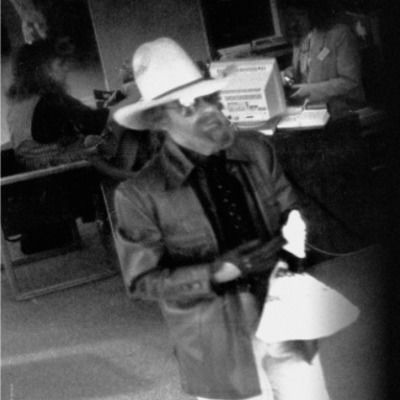
Peggy Jo Tallas, a soft-spoken bachelorette, spent much of her adult life doing two things: taking care of her ailing mother and robbing bank after bank dressed as a pudgy, bearded cowboy.
A selection from our guide to bank heists for Slate.
Having fallen on hard times, a former football star and the pride of his small town decides to rob the local bank. His weapons of choice: Craigslist, bear mace, and an inner tube.
A selection from our guide to bank heists for Slate.
American demand for drugs gave birth to the cartel war that is paralyzing Mexico, but American guns purchased legally across the Southwest and smuggled over the border have made it staggeringly lethal.
On the motivations and techniques of a prolific book thief who “built a vast collection of rare works, most of which he will never read and no one will ever see.”
An attractive, young, pregnant woman disappears, her husband begins to act strangely, and one of the largest media circuses in history descends on the sleepy community of Modesto, CA.
In the 1970s, Kelbessa Negewo was a midlevel administrator in Ethiopia’s brutal Red Terror regime. In the 1990s, he was a bellhop in an Atlanta hotel. Then someone he had tortured back home recognized him.
A woman is killed. Her husband is accused. A famous/infamous medical examiner investigates.
What’s going on here isn’t just science. It’s something deeper, something stranger, something at the same time both terrifying and fascinating.
An annotated transcript:
MR. SEALE: [The marshals are carrying him through the door to the lockup.] I still want an immediate trial. You can’t call it a mistrial. I’m put in jail for four years for nothing? I want my coat.
Joyce Hatto, unknown to even the most ardent classical music collectors until late in her life, released a string of incredible performances of great works, distributed by her husband’s mail-order CD business. But how was it possible for her to record difficult works at such a dizzying rate? And if wasn’t her playing, who was it?
Inside Florence, Colorado’s ADX prison, possibly one of the most isolated places on Earth, where Tommy Silverstein has spent the last 27 years without human contact.
On the ground in Nigeria with the nation’s notorious scam artists, who share a remarkable number of qualities with America’s top entrepreneurs.
On the economics of the booming Somali pirate business, which is up 177 percent over last year.
John Demjanjuk has had a huge year. Twenty years after being sentenced to die, he finally climbed to the pinnacle of the Wiesenthal Center's list of Nazi war criminals this April, shortly after the Germans filed the arrest warrant that allowed the OSI to put him on the jet to Munich.
While much of the Levin report describes past history, the Goldman section describes an ongoing? crime — a powerful, well-connected firm, with the ear of the president and the Treasury, that appears to have conquered the entire regulatory structure and stands now on the precipice of officially getting away with one of the biggest financial crimes in history.
The story of a high school quarterback’s descent into madness, and its tragic end.
A murder case in Los Angeles, cold since the late ’80s, heats up thanks to breakthroughs in forensic science and leads detectives to “one of the unlikeliest murder suspects in the city’s history.”
The questionable close relationship between a mobster/informant and an F.B.I. agent during a bloody Colombo crime family battle.
When he was 16, Mark Clements talked his way into four life sentences. Twenty-eight years later, he talked his way out.
Odessa High School students know her as “Betty,” a ghost that haunts the auditorium at night. But few know much about the real Betty, whose 1961 murder was “the most sensational crime in West Texas in its day.”
The anatomy of a bungled, massively expensive undercover sting conducted by the Seattle Police Department.
The story of the 1969 murder spree by Charles Manson and “Family” as told by those close to the case.
Bernard Peters and his son, Scott, robbed and shot a Salvation Army worker in 1996. Since then, they’ve been sharing a cell at Elmira Correctional Facility.
A profile of Larry Garrison, the man who “gets paid to bring tabloid stories to TV news programs.”
All told, the military acknowledged this summer, 14 soldiers from the base have been charged or convicted in at least 11 slayings since 2005 — the largest killing spree involving soldiers at a single U.S. military installation in modern history.
From a Tokyo smash and grab to driving a car through the window of a Dubai jewelry shop, how a ragtag band of Balkan thieves set a new bar for audacious heists.
For 18 months, Coatesville, Penn., was besieged with an improbable number of arsons. But who started the fires – and why?
An investigation into rising crime rates in small American cities. Is a lauded antipoverty program to blame?
How crooked officials pulled off a massive scam, spent millions on Dubai real estate, and killed the author’s law partner when he tried to expose them.
Early last year, 10 churches were torched in East Texas. The culprits? Two Baptist teens having a crisis of faith.
A profile of CeaseFire, a group of “violence interrupters” attempting to prevent street shootings by treating them like an infectious disease.
Twenty-five years ago, a guru from India showed up in rural Oregon with 2,000 followers. Here’s what happened next: they legally turned their multi-million dollar ranch into an incorporated city, imported homeless people to swing local votes, poisoned hundreds and attempted to assassinate the state’s U.S. attorney.
Despite no hurricanes in five years, Florida insurers are demanding yet more money from homeowners. At the same time, the capital that insurers have on hand to pay claims has shrunk. One reporter spent a year trying to figure out why.
On a particularly bloody April weekend in 2008 when 40 people were shot, seven fatally. Not one has faced charges.
In 1960, beer heir Adolph Coors III was kidnapped and murdered. A look back at the crime and the man who committed it.
A student fires three shots during a sixth period social studies class. “Then nothing happened, and that’s a problem.”
How skateboard legend Mark “Gator” Anthony was born again, first as a street preacher, and then as a rapist and murderer.
A young Brooklyn man attempts a bank robbery to finance his lover’s sex change surgery; the story that inspired Sidney Lumet’s Dog Day Afternoon.
How a 22-year-old with five warrants for her arrest in Utah conned her way through Brooklyn armed with nothing more than a dirty mouth and a penchant for faking pregnancy and/or cancer.
The strange life of Boston Corbett, the soldier who killed John Wilkes Booth in 1865.
The story of dog-scent lineup innovator Keith Pikett and the not-so-scientific science behind forensics.
In 1991, Frank Sterling confessed to a crime he didn’t commit. His story highlights a common – and controversial – method of police interrogation.
The barbaric brutalization of Abner Louima and the tragic fate of a handful of flawed Brooklyn cops.
On “the Incidents”, three shootings in a single month in a 1,300 person hamlet tucked inside the 12-year-old Nunavut territory. (The complete 4-part series.)
Who would poison the vines of La Romanée-Conti, the tiny, centuries-old vineyard that produces what most agree is Burgundy’s finest, rarest, and most expensive wine?
Sheikh Amer Hassan’s parties were notoriously debauched, evidence of a growing permissiveness in Karachi high society. His murder by a pair of young brothers surprised few.
Last summer, when she thought nobody was looking, Mary Bale put a cat in the trash. The act was caught on video, and Bale was quickly tried and convicted online. The aftermath of a viral crime.
Rodrigo Rosenberg, a highly respected corporate attorney in Guatemala, began, in the spring of 2009, to prophesy his own murder. The unraveling of a political conspiracy.
Schaeffer Cox, who is accused of plotting to kill State Troopers and a federal judge, shifted rapidly from a Ron Paul campaign worker and Tea Party activist to a hardcore militia leader. His conspiracy revealed, mainstream Alaskan politicians are scrambling to distance themselves from their ties to Cox.
The story of Dean Corll and his accomplices, who killed over 20 teenage boys in the Heights neighborhood of Houston in the early 1970s, and the families searching for their missing sons.
In the 1880’s, a shabbily dressed man popped up in numerous America cities, calling upon local scientists, showing letters of introduction claiming he was a noted geologist or paleontologist, discussing both fields at a staggeringly accomplished level, and then making off with valuable books or cash loans.
Intended for cremation, 244 bodies are instead harvested for organs and tissue. The story of the families of the dead, the men who profited off the scheme, and the unwitting recipients of black market body parts.
One of the most valuable cars in the world crashes going 200 mph on the Pacific Coast Highway. Its owner claims to be an anti-terrorism officer. In fact, he’s a former executive at a failed software company—and a career criminal. The unraveling of an epic con.
On reservations, where policing hardly exists, bruiser-for-hire vigilantes are often the first choice for justice.
Working with nothing but an Internet connection, a couple of cellphones and a steady supply of weed, the two friends — one with a few college credits, the other a high school dropout — had beaten out Fortune 500 giants like General Dynamics to score the huge arms contract.
One part rapist, one part con-man; the story of the seemingly unconvictable Hy Doan.
The decades-long saga of Miami’s Take Once Cocktail Lounge, where you might get shot, your money will definitely be laundered, and everybody will know your name.
How a tiny inner core made the Aryan Brotherhood the most feared prison gang in America; coded messages, murders on the outside, and the knowledge that those who are already in for life cannot be punished further.
How the culture of academia helped Amy Bishop, a University of Alabama scientist who murdered colleagues during a faculty meeting, fall apart.
First-person accounts from the 2004 siege of a Russian school in Beslan by Chechen terrorists.
“One evening, my home phone rang. ‘You have a collect call from Bernard Madoff, an inmate at a federal prison,’ a recording announced. And there he was.”
The Gabrielle Giffords shooting, from the vantage point of three central figures: Daniel Hernandez helped save the congresswoman’s life; Patricia Maisch stopped the shooter from reloading; Bill Badger tackled him.
At the very bottom of the porn totem pole is the “mope”, a barely paid assistant who hangs around and occasionally performs. Stephen Hill was mope-ing for Ultima Studios in exchange for pocket money and a place to crash. Learning he was going to be evicted, he sharpened a prop machete.
She was last seen leaving a pickup bar, her body was found the next morning in the dirt beside a football field. He was ten. Thirty-six years later, the author investigates his mother’s murder.
The bizarre tale–and unlikely turnaround–of an NHL player who tried to have his youth coach murdered.
“The entire system set up to monitor and regulate Wall Street is fucked up. Just ask the people who tried to do the right thing.”
In 2006, seven men stole £53m. Six were caught, but more than half the money remains at large. On modern money laundering best practices.
A comprehensive history of the case against the Menendez brothers, built primarily on secret audio recording made by their self-promoting therapist.
The father: an Oscar-winning songwriter. The son, a college dropout and partier around downtown New York. Their alleged crimes; serial casting-couch rape (the senior) and a drowning murder in a Soho House bathtub (the junior).
How a Nigerian-American conned upwards of $40 million from banks during the housing boom using publicly available information from the internet, persuasive storytelling, and prepaid cellphones, and then ditched his FBI tail in a casino.
The story of a small town just outside Pittsburgh that has suffered through a half-century of economic decline, racial tension, and endless crime. Despite that trajectory, or perhaps because of it, Aliquippa has also produced an astounding number of NFL players.
The juvenile ward on Rikers Island is a world of constant violence fueled by gangs and, allegedly, encouraged and overseen by the guards.
In the aftermath of a mysterious murder, exploring a part of the story that has received little attention: the young man who lost his life.
Reporting from Kuwait on the week of its liberation, a brutal account of the atrocities committed during seven months of Iraqi occupation.
A trip to Râmnicu Vâlcea, a town of 120,000 where the primary (and lucrative) industry is Internet scams.
Paul Wayment made a profound mistake, left his 2-year-old son alone in his truck as he tracked deer in the wilderness. The boy was gone when he returned. The story of a collective struggle to find a just punishment.
Searching for (and easily finding) Mark Augustus Landis, the man behind the “longest, strangest forgery spree the American art world has known.”
A famed attorney begins a transformation away from being a man; and dies after a companion shoves her under an oncoming train.
How a young state rep from Missouri, seemingly guaranteed political greatness, ended up behind bars.
How the relationship between favela-based drug gangs and elite police units tasked with fighting them came to define Rio de Janeiro.
On the utter brutality of life in the tent cities, one year after the earthquake.
On the last day of their junior year at Harvard, one roommate kills the other, then hangs herself. The press descends. A year later, a reporter searches for the real story.
The writer and his girlfriend move to the Dominican Republic, joining the rapidly expanding community of expats who claim to have found paradise. They promptly get robbed at gunpoint. To cope, he investigates the country.
A ragtag band of pirate-Jihadists grab Americans from a diving resort in the Phillipines and lead them on an odyssey through the jungles of an archipelago with the competing interests of the Phillipines’ Navy and Army, the U.S. Military, and the C.I.A. thwarting their rescue.
Colombian traffickers have a new smuggling method of choice: specially designed submarines capable of carrying 10 tons of cocaine and covering 2,000 miles without refueling.
Inside Office 39, a state-run counterfeiting operation designed to keep Kim Jong-il flush.
In 2003, a man robbed a bank with a bomb around his neck. It exploded shortly thereafter, taking his life and leaving authorities to piece together who had put it there.
The Wikileaks-released documents regarding the polonium-poisoning assassination of Alexander V. Litvinenko speak to the potential involvement of both British and Russian security agencies and hint at the disappearance of a plane that bore evidence of the transport of polonium.
He called himself “TheNoseDoctor” and performed sinus surgeries, many of them unnecessary, at a maniacal clip. When the whole thing fell apart, he left behind his yacht and family, and disappeared into the Alps.
A young girl is reported missing. The detective assigned to her case quickly discovers she’s been gone for years. The story of his search for justice.
“My father didn’t believe in things that were a reminder of the past because he had never had things in the past, and, more important, he had never had a past—not a past that mattered, that should be passed on to me, his son.”
He was an itinerant preacher who claimed god have revealed him to be the one true prophet. He kidnapped Elizabeth Smart and lived with her in a makeshift camp for years. She was hard to find; not because he was sly, but because Utah is full of prophets with multiple young wives.
On the visionary architecture and disturbing goals of Yearning for Zion, the utopian experiment undertaken in rural Texas by the Fundamentalist Church of Jesus Christ of Latter-Day Saints.
The criminologist/lawyer who created Perry Mason unravels the Boston Strangler case, in which eleven women were murdered by an assailant they willingly let into their homes.
Steven Seagal spent a few years in Japan and returned to open a dojo in L.A.. Jules Nasso was the wiseguy producer behind all of Seagal’s hits. When it all fell apart, Seagal reputedly offered money for a contract killing, and Nasso may have been caught on tape arranging to extort Seagal through the Gambino Family.
A Stockholm prostitute is found hacked apart in a dumpster, her head is never found. Two accomplished doctors, confirmed creeps, are arrested. Uncertainty endures.
The cop says she nabbed an online sexual predator. He says he was just willing to chat whatever it took to get laid in real life. Their story, from both perspectives.
A profile of Rafael Pérez, an infamously corrupt LAPD officer and the inspiration behind the Vic Mackey character on The Shield.
How the bulk of the cocaine entering the U.S. ends up cut with a cattle dewormer.
How did a Kentucky entrepreneur, a Louisiana politician, and the vice president of Nigeria end up in one of the biggest scandals to hit America’s black elite in decades?
Scenes from the new Tijuana: two teenage brothers from the country club set descend into the cartel underworld, bored federales guard the acid pit where hundreds of bodies were erased, families picnic through a chain-link border fence.
In Detroit, the aftermath of a reality-TV SWAT raid that killed a sleeping seven-year-old.
Dandenis Muñoz Mosquera, a.k.a. “La Quica,” was one of Pablo Escobar’s top killers. Now he’s in a maximum security prison in Colorado. Here’s the thing: for all his crimes, La Quica may not have committed the one that put him away.
The prosecutor in the case of hacker turned F.B.I. informant (but still hacker) Albert Gonzales and his organization Shadowcrew : “The sheer extent of the human victimization caused by Gonzalez and his organization is unparalleled.”
For the last two decades, the varied personalities behind the Vidocq Society—retired cops, sketch artists, FBI agents—have gathered in Philadelphia to tackled cold-case homicides over lunch. They claim to have solved more than half.
In the feral communities of Russia’s Far East, tiger poaching is among the few lucrative pursuits. This is the story of a tiger who fought back.
A single-page version of Shalhoup’s reporting on the Black Mafia Family, one of the largest cocaine empires in American history.
In 1997, a logger-turned-activist named Grant Hadwin cut down a very special tree. Then he bought a kayak and disappeared.
How an aging trio of Irish ‘travelers’ criss-crossed America in a mobile home conning Home Depot out of over $1 million.
The cops thought they had captured a fugitive. They had not. Elias Fishburne was a hairdresser from Maryland and was going to jail.
A charming assistant funeral home director in a small Texas town murders a wealthy widow, keeps her in a freezer for months, finally gets caught, and still has the town’s sympathy as his case goes to trial.
An 18-month investigation proves reveals how easy it is to get away with murder in Baltimore.
Far outside of Juarez, villagers in rural areas are trapped without supplies or protection as rival cartels attempt to starve each other out of ranch hideouts. A heavily armed convoy attempts to deliver pensions behind siege lines.
A profile of Edna Buchanan, a Pulitzer Prize-winning crime reporter for the Miami Herald during its heyday.
Li Dao, a young Minnesota nurse, appeared in suicide chat rooms, contacted the most desperate, and made pacts to die with them via webcam. After some in the forum caught on, Dao disappeared; or rather, Dao had never existed at all. She was a middle-aged man. And he may have encouraged and witnessed dozens of live suicides.
Alan Young has been running the same scam for years; posing as a member of the Temptations and smooth-talking his way into luxury hotel rooms and prostitutes. Despite his clear charm, he admits he has “no skills other than being a con man.”
A writer starts a vacation in San Juan del Sur, a seaside village of 20,000 in Nicaragua, just in time to see an expat charged with the murder of a local.
The “Shaggy Defense,” the “Little Man Defense,” and more—live from R. Kelly’s 2008 child pornography trial.
There was no doubt: Jeremy Gross had brutally murdered a convenience store clerk. All that was left to decide was his punishment. Death or life without parole? The story of a capital murder trial, as seen from the jury box.
The narcocorrido-immortalized Pacific coast traditionalists, the kidnap-crazed Gulf coast Zetas, and massacres that no longer seem tied to a discernible purpose; inside the ruins of the Mexican-American border.
Full six-part series on the rise and fall of Viktor Bout, the most notorious arms dealer of the modern era.
If your ex-spouse takes your child and hightails it abroad, the legal system often isn’t on your side. So what can you do? One option: hire a former Army ranger named Gus Zamora to take back your kid.
She moved to Cape Cod to escape the glitzy Manhattan world she born into. The only witness to her murder was her 2 1/2-year-old daughter. Everyone she knew, it seemed, was a suspect.
‘Your Black Muslim Bakery’ commanded vast influence in Oakland, offering jobs and self-empowerment to ex-cons , until this story revealed a history of incest-rapes and kidnappings. Another journalist investigating the story was later murdered.
In an elaborate FBI sting to expose corruption, four agents pose as futures traders in Chicago. The plan works–if you don’t count the hundreds of thousands in taxpayer dollars the agents lost in the process.
How the illegitimate son of Liberian ex-President (and accused cannibal) Charles Taylor went from being a small time Florida hoodlum to one of Africa’s most notorious killers.
Matthew Weigman was blind, overweight, 14 and alone. He could also do anything he wanted with a phone. Sometimes that meant calling Lindsay Lohan. Other times it meant sending a SWAT team to an enemy’s door.
In Torreón, north of Mexico City, cartel gunmen are freed from a prison, commit a massacre at a wedding that includes the band, and then return to custody.
Raffaello Follieri was young, handsome. He was Italian. He was dating Anne Hathaway, hobnobbing with Bill Clinton, and using contacts at the Vatican to launch a lucrative business in the States. Then he was in jail.
Russian serial killer Alexander Pichushkin was so prolific that even he doesn’t know how many he killed.
A Wikipedia-style dissection of the case that inspired The Fugitive. The accused, Dr. Sam Sheppard, claimed to have struggled with an intruder before being knocked out and dumped on a beach, his wife’s left corpse in their house.
In 1992, Anthony Graves was arrested for brutally murdering a family in the middle of night. He had no motive. There was no physical evidence. The only witness recanted. And yet Graves remains behind bars.
The epic life story of Rick Rescorla: immigrant, war hero, husband, and head of security at Morgan Stanley/Dean Witter, occupant of 22 floors in the South Tower.
A profile of Viktor Bout, believed to be the largest arms trafficker in the world. A Russian who bought his first cargo planes at age 25, Bout has been in the news recently after being arrested in Thailand.
Albert Talton started with some recycled newsprint and a cheap printer from Staples. By the end, he’d put more than $7 million into circulation.
The rise and fall of the Seven-Seven - stationed in the war zone of 1980’s Crown Heights, Brooklyn - and how an idealistic young recruit became part of cash-snatching, drug-reselling, renegade clique of cops
A classified Guantánamo Bay interrogation log reveals the techniques used on Mohammed al-Qahtani, the so-called 20th 9/11 hijacker.
A Holocaust detective story: could a lampshade pulled from the ruins of Katrina really be Buchenwald artifact made of human remains?
Mr. Lindall was the only high school teacher who understood him. Then Mr. Lindall went to jail, and it was his turn to try to understand.
Tabloid newspapers were caught hacking into the voicemails of Prince William and Prince Harry. One reporter was arrested - but an investigation shows the eavesdropping was far more elaborate and widespread.
The night the doctor behind the Scarsdale Diet was shot by his mistress, the impeccable headmistress of the elite all-girls boarding school Madeira.
They robbed 27 banks in 15 years, one of the most prolific streaks in American history. Then they got caught.
A young reporter heads to Colombia to report on the conflict between FARC and the paramilitaries. He meets a girl on the bus. After they begin a relationship, she reveals that that she is part of a death squad.
A 13 year old gets a webcam and starts doing dirty shows online, ending up running a smut business in Mexico with his deadbeat father.
A blow by blow account of the seizure of a French cruise ship by Somali pirates.
For sixty years, the weekly Evening Whirl attacked the drug lords, whoring preachers, and hypocritical bourgeoisie of St. Louis’ black community, sometimes in rhyming Iambic couplets.
A Barclays analyst leaves for a routine laser treatment and is never heard from again. Ten months later, authorities find her body under a concrete slab at the house of her doctor, who was in fact not a doctor at all.
A firsthand account of prison’s dysfunctional relationships. The writer wasn’t able to gain access through official channels, so he completed guard training and took a job as a Sing Sing corrections officer.
After two New Jersey homes were robbed of their silver—only their silver—in the same night, the local police got a call from a detective in Greenwich, Connecticut. “I know the guy who’s doing your burglaries.”
An American, born into privilege, became a bootleg DVD kingpin in Shanghai and then, in an unprecedented development, landed in Chinese prison.
For many immigrants coming through Arizona, it’s not enough to pay a coyote to shepherd you across the border. You also need to pay the ransom demanded by your kidnapper after you arrive.
Two sisters, heirs to the Bronfman fortune, may have blown $100 million supporting the cult-like group NXIVM.
Is letting convicts roam free under electronic surveillance better than putting them behind bars?
Was the 1911 theft of the Mona Lisa from the Louvre actually a smokescreen to obscure an even more audacious art crime?
A reporter heads to Nauru, a tiny island nation in the Pacific, to track down the hub of a worldwide money-laundering operation—a shack filled with computers, air-conditioners, and little else.
Brian Hickey, a journalist who was induced into a coma after being left for dead following a hit and run accident, reports the story of his recovery.
How phone phreakers, many of them blind, opened up Ma Bell to unlimited free international calling using a technical manual and a toy organ.
Three Dallas prostitutes were found dead in as many months. Charles Albright might be the last person you’d suspect–unless you knew about his unique, lifelong obsession.
Jacob Riis, writing in 1899, on how a childhood spent in New York City’s tenements led a 15-year-old boy to be convicted of murder.
How PCC, once an inmate soccer team and now Brazil’s most notorious prison gang, coordinated seven days of riots throughout São Paulo using mobile phones.
Inside the competitive, lucrative, swashbuckling world of DWI attorneys in Houston.
A Hollywood screenwriter finds out his identity’s been stolen when a hooker calls–from his private office–demanding to be paid for the sex they didn’t just have.
Her suicide made headlines around the world after classmates were indicted on felony charges related to bullying. The real story isn’t that simple.
In January 1966–the same month In Cold Blood was first published–Truman Capote sat down with George Plimpton to discuss the new art form he liked to call “creative journalism.”
The 19-year-old “Barefoot Bandit”—on the run since 2008 and famous for stealing Cessnas without flying lessons, among other feats—was captured this week in the Bahamas. Here, the view of Colt from his hometown.
Admiring evangelicals are helping David Berkowitz, the imprisoned serial killer who murdered six people in NYC during the summer of 1977, with an unusual image makeover.
In the early ’80s, underground chemists cooked up synthetic versions of heroin that took over the market in California—and left young users with symptoms typically associated with Parkinson’s.
Nitrous balloon vendors clash in the parking lots of jam band festival across the Northeast.
After his wife disappears, Hans Reiser’s defense contacts a Wired writer who they believe can help explain the world of groundbreaking code, video games, and sci-fi that defines Reiser’s existence.
When New York built a prison designed to house two men in a single cell, it launched a new experiment in crime control. A look at life inside this prison and in the tiny town surrounding it.
Ty Cobb, who would go on to be the greatest baseball player of his time, was a 17-year-old minor league prospect when his mother shot and killed his father at home in Georgia.
It’s legal to buy poppy seeds in America and it’s legal to plant them—unless you’re familiar with the simple process of turning them into opium, that is. Then having poppies in your garden is a felony.
How an L.A. high school dropout became an enforcer for Mexican cartels and ended up on the F.B.I. Most Wanted List.
An unidentified body found near the beach in Australia in 1948. An unclaimed suitcase. A coded note.
When Clark Rockefeller snatched his daughter during a custody dispute, what the D.A. called “the longest con I’ve seen in my professional career” came unraveled, and the trail led to bones buried in a California backyard.
The lonesome death of Arnold Rothstein, notorious gambler, inspiration for a the character Meyer Wolfsheim in The Great Gatsby, alleged fixer of the 1916 World Series, opiate importation pioneer, mobster and Jew.
It is agreed that the 1977 political murder of a couple in Johannesburg was a political killing that covered up mysterious Swiss Bank deposits. Various reports implicate Cuban Nationalists, Italian Fascists and the CIA.
What’s Madoff like as a prisoner? According to his fellow inmates, he’s cheap (“You couldn’t get an ice-cream cone off him”), he’s unrepentant (“Fuck my victims”), and he’s eager to dole out financial advice.
How $100 million in diamonds, gold and jewelry disappeared from Antwerp Diamond Center’s supersecure vault.
Lenny makes $5,000 a week selling coke. It was easy to get into the business after finishing prep school. Getting out and going legit after his final score is proving much more difficult.
A teenage Florida hacker crew, millions of credit cards numbers stolen by driving by big box stores and entering their networks, $1.1 million in cash buried in a backyard, an FBI snitch, and how it all fell apart.
Lou Pearlman, the guy responsible for the Backstreet Boys and ‘NSync, bilked his investors of $300 million and fled the country. But the boys say he was interested in more than just money.
He was an 18 year old Marine bound for Iraq. She was a high school senior in West Virginia. They grew intimate over IM. His dad also started contacting her. No one was who they claimed to be and it led to a murder.
It took a desperate screenwriter to find Max Mermelstein, Miami’s former coke overlord, after twenty-five years in hiding.
Step 1: awkward high school senior passes himself off as a flirtatious female student online. Step 2: he cons his male classmates into e-mailing him sexually explicit images of themselves. Step 3: extortion.
The Conficker ‘worm’ has replicated itself across tens of millions of computers. Only a few hundred people have the knowledge to recreate how, and no one (except its anonymous maker) fully understands why.
How two brothers, born of the same mother but adopted by different families, reunited and used a stolen $50k to fund a ride that started in New Jersey and ended with bullet-ridden cabins in the wilds of Alaska.
In 2005, the prisoner who had set the U.S. penal system record for years in solitary confinement was moved to what’s called “the Alcatraz of the Rockies”—a jail in Colorado built just for him.
Pitcairn Island is impossibly remote, populated by descendants of a ship of British mutineers. Revelations that child molestation and rape had been a way of life for generations exposed them to the outside world.
In 2008, a Brooklyn cop grew gravely concerned about how the public was being served. So he began carrying a digital sound recorder, secretly recording his colleagues and superiors.
Bill Conradt, a well-known prosecutor, never showed up at the house in Murphy, Texas, where police and a crew from NBC’s To Catch a Predator were waiting. So they, along with a SWAT team, went to Conradt.
The second installment of the Gaile Owens story. A former churchgoing mother of two from suburban Memphis, Owens is the first woman to be given the death penalty in Tennessee in nearly 200 years.
A utopian German settlement in Chile had already turned darkly cultish by the time it became a secret torture site for enemies of the Pinochet regime.
Las Vegas casinos operating in Macau rely on “junkets” to bring in the gambling elite, but the money and murder for hire trails lead straight to the Triads.
Gaile Owens was a churchgoing mother of two boys in suburban Memphis. Now she’s the first woman sentenced to die in Tennessee in nearly 200 years. The jury never heard her whole story; this is it.
The defining, minute-by-minute account of the 2008 attacks in Mumbai.
When the Feds sought the death penalty for four African-American drug dealers in Baltimore, the accused found a defense in the unlikeliest of places: the legal theories of white supremacists.
Working from a tiny shop in Chinatown, Sister Ping helped thousands of Chinese immigrate illegally by boat. By the time one of her ships ran aground, the F.B.I estimated her total profits at $40 million.
Helg Sgarbi had perfected the art of seducing, swindling, and blackmailing ultra-rich women across Europe. Fleecing a billionaire BMW heiress should have been the crowning achievement of his career.
In the wake of a brazen but mysterious Philadelphia gunfight, Marvin Harrison, the man who holds the NFL record for receptions in a season, may find himself with a permanent record of a different sort.
A rape case against a Deputy D.A. brought by a co-worker opens a window into a shockingly kinky and dysfunctional District Attorney’s office, brimming with conflict of interest.
In nine hours, Guinea-Bissau’s President and military leader were assassinated in separate incidents. Their dealings had turned the country into the runway of choice for drug smugglers and Hezbollah.
When Christian Longo, who brutally murdered his family, was on the lam in Mexico he posed as a NYT reporter named Michael Finkel. From Death Row, Longo asked the real Finkel to attend his execution.
The story of how federal authorities blew the biggest anti-terror investigation of the past decade—the post-9/11 anthrax attacks—and nearly destroyed an innocent man.
The Spanish police believed he was a missing American teen. So, seemingly, did the Texas family who had lost him three years prior. But he was an adult Frenchman. And he had done it before.
Forgetting a child in the backseat of a car is a horrifying mistake. But is it a crime? (A newly minted Pulitzer Prize winner.)
Gerald Blanchard, the world’s most ingenious thief, made his first swipe at age six. And he didn’t stop, robbing banks and stealing jewels around the world until a pair of obsessed Winnipeg cops took his case.
Thomas Sweatt torched D.C. for decades and was finally jailed for killing one person. During a year-long correspondence from prison with a reporter, he confessed there were more.
Matthew Roberts was a fledgling musician in L.A., DJing at a strip club and prone to nightmares. But when he learned Charles Manson might be his biological father, his whole life suddenly made sense.
For Gangaram Mahes, Rikers Island was the only chance for three squares and a “decent life.” So Mahes committed the same crime 31 straight times: refusing to pay the check at New York City restaurants.
Jeff Mailhot, convicted serial killer, has joined several infamous criminals in a second career from behind bars: paid artist. His first piece? An outline of his left hand, available for $34.99.
Katrina’s floodwaters had knocked out the power. Evacuation of the sickest patients seemed impossible. So the doctors at Memorial did what they thought was right, even if they knew it was a crime.

The secret history of the Wildensteins, the art world’s richest and most powerful family, whose legendary vaults likely include counterfeits and works stolen by the Nazis.