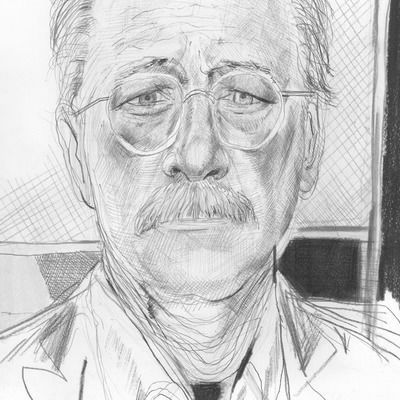
The Storyteller
On the writer W.G. Sebald.
On the writer W.G. Sebald.
A viral short story and the real person it mysteriously drew on.
When a young author started her novel years ago, she saw it as a romance. She sees it differently now.
Dan Mallory, who writes under the name A. J. Finn, went to No. 1 with his debut thriller, The Woman in the Window. His life contains even stranger twists.
A major black novelist made a remarkable début. How did he disappear?
The relationship between creative writing programs and modern fiction.
“It’s odd, the older I get, the more I remember.”
An interview with the late writer.
21,000 words on the watchers and watched.
An essay on gynobibliophobia and the critical reception of women writers.
"For example, I remember reading Hemingway and loving his work so much—but then at some point, realizing that my then-current life (or parts of it) would not be representable via his prose style. Living in Amarillo, Texas, working as a groundsman at an apartment complex, with strippers for pals around the complex, goofball drunks recently laid off from the nuclear plant accosting me at night when I played in our comical country band, a certain quality of West Texas lunatic-speak I was hearing, full of way off-base dreams and aspirations—I just couldn’t hear that American in Hem-speak. And that kind of moment is gold for a young writer: the door starts to open, just a crack."
On writing what you loathe. Leslie McFarlane, ghostwriter of the early Hardy Boys novels, was so ashamed of the work he couldn’t even bring himself to name the books in his diary. “June 9, 1933: Tried to get at the juvenile again today but the ghastly job appalls me.”
“Fiction writers are good people, usually. There’s a lot of pretenders, but I haven’t met a lot of sons of bitches.”
What the great romantic novels of history can tell us about “seduction theory” and the cult of the pickup artist.
A interview with David Mitchell, author of the recent The Thousand Autumns of Jacob de Zoet and Cloud Atlas, on stretching a fictional universe across multiple novels and centuries of real history.
The boom in dystopian fiction aimed at young adults.
An email dialogue between David Gates and Jonathan Lethem on writing fiction in the age of online experiences.

