How business incentives impact local economies.
Investigative Reporting
Welcome to Plasenzuela, whose 500 inhabitants enjoyed no-show jobs, spent millions on phantom projects and defrauded Social Security.
How and why did 200 pages of the Aleppo Codex, “the oldest, most complete, most accurate text of the Hebrew Bible,” go missing?
The rise and fall of the “most far-flung, most organized, and most brazen example of homosexual extortion in the nation’s history.”
Last year, 1 million gallons of diluted bitumen flooded the town of Marshall, Mich. An investigation into “the biggest oil spill you’ve never heard of.”
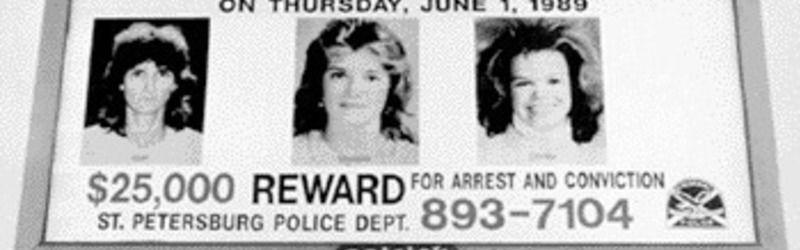
On June 4, 1989, the bodies of Jo, Michelle and Christe were found floating in Tampa Bay. This is the story of the murders, their aftermath, and the handful of people who kept faith amid the unthinkable.
A look at Apple stores, where jobs are high stress, with low pay and little opportunity for advancement.
In the remote wilderness along northern British Columbia’s Highway 16, at least 18 women have gone missing over the past four decades. Is it the work of a serial killer or multiple offenders?
John Dirr’s son Eli didn’t really have cancer. In fact, neither Eli nor John Dirr ever existed.
A decade-long Internet hoax unravels.
Uncovered letters reveal ties between the literary magazine and the CIA’s Congress for Cultural Freedom.
Between 2003 and 2011, there were 50 “invisible” fatalities at cell towers, “a death rate roughly 10 times that of construction.”
An investigation into McWane, Inc., “one of the most dangerous employers in America.”
New research on children’s behavior.
The idea that a young child could have psychopathic tendencies remains controversial among psychologists. Laurence Steinberg, a psychologist at Temple University, has argued that psychopathy, like other personality disorders, is almost impossible to diagnose accurately in children, or even in teenagers — both because their brains are still developing and because normal behavior at these ages can be misinterpreted as psychopathic.
Inside the color forecaster.
There are no analytics measuring success of color forecasting—how would one even accurately measure such a thing? To play it safe most companies rely on a range of color forecasts. Eiseman says Pantone’s effort, and perhaps color forecasting in general, suffers from two misconceptions. The first is that there is some kind of “evil cabal” that “schemes to get the colors out there.” The second is “let’s just throw a dart and wherever it lands is what’s going to be the hot color for next year.”
An uncertain future for the retailer.
"Sears was so powerful and so successful at one time that they could build the tallest building in the world that they did not need," says James Schrager, a professor of entrepreneurship and strategy at the University of Chicago's Booth School of Business. "The Sears Tower stands as a monument to how quickly fortunes can change in retailing, and as a very graphic example of what can go wrong if you don't 'watch the store' every minute of every day."
In 1979, a Pulitzer was given to “an unnamed photographer of United Press International” who documented a mass execution in Iran.
His name is Jahangir Razmi – and, nearly three decades later, he wants the credit.
Enbridge, Inc. spilled more than a million gallons of tar sands crude into the Kalamazoo River. Was John Bolenbaugh fired for refusing to cover this up?
An investigation of the county’s Tactical Narcotics Team and, in particular, a Christmas-themed sting dubbed “Santa’s Helper”:
A two-month investigation by New Times has found that Santa's Helper was a colossal waste of police resources. Of the 112 suspects arrested, 73 people were charged only with misdemeanor pot possession. The vast majority of the busted pot smokers were either released within 24 hours or avoided jail by promising to show up in court. Of the 73 alleged tokers, 68 of them — including Dante Level and his siblings — had no violent criminal record. If they were guilty of anything, it was smoking a joint on their own front porch.
A report from the KKK’s 2012 Faith and Freedom conference in Arkansas:
It's quite disconcerting in this modern age to be in a room full of white people who are all spouting the most vile racist slurs that one can imagine, openly, while everyone else laughs and applauds it. There is a Twilight Zone feeling to it, as if you'd stumbled into a secret clubhouse where white people can say those forbidden things—the Valhalla of dumb racist jokes.
At 2:11 p.m., as two ambulances waited with motors running, 10 horses burst from the starting gate at Ruidoso Downs Race Track 6,900 feet up in New Mexico’s Sacramento Mountains.
Nineteen seconds later, under a brilliant blue sky, a national champion jockey named Jacky Martin lay sprawled in the furrowed dirt just past the finish line, paralyzed, his neck broken in three places. On the ground next to him, his frightened horse, leg broken and chest heaving, was minutes away from being euthanized on the track. For finishing fourth on this early September day last year, Jacky Martin got about $60 and possibly a lifetime tethered to a respirator.
An investigation into Erin Brockovich and the lawsuits that made her famous.
After years of avoiding the uncomfortable truths about how his gadgets are made, a Mac fanboy travels to Foxconn to see for himself.
Update 3/16/12: This American Life retracted this story today after it was revealed to have "contained significant fabrications."Virginia authorities possess DNA evidence that may exonerate dozens of convicted men. Why won’t the state say who they are?
Interviews with modern travelling salesmen. The article inspired Kirn’s novel Up in the Air.
What makes this a truly military culture, besides its overwhelming maleness, its air of emotional deprivation and the lousy rations, is its obsession with rank and hierarchy. Like jungle gorillas, business travelers always know where they stand versus the rest of the group. In this parallel universe of upgrade vouchers and priority-boarding privileges, everyone has a number and a position, and who gets that open aisle seat in first class means even more on the road then who earns what.
On solitary confinement:
"Two or three hundred years from now people will look back on this lockdown mania like we look back on the burning of witches."
"I thought dying for your country was the worst thing that could happen to you, and I don't think it is. I think killing for your country can be a lot worse. Because that's the memory that haunts."
On February 25, 1969, Bob Kerrey led a raid into a Vietnamese peasant hamlet during which at least 13 unarmed women and children were killed.
Inside a restaurant lawsuit.
Michael Chow’s complaint, which sought $21 million in damages, alleged that the team behind Philippe, including chef Philippe Chau, restaurateur Stratis Morfogen (also behind the well-received Ciano) and several codefendants, appropriated the Satay recipe and 11 other Mr Chow standbys, the “modern” decor of Mr Chow’s restaurants and even the name Chow—thereby engaging in deceptive trade practices, swiping trade secrets and infringing on the Mr Chow trademark.
A Pulitzer Prize-winning investigation of group homes for the retarded in Washington, D.C.
“We’re trying really hard to make things better,” said one former Apple executive. “But most people would still be really disturbed if they saw where their iPhone comes from.”
Previously: ”Apple, America and a Squeezed Middle Class”
In 2008, a 38-year old Oklahoma nurse whom I'll call Kelly adopted an eight-year old girl, "Mary," from Ethiopia. It was the second adoption for Kelly, following one from Guatemala. She'd sought out a child from Ethiopia in the hopes of avoiding some of the ethical problems of adopting from Guatemala: widespread stories of birthmothers coerced to give up their babies and even payments and abductions at the hands of brokers procuring adoptees for unwitting U.S. parents. Now, even after using a reputable agency in Ethiopia, Kelly has come to believe that Mary never should have been placed for adoption.
How a Texas woman pushed for autopsy reform.
Clinical autopsies, once commonplace in American hospitals, have become an increasing rarity and are conducted in just 5 percent of hospital deaths. Grief-stricken families like the Carswells desperately want the answers that an autopsy can provide. But they often do not know their rights in dealing with either coroners or medical examiners, who investigate unnatural deaths, or health-care providers, who delve into natural ones.
An investigation into the events surrounding Dominique Strauss-Kahn’s May 2011 arrest for sexual assault.
A look at Andy Warhol’s enduring popularity and power in the art market.
Warhol’s art was not supposed to be a matter of emotion, introspection or spiritual quest; it was to be an image, pure and simple. “During the 1960s,” he wrote knowingly in 1975, “I think, people forgot what emotions were supposed to be. And I don’t think they’ve ever remembered.”
Ida Tarbell’s classic write-around of the world’s only billionaire:
He was a silent boy — a silent young man. With years the habit of silence became the habit of concealment. It was not long after the Standard Oil Company was founded, before it was said in Cleveland that its offices were the most difficult in the town to enter, Mr. Rockefeller the most difficult man to see. If a stranger got in to see any one he was anxious. "Who is that man?" he asked an associate nervously one day, calling him away when the latter was chatting with a stranger. "An old friend, Mr. Rockefeller." "What does he want here? Be careful. Don't let him find out anything." "But he is my friend, Mr. Rockefeller. He does not want to know anything. He has come to see me." "You never can tell. Be very careful, very careful." This caution gradually developed into a Chinese wall of seclusion. This suspicion extended, not only to all outsiders but most insiders. Nobody in the Standard Oil Company was allowed to know any more than was necessary for him to know to do his business. Men who have been officers in the Standard Oil Company say that they have been told, when asking for information about the condition of the business, "You'd better not know. If you know nothing you can tell nothing."
Abdul Raziq, a 33-year-old warlord, is an increasingly powerful player in Afghanistan and the recipient of substantial U.S. support. He may also be the perpetrator of a civilian massacre.
A look inside Amazon’s Pennsylvania distribution warehouse, where workers endure 110 degree temperatures and extreme productivity quotas.
After acting erratically and trying to skip out on a dinner bill, she was detained briefly in Malibu before being released in the middle of the night. Twenty-four years old and in an unfamiliar area, she had no car, no phone, and no wallet. A year later, her body was found in a nearby canyon. On the search for answers.
The notorious Somali paramilitary warlord who goes by the nom de guerre Indha Adde, or White Eyes, walks alongside trenches on the outskirts of Mogadishu’s Bakara Market once occupied by fighters from the Shabab, the Islamic militant group that has pledged allegiance to Al Qaeda. In one of the trenches, the foot of a corpse pokes out from a makeshift grave consisting of some sand dumped loosely over the body. One of Indha Adde’s militiamen says the body is that of a foreigner who fought alongside the Shabab. “We bury their dead, and we also capture them alive,” says Indha Adde in a low, raspy voice. “We take care of them if they are Somali, but if we capture a foreigner we execute them so that others will see we have no mercy.”
Beyond the fact that he lacked a pulse, little is known about the man found on an Adelaide beach in 1948.
As divided families argued over whether to stay or go, Jones saw part of his congregation slipping away. Al Simon, father of three, wanted to take his children back to America. "No! No! No!" screamed his wife. Someone whispered to her: "Don't worry, we're going to take care of everything." Indeed, as reporters learned later from survivors, Jones had a plan to plant one or more fake defectors among the departing group, in order to attack them. He told some of his people that the Congressman's plane "will fall out of the sky."
An 11-month investigation ends with a booster, now in prison for a Ponzi scheme, going public with details of how he spent millions on college athletes from 2002 to 2010.
[Shapiro] said his benefits to athletes included but were not limited to cash, prostitutes, entertainment in his multimillion-dollar homes and yacht, paid trips to high-end restaurants and nightclubs, jewelry, bounties for on-field play including bounties for injuring opposing players, travel and, on one occasion, an abortion.
It started with a candle in an abandoned warehouse. It ended with temperatures above 3,000 degrees and the men of the Worcester Fire Department in a fight for their lives.
Part one of W.T. Snead’s Victorian-era investigation into child prostitution.
First Hormel gutted the union. Then it sped up the line. And when the pig-brain machine made workers sick, they got canned.
An investigation by ProPublica, PBS Frontline and NPR has found that medical examiners and coroners have repeatedly mishandled cases of infant and child deaths, helping to put innocent people behind bars.
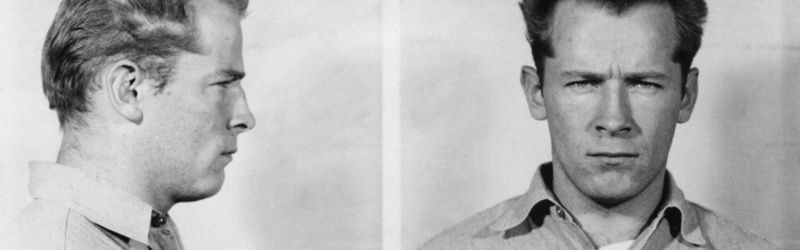
A four-part investigation of brothers William and James ‘Whitey’ Bulger. One was president of the Massachusetts Senate for 17 years. The other was on the lam for 16 before being captured Wednesday in Santa Monica.
A schizophrenic man kills his counselor at a group home in Massachusetts:
Many people wondered aloud whether the system had failed both the suspect and the victim. How had Ms. Moulton ended up alone in a home with a psychotic man who had a history of violence and was off his medication? How had Mr. Chappell been allowed to deteriorate without setting off alarms?
This new strain of Republican is not one Wisconsin, nor the United States, has ever seen...The new Republicans are corporate wrecking crews, given a sledgehammer, a piece of legislation and a command to "make it fit."
Despite no hurricanes in five years, Florida insurers are demanding yet more money from homeowners. At the same time, the capital that insurers have on hand to pay claims has shrunk. One reporter spent a year trying to figure out why.
A student fires three shots during a sixth period social studies class. “Then nothing happened, and that’s a problem.”
Rodrigo Rosenberg, a highly respected corporate attorney in Guatemala, began, in the spring of 2009, to prophesy his own murder. The unraveling of a political conspiracy.
On the mysterious relationship between a major New York State power broker and a Brooklyn family. “The Turanos are variously described by friends, neighbors and colleagues as the senator’s social acquaintances, lovers or surrogate relatives.”
What did $3M paid to a US consulting firm get Qaddafi? A glowing profile in The New Republic, written by a Harvard professor, who travelled to Tripoli to interview him. On the consulting company’s dime. Which he failed to disclose.
Henry Heimlich saved untold choking victimes when he invented his maneuver in 1974. Since then, he’s searched in vain for another miracle treatment—pushing ethical boundaries along the way. Now at the end of his career, Heimlich has hired an investigator to find an anonymous critic working full-time to destroy his legacy.
In 2001, a young Japanese woman walked into the North Dakota woods and froze to death. Had she come in search of the $1 million dollars buried nearby in the film Fargo?
With Washington State debating a bill that would force Christian pregnancy centers to be more forthright about their anti-abortion agenda, a pair of reporters hear firsthand what the centers are telling young women.
A look at the legislative lobbying efforts of Michael Bloomberg’s $7 billion-per-year company. While the mayor has no specific day-to-day role at Bloomberg LP, he maintains “the type of involvement that he believes is consistent with his being the majority shareholder.”
A year-long investigation of America’s coroners and medical examiners reveals a deeply flawed, deeply troubling system.
The bizarre tale of how the hiring of a reality TV contestant to greet high-end customers led to the firing of a successful CEO. Plus: a follow-up article.
A single-page version of Shalhoup’s reporting on the Black Mafia Family, one of the largest cocaine empires in American history.
Are we at war? The U.S. government’s evolving response to cyber security and its impact on privacy.
When it comes to representing pharmaceutical companies, a doctor’s medical record is far less important than his or her ability to sell.
An 18-month investigation proves reveals how easy it is to get away with murder in Baltimore.
‘Your Black Muslim Bakery’ commanded vast influence in Oakland, offering jobs and self-empowerment to ex-cons , until this story revealed a history of incest-rapes and kidnappings. Another journalist investigating the story was later murdered.
How the illegitimate son of Liberian ex-President (and accused cannibal) Charles Taylor went from being a small time Florida hoodlum to one of Africa’s most notorious killers.
For most people who participate in clinical trials, being a guinea pig is just a way to make a quick buck. For others, it’s a career.
A firsthand account of prison’s dysfunctional relationships. The writer wasn’t able to gain access through official channels, so he completed guard training and took a job as a Sing Sing corrections officer.
Race relations at the gigantic and soul-crushing Smithfield slaughterhouse, where annual turnover is 100 percent: 5,000 people are hired, 5,000 quit.
A utopian German settlement in Chile had already turned darkly cultish by the time it became a secret torture site for enemies of the Pinochet regime.
A recent episode of This American Life was put together by reporters from Pro Publica based on this original reporting about the the bubble-profiteering hedge fund Magnetar.