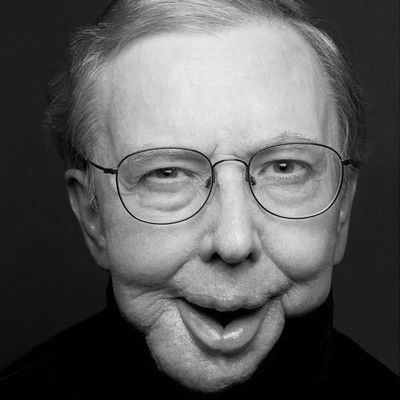
A profile of the late critic.
Newspapers & Magazines
The backstory of “The Duke in His Domain,” Truman Capote’s 1957 New Yorker profile of Marlon Brando.
“Has anybody in Westchester County ever called the New York Times his or her ‘friend’? I realize that the rest of America, in its post-Katrina fatigue, is pretty tired of hearing New Orleanians, the city’s acolytes and defenders, always carrying on about how it’s the most unique city in America, but, the fact is, it is. Get over it.
And so, too, is its newspaper.”
“Reg Smythe was the greatest British newspaper strip cartoonist of the 20th Century – and second only to Peanuts’ Charles Schulz on a global scale. So why don’t we treat him that way?”
How Cosmo, with 64 international editions and a readership that would make it the world’s 16th largest country, conquered the globe.
The author interviews her mother about life as a secretary at Playboy in 1960s New York City.
On the mid-sixties birth of America’s underground newspaper movement and the rise of The Realist, East Village Other, Berkeley Barb, and more.
Uncovered letters reveal ties between the literary magazine and the CIA’s Congress for Cultural Freedom.
As Playboy magazine moves to Los Angeles, the writer considers its place in the Midwest.
No other general interest magazine tried to reach readers in the wide swathe of land between New York and California. “It was a Midwestern magazine, designed for people there. If you wanted it to be hip, edgy, go toe-to-toe with GQ, you were making a mistake,” said Chris Napolitano, a former executive editor who began at Playboy in 1988.
A profile of the Mexican newsweekly, a “lone voice” in reporting on the narcos.
A profile of the eccentric Gene Weingarten, the only person to twice win the Pulitzer for feature writing.
Sixty-nine years after publication, Fortune revisits “Let Us Now Praise Famous Men” – a story it commissioned but did not run.
A profile of Rebekah Brooks, who started as a secretary at News of the World and became CEO of News International by 41, developing an incredibly close relationship with Rupert Murdoch along the way.
The dissolution of Brooklyn softcore skin-mag Jacques and the marriage of the couple that created it.
On Michael Lewis and the global financial crisis.
Previously: The Michael Lewis World Tour of Economic CollapseThe Starbucks-fueled saga of how Jim Romenesko, beloved journalism blogger, took an early retirement.
In 1972, James Wolcott arrived in New York armed with a letter of recommendation from Norman Mailer. He hoped to land a job at The Village Voice. Excerpted from his memoir, Lucking Out.
How lucky I was, arriving in New York just as everything was about to go to hell. I had no idea how fortunate I was at the time, eaten up as I was by my own present-tense concerns and taking for granted the lively decay, the intense dissonance, that seemed like normality.
The death of the journalist who exposed dark secrets about Islamic extremism in Pakistan’s military.
Extracted from the author’s memoir, Life Itself.
The British satirist Auberon Waugh once wrote a letter to the editor of the Daily Telegraph asking readers to supply information about his life between birth and the present, explaining that he was writing his memoirs and had no memories from those years. I find myself in the opposite position. I remember everything. All my life I've been visited by unexpected flashes of memory unrelated to anything taking place at the moment. These retrieved moments I consider and replace on the shelf.
The anatomy of a 1930 epidemic that wasn’t:
Was parrot fever really something to worry about? Reading the newspaper, it was hard to say. “not contagious in man,” the Times announced. “Highly contagious,” the Washington Post said. Who knew? Nobody had ever heard of it before. It lurked in American homes. It came from afar. It was invisible. It might kill you. It made a very good story. In the late hours of January 8th, editors at the Los Angeles Times decided to put it on the front page: “two women and man in Annapolis believed to have 'parrot fever.'"
SHRIVER: Regarding your Playboy exposé, I know you've discussed this a great deal, but I'd like to ask you this: You've said that you were glad you did it. What role do you think that exposé played in your early career and the notoriety you've achieved? Is there a similar exposé that someone could do today--something that would be as shocking? STEINEM: It took me a very long time to be glad. At first, it was such a gigantic mistake from a career point of view that I really regretted it. I'd just begun to be taken seriously as a freelance writer, but after the Playboy article, I mostly got requests to go underground in some other semi-sexual way. It was so bad that I returned an advance to turn the Playboy article into a paperback, even though I had to borrow the money. Even now, people ask why I was a Bunny, Right-Wingers still describe me only as a former Bunny, and you're still asking me about it-almost a half-century later. But feminism did make me realize that I was glad I did it--because I identified with all the women who ended up an underpaid waitress in too-high heels and a costume that was too tight to breathe in. Most were just trying to make a living and had no other way of doing it. I'd made up a background as a secretary, and the woman who interviewed me asked, "Honey, if you can type, why would you want to work here?" In the sense that we're all identified too much by our outsides instead of our insides and are mostly in underpaid service jobs, I realized we're all Bunnies--so yes, I'm glad I did it. If a writer wants to do a similar exposé now, there's no shortage of stories that need telling. For instance, go as a pregnant woman into so-called crisis pregnancy centers and record what you're told to scare or force you not to choose an abortion-including harassing you, calling your family or employer. Or pretend to be a woman with a criminal record and see how difficult it is to get a job. Or use a homeless center as an address and see what happens in your life. Or work at an ordinary service job in the pink-collar ghetto, as Barbara Ehrenreich did in Nickel and Dimed. But be warned that if you're a woman journalist and you choose an underground job that's related to sex or looks, you may find it hard to shake the very thing you were exposing.
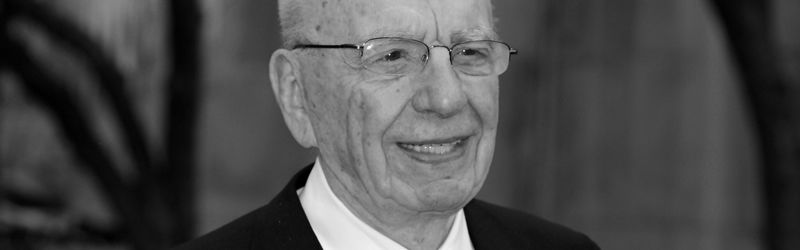
A profile of Rupert Murdoch from 1995, as he fought monopoly charges in the U.S. and U.K. and prepared to expand his empire into China.
Murdoch is a pirate; he will cunningly circumvent rules, and sometimes principles, to get his way, as his recent adventures in China demonstrate.
Tom Wolfe on the development of ”New Journalism,” an unconventional reporting style which he helped to pioneer.
I had the feeling, rightly or wrongly, that I was doing things no one had ever done before in journalism. I used to try to imagine the feeling readers must have had upon finding all this carrying on and cutting up in a Sunday supplement. I liked that idea. I had no sense of being a part of any normal journalistic or literary environment.
This past Memorial Day weekend, Steven T. Florio, the president and CEO of Conde Nast Publications, made a dramatic change at The New Yorker, the most illustrious of the 17 magazines he runs for billionaire S.I. "Si" Newhouse Jr. He fired his own brother.
A profile of the founding editor of Radar and current editor of The Fix, penned by a former employee.
“Radically brilliant. Absurdly ahead of its time. Ridiculously poorly planned.” An oral history of the National Sports Daily.
John Ross, rebel reporter, became the sort of devoted gringo scribe who would give up drugs and drinking in order to better write about the native revolutionaries; the sort of man who used dolls to preach armed revolution to high schoolers in the weeks after September 11th.
Confessions of a yellow journalist:
Let me say that I did very little faking, although there was no special prejudice against it, so long as the fake wasn't libelous.
An interview with McPhee on his writing process, how he got his start at The New Yorker, and why he never understood how New Journalism could be called a revolution. “Anytime I was called a New Journalist I winced a little with embarrassment.”
Henry Luce and Time vs. Harold Ross and The New Yorker. What was at stake in the epic magazine rivalry of the 20th century?
NYT journalist David Rohde’s alternately terrifying and absurd first person account of his kidnapping en route to an interview in Southern Afghanistan and the subsequent seven months he, along with his translator and driver, spent in captivity in the tribal areas of Pakistan.
A profile of Grace Coddington, creative director of Vogue and break-out star of The September Issue.
What did $3M paid to a US consulting firm get Qaddafi? A glowing profile in The New Republic, written by a Harvard professor, who travelled to Tripoli to interview him. On the consulting company’s dime. Which he failed to disclose.
The story of three months spent training reporters in Saudi Arabia, where the press is far from free. “I suspected that behind the closed gates of Saudi society there was a social revolution in the making. With some guidance, I thought, these journalists could help inspire change.”
The original new journalist on his start at the Times, his daily writing routine, and why he’s always taken notes on shirt boards.
On the cloak and dagger dealings between The New York Times and WikiLeaks. Adapted from Executive Editor Bill Keller’s forthcoming ebook, Open Secrets: WikiLeaks, War and American Diplomacy: Complete and Updated Coverage from The New York Times.
A primer on Peretz, longtime owner/editor of The New Republic, committed Zionist, and author of the line “Muslim life is cheap.”
George Lois never actually worked at Esquire, he simply designed the most iconic magazine covers of the 60s as a moonlighting gig while revolutionizing (and, generally pissing off) the advertising industry by day.
The backstory on Julian Assange’s relationship with the Guardian and the New York Times.
“In 1995 I was hired as entertainment editor of Hustler magazine at Larry Flynt Publications.” Gang-bang buffet tables, deeply earnest ‘Letters to the Editor’, ghost-writing Kierkegaard references into model bios in Barely Legal, and how a half-decade of reviewing porn erodes the thin line between the author’s alter egos and self.
A profile of Esquire features writer Chris Jones. Plus: the Jones archive on Longform.org.
A veteran black Metro columnist, adrift in a rapidly shifting D.C., rankles an incoming generation of gentrificationists.
A review of several books on Rupert Murdoch first criticizes the authors for not grasping the many sides of their subject, then offers a thesis of its own. He’s “not so much a man, or a cultural force, as a portrait of the modern world.”
The article that spawned a school of thought; an elegy for the age of the megahit and a primer for the niche-based future.
At 25, Stephen Glass was a reporter wunderkind, regularly filing incredible pieces for the largest magazines. When suspicion fell on his sources, things started to really get strange. It wasn’t just sources and organizations he was inventing, but whole stories.
A profile of Edna Buchanan, a Pulitzer Prize-winning crime reporter for the Miami Herald during its heyday.
A profile of Anas Aremeyaw, an investigative journalist in Ghana who’s willing to do anything–and pose as anyone–to get the story.
The managing editor’s suicide has received extensive press coverage, in part because the story appeared to be a relatively simple one: his boss was a bully. It was more complicated than that.
In the last decade, newsrooms across the country have adopted a “do more with less” strategy. It’s a kamikaze mission.
The sordid, petty world of “gossip item” sources for the New York Post and The Daily News, and what happens when they go bad.
Tabloid newspapers were caught hacking into the voicemails of Prince William and Prince Harry. One reporter was arrested - but an investigation shows the eavesdropping was far more elaborate and widespread.
For sixty years, the weekly Evening Whirl attacked the drug lords, whoring preachers, and hypocritical bourgeoisie of St. Louis’ black community, sometimes in rhyming Iambic couplets.
The New York Times reveals the deception of 27-year-old reporter Jayson Blair.
Scott Dadich, 34, has been described by a former boss as a “combination of Pelé and Jesus” and is now tasked with figuring out the future of the magazine. All he’s got in his new Times Square office: an iPad and a book of George Lois’ Esquire covers.
Evidence of a decades-old hotel trist with a teenage intern costs a beloved Chicago columnist his job - and his identity.
Seventeen years after taking the iconic "Afghan Girl" photograph for National Geographic, Steve McCurry went back to find her.
A war correspondent decides to rent a house in Baghdad to save money. Complications ensue.
In January 1966–the same month In Cold Blood was first published–Truman Capote sat down with George Plimpton to discuss the new art form he liked to call “creative journalism.”
On September 28, 1980, the Washington Post published a story by an ambitious young reporter about an 8-year-old boy addicted to heroin. The story won a Pulitzer. The boy didn’t exist.
An interview with Clay Shirky on “why no medium has ever survived the indifference of 25-year-olds.”
“But the journalism itself is not free. It can’t be free. And if it is free, it’s not going to be very good.”
How the National Enquirer became a 2010 Pulitzer contender without straying from its roots as a supermarket tabloid.
A young journalist’s low-paid odyssey through publications from the Hong Kong iMail to Gawker adrift in the “nothing-based economy.”
Yeah, you’ve seen that headline before. The difference? This time it’s not journalists trying to do the saving. It’s Google.
The editors of N+1 recap the revolution that is/was the internet with pit-stops to survey the Bolshevik Revolution, the NYT’s messy relationship with tech, and the value of an ad.
Murderous editors, allegations of insanity, connections to the Church of Satan, illegal predatory-pricing schemes, and more than $21 million on the line—the crazy alt-weekly war in San Francisco has it all.
David Remnick, editor of the New Yorker, has written a new Obama biography expected to be a best-seller. His frugal streak has kept his staff intact. And yet, after a dozen years, he’s still the new guy at Condé Nast.