The Undiscovered Country
Can suicide be predicted?
Can suicide be predicted?
A mysterious outbreak. Hundreds of stricken schoolgirls. Was it an illness, or was something darker to blame?
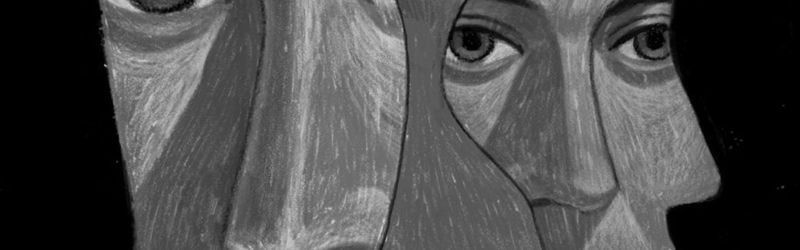
The life and work of a Manhattan psychoanalyst.
The psychology behind our limitations of reason.
Millions of Americans have taken antidepressants for many years. What happens when it’s time to stop?
Heart removal as therapy.
The untold story of how anger became the dominant emotion in our politics and personal lives—and what we can do about it.
The psychology, interactions, and sadness of a fringe NBA player.
After Moneyball became a best-seller, Michael Lewis learned that many of the ideas it presented to the general public had actually been introduced decades earlier by a pair of Israeli psychologists.
Adapted from The Undoing Project: A Friendship That Changed Our Minds.
A terminally ill journalist deals with a variety of setbacks.
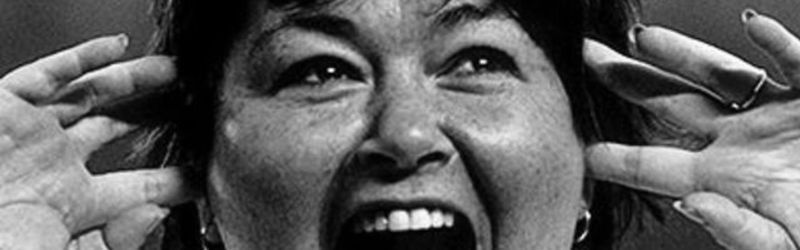
A profile of Roseanne Barr and her multiple personalities.
A man's friendships with various women reveal psychological and philosophical complexities.
“It’s just beyond our experience—we have nothing in our evolutionary history that prepares us or primes us, no intellectual architecture, to try and grasp the remoteness of those odds.”
On the unexpected longevity of a very strange theory.
Websites and apps are designed for compulsion, even addiction. So why aren’t they regulated like drugs or casinos?
The frustrated – and well-hidden – story of Isabel Myers Briggs, inventor of the famous personality test.
Troubles and afflictions weigh on counselors and veterans.
"The Fort was actually just an ugly house. Eighteen rooms, two stories. A kitchen, a lavatory, a staircase. One office, one entrance, two exits, thirty-six bunks, four televisions, the mini-library, two footballs, one fútbol, a basketball, and the whole of Big Ben, the biggest backyard in Texas. It housed between twenty-one and thirty-two bodies a year. Most of them stayed a couple months. They found us through each other."
Members of the multiplicity community say they are many different people–sometimes so many they think of themselves as a city–all existing within one body.
The allure of invisibility.
Family problems and a myriad of solutions.
"I don’t know if my husband and I are on the way to church or a hangover. It is too early in the drive to tell. The first Thursday of every month, my husband’s sister comes over to watch the kids. They are too old for a sitter, but the older one keeps trying to kill herself and we don’t want to risk it. Always keep an eye on them, I tell my sister-in-law. Don’t leave them alone for a second, not even to ice a cake, organize a closet, dry the dishes, say a prayer."
The belief that hidden memories can be “recovered” in therapy has been discredited, but the mental health establishment does not always learn from its mistakes—and families are still paying the price.
A man's lifelong hold on an imaginary person.
"He could never really explain it, once he got past that age where it stopped being okay to have an imaginary friend. He always knew she wasn't an imaginary friend. But he desperately tried to explain it anyway, to all the school counselors and all sorts of in-network therapists as he got older. It was simple in some senses. She was supposed to be living on his street. She was supposed to be in his kindergarten class. But all the houses were full with other families. And every little spot on that circular alphabet rug in his classroom was taken by someone else. Leona never happened."
A classis psychological work on Hawthorne's 210th birthday.
"The cause of so much amazement may appear sufficiently slight. Mr. Hooper, a gentlemanly person, of about thirty, though still a bachelor, was dressed with due clerical neatness, as if a careful wife had starched his band, and brushed the weekly dust from his Sunday's garb. There was but one thing remarkable in his appearance. Swathed about his forehead, and hanging down over his face, so low as to be shaken by his breath, Mr. Hooper had on a black veil. On a nearer view it seemed to consist of two folds of crape, which entirely concealed his features, except the mouth and chin, but probably did not intercept his sight, further than to give a darkened aspect to all living and inanimate things. With this gloomy shade before him, good Mr. Hooper walked onward, at a slow and quiet pace, stooping somewhat, and looking on the ground, as is customary with abstracted men, yet nodding kindly to those of his parishioners who still waited on the meeting-house steps. But so wonder-struck were they that his greeting hardly met with a return."
An investigation into “Little Albert,” the famous test subject.
A scientific and psychological examination of a gunshot.
"This is how you feel a bullet. You have certain sensory receptors that detect pain, these are called nociceptors. When a nocicpetor receives a painful stimulus, it sends a signal through its neuron to the spinal cord, which sends the signal to your brain, which sends it to a number of different areas for processing. The location and intensity of the stimulus is deciphered by the primary and secondary somatosensory cortex, for example."

