Tracking down a Congolese war criminal.
World
A 21-year-old UCLA math major leaves his $9,000-a-month internship to fight with the rebels in Libya.
A college president on the bizarre experience of being informed by NBC News that he had hired a war criminal to teach French.
Revealing the murder of 109 Vietnamese civilians during a 1968 search-and-destroy mission on a rumored Viet Gong stronghold, often referred to in military circles as Pinkville, actually the village of My Lai.
On Jenny Craig’s European expansion and how dieting differs in France and the States.
A profile of former Liberian president Charles Taylor, who was sentenced to 50 years today after being convicted of committing crimes against humanity.
On the escape of hundreds of insurgents from Kandahar’s Sarposa Prison through a tunnel dug from the outside, and an unlikely suspect: the jail’s former warden.
A man living in the Boston suburbs learns he could be one of the only survivors of a 1982 massacre in Guatemala.
A profile of former Bosnia Serb military commander Ratko Mladic, whose war crimes trial began, and was abruptly suspended, this week.
As it approaches a public offering, how Glencore—founded by the legendary fugitive March Rich—cornered the market for just about everything by working with dictators and spies.
On spending six months on the southern coast of Argentina with the “Jane Goodall of penguins” and several hundred of her research subjects.
The expansion of private-security contractors in Iraq and Afghanistan is well known. But armed security personnel account for only about sixteen per cent of the over-all contracting force. The vast majority—more than sixty per cent of the total in Iraq—aren’t hired guns but hired hands. These workers, primarily from South Asia and Africa, often live in barbed-wire compounds on U.S. bases, eat at meagre chow halls, and host dance parties featuring Nepalese romance ballads and Ugandan church songs. A large number are employed by fly-by-night subcontractors who are financed by the American taxpayer but who often operate outside the law.
A report from the trial of Ivan Demjanjuk—a.k.a. “The Last Nazi”—who died on March 17.
Sam Childers, a Pennsylvania-based evangelical preacher, biker, and former drug addict, has devoted his life to catching crazed African warlord Joseph Kony.
The story of a young man on the run in the slum he dreams of escaping.
When 25-year-old Valentine Strasser seized power in Sierra Leone in 1992, he became the world’s youngest head of state. Today he lives with his mother and spends his days drinking gin by the roadside.
Hanging out in Moscow with Russia’s yuppie, 20-something journalist revolutionaries:
In other words, the protest was being brought to you by the same people you would have relied on, weeks earlier, for restaurant picks.
The youngest prisoner held at Guantánamo on his seven years in detention.
On Michael Lewis and the global financial crisis.
Previously: The Michael Lewis World Tour of Economic CollapseOn the battles, both between humans and animals, in Africa’s overpopulated Albertine Rift.
Two days after the Japanese tsunami, after the waves had left their destruction, as rescue workers searched the ruins, news came of an almost surreal survival: Miles out at sea, a man was found, alone, riding on nothing but the roof of his house.
How an Italian thug looted MGM, brought Credit Lyonnais to its knees, and made the Pope cry.
A trip to Scotland and an investigation of enduring belief:
I remember reading about the deathbed confession, and how strangely sad it made me, even though I had not, at that point, believed in the monster for years. How much sadder, I wondered, would it make those who still believed in the existence of a monster in Loch Ness?
On the railways of China and a trip aboard its latest spectacle, a $32 billion line carrying passengers between Shanghai and Beijing at 170 MPH.
On a group of teenage believers raised in settlements on the West Bank:
They say it takes one generation to found a new language. These girls are a new language, believing that they belong to the land on which they were born, and sponsored by the government they despise, which pays for their roads and electricity.
Inside the safe houses where Syrian youth protesters have retreated since the uprising:
Around his neck he wore a tiny toy penguin that was actually a thumb drive, which he treated like a talisman, occasionally squeezing it to make sure it was still there. I sat next to him on the mattress and watched as he traded messages with other activists on Skype, then updated a Facebook page that serves as an underground newspaper, then marked a Google Earth map of Homs with the spots of the latest unrest. “If there’s no Internet,” Abdullah said, “there’s no life.”
But despite all that has been promised, almost nothing has been built back in Haiti, better or otherwise. Within Port-au-Prince, some 3 million people languish in permanent misery, subject to myriad experiments at "fixing" a nation that, to those who are attempting it, stubbornly refuses to be fixed. Mountains of rubble remain in the streets, hundreds of thousands of people continue to live in weather-beaten tents, and cholera, a disease that hadn't been seen in Haiti for 60 years, has swept over the land, infecting more than a quarter million people.
On a decade-long war:
Hackers from many countries have been exfiltrating—that is, stealing—intellectual property from American corporations and the U.S. government on a massive scale, and Chinese hackers are among the main culprits.
On riding China’s Qinghai-Tibet Railway just before it opened:
Staring out at the shimmering tracks and concrete-reinforced embankment extending to the horizon, I can’t help but think of the senior Chinese scientist who confessed to me that the rail line he helped build might not be safe for long.
Around the world, governments and corporations are in a race for code that can protect, spy, and destroy—hacks some secretive startups are more than happy to sell.
Next is "culture training," in which trainees memorize colloquialisms and state capitals, study clips of Seinfeld and photos of Walmarts, and eat in cafeterias serving paneer burgers and pizza topped with lamb pepperoni. Trainers aim to impart something they call "international culture"—which is, of course, no culture at all, but a garbled hybrid of Indian and Western signifiers designed to be recognizable to everyone and familiar to no one. The result is a comically botched translation—a multibillion dollar game of telephone. "The most marketable skill in India today," the Guardian wrote in 2003, "is the ability to abandon your identity and slip into someone else's."
On the brother of the Sultan of Brunei, Prince Jefri Bolkiah, who has “probably gone through more cash than any other human being on earth.”
When a CIA operation in Pakistan went bad, leaving three men dead, the episode offered a rare glimpse inside a shadowy world of espionage. It also jeopardized America’s most critical outpost in the war against terrorism.
What it means to be an entrepreneur in Argentina, where economic crashes are a way of life.
On Silvio Berlusconi’s hedonism.
Berlusconi is Italy’s waning Hugh Hefner, alternately reviled and admired for his loyalty to his own appetites—except that he’s supposed to be running the country.
In the 1970s, Kelbessa Negewo was a midlevel administrator in Ethiopia’s brutal Red Terror regime. In the 1990s, he was a bellhop in an Atlanta hotel. Then someone he had tortured back home recognized him.
On the ground in Nigeria with the nation’s notorious scam artists, who share a remarkable number of qualities with America’s top entrepreneurs.
On Russia’s faltering justice system.
“It was a tiny incident in itself, but it gave me a better glimpse than I had had before of the real nature of imperialism–the real motives for which despotic governments act.” Memories of a British soldier in Burma.
How Lalit Modi built a billion-dollar cricket empire—only to be exiled from his sport and homeland.
Rodrigo Rosenberg, a highly respected corporate attorney in Guatemala, began, in the spring of 2009, to prophesy his own murder. The unraveling of a political conspiracy.
A 12,000-word profile of recently departed Brazilian President Luiz Inácio da Silva, the “most successful politician of his time.”
The surreal afterlife of the once-ascendant Dubai, where “the legacy of oil has made everything worthless.”
A first-person account of the author’s time spent volunteering with a group of Burmese activists in Thailand, who turn out to be not Korean but in fact Karen, members of Burma’s persecuted ethnic minority. In the course of her time there, they show her videos of their risky forays across the border, and she shows them MySpace.
The perilous routes through which information—video footage, secret documents, radio broadcasts—flow in and out of North Korea through its porous borders with China.
After nearly 15 years in a Peruvian prison, an American woman convicted of aiding a Marxist terrorist group finds parole in Lima full of contradictions.
First-person accounts from the 2004 siege of a Russian school in Beslan by Chechen terrorists.
One of most popular Libyan figures amongst Western intellectuals and democracy advocates is… Qaddafi’s second son, Saif.
A profile of Teodoro Nguema Obiang Mangue, the Malibu-dwelling, “fantastically corrupt” dictator-in-waiting of Equatorial Guinea. Teodorin, as his friends call him, is considered by U.S. intelligence to be “an unstable, reckless idiot.”
A suitcase was smuggled from Spain to Mexico during the Spanish Civil War containing negatives from three photographers would later become legends and all die in war zones. The suitcase disappeared.
What Egypt learned from the students who overthrew Milosevic. “The Serbs are not the usual highly paid consultants in suits from wealthy countries; they look more like, well, cocky students. They bring a cowboy swagger. They radiate success. Everyone they teach wants to do what the Serbs did.”
The Ugandan rebel Lord’s Resistance Army, drawn mostly from kidnapped children, has proved as elusive as it is barbaric.
The story of three months spent training reporters in Saudi Arabia, where the press is far from free. “I suspected that behind the closed gates of Saudi society there was a social revolution in the making. With some guidance, I thought, these journalists could help inspire change.”
An opinion piece on the structural causes of unrest in Egypt; the business fraternity, globalization, and the fate of Egyptian women.
A trip to Kingston, Jamaica to track down Bunny Wailer, a reggae legend now living “in his own private Zion.”

On the Cairo knifing of 82-year-old Nobel Prize winner Naguib Mahfouz and its aftermath.
Reporting from Kuwait on the week of its liberation, a brutal account of the atrocities committed during seven months of Iraqi occupation.
How a nation went bankrupt. “Ireland’s regress is especially unsettling because of the questions it raises about Ireland’s former progress: even now no one is quite sure why the Irish suddenly did so well for themselves in the first place.”
A trip to Râmnicu Vâlcea, a town of 120,000 where the primary (and lucrative) industry is Internet scams.
What happened when the founder of North Face and Esprit bought a chunk of Chile the size of a small state, intending to live with a select group inside it and turn it case study for ecological preservation. It turned out, however, that Chileans didn’t really like that idea.
On the illusion of the inevitable and the revolutions that ended the Eastern Bloc.
How the social networks that popped up in Facebook’s absence—the site is not available behind the Great Firewall—are changing Chinese culture.
How the relationship between favela-based drug gangs and elite police units tasked with fighting them came to define Rio de Janeiro.
Mattathias Rath made a fortune selling cure-all vitamins in Europe before moving his business to South Africa, where he launched a massive campaign against retroviral AIDS medications and in favor of his own vitamin cocktails. When scientists, AIDS non-profits, and even Medecins San Frontieres objected, he sued.
On the utter brutality of life in the tent cities, one year after the earthquake.
Last year, an Mossad hit squad traveled to Dubai to assassinate a Hamas leader. They completed their mission, but were later humiliated when a twenty-seven minute video of their movements was posted online. How their cover got blown.
Memories of the expat revolutionary scene in 1980s Nicaragua. An excerpt from Revolution: The Year I Fell in Love and Went to Join the War.
“In 2000, Zimbabwe’s dictator began kicking white farmers off their land. One man decided to stay.”
A ragtag band of pirate-Jihadists grab Americans from a diving resort in the Phillipines and lead them on an odyssey through the jungles of an archipelago with the competing interests of the Phillipines’ Navy and Army, the U.S. Military, and the C.I.A. thwarting their rescue.
Colombian traffickers have a new smuggling method of choice: specially designed submarines capable of carrying 10 tons of cocaine and covering 2,000 miles without refueling.
Anatomy of an international incident; how three idealistic young American hikers wandered across the Kurdistan-Iran border and ended up in Iranian prison charged with spying.
Putin, Medvedev, and how the Russian security agency FSB became the “new nobility.”
“Most cities spread like inkblots; a few, such as Manhattan, grew in linear increments. Paris expanded in concentric rings, approximately shown by the spiral numeration of its arrondissements.”
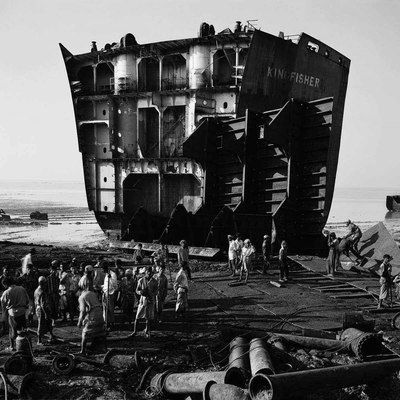
On a desolate, six-mile stretch of Indian beachfront, the bulk of the world’s big ships are dismantled for scrap. Though a ship is usually worth over $1 million in steel, the margins are low, the leftovers are toxic, and the labor—which employs huge numbers of India’s poor—is wildly dangerous.
The history of a Japanese archipelago and its inhabitants, through rebellions and famine, a 20th century exodus for prostitution work across Asia, and finally depopulation and isolation.
A Stockholm prostitute is found hacked apart in a dumpster, her head is never found. Two accomplished doctors, confirmed creeps, are arrested. Uncertainty endures.
Published on the eve of Iran’s 2009 presidential election and subsequent protests, a look at the booze-fueled, hijab-less underground party scene in the capital.
An oral history of a family in Mexico City, in transition from poverty to the lower-middle class, as they scramble to organize the burial of a slum-dwelling aunt.
An investigation into Lashkar-i-Taiba, the group behind the 2008 Mumbai massacre, and why Pakistani authorities has not arrested their leaders.
A stroll through Tokyo’s Tsukiji, the world’s largest seafood market, and the mecca of the global sushi trade.
Scenes from the new Tijuana: two teenage brothers from the country club set descend into the cartel underworld, bored federales guard the acid pit where hundreds of bodies were erased, families picnic through a chain-link border fence.
Mikhail Khodorkovsky, oil magnate and once the richest man in Russia, delivers a speech from prison, where he has lived since 2003.
The macabre, ultra-violent plays put on at the Grand Guignol defined an era in Paris, attracting foreign tourists, aristocrats, and celebrities. Goering and Patton saw plays there in the same year. But the carnage of WWII ultimately undermined the shock of Guignol’s brutality, and audiences disappeared.
Russia has ended its death penalty, leaving in its place five prison “colonies” to house its most hardened criminals, nicknamed “The White Swan”, “The Black Dolphin”, “The Vologda Coin”, “The Village of Harps”. Inside “The Black Eagle.”
On China’s modern-day Communist Party and why foundational myths can never be shed.
On the set of Afghanistan’s first soap opera and at home with its cast.
Far outside of Juarez, villagers in rural areas are trapped without supplies or protection as rival cartels attempt to starve each other out of ranch hideouts. A heavily armed convoy attempts to deliver pensions behind siege lines.
Inside the conflict that has caused more deaths than any since WWII—with no end in sight.
The world’s population is rapidly getting older. How China and other countries stocked with young workers are taking advantage.
The narcocorrido-immortalized Pacific coast traditionalists, the kidnap-crazed Gulf coast Zetas, and massacres that no longer seem tied to a discernible purpose; inside the ruins of the Mexican-American border.
If your ex-spouse takes your child and hightails it abroad, the legal system often isn’t on your side. So what can you do? One option: hire a former Army ranger named Gus Zamora to take back your kid.
A behind-the-scenes account of the tense negotiations, involving Gorbachev, Kohl, Bush, and Thatcher, that led from the aftermath of the fall of the Berlin Wall to a reunified Germany. (Translated from German.)
Foreign policy as architecture; how embassies went from lavish social hubs to reinforced strongholds.
An interview with Michael Maren, who spent nearly twenty years working in Africa as an aid worker and then a journalist, on why NGOs and “feed an African child” charities do more harm than good.
How the illegitimate son of Liberian ex-President (and accused cannibal) Charles Taylor went from being a small time Florida hoodlum to one of Africa’s most notorious killers.
The relative prosperity of the Putin-era has thrown Russian bride-introduction tours for a loop, as a group of American bachelors learn in a series of Meet and Greets.
In Torreón, north of Mexico City, cartel gunmen are freed from a prison, commit a massacre at a wedding that includes the band, and then return to custody.
Russian serial killer Alexander Pichushkin was so prolific that even he doesn’t know how many he killed.
India’s greatest terror threat may not be militants slipping across the Pakistani border, but rather the homegrown Maoist rebels who control the villages of the interior.
“There is perhaps no other political-military elite in the world whose aspirations for great-power regional status, whose desire to overextend and outmatch itself with meager resources, so outstrips reality as that of Pakistan.”
A trip to interview former South Vietnamese premiere Ky on the occasion of the 30th anniversary of the reunification of Vietnam ends with government surveillance, partying, and confusion.
Riots in Athens, the shadowy Vatopaidi monastery, and a quarter million dollars in debt for every citizen. Welcome to Greece.
A young reporter heads to Colombia to report on the conflict between FARC and the paramilitaries. He meets a girl on the bus. After they begin a relationship, she reveals that that she is part of a death squad.
A blow by blow account of the seizure of a French cruise ship by Somali pirates.
Inside Rebecca West’s vast Black Lamb and Grey Falcon, an eerily timeless travelogue of the Balkans written on the eve of WWI.
The bloody, often surreal, fight for Kosovo’s independence was led by a man moonlighting as a roofer in Switzerland.
A new Egyptian TV channel called 4Shbab—“for youth” in Arabic—aims to get young people interested in Islam through music videos and reality shows.
A year after dozens died protesting his election and hundreds more were imprisoned, Mahmoud Ahmadinejad grants a rare interview to an American journalist.
When members of China’s massive bulletin-board forums perceive wrongdoing, they form a “human flesh search engine” and seek out real world vigilante justice.
How PCC, once an inmate soccer team and now Brazil’s most notorious prison gang, coordinated seven days of riots throughout São Paulo using mobile phones.
How a dental equipment salesman from Germany named Klaus Teuber invented the perfect board game, Settlers of Catan.
The shoot-first-and-ask-questions-later culture of the 101st Airborne Division, an execution of captured Iraqi prisoners, and how far up the chain of command responsibility lies.
The complex, highly evolved world of Moscow’s subway-riding stray dogs.
In post-Shock and Awe Baghdad, the relationship between a war reporter and his Iraqi guide falls apart.
When Japanese men in their teens and twenties shut themselves in their rooms, sometimes for a period of years, one way to lure them out is a hired “big sister.”
A Dutch traffic engineer showed that streets without signs are safer than those cluttered with arrows, painted lines, and lights.
Rolling Stone’s subhead: “Stanley McChrystal, Obama’s top commander in Afghanistan, has seized control of the war by never taking his eye off the real enemy: The wimps in the White House.”
After a racial hazing incident, the first black head of South Africa’s University of Free State confronts the myths of the reconciliation era.
A voyage to North Sentinel island, home to one of the last entirely isolated populations on Earth.
A conversation with NYU Law Professor Philip Alston on the legality of ‘targeted killings’ by drones, which have made headlines in Pakistan, but also have been deployed by the C.I.A. in countries like Yemen.
It is agreed that the 1977 political murder of a couple in Johannesburg was a political killing that covered up mysterious Swiss Bank deposits. Various reports implicate Cuban Nationalists, Italian Fascists and the CIA.
In 1970, he was plucked from Saigon to attend West Point. He got his degree and went home to fight, but instead spent six years in a reeducation camp. Then, somehow, he ended up teaching high school in D.C.
Night raids by the “Hash Monster” and other perils facing American soldiers at a remote base in the wilderness of the Paktya Province as they attempt to turn over power to the Afghan Army.
It’s the biggest environmental lawsuit in history. The people of Lago Agrio, an oil-rich area in the Ecuadorean Amazon, are suing Chevron for $6 billion after decades of spills. The case has been underway since 1993.
Kurdistan is the safest and most stable region in Iraq and at the center of its modern history is Amna Surak Prison, ground zero for both a genocide and an uprising.
Job Cohen, the current mayor of Amsterdam, is leading the Dutch race for Prime Minister on a platform of racial integration that could transform the relationship between European politics and immigration.
The doctor behind the autism-vaccine uproar is removed from the General Medical Council for being “dishonest,” “misleading” and “irresponsible” in his research into the MMR vaccine.
Banned in Russia and cut by Conde Nast from the GQ website, this story (presented in full) details the intrigue behind the Moscow apartment bombings, blamed on Chechens, that allowed Putin to rapidly ascend to power.
The island of Coiba off the coast of Panama is both a nature preserve and an open-air prison.
Seized passports, debtor’s prison, and slave labor prop up a Disneyland in the desert now in decline.
Both the Chinese government and private matchmakers are laboring to unite people who lost spouses and children in the earthquake.
Pitcairn Island is impossibly remote, populated by descendants of a ship of British mutineers. Revelations that child molestation and rape had been a way of life for generations exposed them to the outside world.
On the day of the earthquake, two men went into Haiti’s Soccer Federation headquarters. Only one came out.
From Hong Kong to Bangkok to the Golden Triangle, the author searches for something everyone says no longer exists: an opium den.
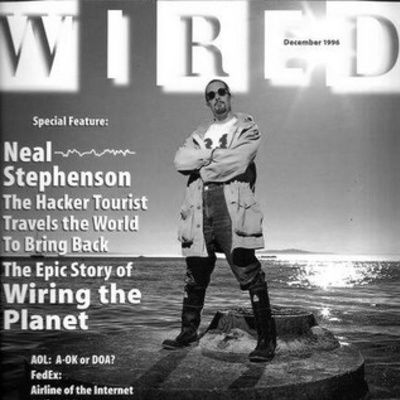
Neal Stephenson’s three continent spanning “hacker tourist” account of the laying of the (then) longest wire on earth, FLAG, fiber-optic link around the world. A 42,000+ word business/tech/history epic.
Al-Jazeera English dominated the international coverage of the 2008-2009 Gaza war. And now it’s poised to invade North America.
A utopian German settlement in Chile had already turned darkly cultish by the time it became a secret torture site for enemies of the Pinochet regime.
Las Vegas casinos operating in Macau rely on “junkets” to bring in the gambling elite, but the money and murder for hire trails lead straight to the Triads.
The defining, minute-by-minute account of the 2008 attacks in Mumbai.
The improbable and true story of how Al Sharpton, Cornel West, Marion Barry’s wife, and Tucker Carlson (yes, that Tucker Carlson) flew to Liberia to negotiate a ceasefire in the midst of a civil war.
Working from a tiny shop in Chinatown, Sister Ping helped thousands of Chinese immigrate illegally by boat. By the time one of her ships ran aground, the F.B.I estimated her total profits at $40 million.
Kevin Fulton, a spy planted in the IRA, thought he was dead when he faced interrogation by a notorious IRA enforcer. But, it turned out, the enforcer was also an agent. How British intelligence undermined the IRA.
Jillian Lauren, wife of Weezer bassist Scott Shriner, grew up middle class and now lives in a three-bedroom house in L.A. In between, she was a part of a royal harem in Brunei.
In nine hours, Guinea-Bissau’s President and military leader were assassinated in separate incidents. Their dealings had turned the country into the runway of choice for drug smugglers and Hezbollah.
China is securing sub-Saharan Africa’s natural resources at a staggering rate. With the buying spree comes contracts, workers, and of course, politics. (Part 1 of a 6 part series, rest here)
Recently, African Elephants have been killing people, raping rhinos, and exhibiting uncharacteristically aggressive behavior. An investigation reveals deep similarities between elephants’ and humans’ reaction to childhood trauma.
The inside story of how an ABC nature shoot in Africa end up producing a snuff film.
When Nazi-sympathizing politician Jorg Haider died in a crash, his 27-year-old protégé Stefan Petzner was left to lead the Austrian far right—and to mourn the boss who he revealed was also his lover.