An interview with a blotto Lee Marvin.
Esquire
In the wake of his grandmother's death, a young man struggles with intense bouts of anger.
"I'll describe the walls because that's easy — they were white, and I hurt my right pinkie knuckle-punching some of them while I walked through rooms searching for my car keys. My inability to find them frustrated me so badly that I beat up the bathroom door, limped away, and waved my fist at the plaster statue of Beethoven's head on top of the piano we never learned to play. After all that, I found the keys in a coat pocket I had already checked twice but somehow missed. I grabbed the video and made toward the back door, but on my way I noticed Sparkles cowering under the kitchen table, shaking, terrified of me. I hated myself a little extra, fed her a slice of manufactured cheese, patted her on the head, and took the back steps three at a time."
The early life of “the onetime Black Panther, protégé of George Jackson, and sole member of the San Quentin Six convicted of murder.”
After a tragic accident involving a rabid dog, grief drives citzens to extreme, illogical measures to prevent further occurrences.
"What I'm saying is, with no dogs and no cats, the chance that another father would have to carry his animal-murdered child into their home, where the child's mother sat, doing the bills, happy or something like happy for the last time in her life, happy until the instant she looked up and saw--what I guess I'm saying is, with no dogs and no cats, the chances of that happening to someone else (or to us again) went down to that very beautiful number of Zero. Which is why we eventually did have to enact our policy of sacrificing all dogs and cats who had been in the vicinity of the Village at the time of the incident."
“Four mornings a week Murray Kempton, the Huckleberry Finn of American journalism, climbs onto his bicycle and pedals out into the world in search of what may be there. For more than thirty years he has been finding things other writers have not even thought to look for, and he has done so with a compelling humanity that is rare not just in his profession but in the human race as well. I have followed him as he made his regular rounds, and I have eaten at his table, and I am not all that certain that he is not the greatest man I have ever met.”
A Bosnian immigrant in Chicago undertakes some ramshackle detective work.
"Office 909 had a sign that read GREAT LAKES EYE and a black-and-white eye with long, upward-curling eyelashes. Pronek hesitated for a moment before knocking at the door--his fingers levitated, angled, in front of the eye. Pronek knocked using three of his knuckles, the glass shook perilously, then he opened the door and entered an empty waiting room. There was another door, closed, and there were magazines strewn on the few chairs, even on the musty floor, as if someone had searched through them all. The waiting room was lit by a thin-necked lamp in the corner, leaning slightly as if about to snap. A picture of an elaborate ocean sunset--somebody lit a match under the water--hung on the opposite wall. 'Acapulco,' it said in the lower right corner, 'where you want to dream.' Pronek stood in front of the picture, imagining Acapulco and all the pretty, tawny people there. It would be a good place to disappear for a while."
A couple goes about their relationship while the world outside may or may not be descending into chaos.
"When the announcement was made, my first instinct was to hold my breath in case whatever it was had already been released into the air. 'What?' Victor asked, coming in and turning down the volume. I exhaled. 'Gas masks,' I said."
An alternate take on Memento's amnesiac-detective concept, written by Christopher Nolan's brother.
"He is caught at the door to his room, one hand on the knob. Two pictures are taped to the wall by the door. Earl's attention is caught first by the MRI, a shiny black frame for four windows into someone's skull. In marker, the picture is labeled YOUR BRAIN. Earl stares at it. Concentric circles in different colors. He can make out the big orbs of his eyes and, behind these, the twin lobes of his brain. Smooth wrinkles, circles, semicircles. But right there in the middle of his head, circled in marker, tunneled in from the back of his neck like a maggot into an apricot, is something different. Deformed, broken, but unmistakable. A dark smudge, the shape of a flower, right there in the middle of his brain."
A profile of the Hollywood star-maker behind Vanna White, Pamela Anderson and Jenny McCarthy.
The mishaps and growth of an accident-prone child.
"But Oliver had come late in their little pack of offspring, at a time when the challenge of child rearing was wearing thin, and he proved susceptible to mishaps. He was born with inturned feet and learned to crawl with corrective casts up to his ankles. When they were at last removed, he cried in terror because he thought those heavy plaster boots scraping and bumping along the floor had been part of himself."
A profile of Colin Duffy: fifth-grader, suburban New Jersey resident, ruler of the backyard, player of video games, boy.
A profile of Robert Caro, who’s been working on a biography on Lyndon Johnson for nearly 40 years.
A pilgrimage to J.D. Salinger’s New Hampshire home:
The silence surrounding this place is not just any silence. It is the work of a lifetime. It is the work of renunciation and determination and expensive litigation. It is a silence of self-exile, cunning, and contemplation. In its own powerful, invisible way, the silence is in itself an eloquent work of art. It is the Great Wall of Silence J.D. Salinger has built around himself.
The night when Terry Thompson let his zoo-worthy collection of big animals, including lions and a bear, into the wilds of Zanesville, Ohio before shooting himself in the head.
An interview with the former president about the upcoming election and American consensus.
A profile of the Waffle House terrorists, a group of senior citizens arrested by the Department of Homeland security for plotting a civil war, and the government-hired confidential informant who allegedly led the group astray.
Two parents react to their child's accidental scalding.
"The Daddy was around the side of the house hanging a door for the tenant when he heard the child's screams and the Mommy's voice gone high between them. He could move fast, and the back porch gave onto the kitchen, and before the screen door had banged shut behind him the Daddy had taken the scene in whole, the overturned pot on the floortile before the stove and the burner's blue jet and the floor's pool of water still steaming."
After losing his sight at age 3, Michael May went on to become the first blind CIA agent, set a world record for downhill skiing, and start a successful Silicon Valley company. Then he got the chance to see again.
The opening to Zone One, Colson Whitehead's new zombie novel
"Just another day at the office when she gets bit by some New York whacko while loading up on spring mix at the corner deli's Salad Lounge. Full of plague but unaware. That night the shivers came, and the legendary bad dreams everyone had heard about and prayed againstthe harbingers, the nightmares that were the subconscious rummaging through a lifetime for some kind of answer to or escape from this trap. With those early strains, you might last a whole day without flipping. She returns to her cubicle the next day because she hadn't taken a sick day in years."
The new owner of the Twin Forks Store and Campground encounters some trouble.
"The sheriff had said, 'You probably should've shot him while you could do it legal and get it over with. He might be back for you, or you might not ever see him again, who knows with meth heads. But you surely will want to be ready if ever he does come around for you, and that could be at any time from now on.'"
When your family is murdered, and the home you had made together is destroyed, and you yourself are beaten and left for dead — as happened to Bill Petit on the morning of July 23, 2007 — it may as well be the end of the world. It is hard to see how a man survives the end of the world. The basics of life — waking up, walking, talking — become alien tasks, and almost impossibly heavy, as you are more dead than alive. Just how does a man go about surviving such a thing? How does a man go on?
The stories of two dozen strangers who survived the Joplin, Mo., tornado by hiding in a walk-in beer cooler.
A profile of the comedian who’s “not so funny anymore”:
Jon Stewart has made a career of avoiding "Whooo" humor. He has flattered the prejudices of his audience, but he has always been funny, and he has always made them laugh. At the Juan Williams taping, however, at least half of Stewart's jokes elicited the sound of Whooo! instead of the sound of laughter. He's been able to concentrate his comedy into a kind of shorthand — a pause, or a raised eyebrow, is often all that is necessary now — but a stranger not cued to laugh could be forgiven for not laughing, indeed for thinking that what was going on in front of him was not comedy at all but rather high-toned journalism with a sense of humor. Which might be how Jon Stewart wants it by now.
If you are young and you should write asking to see me and learn how to be a somber literary man writing pieces upon the state of emotional exhaustion that often overtakes writers in their prime -- if you should be so young and fatuous as to do this, I would not do so much as acknowledge your letter, unless you were related to someone very rich and important indeed. And if you were dying of starvation outside my window, I would go out quickly and give you the smile and the voice (if no longer the hand) and stick around till somebody raised a nickel to phone for the ambulance, that is if I thought there would be any copy in it for me.
At work with the scientists standing on the precipice of a grand unified theory of the universe. Or failure.
The life history of an unassuming Sudanese man, Noor Uthman Muhammed, who has spent the last nine years in Guantánamo Bay prison.
In 1956, an ocean liner named the Andrea Doria sank off the coast of Cape Cod. Half a century later, deep-sea divers—the author included—were still risking their lives to explore it.
From the author of Winter's Bone: A Vietnam War veteran grapples with the aftermath of killing a home intruder.
" A year after his return Pelham ceased to mention Vietnam to new acquaintances, dropped it from the biography of himself he’d give if asked. Only those who knew him before he went were certain that he’d gone. Jill was a second wife, fifteen years his junior, a lovely, patient blond, and remembered Vietnam as a tiresome old television show that’d finally been canceled about the time she left third grade. "
On a failed attack in Spokane and the fragments of homegrown terrorism in the United States.
Alan Beaty’s Tennessee farm serves an unofficial halfway house for Marines struggling with their return to civilian life.
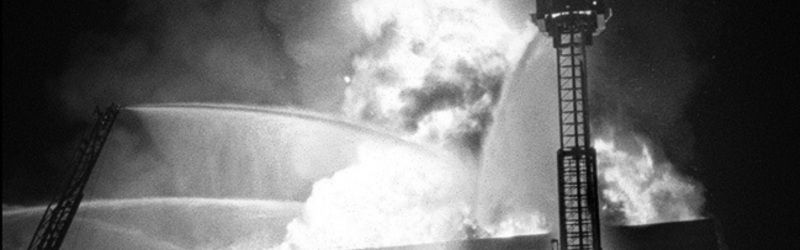
It started with a candle in an abandoned warehouse. It ended with temperatures above 3,000 degrees and the men of the Worcester Fire Department in a fight for their lives.
A visit to the French hideaway of Ira Einhorn, co-founder of Earth Day, who had avoided arrest on murder charges for nearly 20 years.
From our guide to fugitives for Slate.Two killers and one cop: The story of the LaMarca family, told over three generations.
On George Plimpton and the founders of the Paris Review:
Early in the fifties another young generation of American expatriates in Paris became twenty-six years old, but they were not Sad Young Men, nor were they Lost; they were the witty, irreverent sons of a conquering nation.
John Demjanjuk has had a huge year. Twenty years after being sentenced to die, he finally climbed to the pinnacle of the Wiesenthal Center's list of Nazi war criminals this April, shortly after the Germans filed the arrest warrant that allowed the OSI to put him on the jet to Munich.
Over the course of a year, Luke Dittrich will be walking the entire 1,933 miles of the Mexico-US border “from the beach to Gulf” with a stroller. The first in a series.
A profile of computational biologist Eric Schadt, the guy who’s figuring out what comes next after the Human Genome Project.
First-person accounts from the 2004 siege of a Russian school in Beslan by Chechen terrorists.
Omar Mohammed (most certainly not his real name), a former Iraqi cop, is widely believed to be the most skilled and prolific terrorist hunter alive. Recently, he personally killed two of Al-Qaeda’s senior commanders in Iraq. He has already been shot and blown up, and with U.S. forces on their way out, his chances of survival in Baghdad are slim.
Nobody loved chimpanzees more than St. James Davis and his wife LaDonna; the couple spent more than 30 years—and gained a modicum of fame—raising one as their son. Then they almost died in a brutal chimp attack.
A profile of Jobs. The themes: immortality, relinquishing control, and how being adopted affected his choices for Apple. The lede: “One day, Steve Jobs is going to die.”
An interview about why giving interviews is totally worthless.
Adapting from his book The Gun, Chivers traces how the design and proliferation of small arms, originating from both the Pentagon and the Russian army, rerouted the 20th century.
The brain of Henry Molaison gave science most of what it knows about memory. Dr. Jacopo Annese believes there’s even more to learn.
Ten years ago, Esquire did a piece about Harvard Law grads who had eschewed their degrees. One of them was the late comedian.
Mr. Lindall was the only high school teacher who understood him. Then Mr. Lindall went to jail, and it was his turn to try to understand.
How phone phreakers, many of them blind, opened up Ma Bell to unlimited free international calling using a technical manual and a toy organ.
Evidence of a decades-old hotel trist with a teenage intern costs a beloved Chicago columnist his job - and his identity.
The pain and beauty of U.S. military funerals. The author follows fallen soldier Joe Montgomery from field to grave.
How a card-counting former meteorologist from Las Vegas made the first perfect Showcase bid in the 38-year history of The Price Is Right.
“What’s it like to be kidnapped and held for ransom, not as a political prisoner but as an economic one? What’s it like to live in the Ecuadoran jungle for 141 days? What’s it like not to sleep, to be bound in chains, to have your body invaded by living things, to waste away to the point of death?…What’s it like? This is what it’s like.”
After the explosion of the Columbia shuttle in 2003, two American astronauts aboard the International Space Station suddenly found themselves with no ride home.
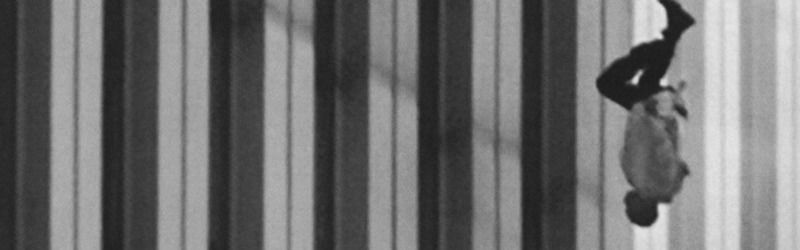
In the days after 9/11, a photo of an unknown man falling from the South Tower appeared in publications across the globe. This is the story of that photograph, and of the search to find the man pictured in it.
The island of Coiba off the coast of Panama is both a nature preserve and an open-air prison.
How the actor ended up with a house full of tourniquets and syringes, an unflinching belief in the restorative powers of “ozone,” and the brain scan of someone who has “experienced the equivalent of blunt trauma.”
Bill Conradt, a well-known prosecutor, never showed up at the house in Murphy, Texas, where police and a crew from NBC’s To Catch a Predator were waiting. So they, along with a SWAT team, went to Conradt.
How Todd Marinovich, engineered from birth to be the greatest quarterback of all time, ended up a heroin junkie while still playing pro football. A 2010 National Magazine Award winner.
The improbable and true story of how Al Sharpton, Cornel West, Marion Barry’s wife, and Tucker Carlson (yes, that Tucker Carlson) flew to Liberia to negotiate a ceasefire in the midst of a civil war.
When Christian Longo, who brutally murdered his family, was on the lam in Mexico he posed as a NYT reporter named Michael Finkel. From Death Row, Longo asked the real Finkel to attend his execution.