Enemy Aliens
The history of civilian internment camps.
The history of civilian internment camps.
On the relationship between rivalry and creativity.
The author on his reverence for water.
The journey of a river from source to mouth resembles our own journey from birth to death, an analogy oft remarked, and yet the beginnings and endings of rivers are as fictional as those we impose on stories. There are headwaters to headwaters and no river ever really ends.
How the French philosopher earned the means to publish freely by winning the lottery—repeatedly.
On applying to work as an undercover agent.
Typee, the most popular book Melville published in his lifetime, was his memoir of Polynesia. Most of it was probably made up.
A brief history of pretending to be sick.
To be a foreigner is to be perpetually detached, but it is also to be continually surprised.
Reconsidering Virginia Woolf’s novel, Orlando.
“Does a talent for comedy necessitate a tragic life?”
Adventures as a mortuary assistant.
The Arctic, sailors and scurvy.
“It’s just like putting gas in a car that don’t have no motor.”
Encounters with the sea.
The story of 1968’s Golden Globe, a race to see who could become the first sailor to circumnavigate the world solo without stopping.
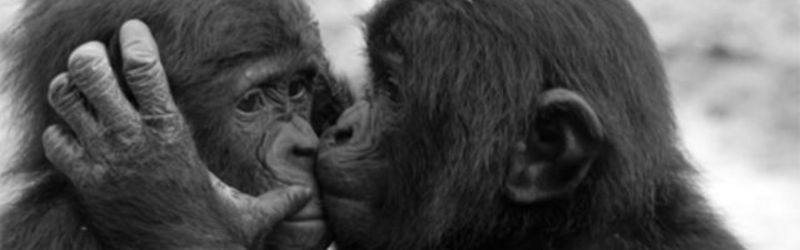
What the bountiful sex lives of bonobos—they enjoy deep kissing, oral sex, dry humping, and polyamory—can teach us about humanity.
The history and meaning of taxidermy in American museums.
A history of food poisoning.
On the uneasy relationship between magic and medicine.

On “Poor Hartley,” the son of Samuel Taylor Coleridge.
When we form our thoughts into speech, some of it leaks through our hands. Gestures are thoughts, ideas, speech acts made tangible in the air. They can even, for a moment, outlive the speaker.
What hand motions can teach us about language, ethnicity and assimilation.
The making of the “five-thousand-page, five-volume book, known formally as the Dictionary of American Regional English and colloquially just as DARE”:
What joking names do you have for an alarm clock? For a toothpick? For a container for kitchen scraps? Or an indoor toilet? Or women’s underwear? When a woman divides her hair into three strands and twists them together, you say she is_____her hair? What words do you have to describe people’s legs if they’re noticeably bent, or uneven, or not right? What do you call the mark on the skin where somebody has sucked it hard and brought blood to the surface?
Coping with a brother’s suicide.
We tell stories about the dead in order that they may live, if not in body then at least in mind—the minds of those left behind. Although the dead couldn’t care less about these stories—all available evidence suggests the dead don’t care about much—it seems that if we tell them often enough, and listen carefully to the stories of others, our knowledge of the dead can deepen and grow. If we persist in this process, digging and sifting, we had better be prepared for hard truths; like rocks beneath the surface of a plowed field, they show themselves eventually.
Hartwick College didn’t really mean to annihilate the U.S. economy. A small liberal-arts school in the Catskills, Hartwick is the kind of sleepy institution that local worthies were in the habit of founding back in the 1790s; it counts a former ambassador to Belize among its more prominent alumni, and placidly reclines in its berth as the number-174-ranked liberal-arts college in the country. But along with charming buildings and a spring-fed lake, the college once possessed a rather more unusual feature: a slumbering giant of compound interest.
A profile of Michel de Nostradame, better known as Nostradamus.

