Fiction Pick of the Week: "Adam's Apple"
A first date; a viewing of a classic musical.
A first date; a viewing of a classic musical.
Inside the fight for safe cannabis for all.
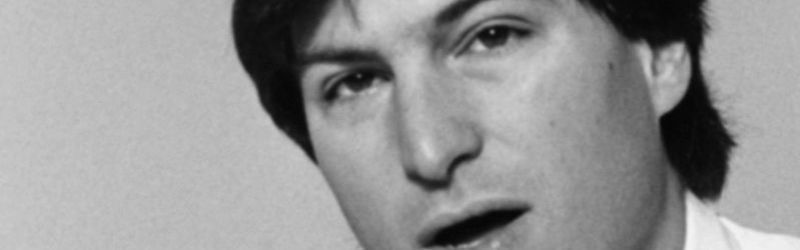
Steve Jobs, age 29.
"It’s often the same with any new, revolutionary thing. People get stuck as they get older. Our minds are sort of electrochemical computers. Your thoughts construct patterns like scaffolding in your mind. You are really etching chemical patterns. In most cases, people get stuck in those patterns, just like grooves in a record, and they never get out of them. It’s a rare person who etches grooves that are other than a specific way of looking at things, a specific way of questioning things. It’s rare that you see an artist in his 30s or 40s able to really contribute something amazing. Of course, there are some people who are innately curious, forever little kids in their awe of life, but they’re rare."
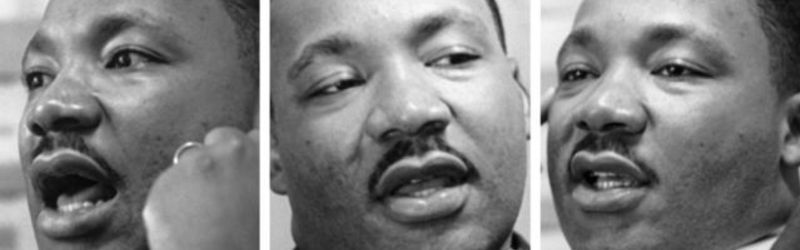
Shortly after winning the Nobel Peace Prize, King sat for what would be the longest interview he ever gave to the press.
“A strong man must be militant as well as moderate. He must be a realist as well as an idealist. If I am to merit the trust invested in me by some of my race, I must be both of these things.”
“One cannot be in my position, looked to by some for guidance, without being constantly reminded of the awesomeness of its responsibility. I live with one deep concern: Am I making the right decisions?”
Tackling North America’s longest continuous off-road race in an ’80s VW Bug.
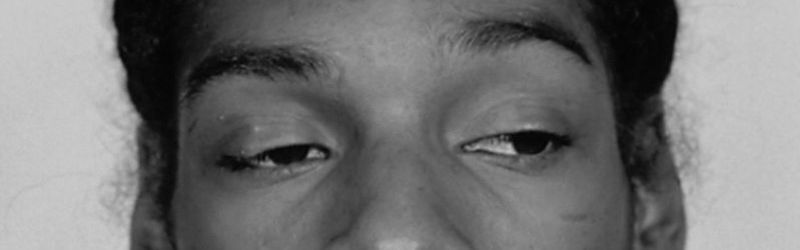
"If I had been a straight-A student my whole life and had rapped about Jesus coming back to save us all, I wouldn’t get no media. The motherfuckers wouldn’t give a fuck about me. But since I’m telling the truth, and been through what I’m stressing and know what I’m talking about, I’m a threat."
“Let me state, in all frankness, that I have never harbored personal doubts or a lack of confidence. That may be good or it may be bad. But if you see your actions as objectively correct, then not having doubts is good. I must admit that pride may have influenced my attitudes from time to time. But once I came to a conclusion as to what was right, I had great personal confidence in those ideas.”
A conversation with the former head of the NSA.

The author on Lolita, his work habits, and what he expected from his literary afterlife.
“Things don’t just flow out of your brain. It’s not like, Hey, I’m brilliant. Show up, paper right here, bam, another banger. No—you sit and you struggle with yourself and you stop cutting your hair. I’m not cutting my hair right now. You stop shaving, like I’m not shaving right now. You remember that you can fail. I’ve failed several times. The fact that everybody else don’t see that don’t give me the right to not see it.”
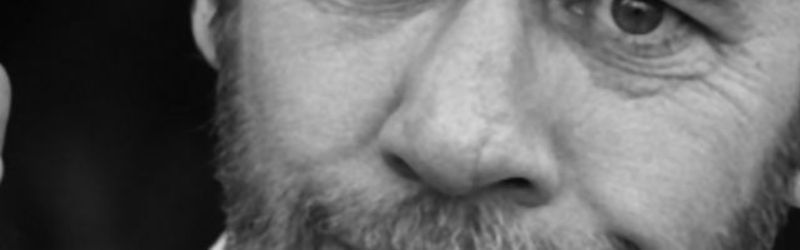
“It’s the American view that everything has to keep climbing: productivity, profits, even comedy. No time for reflection. No time to contract before another expansion. No time to grow up. No time to fuck up. No time to learn from your mistakes. But that notion goes against nature, which is cyclical.”

Bobby Fischer unravels before the 1972 World Chess Championships, a.k.a. the “Match of the Century.”

“I don’t know what other singers feel when they articulate lyrics, but being an 18-karat manic-depressive and having lived a life of violent emotional contradictions, I have an overacute capacity for sadness as well as elation. I know what the cat who wrote the song is trying to say. I’ve been there—and back. I guess the audience feels it along with me. They can’t help it. Sentimentality, after all, is an emotion common to all humanity.”
At age 22, the author went undercover at his old high school. An excerpt of the book that became the film.
The last trip of a dedicated wanderer.
“In essence, Pez ordered his economic assassination,” said a fellow Pez dealer.
Talking with the most read—and most controversial—sex columnnist today.
“It was offensive to me on a certain level that when Saw and those other movies came out, people said, “Well, torture porn really started with Seven.” Fuck you. There’s enough pervy shit going on in Seven that I don’t have to get on my high horse to defend its artistic sensibilities.”
An oral history of the Tinderverse.
Arts Business Politics World Movies & TV
The aging action star’s second wind abroad: political maneuvering, many guns and, most importantly, a market for his B movies.
A personal history of Soldier of Fortune magazine and the mercenary-wannabes who read and wrote it.
“If you take the chance, sometimes you’ll find something so magnificent that it was worth dying for, and sometimes you’ll find nothing and have a horrible night. To go deeper with it, that’s the most interesting challenge.”
A cross-country drive with Michael O'Donoghue, the first head writer of Saturday Night Live.
Previously: The Longform Guide to SNL.
A mid-career profile of Johnny Cash.
Embedded with a U.S. bomb squad in Baghdad.
The story that inspired The Hurt Locker.

