He came home from Vietnam, wrote the novel that became Full Metal Jacket, was nominated for an Oscar and riding high. Then he got thrown in jail for stockpiling stolen library books, started drinking, cut off his friends and fled to a remote Greek island. He never made it back.
Celebrity
The backstory of “The Duke in His Domain,” Truman Capote’s 1957 New Yorker profile of Marlon Brando.
A profile of the Hollywood star-maker behind Vanna White, Pamela Anderson and Jenny McCarthy.
“Being Justin Bieber means having an endless number of T-shirts to destroy.” A profile of the pop star just after his 18th birthday.
The phrase “knew how to wear clothes” is a loaded one. To “know how to wear clothes” is another way of saying that Cary Grant embodied class, which is to say high class: Grant wore well-tailored clothes, and he knew how to hold himself in them. But he came from nothing, and the way he wore clothes was just as much of a performance as his refined trans-Atlantic accent, his acrobatic slapstick routines, and his masterful flirtation skills.
It's a glorious thing, hearing Eddie Murphy say "fuck" again. Few people ever said it better – and down here in the basement of the stone-and-marble mansion he built on a Beverly Hills cliff, it's coming from his lips often enough to make Shrek blush. "Come on, motherfucker," Murphy shouts, over the throb of James Brown's "Hot Pants" on a formidable sound system.
Rick Barry has a problem. He would like people to regard him with love and affection, as they do Jerry West and John Havlicek. They do not.
An interview with Vanity Fair and Rolling Stone writer Vanessa Grigoriadis on the finer points of celebrity profiling.
Less than half a decade after The Hills brought them massive celebrity, Heidi Montag and Spencer Pratt are broke and his living in his parent’s vacation house. Their onscreen relationship was mostly fake, but the reality, as their current situation attests, was far worse:
By the end of 2009 (and the show’s fifth season), their lives seemed insane. Instead of riding bikes, Spencer was holding guns. Heidi’s plastic surgeries gave her a distorted quality, but she vowed to have more. Spencer grew a thick beard, became obsessed with crystals, and was eventually told to leave the series. There were daily updates on gossip sites about them “living in squalor,” publicly feuding with their families, and attacking The Hills producers (or claiming The Hills producers attacked them). By the time they announced they were (fake) splitting, followed by Spencer threatening to release various sex tapes, and Heidi (fake) filing for divorce, it seemed like they had ventured into, at best,Joaquin Phoenix-like, life-as-performance-art notoriety and, at worst, truly bleakStar 80 territory that could end with one or both of them dead.
Dr. Drew has turned addiction television into a mini-empire, offering treatment and cameras to celebrities who have fallen far enough to take the bait. His motivations, he insists, are pure:
Whether the doctor purposefully cultivates his celebrity stature for noble means or wittingly invites it because he himself likes being in the spotlight, he is operating on the assumption that his empathetic brand of TV will breed empathy instead of the more likely outcome, that it will just breed more TV.
A profile of Chris Evans, star of the upcoming Captain America:
At this point, which was a…number of drinks in, it was easy to forget that it really was an interview, and I'd be lying if I said it didn't cross my mind that something might happen (and that we'd go to the Oscars and get married and have babies forever until we died?). But there was always the question of how much of it was truly Chris Evans, and whom I should pretend to be in response.
The rise, fall and stubborn survival of a teenage Internet celebrity who discovered that the real world can be a very scary place.
The comedian and veteran of MTV’s The State on a peculiar brand of stardom. “Often people would be like, I’m such a big fan of your work. I think you’re amazing. I want to have a career like yours. And I’m like, great, can you buy me a slice of pizza?”
Six months after playing an electric guitar at the Newport Folk Festival, a rambling Dylan holds forth on style, songwriting, and fame. “People have one great blessing—obscurity—and not really too many people are thankful for it.”
A melancholic Billy Ray Cyrus on the trauma of being the father of a famous 18-year-old girl, his friendship with Kurt Cobain, and his favorite mullet nicknames (Kentucky Waterfall and Missouri Compromise).
On the dilemmas facing a (very famous) working mother in New York City. “It is less dangerous to draw a cartoon of Allah French-kissing Uncle Sam—which, let me make it very clear, I have not done—than it is to speak honestly about this topic.”
A profile of Kareem Abdul-Jabbar, written at the midpoint of his career.
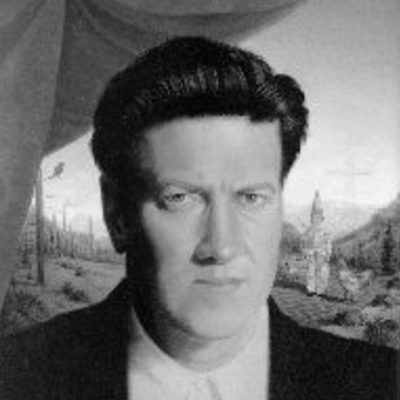
A “fanatical Lynch fan from way back,” David Foster Wallace visits the set of Lost Highway, never actually talks to the director, and writes a profile.
Christian Audigier is the man behind Von Dutch and Ed Hardy. The massive succes of his garish and expensive creations may say more about the power of celebrity than about fashion.
An awkward journalist-Russell Crowe friendship turns even more awkward.
The champ is now a vegan, claims to be broke, and says he feels freer than ever before. “I have this uncanny ability to look at myself in the mirror and say, ‘This is a pig. You are a fucking piece of shit.’”