A captured bank robber makes a remarkable claim.
cia
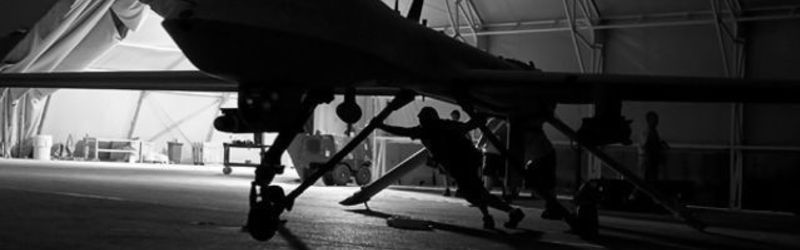
The origin story of the C.I.A.’s covert drone war, which began with the 2004 killing of a Pashtun militant, the result of a secret deal for access to Pakistani airspace.
How the CIA used a fake science fiction film to sneak six Americans out of revolutionary Iran. The declassified story that became Ben Affleck’s Argo.
The story of Thor Holm Hansen—”Norwegian country singer, a former Outlaws motorcycle chieftain, and an ‘ambassador at large’ to a rebel Haitian government”—who claims to be back in Florida to locate his missing daughter.
In November 1985, a woman who appeared to be a homeless drifter staked out the offices of 80-year-old banker Nicholas Deak, waited until he returned from lunch, then executed Deak and his secretary. As police wrestled her to the floor, she said “Don’t hurt me. He told me I could carry the gun.”
How John Kiriakou, a public opponent of US torture policy, became the first CIA officer convicted of leaking classified information to the press.
The disappearance of the mysterious “Pakistani asset” that helped the CIA zero in on Bin Laden.
A CIA veteran remembers his Soviet nemesis, Leonid Vladimirovich Shebarshin, who was the chairman of the KGB for a single day during the 1991 coup against Gorbachev, and committed suicide in Moscow in March.
Uncovered letters reveal ties between the literary magazine and the CIA’s Congress for Cultural Freedom.
How the CIA, under a program called MK-ULTRA, used a San Francisco apartment to dose johns with LSD.
The son of Jim Nicholson, a former CIA agent convicted of espionage, follows in his father’s footsteps.
The transcript from an lecture presented by In-Q-Tel, the CIA’s venture-capital arm, on the ethics of drones, military robots, and cyborg soldiers.
The CIA’s declassified account of the two decades two young officers spent as captives after being shot down over China during the Korean War.
Drones, renditions, and underground prisons; inside the war on terror’s African front.
In the eighteen years since the infamous “Black Hawk Down” incident in Mogadishu, US policy on Somalia has been marked by neglect, miscalculation and failed attempts to use warlords to build indigenous counterterrorism capacity, many of which have backfired dramatically. At times, largely because of abuses committed by Somali militias the CIA has supported, US policy has strengthened the hand of the very groups it purports to oppose and inadvertently aided the rise of militant groups, including the Shabab.
When a CIA operation in Pakistan went bad, leaving three men dead, the episode offered a rare glimpse inside a shadowy world of espionage. It also jeopardized America’s most critical outpost in the war against terrorism.
On January 27th in Lahore, an American named Raymond A. Davis stopped his Honda Civic and shot two Pakistani men, then made a failed attempt to flee. Beyond those basic facts, little is agreed upon, and the murders have ignited a diplomatic crisis, which only intensified with the revelation that Davis was a CIA subcontractor.
A profile of Valerie Plame and Joe Wilson, published at the height of the controversy.
Throughout the ’50s and ’60s, media outlets including the New York Times and CBS News provided the CIA with information and cover for agents. Then everyone decided to pretend it had never happened.
The boyish CEO of America’s largest and most controversial mercenary force, Blackwater, also happened to be a C.I.A. agent.