A profile of the late critic.
Media
A wounded soldier is groomed for his media appearances in this setpiece from Abrams' satirical novel.
"Kyle Pilley was one of the best moneymakers the division had seen in the past six months and Harkleroad was practically piddling his pants with glee at the thought of all the goodwill his story would buy them in the mainstream media. He was already laying plans for Pilley to be interviewed, via remote satellite, by the Big Three morning-breakfast news shows (Good Morning America was on board, Today and CBS This Morning were teetering on the brink of a yes), not to mention features in the New York Times, Los Angeles Times, and, if Harkleroad was really, really lucky, Time and/or Newsweek. Yes, Kyle Pilley was the best thing to happen to Lieutenant Colonel Eustace Harkleroad and the rest of the Shamrock Division since they’d entered Iraq."
“If you have read 6,000 books in your lifetime, or even 600, it’s probably because at some level you find “reality” a bit of a disappointment.”
The backstory of “The Duke in His Domain,” Truman Capote’s 1957 New Yorker profile of Marlon Brando.
I can’t ask anything. Once in a while if I’m forced into it I will conduct an interview, but it’s usually pro forma, just to establish my credentials as somebody who’s allowed to hang around for a while. It doesn’t matter to me what people say to me in the interview because I don’t trust it.
“Has anybody in Westchester County ever called the New York Times his or her ‘friend’? I realize that the rest of America, in its post-Katrina fatigue, is pretty tired of hearing New Orleanians, the city’s acolytes and defenders, always carrying on about how it’s the most unique city in America, but, the fact is, it is. Get over it.
And so, too, is its newspaper.”
How Cosmo, with 64 international editions and a readership that would make it the world’s 16th largest country, conquered the globe.
A 7,000-word anatomy of the chaotic 9 minutes after the U.S. Supreme Court issued its health care ruling.
A profile of Larry King at the height of his fame and on the heels of his sixth divorce.
On the mid-sixties birth of America’s underground newspaper movement and the rise of The Realist, East Village Other, Berkeley Barb, and more.
As Playboy magazine moves to Los Angeles, the writer considers its place in the Midwest.
No other general interest magazine tried to reach readers in the wide swathe of land between New York and California. “It was a Midwestern magazine, designed for people there. If you wanted it to be hip, edgy, go toe-to-toe with GQ, you were making a mistake,” said Chris Napolitano, a former executive editor who began at Playboy in 1988.
The strange saga of Sarah Phillips, who went from message board commenter to ESPN gambling columnist and hid her identity from editors, scamming many of the people she met along the way.
On the last weekend of April 2011, two things happened in Washington D.C.: the annual White House Correspondents Dinner and the decision to raid Osama bin Laden’s compound. This is the story of how both transpired.
Jimmy McNulty, Mike Daisey, and the problems with skirting the system to get to the greater truth.
How a mysterious twitching epidemic overtook one Western New York town.
Why “Father of Botox” Arnold Klein, whose famous clients once included Michael Jackson and Elizabeth Taylor, thinks everyone’s out to get him.
A fifteen year history of the music site Pitchfork detailing its prescient take on the relationship between culture and consumption.
On the utility of euphemisms:
In the upper reaches of the British establishment, euphemism is a fine art, one that new arrivals need to master quickly. “Other Whitehall agencies” or “our friends over the river” means the intelligence services (American spooks often say they “work for the government”). A civil servant warning a minister that a decision would be “courageous” is saying that it will be career-cripplingly unpopular. “Adventurous” is even worse: it means mad and unworkable. A “frank discussion” is a row, while a “robust exchange of views” is a full-scale shouting match. (These kind of euphemisms are also common in Japanese, where the reply maemuki ni kento sasete itadakimasu—I will examine it in a forward-looking manner—means something on the lines of “This idea is so stupid that I am cross you are even asking me and will certainly ignore it.”)
A profile of Rebekah Brooks, who started as a secretary at News of the World and became CEO of News International by 41, developing an incredibly close relationship with Rupert Murdoch along the way.
Joan Didion versus the boys on the bus:
American reporters “like” covering a presidential campaign (it gets them out on the road, it has balloons, it has music, it is viewed as a big story, one that leads to the respect of one’s peers, to the Sunday shows, to lecture fees and often to Washington), which is one reason why there has developed among those who do it so arresting an enthusiasm for overlooking the contradictions inherent in reporting that which occurs only in order to be reported.
The dissolution of Brooklyn softcore skin-mag Jacques and the marriage of the couple that created it.
On “If You Are the One”, the smash hit Chinese dating show that raised the ire of censors.
Caitlin Curran was fired from WNYC for attending an Occupy Wall Street protest. The author explains why her boss was wrong.
Breaking the news of the Kennedy assassination, an oral history:
Wicker: [In the press room] we received an account from Julian Reed, a staff assistant, of Mrs. John Connally’s recollection of the shooting…. The doctors had hardly left before Hawks came in and told us Mr. Johnson would be sworn in immediately at the airport. We dashed for the press buses, still parked outside. Many a campaign had taught me something about press buses and I ran a little harder, got there first, and went to the wide rear seat. That is the best place on a bus to open up a typewriter and get some work done.
On Michael Lewis and the global financial crisis.
Previously: The Michael Lewis World Tour of Economic CollapseThe Starbucks-fueled saga of how Jim Romenesko, beloved journalism blogger, took an early retirement.
On the TechCrunch founder’s venture capital fund, and a new breed of startup investor.
As Twitter-loving VC investors have become brand names themselves (Fred Wilson, Marc Andreessen, Chris Sacca), what one might call the auteur theory of venture capitalism has emerged—the idea that startup companies bear the unique creative signature of those who invested in them. To study a venture capitalist’s portfolio is to study his oeuvre.
On conservative radio host John Ziegler and “the strange media landscape in which political talk radio is a salient.”
How the media and law enforcement fingered the wrong man for the 1996 Olympic Park bombing.
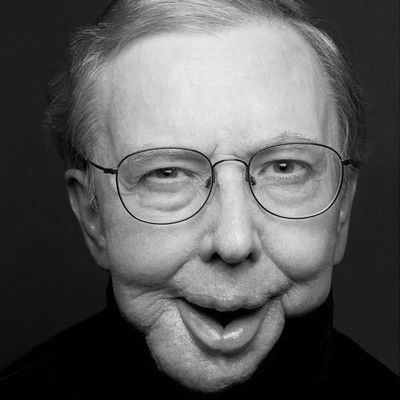
The death of the journalist who exposed dark secrets about Islamic extremism in Pakistan’s military.
The anatomy of a 1930 epidemic that wasn’t:
Was parrot fever really something to worry about? Reading the newspaper, it was hard to say. “not contagious in man,” the Times announced. “Highly contagious,” the Washington Post said. Who knew? Nobody had ever heard of it before. It lurked in American homes. It came from afar. It was invisible. It might kill you. It made a very good story. In the late hours of January 8th, editors at the Los Angeles Times decided to put it on the front page: “two women and man in Annapolis believed to have 'parrot fever.'"
"Here is what Jack Shafer is," says Erik Wemple, who blogs about the media for washingtonpost.com. "Obviously, very talented, tremendously original and highly informed. But more important, he is utterly uncorrupted by friendship, money, power, anything. He is ruthless with people he doesn't know, but what is impressive is how ruthless he can be with the people he knows. He's impervious to outside influence, and it's a glorious thing to watch."
SHRIVER: Regarding your Playboy exposé, I know you've discussed this a great deal, but I'd like to ask you this: You've said that you were glad you did it. What role do you think that exposé played in your early career and the notoriety you've achieved? Is there a similar exposé that someone could do today--something that would be as shocking? STEINEM: It took me a very long time to be glad. At first, it was such a gigantic mistake from a career point of view that I really regretted it. I'd just begun to be taken seriously as a freelance writer, but after the Playboy article, I mostly got requests to go underground in some other semi-sexual way. It was so bad that I returned an advance to turn the Playboy article into a paperback, even though I had to borrow the money. Even now, people ask why I was a Bunny, Right-Wingers still describe me only as a former Bunny, and you're still asking me about it-almost a half-century later. But feminism did make me realize that I was glad I did it--because I identified with all the women who ended up an underpaid waitress in too-high heels and a costume that was too tight to breathe in. Most were just trying to make a living and had no other way of doing it. I'd made up a background as a secretary, and the woman who interviewed me asked, "Honey, if you can type, why would you want to work here?" In the sense that we're all identified too much by our outsides instead of our insides and are mostly in underpaid service jobs, I realized we're all Bunnies--so yes, I'm glad I did it. If a writer wants to do a similar exposé now, there's no shortage of stories that need telling. For instance, go as a pregnant woman into so-called crisis pregnancy centers and record what you're told to scare or force you not to choose an abortion-including harassing you, calling your family or employer. Or pretend to be a woman with a criminal record and see how difficult it is to get a job. Or use a homeless center as an address and see what happens in your life. Or work at an ordinary service job in the pink-collar ghetto, as Barbara Ehrenreich did in Nickel and Dimed. But be warned that if you're a woman journalist and you choose an underground job that's related to sex or looks, you may find it hard to shake the very thing you were exposing.
Codenamed “Synapse”, the Match algorithm uses a variety of factors to suggest possible mates. While taking into account a user’s stated preferences, such as desired age range, hair colour and body type, it also learns from their actions on the site. So, if a woman says she doesn’t want to date anyone older than 26, but often looks at profiles of thirty-somethings, Match will know she is in fact open to meeting older men. Synapse also uses “triangulation”. That is, the algorithm looks at the behaviour of similar users and factors in that information, too.
An oral history.
Tom Freston: We knew we needed a real signature piece that would look different from everything else on TV. We also knew that we had no money. So we went to NASA and got the man-on-the-moon footage, which is public domain. We put our logo on the flag and some music under it. We thought that was sort of a rock ’n’ roll attitude: “Let’s take man’s greatest moment technologically, and rip it off.”
What happened to Wesley Autrey after he jumped in front of a New York City subway train to save a man’s life.
A profile of Rupert Murdoch from 1995, as he fought monopoly charges in the U.S. and U.K. and prepared to expand his empire into China.
Murdoch is a pirate; he will cunningly circumvent rules, and sometimes principles, to get his way, as his recent adventures in China demonstrate.
Because of what happened in Georgia, Ms. Grace has said over and over, she knows firsthand how the system favors hardened criminals over victims. It is the foundation of her judicial philosophy, her motivation in life, her casus belli. And much of it isn’t true.
On the oeuvre of Glenn Beck:
"The undisputed high point of Beck’s tenure in Baltimore was an elaborate prank built around a nonexistent theme park. The idea was to run a promotional campaign for the fictional grand opening of the world’s first air-conditioned underground amusement park, called Magicland. According to Beck and Gray, it was being completed just outside Baltimore. During the build-up, the two created an intricate and convincing radio world of theme-park jingles and promotions, which were rolled out in a slow buildup to the nonexistent park’s grand opening… On the day Magicland was supposed to throw open its air-conditioned doors, Beck and Gray took calls from enraged listeners who tried to find the park and failed. Among the disappointed and enraged was a woman who had canceled a no-refund cruise to attend the event." — from Alexander Zaitchik’s Common Nonsense: Glenn Beck and the Triumph of Ignorance
Tom Wolfe on the development of ”New Journalism,” an unconventional reporting style which he helped to pioneer.
I had the feeling, rightly or wrongly, that I was doing things no one had ever done before in journalism. I used to try to imagine the feeling readers must have had upon finding all this carrying on and cutting up in a Sunday supplement. I liked that idea. I had no sense of being a part of any normal journalistic or literary environment.
This past Memorial Day weekend, Steven T. Florio, the president and CEO of Conde Nast Publications, made a dramatic change at The New Yorker, the most illustrious of the 17 magazines he runs for billionaire S.I. "Si" Newhouse Jr. He fired his own brother.
A profile of the founding editor of Radar and current editor of The Fix, penned by a former employee.
“Radically brilliant. Absurdly ahead of its time. Ridiculously poorly planned.” An oral history of the National Sports Daily.
John Ross, rebel reporter, became the sort of devoted gringo scribe who would give up drugs and drinking in order to better write about the native revolutionaries; the sort of man who used dolls to preach armed revolution to high schoolers in the weeks after September 11th.
On Silvio Berlusconi’s hedonism.
Berlusconi is Italy’s waning Hugh Hefner, alternately reviled and admired for his loyalty to his own appetites—except that he’s supposed to be running the country.
“Winning” in Hollywood means not just power, money, and complimentary smoked-salmon pizza, but also that everyone around you fails just as you are peaking.
Confessions of a yellow journalist:
Let me say that I did very little faking, although there was no special prejudice against it, so long as the fake wasn't libelous.
A profile of Larry Garrison, the man who “gets paid to bring tabloid stories to TV news programs.”
An interview with McPhee on his writing process, how he got his start at The New Yorker, and why he never understood how New Journalism could be called a revolution. “Anytime I was called a New Journalist I winced a little with embarrassment.”
Henry Luce and Time vs. Harold Ross and The New Yorker. What was at stake in the epic magazine rivalry of the 20th century?
NYT journalist David Rohde’s alternately terrifying and absurd first person account of his kidnapping en route to an interview in Southern Afghanistan and the subsequent seven months he, along with his translator and driver, spent in captivity in the tribal areas of Pakistan.
A profile of the “lawyer-turned-journalist-turned-talk-show-host-turned-journalist.”
How a herbalist who used to swim naked with Allen Ginsberg became one of conservative talk radio’s most vicious—and listened to—hosts.
The underage prostitution study that was cited extensively in the congressional hearings that resulted in the removal of Craigslist’s Erotic Services turns out to be the work of a for-hire business consulting firm and, scientifically, completely bogus.
The perilous routes through which information—video footage, secret documents, radio broadcasts—flow in and out of North Korea through its porous borders with China.
What did $3M paid to a US consulting firm get Qaddafi? A glowing profile in The New Republic, written by a Harvard professor, who travelled to Tripoli to interview him. On the consulting company’s dime. Which he failed to disclose.
Kansas City’s most powerful political journalist is a 36-year-old blogger who resides in a porn lair in his mother’s basement, posting rants on local government and bikini shots 24-hours-a-day.
A profile of Alex Jones, who draws a bigger online audience than Glenn Beck and Rush Limbaugh combined.
How a journalism professor named Dan Sinker became the most entertaining part of the Chicago mayoral race.
A manifesto from one of the first professional bloggers on a new ‘golden age of journalism.’
A profile of Heather Armstrong, a mom in Salt Lake City who has more than 1.5 million Twitter followers and a personal blog generating $30,000-$50,000 monthly.
A look at the legislative lobbying efforts of Michael Bloomberg’s $7 billion-per-year company. While the mayor has no specific day-to-day role at Bloomberg LP, he maintains “the type of involvement that he believes is consistent with his being the majority shareholder.”
The story of three months spent training reporters in Saudi Arabia, where the press is far from free. “I suspected that behind the closed gates of Saudi society there was a social revolution in the making. With some guidance, I thought, these journalists could help inspire change.”
When Conan O’Brien left NBC, he agreed to stay off TV for months and stay quiet about the network and its executives. The agreement contained no mention of social media, however. On the origins of a digital renaissance.
The original new journalist on his start at the Times, his daily writing routine, and why he’s always taken notes on shirt boards.
On the cloak and dagger dealings between The New York Times and WikiLeaks. Adapted from Executive Editor Bill Keller’s forthcoming ebook, Open Secrets: WikiLeaks, War and American Diplomacy: Complete and Updated Coverage from The New York Times.
A primer on Peretz, longtime owner/editor of The New Republic, committed Zionist, and author of the line “Muslim life is cheap.”
A profile of A.J. Daulerio, editor of Deadspin and procurer of, among other things, cell phone pics of Brett Favre’s penis.
George Lois never actually worked at Esquire, he simply designed the most iconic magazine covers of the 60s as a moonlighting gig while revolutionizing (and, generally pissing off) the advertising industry by day.
But the web is not just some kind of magic all-absorbing meta-medium. It's its own thing. And like other media it has a question that it answers better than any other. That question is: Why wasn't I consulted?
The backstory on Julian Assange’s relationship with the Guardian and the New York Times.
How Zion, Ill., a fundamentalist Christian settlement with a population of 6,250, created one of the most popular stations in the country during the early days of radio.
A profile of Esquire features writer Chris Jones. Plus: the Jones archive on Longform.org.
Nick Denton is rebooting his entire Gawker empire—and his vision is drawn more from TV than blogs.
The unedited transcript of an interview with Julian Assange for the cover story of Forbes’ December issue. His next target? A major U.S. bank.
Its editors still live in different cities, still work different careers, and still treat Boing Boing as a (lucrative) hobby.
A veteran black Metro columnist, adrift in a rapidly shifting D.C., rankles an incoming generation of gentrificationists.
A survey on where the industry is headed. Says one agency veteran: “Marketing in the future is like sex. Only the losers will have to pay for it.”
In Detroit, the aftermath of a reality-TV SWAT raid that killed a sleeping seven-year-old.
A review of several books on Rupert Murdoch first criticizes the authors for not grasping the many sides of their subject, then offers a thesis of its own. He’s “not so much a man, or a cultural force, as a portrait of the modern world.”
The perpetually underpaid author takes a moonlighting job with Demand Media, publisher of search-engine optimized articles with titles like “Hair Styles for Women Over 50 With Glasses”, absurdity ensues.
The article that spawned a school of thought; an elegy for the age of the megahit and a primer for the niche-based future.
At 25, Stephen Glass was a reporter wunderkind, regularly filing incredible pieces for the largest magazines. When suspicion fell on his sources, things started to really get strange. It wasn’t just sources and organizations he was inventing, but whole stories.
On public radio and the emerging genre of shows inspired by This American Life.
A profile of Edna Buchanan, a Pulitzer Prize-winning crime reporter for the Miami Herald during its heyday.
A profile of Anas Aremeyaw, an investigative journalist in Ghana who’s willing to do anything–and pose as anyone–to get the story.
Why did a veteran BBC on-air personality confess on camera to a mercy killing he did not commit?
In the last decade, newsrooms across the country have adopted a “do more with less” strategy. It’s a kamikaze mission.
Throughout the ’50s and ’60s, media outlets including the New York Times and CBS News provided the CIA with information and cover for agents. Then everyone decided to pretend it had never happened.
The sordid, petty world of “gossip item” sources for the New York Post and The Daily News, and what happens when they go bad.
Mark Zuckerberg, the founder of Facebook, on the eve of the release of The Social Network, believed to be a deeply unflattering portrait of him and the genesis of his company.
Our debt, conscious or unconscious, to what has come before, and what it can tell us about copyright, the public domain, and the complicated relationship between creators and consumers.
Jimmy Lai, a Hong Kong tabloid tycoon, thinks he’s found the future of journalism: an animation assembly line that can crank out clips recreating–or anticipating, or imagining–breaking news.
Tabloid newspapers were caught hacking into the voicemails of Prince William and Prince Harry. One reporter was arrested - but an investigation shows the eavesdropping was far more elaborate and widespread.
A profile of the man who helped invent the modern art of presidential spin and came to embody the blurry line between journalist and government official.
For sixty years, the weekly Evening Whirl attacked the drug lords, whoring preachers, and hypocritical bourgeoisie of St. Louis’ black community, sometimes in rhyming Iambic couplets.
The New York Times reveals the deception of 27-year-old reporter Jayson Blair.
Scott Dadich, 34, has been described by a former boss as a “combination of Pelé and Jesus” and is now tasked with figuring out the future of the magazine. All he’s got in his new Times Square office: an iPad and a book of George Lois’ Esquire covers.
Evidence of a decades-old hotel trist with a teenage intern costs a beloved Chicago columnist his job - and his identity.
Selections from the leaked documents about the war in Afghanistan portray a military effort that is ineffective and frequently absurd. (Part of the NYT War Logs series.)
The backstory of the publication of WikiLeaks’s Afghanistan logs.
Seventeen years after taking the iconic "Afghan Girl" photograph for National Geographic, Steve McCurry went back to find her.
A war correspondent decides to rent a house in Baghdad to save money. Complications ensue.
In January 1966–the same month In Cold Blood was first published–Truman Capote sat down with George Plimpton to discuss the new art form he liked to call “creative journalism.”
On September 28, 1980, the Washington Post published a story by an ambitious young reporter about an 8-year-old boy addicted to heroin. The story won a Pulitzer. The boy didn’t exist.
An interview with Clay Shirky on “why no medium has ever survived the indifference of 25-year-olds.”
Saad Mohseni, Afghanistan’s first media mogul and a business partner of Rupert Murdoch, produces everything from nightly news broadcasts to the controversial Afghan version of American Idol.
“But the journalism itself is not free. It can’t be free. And if it is free, it’s not going to be very good.”
How a French journalist recruited a posse of Brazilian parking lot attendants and pizza-delivery guys and created Hollywood’s most addictive entertainment product.
How the National Enquirer became a 2010 Pulitzer contender without straying from its roots as a supermarket tabloid.
The nation watched live as Robert O’Donnell rescued Baby Jessica from that well in Texas in October, 1987. Then they stopped watching, and Robert O’Donnell was lost without the attention.
A young journalist’s low-paid odyssey through publications from the Hong Kong iMail to Gawker adrift in the “nothing-based economy.”
Yeah, you’ve seen that headline before. The difference? This time it’s not journalists trying to do the saving. It’s Google.
Bill Conradt, a well-known prosecutor, never showed up at the house in Murphy, Texas, where police and a crew from NBC’s To Catch a Predator were waiting. So they, along with a SWAT team, went to Conradt.
Al-Jazeera English dominated the international coverage of the 2008-2009 Gaza war. And now it’s poised to invade North America.
The editors of N+1 recap the revolution that is/was the internet with pit-stops to survey the Bolshevik Revolution, the NYT’s messy relationship with tech, and the value of an ad.
How the daily e-mail from Mike Allen, Politico’s star reporter, has become a morning ritual for Washington’s elite.
According to Lou Dobbs, we’re wrong about his stance on illegal immigrants, wrong about why he quit CNN, and wrong about his presidential aspirations. Well, we might actually be right about that last thing.
Murderous editors, allegations of insanity, connections to the Church of Satan, illegal predatory-pricing schemes, and more than $21 million on the line—the crazy alt-weekly war in San Francisco has it all.
“I could give a flying crap about the political process,” Beck says. Making money, on the other hand, is to be taken very seriously. And he’s very good at it: Beck pulled in $32 million in the last year.
David Remnick, editor of the New Yorker, has written a new Obama biography expected to be a best-seller. His frugal streak has kept his staff intact. And yet, after a dozen years, he’s still the new guy at Condé Nast.