In 2011, just before Christmas, a tiny Spanish town won 120 million Euros in the lottery. A trip to the new Sodeto.
GQ
Aside from the wealthiest players, nine out of 10 NFL athletes are likely to be insolvent within 10 years of retirement. A new executive MBA program aims to change that.
A collection of war stories told by women who have seen combat while serving in the U.S. military.
A profile of Kehinde Wiley, a painter who inserts the “brown faces” that have historically been relegated to the background in Western art.
A trip to the French island of Réunion to report on a bloody battle between surfers and sharks.
How the author of Friday Night Lights spent more than half a million dollars over three years on “eighty-one leather jackets, seventy-five pairs of boots, forty-one pairs of leather pants, thirty-two pairs of haute couture jeans, ten evening jackets, and 115 pairs of leather gloves.”
Navigating the sewers of London and summiting the peaks of Paris with a group of urban explorers.
The author travels to Dubai; Arab children see snow for the first time, which is made by a Kenyan.
In a matter of months she became one of the world’s most famous porn stars. Three years later, she was dead. The rise and fall of Savannah.
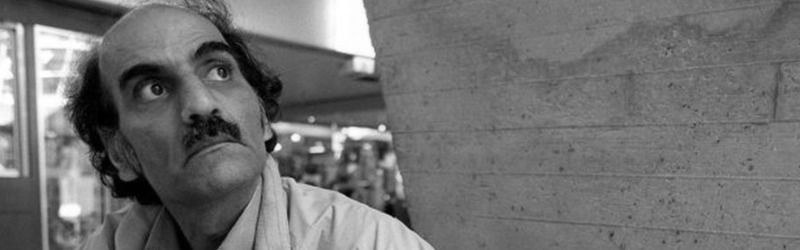
The disappearance of the mysterious “Pakistani asset” that helped the CIA zero in on Bin Laden.
A field report from Electric Daisy Carnival, a three-night bacchanal in the Las Vegas desert attended by “100,000 wasted hedonists scantily dressed in furry underwear.”
As a 15-year runaway hitchhiker, a trucker nearly killed the writer. Twenty seven years later, she investigates whether her attacker was truck stop serial killer Robert Ben Rhoades, who often kept his victims chained in the back of his truck for weeks before killing and dumping them.
A jailhouse interview with Steve Washak, who made millions selling “natural male enhancement” pills.
A torrid phone sex affair begins with a random call in a motel and ends a year later with a face-to-face meeting.
Inside ArtPrize, a competition in Michigan that’s either a “naked bid to buy cultural cachet in a flyover-country backwater” or a “populist wresting of aesthetic judgment from the snobbery of elites in New York and Los Angeles,” depending on who you ask.
An essay on Alcor – “the Arizona cryonics company that has put the body of Boston Red Sox Hall of Famer Ted Williams in cryogenic suspension, in the hope he may one day rise again” – and the desire to live forever.
How Bernardo Provenzano, “boss of all bosses of the Sicilian Mafia” and fugitive for more than 40 years, got caught.
The writer on his father’s religious devotion to personal style. Among the maxims: “the turtleneck is the most flattering thing a man can wear”; “there is nothing like a fresh burn”; and “always wear white to the face.”
The highest-ranking CIA officer to be convicted of spying passes the tricks of the trade along to his son.
On the escape of hundreds of insurgents from Kandahar’s Sarposa Prison through a tunnel dug from the outside, and an unlikely suspect: the jail’s former warden.
“Being Justin Bieber means having an endless number of T-shirts to destroy.” A profile of the pop star just after his 18th birthday.
A cop kills a fellow officer during a drug bust and claims it was an accident. Others suspect that it wasn’t.
A married father of two tracks down his free-living doppelgänger, a musician who has avoided responsibility at every turn, to see who’s happier.
The story of former Vikings linebacker Fred McNeill and the lasting impact of his concussions.
George Wright spent more time on the lam, 41 years, than any fugitive in American history. Last fall, after being caught in a rural Portuguese village, he told his story.
How a lonely, self-taught hacker found his way into the private emails of movie stars – and into the underworld of the celebrity-skin business.
Office culture in Paris held that it was each person's responsibility, upon arrival, to visit other people's desks and wish them good morning, and often kiss each person once on each cheek, depending on the parties' personal relationship, genders, and respective positions in the corporate hierarchy. Then you moved on to the next desk. Not everyone did it, but those who did not were noticed and remarked upon.
How the golfer hasn’t changed, post-scandal.
Try as his publicity squad might, it's tough to maintain—or now restore—the Tiger Image when former insiders sprout secret-sharing campaigns. "It's always a divorce," David Feherty, longtime commentator and golf-gab-show host, told me recently. "Tiger expects the curtains to remain drawn, and when somebody opens them, it pisses him off. He has appeared superhuman for so long, and it's like he feels the need to perpetuate that myth."
Interviews with modern travelling salesmen. The article inspired Kirn’s novel Up in the Air.
What makes this a truly military culture, besides its overwhelming maleness, its air of emotional deprivation and the lousy rations, is its obsession with rank and hierarchy. Like jungle gorillas, business travelers always know where they stand versus the rest of the group. In this parallel universe of upgrade vouchers and priority-boarding privileges, everyone has a number and a position, and who gets that open aisle seat in first class means even more on the road then who earns what.
The strange saga of a 2009 Gary Oldman profile that his manager, Douglas Urbanski, aggressively sought to kill.
"Mr. Heath's motives are dishonest in the least...supposed 'journalism' at its very lowest...while Mr. Heath may find his sloppy reporting cute, in fact it is destructive, and he knows it...his out of context and uninformed pot shots...out of context swipes at me...stretching the most basic rules of journalism...in certain ways has aspects of a thinly disguised hit piece... a hole filled swiss cheese of wrong facts, misleading insinuations, and in general lazy, substandard, agendized non-reporting...again and again Mr. Heath attempts to turn the piece into a political piece...GQ has allowed Heath to go for the cheap shot..."
On a U.S. soldier burned to the verge of death and the virtual-reality video game doctors used as treatment when he came home.
Terrell ‘T.O’ Owens is 38, currently unemployed, nearly bankrupt after losing his shirt in a electronic-bingo entertainment complex development plan gone bust, father of four children (one of which he has never met), and bowls frequently.
In a dark echo of Rear Window, a wheelchair-bound hacker seizes control of hundreds of webcams, most of them aimed at young women’s beds.
Inside carpenter brothers Ryan and Dylan, and their stripper sister Lee-Grace Dougherty’s eight-day, fifteen-state, AK-47-wielding crime spree.
On switching to the gold standard and a trip to the Yukon to witness the modern gold rush.
A 21-year-old falls into a coma from which he’ll never emerge. His mother, desperate to grant his wish of becoming a father, has his sperm preserved. Two years later, after a fruitless search for other alternatives, she finds a willing doctor and tries one last option: carrying her son’s child herself.
The West Memphis Three, teenagers who were convicted in 1993 of brutal killings that they certainly did not commit on the basis of local gossip that they were satanists (as evidenced by Metallica fandom), suddenly found themselves released this summer after over 17 years in prison. But what life awaited them?
"Of course, sexuality has never only been about reproduction, obviously, with human beings, anyway. But at the moment it's almost cut free to kind of float wherever it will float. And sexuality has been mixed with many things that I think the ancients would have been surprised to find it mixed with."
Years of guilt and shame over an obsession with hardcore porn drives the Orthodox Jewish-raised author to meet the the personalities behind the darkest and most distrurbing X-rated subgenres and ask, “Do you ever feel guilty?”
Ten years ago, a man moved to Marsing, Idaho. He had a strange accent and didn't know much about cattle. The folks in Marsing were a little skeptical at first, but when he built a house and started a family, he earned his neighbors' acceptance. Last February, while buying hay, he was cornered by federal agents and arrested for violent crimes tied to the Boston Mob. And the town wondered: Who the hell is Jay Shaw?
Two weeks spent walking across Provence.
There is something about entering an ancient town on foot that's radically different from entering the same place by car. Keep in mind that these old French towns were all designed by people on foot for people on foot. So when you walk in, you're approaching the place as it was intended to be approached—slowly and naturally, the way Dorothy came upon Oz (spires rising in the distance, a sense of mounting mystery: What kind of city will this be?).
Khrzhanovsky came up with the idea of the Institute not long after preproduction on Dau began in 2006. He wanted a space where he could elicit the needed emotions from his cast in controlled conditions, twenty-four hours a day. The set would be a panopticon. Microphones would hide in lighting fixtures (as they would in many a lamp in Stalin's USSR), allowing Khrzhanovsky to shoot with multiple film cameras from practically anywhere — through windows, skylights, and two-way mirrors. The Institute's ostensible goal was to re-create '50s and '60s Moscow, home to Dau's subject, Lev Landau. A Nobel Prize–winning physicist, Landau significantly advanced quantum mechanics with his theories of diamagnetism, superfluidity, and superconductivity. He also tapped epic amounts of ass.
GQ: Your relationship with your biological father seems complicated. Lil Wayne: He don't give a shit about me. And I don't give a shit about him. I know his friends be like, "Damn, nigga. That is not your son. Stop lying. Nigga, you could be living in a motherfucking ranch right now, nigga." You know, whatever your father's into, if you're rich, you're gonna get him that shit. I would've got that nigga all kinda harnesses, ranches—you know what I mean? I saw the nigga recently—I had a show in New Orleans. And I ain't afraid to put this out there, 'cause this is just how much I don't give a fuck about a nigga, and I want people to see how you're not supposed to be. I was parked at the hotel, and I saw him walking outside the hotel. Just walking back and forth. I'm like, "Look at this nigga! You gotta be looking for me." If Lil Wayne got a show in New Orleans, the whole of New Orleans knows. Basically, you're not there for nothing else but me. So I call my man on the bus. I'm like, "Nigga, that's my daddy." He's like, "Word? Oh shit. That nigga looks just like you!" So I tell my man, "Go see what's up." So my man goes to holla at him. He tells my man, "Oh. I didn't know y'all was here. I'm here waiting for this little ho to get o¬ff. Get off¬ work from the hotel." For real? That's when I was like, "Typical Dwayne Carter." So that's what's up with me and my real father. I don't want to look like his ass, but I do.
When your house is the set of One Tree Hill:
On one shoot, I remember, I'd been confused about where they needed to set up (confession: hungover), and as a result neglected to clean the bedroom. Later, a crew guy—the same one who'd told me about Blue Velvet—said, "I'm not used to picking up other people's underwear." I felt like saying, Then don't go into their bedrooms at nine o'clock in the morning! Except… he was paying to be in my bedroom.
Two days after the Japanese tsunami, after the waves had left their destruction, as rescue workers searched the ruins, news came of an almost surreal survival: Miles out at sea, a man was found, alone, riding on nothing but the roof of his house.
On the life of illegal immigrant fruit pickers.
Without 1 million people on the ground, on ladders, in bushes—armies of pickers swooping in like bees—all the tilling, planting, and fertilizing of America's $144 billion horticultural production is for naught. The fruit falls to the ground and rots.
From the Econo-Lodge to the Porcupine Freedom Festival, on the campaign trail with former New Mexico governor Gary Johnson, the fringe candidate who doesn’t really seem he should be a fringe candidate.
Rick Ross was born William Leonard Roberts II in 1976, and he borrowed his stage name (and the associated big-time cocaine-selling hustler persona) from the legendary L.A. drug lord Freeway Ricky Ross. But the website MediaTakeout uncovered a photograph of William Leonard Roberts II when he was a Florida corrections officer. Most people thought that'd be the end of his career. Freeway Ricky Ross then sued him for stealing his name. None of it mattered. Rick Ross the rapper just sold more records.
In Cleveland, TX, nineteen men and boys gang raped an eleven-year-old girl in an abandoned trailer. This is the story of the victim and her community.
A profile of a serial sex offender:
This is a story about how hard it is to be good—or, rather, how hard it is to be good once you’ve been bad; how hard it is to be fixed once you’ve been broken; how hard it is to be straight once you’ve been bent. It is about a scary man who is trying very hard not to be scary anymore and yet who still manages to scare not only the people who have good reason to be afraid of him but even occasionally himself. It is about sex, and how little we know about its mysteries; about the human heart, and how futilely we have responded—with silence, with therapy, with the law and even with the sacred Constitution—to its dark challenge. It is about what happens when we, as a society, no longer trust our futile responses and admit that we have no idea what to do with a guy like Mitchell Gaff.
As “Don’t Ask, Don’t Tell” comes to an end, a conversation with gay servicemen past and present.
An attempt to sort out whether Vick is truly a changed man or simply a very gifted football player who was bound to be forgiven.
Smigel: Louis comes up with, "What if he says, 'I'm the nurturing president,'and I've developed the ability to breastfeed!" And I'm like, "Yeah, that's great! And then let's have him open the shirt and he's got eight nipples and he can breastfeed dogs and cats." Colbert: We had already lost a lot of sponsors. [Starts singing] It's a beautiful root beer day, the folks from Mug Root Beer have agreed to stay. But you better not breastfeed any puppies today, or you sure as hell will be on your way. So be careful you little punk, Dana Carvey! Even I think it's odd I remember all of the lyrics. I am very impressive...remembering reasons why shows I'm on failed.
Jerry Lewis has had a spectacular sex life. On the road, of course, girls were everywhere—in his dressing room, back at his hotel. But even at home, when he was directing a film, sometimes he'd get to the set early for "a little hump," just to get the day started right. Joseph Levitch, as he was named upon his birth in Newark, New Jersey, had his first sexual experience seventy-three years ago, when he was 12. It was backstage at a club where his father, a singer and dancer who called himself Danny Lewis, was performing. The temptress was a twentysomething stripper named Trudine who lured the boy into her dressing room. "Whatever we did, I remember it took only a minute," Lewis recalls fondly. "She was a piece of work. She danced with a snake." He married his first wife, Patti, a singer with Jimmy Dorsey's band, when he was 19. They'd met after he dropped out of high school to go on the road, starting at the bottom in burlesque houses where comics took the stage in between strippers. These were the kinds of dives that were patronized by "guys in the front with the newspapers in their laps and the trench coats—a tough room, but you had to do it."
With Osama dead, U.S. intelligence is zeroing in on the remaining most dangerous terrorists alive, and one man is at the top of the list. Of the eighteen terror attacks attempted in the United States over the past two years, Anwar al-Awlaki’s fingerprints are on eight of them. The moderate turned radical is eloquent, he is popular— and he’s American.
Dr. Drew has turned addiction television into a mini-empire, offering treatment and cameras to celebrities who have fallen far enough to take the bait. His motivations, he insists, are pure:
Whether the doctor purposefully cultivates his celebrity stature for noble means or wittingly invites it because he himself likes being in the spotlight, he is operating on the assumption that his empathetic brand of TV will breed empathy instead of the more likely outcome, that it will just breed more TV.
When James Brown died on Christmas Day 2006, he left behind a fortune worth tens, maybe hundreds, of millions of dollars. The problem is, he also left behind fourteen children, sixteen grandchildren, eight mothers of his children, several mistresses, thirty lawyers, a former manager, an aging dancer, a longtime valet, and a sister who’s really not a sister but calls herself the Godsister of Soul anyway.
A profile of Chris Evans, star of the upcoming Captain America:
At this point, which was a…number of drinks in, it was easy to forget that it really was an interview, and I'd be lying if I said it didn't cross my mind that something might happen (and that we'd go to the Oscars and get married and have babies forever until we died?). But there was always the question of how much of it was truly Chris Evans, and whom I should pretend to be in response.
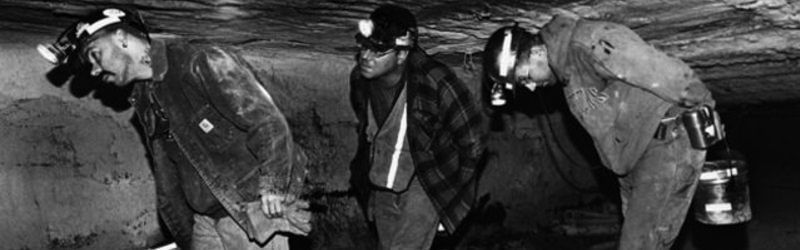
500 feet below ground with Ohio coal miners:
I followed them underground, home, to church, to the strip club where they drink and gossip and taunt and jab and worry about one another. I listened while they worried about Smitty, the loner of the group, who had just ordered himself a mail-order woman.
A ride-along with the guys tasked with demolishing the city’s 10,000 “abandoned, godforsaken homes.”
A rare interview with Gene Hackman, who says Welcome to Mooseport was his last movie, unless he “could do it in my own house.”
Having fallen on hard times, a former football star and the pride of his small town decides to rob the local bank. His weapons of choice: Craigslist, bear mace, and an inner tube.
A selection from our guide to bank heists for Slate.
On the eve of the release of The Tree of Life, a look back at the turbulent making of Terence Malick’s debut.
On the life of an American soldier AWOL in Canada:
I asked him what it's like to have the entire U.S. Army after you, and he thought for a moment and said slowly, "It's like I'm carrying a heavy rock in my backpack." This is as close to introspection as McDowell gets.
Doc moves quickly. He takes off his windbreaker, tosses his leather bag on the counter and unzips it. He pulls out a slate-blue polyester vest, V-necked, with six buttons. He raises his arms and jumps into it and then says, with an air of deep satisfaction, "Aah." Doc is proud of his bulletproof vest.
Three teenage boys decide to set sail after a night of drinking. They go missing for 51 days.
Nearly every American soldier injured in Iraq or Afghanistan is treated—for a few days at least—at a single hospital in Landstuhl, Germany.
From the Tower of Babel to the birthplace of Abraham, from Saddam’s ruined palaces to fortified blast-proof checkpoints, a diary from a nine-day, eight-night tour of Mespotamia/Iraq.
Depending on who you ask, Mohammed Jawad was either 12 or 17 when he was detained. Nobody disputes that he spent seven years at Guantánamo before he was exonerated. The story of a boy who grew up as a detainee.
Memories of the author’s teenage years, when his father pulled up stakes on a comfortable life in Baltimore to reinvent himself as the head of a S&L bank in Los Angeles.
The Gabrielle Giffords shooting, from the vantage point of three central figures: Daniel Hernandez helped save the congresswoman’s life; Patricia Maisch stopped the shooter from reloading; Bill Badger tackled him.
She was last seen leaving a pickup bar, her body was found the next morning in the dirt beside a football field. He was ten. Thirty-six years later, the author investigates his mother’s murder.
The Top Gun effect; how Hollywood became a factory for sequels, comic book and video game adaptations, and anything else easily marketed to under-25-year-old males.
A melancholic Billy Ray Cyrus on the trauma of being the father of a famous 18-year-old girl, his friendship with Kurt Cobain, and his favorite mullet nicknames (Kentucky Waterfall and Missouri Compromise).
A trip to Kingston, Jamaica to track down Bunny Wailer, a reggae legend now living “in his own private Zion.”
What has Ted Haggard, who left the New Life megachurch after admitting he purchased crystal meth and sexual favors from a male escort, been doing in the four years since? Selling insurance door to door and then… founding a new church and returning to the pulpit.
The diary of a Scranton, PA National Guardsmen tasked with guarding the highest profile prisoner in U.S history: a surprisingly amiable Saddam Hussein.
A profile of A.J. Daulerio, editor of Deadspin and procurer of, among other things, cell phone pics of Brett Favre’s penis.
How a burst blood vessel transformed the mind of a deliberate, controlled chiropractor into that of an utterly unfiltered, massively prolific artist.
Last year, an Mossad hit squad traveled to Dubai to assassinate a Hamas leader. They completed their mission, but were later humiliated when a twenty-seven minute video of their movements was posted online. How their cover got blown.
“In 2000, Zimbabwe’s dictator began kicking white farmers off their land. One man decided to stay.”
A tech neophyte looks for answers in Silicon Valley, “the last place in America where people are this optimistic.”
“Twenty-two years after being sent to prison for an unspeakable crime he did not commit, Calvin Willis walked out a free man, the 138th American exonerated by DNA evidence. He has won his freedom, yes, but how does a falsely accused man reclaim his life?”
Li Dao, a young Minnesota nurse, appeared in suicide chat rooms, contacted the most desperate, and made pacts to die with them via webcam. After some in the forum caught on, Dao disappeared; or rather, Dao had never existed at all. She was a middle-aged man. And he may have encouraged and witnessed dozens of live suicides.
As CEO of HBO, Chris Albrecht was responsible for putting The Wire, The Sopranos, and Sex and the City on the air. Then he choked his girlfriend outside a Vegas casino, got fired, and took a job running Starz.
Inside the conflict that has caused more deaths than any since WWII—with no end in sight.
A report from Camp Hope, the tent city that’s sprung up next to the Chilean mine where 33 men have been trapped since early August.
Four years after a disastrous MTV performance had led him to avoid the public, Rose was back on stage.
At age 17, Eustace Conway moved into the North Carolina woods. He hasn’t compromised since.
The relative prosperity of the Putin-era has thrown Russian bride-introduction tours for a loop, as a group of American bachelors learn in a series of Meet and Greets.
Not long ago, Rand Paul, opthalmologist and son of Ron, would have been written off as a wacky extremist. Thanks to his Dad and the Tea Partiers, he’s poised to become the most radical member of the U.S Senate.
Russian serial killer Alexander Pichushkin was so prolific that even he doesn’t know how many he killed.
Christian Audigier is the man behind Von Dutch and Ed Hardy. The massive succes of his garish and expensive creations may say more about the power of celebrity than about fashion.
A writer for Conan O’Brien on how The Tonight Show really ended and on how his boss got screwed.
Bill Murray grants a rare interview and appears to admit, among other things, that he occasionally approaches strangers from behind on the streets of NYC, puts his hands over their eyes, and says “guess who.”
An hour-by-hour account of the explosion and rescue effort on the Deepwater Horizon oil rig in the Gulf of Mexico.
In need of a new lead singer, Journey settled on an unknown 40-year-old from the Philippines whose clips they found online. Arnel Pineda was perfect: just a small-town boy, living in a lonely world.
How the National Enquirer became a 2010 Pulitzer contender without straying from its roots as a supermarket tabloid.
Banned in Russia and cut by Conde Nast from the GQ website, this story (presented in full) details the intrigue behind the Moscow apartment bombings, blamed on Chechens, that allowed Putin to rapidly ascend to power.
Step 1: awkward high school senior passes himself off as a flirtatious female student online. Step 2: he cons his male classmates into e-mailing him sexually explicit images of themselves. Step 3: extortion.
In the wake of a brazen but mysterious Philadelphia gunfight, Marvin Harrison, the man who holds the NFL record for receptions in a season, may find himself with a permanent record of a different sort.
According to Lou Dobbs, we’re wrong about his stance on illegal immigrants, wrong about why he quit CNN, and wrong about his presidential aspirations. Well, we might actually be right about that last thing.
On Easter Sunday, 2008, a boat called the Alaskan Ranger went down in the Bering Sea. Forty-seven people were left to fend for themselves in 32-degree water. Forty-two survived.