The persistent, tragic behavior of professional athletes.
Sports Illustrated
Tracing the Boston Marathon route via the people who live and work along its course.
A profile of a previously unknown rookie pitcher for the Mets who dropped out of Harvard, made a spiritual quest to Tibet, and somewhere along the line figured out how to throw a baseball much, much faster than anyone else on Earth.
Amidst the football-obsessed culture of small-town Christian colleges in Kansas, a player is killed at a party.
“This is the story of Billy Conn, who won the girl he loved but lost the best fight ever.”
The story of a home run that almost wasn’t, and the act of sportsmanship that made it so.
A profile of Robert Cade, a University of Florida professor and inventor of Gatorade.
How FC Barcelona became the most successful - and most beloved - club in soccer.
Thirteen years ago, NFL wide receiver Rae Carruth conspired to kill the woman carrying his child. The woman, Cherica Adams, died. The child, Chancellor Lee Adams, did not.
Life as an elite Scrabble player at the “first-ever four-day, 54-player, 24-match $100,000 Scrabble Superstars Showdown.”
Three years after her gold-medal performance – and amidst rumors of a fall from grace – the author travels to Transylvania to track down gymnast Nadia Comaneci. He also enjoys several drinks with her coach, Bela Karolyi.
Part of our Olympics primer, on the Longform blog.On the eve of the 1992 Summer Olympics, the Dream Team scrimmaged during a closed-door practice in Monaco. Michael Jordan led one team, Magic Johnson the other. Two decades later, a game report.
“Robert Victor Sullivan, whom you’ve surely never heard of, was the toughest coach of them all. He was so tough he had to have two tough nicknames, Bull and Cyclone, and his name was usually recorded this way: coach Bob “Bull” “Cyclone” Sullivan or coach Bob (Bull) (Cyclone) Sullivan. Also, at times he was known as Big Bob or Shotgun. He was the most unique of men, and yet he remains utterly representative of a time that has vanished, from the gridiron and from these United States.”
A profile of the “acrobatic genius of the trapeze”:
As he spoke, he looked up at the pipes and swings in the arena ceiling. A mechanic was working on the rigging, but Tito spoke thoughtfully, for he seemed to be seeing something else. "Sometimes I see movies of myself in the air and I say, 'Jesus, how can I do that?' I wonder who do I think I am ... but, yes, I do admire myself in films sometimes as if I am watching another person. I have sometimes dreamed my tricks at night, you know, and then tried to master them from the dream."
The On the Waterfront screenwriter visits Dartmouth College on the occasion of its annual “30-ring circus that makes Ringling Brothers look like a two-wagon job on a vacant lot in Sapulpa.”
The story of a high school star who died minutes after hitting a game-winner to end an undefeated season, and the family and friends he left behind.
On Mike Powell, a Chicago-area high school wrestling coach who hasn’t allowed a life-threatening illness to interrupt his life’s work.
On Clifton “Pop” Herring, the then-26-year-old high school basketball coach who famously left Jordan off the varsity squad as a sophomore.
Don DeLillo's first story collection, The Angel Esmeralda, was recently published, but it doesn't contain this early gem about a compulsive sports gambler.
"He will curse the announcers for their stupidity, their cheerfulness, the commercials they must read and the public service messages they are inclined to givemessages about puppet shows at Gimbels or talks sponsored by the Young Lawyers' Committee of the New York County Associationalways when CJ is waiting for a crucial score. It is in these ways that bureaucracy crushes the dreamer. "
Rick Barry has a problem. He would like people to regard him with love and affection, as they do Jerry West and John Havlicek. They do not.
Eight years after Moneyball, nearly every MLB front office has integrated statistical analysis into its strategic process. So where does that leave a former wunderkind like Red Sox General Manager Theo Epstein?
On the start of the high school football season in Odessa, Texas. An adaptation published alongside the release of Bissinger’s 1990 book of the same name, which lead to the movie and the show.
The story of a college town and the most devastating tornado in Alabama history.
Over the past 33 years, Dick Hoyt has pushed, pulled and carried his disabled son, Rick, through more than 1,000 road races and triathlons, including 28 Boston Marathons. But as time bears down on them, how much longer can they keep it up?
Five years after they leave the league, 60 percent of NBA players have nothing left. In the NFL, it’s closer to 80 percent after just two years. On the economics of professional sports.
“My name is Ferdinand Lewis Alcindor Jr., and my name is also Abdul Kareem, but I’ll explain about that much later.” A three-part personal essay on basketball, family, race and religion.
The story of the 2010 NCAA championship game between Duke and Butler, and what would have been greatest shot in college basketball history.
A profile of the highest paid coach in college basketball. A pioneer of one-and-done recruiting, Calipari is also the only coach in NCAA history to have two runs to the Final Four removed from the record books for rules violations.
The bizarre tale–and unlikely turnaround–of an NHL player who tried to have his youth coach murdered.
A profile of Jake Plummer, the NFL quarterback who turned down a $5M offer and left the game while still in his prime.
The story of a small town just outside Pittsburgh that has suffered through a half-century of economic decline, racial tension, and endless crime. Despite that trajectory, or perhaps because of it, Aliquippa has also produced an astounding number of NFL players.
A detailed account of the writer’s very brief stint as quarterback of the Detroit Lions. A participatory journalism classic.
How the racism of white players and coaches ruined the NFL’s St. Louis Cardinals in 1968.
A 15-year-old dies shortly after collapsing from heatstroke during a high school football practice. Was it has coach’s fault? The state thought so, and put him on trial.
A profile of Kareem Abdul-Jabbar, written at the midpoint of his career.
The surprising—and maddening—financial system keeping a championship tournament out of college football.
A profile of Auburn quarterback Cameron Newton, junior college transfer and Heisman Trophy frontrunner.
During his career, Josh Luchs gave college athletes thousands in cash, meals, and trips. Now he’s retiring and coming clean.
Or, the perils of promoting a middle schooler’s basketball skills. An excerpt from Play Their Hearts Out.
A profile of Jimmy Connors on the eve of the 1978 U.S. Open. Connors’ legendary confidence, honed by his mother since childhood, was in freefall. (He would go on to win the final in straight sets.)
Just before his first NBA game, an 18-year-old LeBron James was asked about the pressure of controlling the combined fortunes of a city, major corporations, and the league. “I can handle it,” he said.
Mykal Riley’s last-second three-pointer kept thousands of fans out of the path of tornado. Just as remarkable? That Riley was there to shoot the three in the first place.
A 1998 profile of Kobe Bryant, then a 19-year-old second year player in the NBA. Bryant lived with his parents, worked out 5 hours a day, and didn’t shy away from comparisons to Michael Jordan.
A 1995 profile of Kevin Garnett, then a 19-year-old high school senior about to be picked fifth in the NBA draft. Garnett was considered emotionally soft and hoped to play for Isiah Thomas.
Argentina’s Lio Messi, the best soccer player on the planet, stands all of 5’7” and needed growth-hormone injections to get there.
In 1969, the sports establishment was wrestling with whether to embrace performance-enhancing drugs, decry them, or just look the other way.
Muhammad Ali and his followers were the greatest show on earth. Then the show ended, and life went on.
Sixty years ago, the U.S. upset England in the World Cup on a goal from Joe Gaetjens. In most countries he would have been idolized. Instead, he was ignored in America and marked for death in his native Haiti.
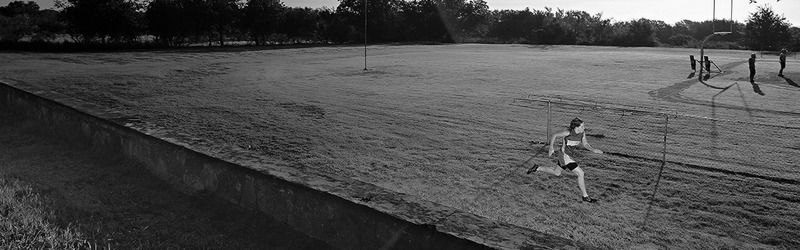
At age 17, Bonnie Richardson won the Texas state track team championship all by herself. Then she did it again.