How Wall Street won.
The Atlantic
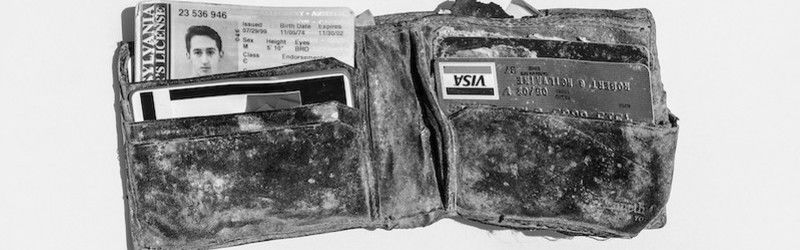
William Sparkman Jr., a census worker, was found hanging from a tree in rural Kentucky. He was naked, hands bound, with the letters “FED” written across his chest. Inside the investigation into how – and why – he died.
Two B-movie directors compete for the talents of a reluctant actress.
"Real lifethat's what I wanted to play, but my only roles were Bat-Winged Pygmy Queen, Werewolf Girl, Two-Headed Bride of Two-Headed Dracula, Squid Motherall those monstrous girls that Checkers dreamed up just for me."
The activists, politicians, and social trends that led to 2012’s gay marriage victories.
On the potential existence of personalized bioweapons, which could attack a single individual without leaving a trace, and how they might be stopped.
“When I’m in Nigeria, I find myself looking at the passive, placid faces of the people standing at the bus stops. They are tired after a day’s work, and thinking perhaps of the long commute back home, or of what to make for dinner. I wonder to myself how these people, who surely love life, who surely love their own families, their own children, could be ready in an instant to exact a fatal violence on strangers.”
“Redistricting today has become the most insidious practice in American politics—a way, as the opportunistic machinations following the 2010 census make evident, for our elected leaders to entrench themselves in 435 impregnable garrisons from which they can maintain political power while avoiding demographic realities.”
A mother views her child in wildly diverse manners.
"The soles of his feet, his ears, the folds of his neck, are excellent and new, expensive-looking, like small perfect things sewn from extinct wild-animal skins. His thighs hold tight to my ribs, athletic and intelligent -- all of his cells have intelligence. It's four A.M. He looks out behind us as we walk around together. He sees like an Abstract Expressionist -- American, of course: color field, emotional repetition, surface tension. Everything is untitled."
One night in Newark with Chris Christie and Bruce Springsteen.
“No one is beyond the reach of Bruce!” he screams over the noise of the crowd, and then screams it again, to make sure I understand: “No one is beyond the reach of Bruce!”
An American mystery writer and an Italian journalist join forces to identify a serial killer that targeted couples having sex in cars in the rolling hills above Florence.
“Strong-arm methods, including murder, are common in the illicit narcotics traffic. After a major international narcotics ring was broken up last year, two of the- twenty-four defendants were murdered before completion of the trial. One was shot down in the Bronx; the burned body of the other was found near Rochester, New York. The business executive, factory worker, and housewife never encounter the seamy side, but this is what their bets are financing. Again I ask, Is this really the way the American people want it to be?”
Jonathan Blow is both the video game industry’s most cynical critic and its most ambitious game developer. As he finishes his indescribable game-opus, a trip inside the head of a videogame auteur.
I've grown, over the last few months, the beginnings of concerned; he's started to suffer bouts of malaise. Nothing too regular, or too terrible: mild stomach aches, sore joints, general lethargy. In anyone else, it could be anything, etc. In Chad, I grow attuned to the slightest variation in temperature, to the distracted look behind his eyes when food isn't sitting with him.
A profile of thriller writer Harlan Coben and what it takes to succeed as a novelist even when the literary establishment doesn’t acknowledge your existence.
Dikembe Mutombo, humanitarian and former NBA center, and oil executive Kase Lawal arrange a ill-fated deal to buy $30 million in gold in Kenya.
The landmark article that changed the way communities were policed:
This wish to "decriminalize" disreputable behavior that "harms no one"- and thus remove the ultimate sanction the police can employ to maintain neighborhood order—is, we think, a mistake. Arresting a single drunk or a single vagrant who has harmed no identifiable person seems unjust, and in a sense it is. But failing to do anything about a score of drunks or a hundred vagrants may destroy an entire community. A particular rule that seems to make sense in the individual case makes no sense when it is made a universal rule and applied to all cases. It makes no sense because it fails to take into account the connection between one broken window left untended and a thousand broken windows.
A visit to the newly on-the-market Jamesburg Earth Station, a massive satellite receiver that played a key role in communications with space, and its neighbors in an adjacent trailer park.
Jaroslav Flegr and his theory about Toxoplasma gondii, a parasite found in cat feces:
If Flegr is right, the "latent" parasite may be quietly tweaking the connections between our neurons, changing our response to frightening situations, our trust in others, how outgoing we are, and even our preference for certain scents. And that’s not all. He also believes that the organism contributes to car crashes, suicides, and mental disorders such as schizophrenia. When you add up all the different ways it can harm us, says Flegr, "Toxoplasma might even kill as many people as malaria, or at least a million people a year."
Clarence Thomas, then-chairman of the U.S. Equal Employment Opportunity Commission, profiled by Juan Williams:
He agrees with Reagan's characterization of the civil-rights leaders as old men fomenting discontent to justify their own "rather good positions." "The issue is economics—not who likes you." Thomas has told me. "And when you have the economics, people do have a way of changing their attitudes toward you. I don't see how the civil-rights people today can claim Malcolm X as one of their own. Where does he say black people should go begging the Labor Department for jobs? He was hell on integrationists. Where does he say you should sacrifice your institutions to be next to white people?"
The story of Standard Motor Products, a 92-year-old family-run auto parts manufacturer, and the transformation of the U.S. manufacturing industry.
Didion’s genius is that she understands what it is to be a girl on the cusp of womanhood, in that fragile, fleeting, emotional time that she explored in a way no one else ever has. Didion is, depending on the reader’s point of view, either an extraordinarily introspective or an extraordinarily narcissistic writer. As such, she is very much like her readers themselves.
The identity of the designer of a proposed 9/11 memorial competition inflames the emotions and the prejudices of an observer.
"The Rally to Protect Sacred Ground kicked off on a balmy Saturday morning in a plaza opposite the site. The members of both the Memorial Defense Committee and Save America From Islam were there, gathered in a cordoned-off area in front of the stage. Behind them stretched thousands: women holding signs that said NO TOLERANCE FOR THE INTOLERANT or KHAN IS A CON; fathers hoisting small children on their shoulders; men in camouflage who may or may not have been veterans. "
The transcript from an lecture presented by In-Q-Tel, the CIA’s venture-capital arm, on the ethics of drones, military robots, and cyborg soldiers.
In 2008, a 38-year old Oklahoma nurse whom I'll call Kelly adopted an eight-year old girl, "Mary," from Ethiopia. It was the second adoption for Kelly, following one from Guatemala. She'd sought out a child from Ethiopia in the hopes of avoiding some of the ethical problems of adopting from Guatemala: widespread stories of birthmothers coerced to give up their babies and even payments and abductions at the hands of brokers procuring adoptees for unwitting U.S. parents. Now, even after using a reputable agency in Ethiopia, Kelly has come to believe that Mary never should have been placed for adoption.
The most dreadful men to live with are those who thus alternate between angel and devil.Not long before she died, Anne Isabella Noel Byron gave a wide-ranging interview to the author of Uncle Tom's Cabin. Most notoriously, she accused her husband, Lord Byron, of carrying on a "secret adulterous intrigue" with his half-sister. The Atlantic lost 15,000 subscribers in the months following publication of this article.
Caitlin Curran was fired from WNYC for attending an Occupy Wall Street protest. The author explains why her boss was wrong.
A statistics-based argument that drug pricing, not drug use or law enformencement, is the only way to predict swings in violent crime rates.
Inside the relationship between the U.S. and Pakistan:
The U.S. government has lied to itself, and to its citizens, about the nature and actions of successive Pakistani governments. Pakistani behavior over the past 20 years has rendered the State Department’s list of state sponsors of terrorism effectively meaningless.
On conservative radio host John Ziegler and “the strange media landscape in which political talk radio is a salient.”
How Warren Buffett’s public image has aided his success.
As a successful investor, he merely moved markets; but as the charismatic, reassuring, quotable prototype of the honest capitalist (a sort of J. P. Morgan with a moral sense), he's capable of influencing elections, galvanizing rock-concert-size crowds, and in general defining how we Americans feel about the system that underlies our wealth.
A prescient take on what the US invasion of Iraq would mean for both countries.
The prison-industrial complex is not only a set of interest groups and institutions. It is also a state of mind. The lure of big money is corrupting the nation's criminal-justice system, replacing notions of public service with a drive for higher profits. The eagerness of elected officials to pass "tough-on-crime" legislation — combined with their unwillingness to disclose the true costs of these laws — has encouraged all sorts of financial improprieties. The inner workings of the prison-industrial complex can be observed in the state of New York, where the prison boom started, transforming the economy of an entire region; in Texas and Tennessee, where private prison companies have thrived; and in California, where the correctional trends of the past two decades have converged and reached extremes.
On Jews:
The Jews are happy in the United States. There are now two hundred congregations of them here, half of whom have arrived within the last twelve years. They are good citizens, firmly attached to those liberal principles to which they owe their deliverance from degrading and oppressive laws, and are rising in the esteem of the people among whom they dwell. Their attachment to the system of universal education is hereditary; it dates back three thousand years; and though their religious feelings are wounded by the opening exercises of many public schools, they would not for that reason destroy them.
Abdul Raziq, a 33-year-old warlord, is an increasingly powerful player in Afghanistan and the recipient of substantial U.S. support. He may also be the perpetrator of a civilian massacre.
Charles Morton Luger unexpectedly becomes Jewish.
"When they sat down to dinner, Charles stared at his plate. Half an hour Jewish and already he felt obliged. He knew there were dietary laws, milk and meat forbidden to touch, but he didn't know if chicken was considered meat and didn't dare ask Sue and chance a confrontation -- not until he'd formulated a plan."
In 1979, a group of Iranian students stormed the U.S. embassy and held the entire American diplomatic mission hostage for fifteen months. Twenty-five years later, the students reflected on their actions, many with regret.
On America’s relationship with the right to bear arms, from the Founding Fathers to the Black Panthers and the Ku Klux Klan.
Fossils and farms in the American South.
"It took over a million years to make that smooth little hill, and I've looked all over it for trilobites. I think how it has always been there and always will be, least for as long as it matters."
It was the confluence of two streams of development that transformed Ted Kaczynski into the Unabomber. One stream was personal, fed by his anger toward his family and those who he felt had slighted or hurt him, in high school and college. The other derived from his philosophical critique of society and its institutions, and reflected the culture of despair he encountered at Harvard and later.
The need for a new letter on an old manual machine leads the author to the shop of Martin Tytell, now in his seventh decade as repairman, historian, and high priest of typewriters.
The jury room was a gray-green, institutional rectangle: coat hooks on the wall, two small bathrooms off to one side, a long, scarred table surrounded by wooden armchairs, wastebaskets, and a floor superficially clean, deeply filthy. We entered this room on a Friday at noon, most of us expecting to be gone from it by four or five that same day. We did not see the last of it until a full twelve hours had elapsed, by which time the grimy oppressiveness of the place had become, for me at least, inextricably bound up with psychological defeat.
On his legacy, his impact on California, and why “saints should be judged guilty until proven innocent.”
Eagleman, a neuroscientist, describes how groundbreaking advances in the science of brain have changed our understanding of volition in criminal acts, and may erode the underpinnings of our justice system.
A profile of Ludwig Minelli, the head of the Swiss assisted suicide organization Dignitas.
America's fascination with murder has not yet extended to its aftermath. As a result, the victims' survivors must seek comfort from one another.
What IARPA's project calls for is the deployment of spy resources against an entire language. Where you or I might parse a sentence, this project wants to parse, say, all the pages in Farsi on the Internet looking for hidden levers into the consciousness of a people.
During her brief tenure as governor of Alaska, Sarah Palin was a genuinely effective, bipartisan legislator. What went wrong?
A murder case in Los Angeles, cold since the late ’80s, heats up thanks to breakthroughs in forensic science and leads detectives to “one of the unlikeliest murder suspects in the city’s history.”
Confessions of a yellow journalist:
Let me say that I did very little faking, although there was no special prejudice against it, so long as the fake wasn't libelous.
A profile of Larry Garrison, the man who “gets paid to bring tabloid stories to TV news programs.”
An investigation into rising crime rates in small American cities. Is a lauded antipoverty program to blame?
As surely as 2008 was made possible by black people’s long fight to be publicly American, it was also made possible by those same Americans’ long fight to be publicly black. That latter fight belongs especially to one man, as does the sight of a first family bearing an African name. Barack Obama is the president. But it’s Malcolm X’s America.
A profile of the “lawyer-turned-journalist-turned-talk-show-host-turned-journalist.”
On the battle over solar farms in the Mojave desert. An excerpt from Madrigal’s new book, Powering the Dream: The History and Promise of Green Technology.
I love combing through The Atlantic’s archives. There’s almost no better way of grasping the strangeness of the past than to flip through a general interest magazine from 1960. Here, we find Fred Hapgood grappling with what human intelligence meant in the light of new machines that could do something like thinking. Intelligence was being explored in a new way: by finding out what was duplicable about how our minds work. Hapgood's conclusion was that if you could automate a task, it would lose value to humans. What tremendous luck! Humans value that which only humans can do, he argued, regardless of the difficulty of the task. And that because computers were so good at sequential logic problems, we'd eventually end up only respecting emotional understanding, which remained (and remains) beyond the reach of AI.
How the little known $50/bottle champagne Antique Gold became the $300/bottle Armand de Brignac that Jay-Z "happened upon in a wine shop" and then featured in a video.
Did A.Q. Khan sell nuclear secrets on the black market? The fame had unbalanced him. He was subjected to a degree of public acclaim rarely seen in the West—an extreme close to idol worship, which made him hungry for more. Money seems never to have been his obsession, but it did play a role.
The unlikely ascent of A.Q. Khan, the scientist who gave Pakistan the Bomb, and his suspicious fall from grace.
The long, happy, surprising life of 77-year old Donald Gary Triplett, the first person ever diagnosed with autism.
The perilous routes through which information—video footage, secret documents, radio broadcasts—flow in and out of North Korea through its porous borders with China.
How a journalism professor named Dan Sinker became the most entertaining part of the Chicago mayoral race.
A manifesto from one of the first professional bloggers on a new ‘golden age of journalism.’
“I had inherited a Rolodex full of useful phone numbers (the College Board, a helpful counselor in the UCLA admissions office), but the number I kept handing out was that of a family therapist.”
A look at what it takes to protect Mahmoud Ahmadinejad when he’s in New York City.
A newly minted, 34-year-old White House budget director gets a little too candid with a reporter profiling him during Ronald Reagan’s first year in office. Among Stockman’s many admissions: “None of us really understands what’s going on with all these numbers.”
Emmanuel “Toto” Constant, the founder of a barbaric Haitian paramilitary group, vanished from Port-au-Prince and resurfaced as a real estate agent in Queens.
What happened when the founder of North Face and Esprit bought a chunk of Chile the size of a small state, intending to live with a select group inside it and turn it case study for ecological preservation. It turned out, however, that Chileans didn’t really like that idea.
On his 80th birthday; how Archie Leach, “the Bristol-born son of a part-Jewish suit presser,” became the greatest leading man of his generation.
On a Duke student’s now infamous Powerpoint presentation of her sexual history; binge-drinking, post-feminism, and Mario Kart.
A ragtag band of pirate-Jihadists grab Americans from a diving resort in the Phillipines and lead them on an odyssey through the jungles of an archipelago with the competing interests of the Phillipines’ Navy and Army, the U.S. Military, and the C.I.A. thwarting their rescue.
On a desolate, six-mile stretch of Indian beachfront, the bulk of the world’s big ships are dismantled for scrap. Though a ship is usually worth over $1 million in steel, the margins are low, the leftovers are toxic, and the labor—which employs huge numbers of India’s poor—is wildly dangerous.
The criminologist/lawyer who created Perry Mason unravels the Boston Strangler case, in which eleven women were murdered by an assailant they willingly let into their homes.
America, China, and the case for coal as a vital weapon in the war against climate change.
The first article in a two-part history of the Educational Testing Service, the institution behind the SAT.
Many experts believe it’s inevitable that in the coming decades, humans will figure out how to live considerably longer lives. It might not be a good thing.
A profile of Anas Aremeyaw, an investigative journalist in Ghana who’s willing to do anything–and pose as anyone–to get the story.
After nearly a year in Afghanistan—during which almost half of their unit was killed or injured—paratroopers from the 82nd Airborne have one more mission before they go home.
If your ex-spouse takes your child and hightails it abroad, the legal system often isn’t on your side. So what can you do? One option: hire a former Army ranger named Gus Zamora to take back your kid.
A profile of Joe Biden, whose political stock has continued to rise even as his boss’s falls.
Is letting convicts roam free under electronic surveillance better than putting them behind bars?
Jacob Riis, writing in 1899, on how a childhood spent in New York City’s tenements led a 15-year-old boy to be convicted of murder.
In 1937, Harvard researchers began following the lives of 268 students. Year after year, the men were interviewed and given medical and psychological exams. The goal? Find a formula for happiness.
The Estonia was carrying 989 passengers when it sank in 30-foot seas on its way across the Baltic in September 1994. More than 850 lost their lives. The ones who survived acted quickly and remained calm.
Since he could speak, 8-year-old Brandon has insisted that he was meant to be a girl. This summer, his parents decided to let him grow up as one.
The founding fathers deserve at least some of the blame for the worst presidencies in American history—they created an office that’s vaguely defined and ripe for abuse. Plus: how to fix it.
Mysterious, man-made “natural flavor” explains why most fast food—indeed, most of the food Americans eat—tastes the way it does. An early excerpt from Fast Food Nation.
How a French journalist recruited a posse of Brazilian parking lot attendants and pizza-delivery guys and created Hollywood’s most addictive entertainment product.
As of this year, more women than men are in the U.S. workforce. More women are managers and more women are earning college degrees. Here’s why.
Today, Abraham Lincoln’s struggle with clinical depression would make him “unfit for office.” Back then, it was the key to his presidency.
In the wake of 9/11, terrorist networks moved their recruitment and training efforts online, giving birth to Jihad-geeks like Irhabi_007.
The Conficker ‘worm’ has replicated itself across tens of millions of computers. Only a few hundred people have the knowledge to recreate how, and no one (except its anonymous maker) fully understands why.
Yeah, you’ve seen that headline before. The difference? This time it’s not journalists trying to do the saving. It’s Google.
Kevin Fulton, a spy planted in the IRA, thought he was dead when he faced interrogation by a notorious IRA enforcer. But, it turned out, the enforcer was also an agent. How British intelligence undermined the IRA.
Advice from 1982 on how and why one should buy a computer. “I can hardly bring myself to mention the true disadvantage of computers,” Fallows writes, “which is that I have become hopelessly addicted to them.”
The story of how federal authorities blew the biggest anti-terror investigation of the past decade—the post-9/11 anthrax attacks—and nearly destroyed an innocent man.
In trailers just minutes from the Vegas Strip, Air Force pilots control predators over Iraq and Afghanistan. A case study in the marvels—and limits—of modern military technology.