Tracking down a Congolese war criminal.
International Politics
Welcome to Plasenzuela, whose 500 inhabitants enjoyed no-show jobs, spent millions on phantom projects and defrauded Social Security.
How a group of men with nicknames like “Emperor” and “Spear Carrier” tipped the balance in South Sudan’s fight for independence.
The United States, which took a forceful stance on other Arab revolts, remained relatively passive in the face of the kingdom’s unrest and crackdown. To many who are familiar with the region, this came as no surprise: of all the Arab states that saw revolts last year, Bahrain is arguably the most closely tied to American strategic interests.
A report on Bahrain, the Arab Spring’s most ill-fated uprising.
A report from the trial of Ivan Demjanjuk—a.k.a. “The Last Nazi”—who died on March 17.
The lavish display and heavy drinking concealed the deadly serious North Caucasus politics of land, ethnicity, clan, and alliance.
In a cable brought to light by Wikileaks, the Ambassador to Russia describes a raucous three-day Dagestani wedding attended by Chechnya’s president Ramzan Kadyrov.
When 25-year-old Valentine Strasser seized power in Sierra Leone in 1992, he became the world’s youngest head of state. Today he lives with his mother and spends his days drinking gin by the roadside.
Hanging out in Moscow with Russia’s yuppie, 20-something journalist revolutionaries:
In other words, the protest was being brought to you by the same people you would have relied on, weeks earlier, for restaurant picks.
But now, being a celebrity yourself, you feel differently? I've subsequently changed my opinion. Brad Pitt doesn't have a superpower at his back. He just has some crazed fans and paparazzi. But now, having had all three, I must say, I'm not terribly impressed with the experience.
The author travels to North Korea in the years after Kim Jong Il’s succession. He also gets a haircut:
But suddenly the whole chair starts vibrating and I find myself surrendering to her, as she begins to knead the acupressure points on my forehead and neck. Next it's ginseng unguent all over my face. Gobs of pomade smelling like bubble gum go on my hair. Then, like a true daughter of the revolution, she upholsters her blow dryer and begins combing in the pomade and sculpting my now subdued hair. The pungent aroma of heated pomade, like fat frying in a pan, fills the room. My stylist gives my hair a little twist with the comb. It feels like she's making a Dairy Queen curl on top. Then she fries it in place with the dryer. Another dab of pomade. More mincing motions with the comb. Another blast of hot air. Suddenly I feel a moist breeze around my ears. She's taken out a can of imported aerosol spray and is cementing her creation in place. She's delicately patting my new coiffure now the way a baker taps a loaf of bread to see if it's springy to the touch. She murmurs something. I'm breathless with expectation. I open my eyes and gaze into the mirror. Magnifique! It looks like I have a loofah sponge on my head! I am reborn -- a cross between Elvis and a 1950s Bulgarian hydrology expert! At last I have become a true son of Pyongyang!
What happened when Pakistan shut down the vitally important Karachi to Kabul trucking line.
An investigation into the events surrounding Dominique Strauss-Kahn’s May 2011 arrest for sexual assault.
Edward Luttwak is a rare bird whose peripatetic life and work are the envy of academics and spies alike. ...he published his first book, Coup d’État: A Practical Handbook, at the age of 26. Over the past 40 years, he has made provocative and often deeply original contributions to multiple academic fields, including military strategy, Roman history, Byzantine history, and economics.
He arrived in Bolivia in November 1966, disguised as a Uruguayan businessman. After desertions, drownings, and difficulty contacting their support group in La Paz, his small troop was surrounded the following October. The inside story of how they were found and destroyed.
N.K.: So when you saw the photo of Neda Soltan, what did you think? M.A.: It was incredibly sad, due to many reasons. First we have proof that that scene was staged, and she was killed later, at a later point. This footage was shown for the first time by BBC. Our security officers and officials had no information of such a thing. but if BBC makes the complete footage from beginning to end available to us, we will analyze it, we will research it because we do search for those who are truly guilty of murdering this young lady. And also, a scene fairly close to this—almost a photocopy I would say—was repeated previously in a South American country—in a Latin American country. this is not a new scene. And they previously tell those who are due to participate, they tell them that “you will be participating in making a short footage, a short movie, a short clip.” After their participation is finished they take them to some place and they kill them. If BBC is willing to broadcast this film, this footage in its entirety, any viewer would be able to distinguish whether it is as we say or it is as they maintain.
At a dinner party, the author meets one of Afghanistan’s last remaining maskhara — an entertainer, thief and murderer.
In 1979, a group of Iranian students stormed the U.S. embassy and held the entire American diplomatic mission hostage for fifteen months. Twenty-five years later, the students reflected on their actions, many with regret.
Around the world, governments and corporations are in a race for code that can protect, spy, and destroy—hacks some secretive startups are more than happy to sell.
In Afghanistan and other zones of international crisis with John Kerry:
Why, then, does Kerry bother? Why is he racing back and forth to put out the fires being set by a serial arsonist? I asked him about this on the short flight from Kabul to Islamabad. Kerry tried to put the best possible face on what he had learned. Despite the warlords in Kabul, he said, Karzai had appointed some talented officials at the provincial and district levels. “It’s a mixed bag,” he concluded gamely. Kerry knew Karzai’s failings as well as anyone, but he was not prepared to abandon Afghanistan’s president, because he was not prepared to abandon Afghanistan. But why not?
Boris Yeltsin’s right-hand man tells the inside story of the 1991 coup that killed glasnost:
"That scum!" Boris Yeltsin fumed. "It's a coup. We can't let them get away with it."
Andrew MacGregor Marshall, a longtime Reuters reporter based in Thailand, resigned and forfeited his ability to enter the country in order to report on the revelations about the Thai royal family and military contained within the Wikileaks “Cablegate” dump.
Thailand has the world's harshest lèse majesté law. Any insult to Bhumibol, Queen Sirikit or their son Crown Prince Vajiralongkorn, is punishable by three to 15 years in jail.The cables reveal a toxic power struggle between elected officials, the military, and the monarchy, with the huge shadow of exiled telecommunications billionaire Thaksin Shinawatra looming over the country’s post-King Bhumibol future.
The impending end of his reign has sparked intense national anxiety in Thailand. King Bhumibol's son and heir, Crown Prince Vajiralongkorn, has a reputation for being a cruel and corrupt womanizer. A notorious video showing a birthday party for his pet poodle Foo Foo -- who holds the rank of Air Chief Marshal -- has been widely circulated in Thailand; in it, the prince's third wife, Princess Srirasmi, dressed only in a thong, eats the dog's birthday cake off the floor while liveried servants look on.Editor's Note: Marshall’s findings will be published as a 4-part series, hosted here by the permission of the author, and re-publishable through a Creative Commons license. His writings on the topic have already reached near book length, for a good overview, see Marshall's introduction in Foreign Policy.
On Silvio Berlusconi’s hedonism.
Berlusconi is Italy’s waning Hugh Hefner, alternately reviled and admired for his loyalty to his own appetites—except that he’s supposed to be running the country.
On the ground to witness Cuba’s last days:
“Either we rectify our course or the time for teetering along on the brink runs out and we go down. And we will go down…[with] the effort of entire generations.”—Raul Castro
Why has the Palestinian cause failed to produce a Martin Luther King-like leader with a platform based on non-violence?
A 12,000-word profile of recently departed Brazilian President Luiz Inácio da Silva, the “most successful politician of his time.”
A first-person account of the author’s time spent volunteering with a group of Burmese activists in Thailand, who turn out to be not Korean but in fact Karen, members of Burma’s persecuted ethnic minority. In the course of her time there, they show her videos of their risky forays across the border, and she shows them MySpace.
“While its source remains something of a mystery, Stuxnet is the new face of 21st-century warfare: invisible, anonymous, and devastating.”
One of most popular Libyan figures amongst Western intellectuals and democracy advocates is… Qaddafi’s second son, Saif.
A profile of Teodoro Nguema Obiang Mangue, the Malibu-dwelling, “fantastically corrupt” dictator-in-waiting of Equatorial Guinea. Teodorin, as his friends call him, is considered by U.S. intelligence to be “an unstable, reckless idiot.”
An opinion piece on the structural causes of unrest in Egypt; the business fraternity, globalization, and the fate of Egyptian women.
The Bohemian Grove is an exclusive, all-male club made up of Presidents, ambassadors, and other world leaders, with a 33 year waiting list for membership. Their booze-soaked annual retreat outside of San Francisco had never been infiltrated—until this story.
A primer on Peretz, longtime owner/editor of The New Republic, committed Zionist, and author of the line “Muslim life is cheap.”
Last year, an Mossad hit squad traveled to Dubai to assassinate a Hamas leader. They completed their mission, but were later humiliated when a twenty-seven minute video of their movements was posted online. How their cover got blown.
Inside Office 39, a state-run counterfeiting operation designed to keep Kim Jong-il flush.
Anatomy of an international incident; how three idealistic young American hikers wandered across the Kurdistan-Iran border and ended up in Iranian prison charged with spying.
Putin, Medvedev, and how the Russian security agency FSB became the “new nobility.”
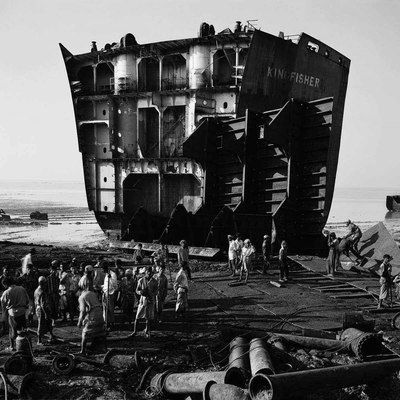
On a desolate, six-mile stretch of Indian beachfront, the bulk of the world’s big ships are dismantled for scrap. Though a ship is usually worth over $1 million in steel, the margins are low, the leftovers are toxic, and the labor—which employs huge numbers of India’s poor—is wildly dangerous.
The unedited transcript of an interview with Julian Assange for the cover story of Forbes’ December issue. His next target? A major U.S. bank.
The latest WikiLeaks unveiling has exposed more than 250,000 sensitive messages from American diplomats. Among the revelations: the plan for a unified Korea, the Chinese government’s hacking strategy, and negotiations with countries for housing Gitmo detainees.
Scenario-based forecasts on the future of America, in the style of the C.I.A’s National Intelligence Estimate.
An investigation into Lashkar-i-Taiba, the group behind the 2008 Mumbai massacre, and why Pakistani authorities has not arrested their leaders.
Are we at war? The U.S. government’s evolving response to cyber security and its impact on privacy.
A behind-the-scenes account of the tense negotiations, involving Gorbachev, Kohl, Bush, and Thatcher, that led from the aftermath of the fall of the Berlin Wall to a reunified Germany. (Translated from German.)
Foreign policy as architecture; how embassies went from lavish social hubs to reinforced strongholds.
An interview with Michael Maren, who spent nearly twenty years working in Africa as an aid worker and then a journalist, on why NGOs and “feed an African child” charities do more harm than good.
A profile of Viktor Bout, believed to be the largest arms trafficker in the world. A Russian who bought his first cargo planes at age 25, Bout has been in the news recently after being arrested in Thailand.
A year after dozens died protesting his election and hundreds more were imprisoned, Mahmoud Ahmadinejad grants a rare interview to an American journalist.
Refugees arriving in the U.S. after receiving asylum face challenges that have led some to return to their war-torn homelands.
China is securing sub-Saharan Africa’s natural resources at a staggering rate. With the buying spree comes contracts, workers, and of course, politics. (Part 1 of a 6 part series, rest here)