Up and Then Down
The lives of elevators.
Showing 25 articles matching best fc points to buy Buyfc26coins.com is FC 26 coins official site..KzUT.
The lives of elevators.

Sounding a warning on pesticides.
Stylistically speaking, in terms of clothing, they arrived in shirts and pants and shoes (there’s really no other way to say it). They had haircuts, but it didn’t really look it. While other bands were mumbling or over-enunciating their dreary positions or penny-candy philosophies, Pavement kind of screamed for a generation. But they did it in a way that was so deeply American that it was almost Scandinavian.
Playwright Will Eno profiles the band and their cult as they grow up and prepare for a reunion.
Normally $4.99, Longform's critically acclaimed iPad app is available today for just 99 cents.
Story picks from the Longform editors, plus the latest articles from more than 60 of the world's best magazines. Elegant, reader-friendly design. Offline accessible. Perfect for commutes, flights, and Sunday afternoons.
It's the only magazine app you'll ever need.
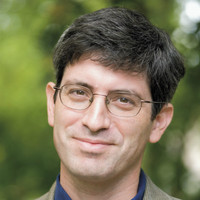
Carl Zimmer, a columnist for the New York Times and a national correspondent at STAT, writes about science.
“[Criticism] doesn’t change the truth. You know? Global warming is still happening. Vaccines still work. Evolution is still true. No matter what someone on Twitter or someone in an administration is going to say, it’s still true. So, we science writers have to still be letting people know about what science has discovered, what we with our minds have discovered about the world—to the best of our abilities. That’s our duty as science writers, and we can’t let these things scare us off.”
Thanks to MailChimp, Audible, and Squarespace for sponsoring this week's episode.
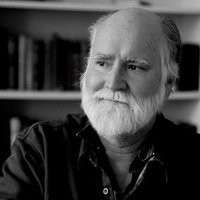
Nicholson Baker is the author of 18 books of fiction and nonfiction. He has written for The New Yorker, Harper’s, and many other publications. His latest book is Baseless: My Search for Secrets in the Ruins of the Freedom of Information Act.
"In the end, I don’t care how famous you get, how widely read you are during your lifetime. You’re going to be forgotten. And you’re going to have five or six fans in the end. It’s going to be your grandchildren or your great-grandchildren are going to say, Oh, yeah, he was big. … So I think the key is, write what you actually care about. Because in the end, you’re only doing this for yourself. … So maybe do your best stuff for yourself and for the three, four, five people who know in the coming century that you ever existed. That’s all you need to do."
Thanks to Mailchimp for sponsoring this week's episode.
“I faced death and all that shit. It’s my responsibility to come back and come back strong. It’s going to take more than a Walmart truck to take that gift away. I can’t wait to make you all laugh. Especially you, Mike. And I already did that today. So all is good.”
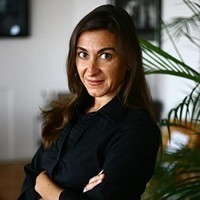
Lynsey Addario is a photojournalist for The New York Times and National Geographic. She won the George Polk award for her photograph of the bodies of a woman and her two children alongside a friend who lay dying moments after a mortar struck them as they sought to flee Ukraine.
“If I have time to compose a photo—even if it's of a horrific topic—I will always try to make the most beautiful photograph because I want people to look. I want people to ask questions, to be engaged, to pay attention. And often, that does mean the intersection of beauty and horror.”
This is the fourth in a week-long series of conversations with winners of this year's George Polk Awards in Journalism.
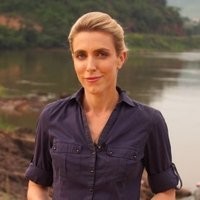
Clarissa Ward is the chief international correspondent for CNN. Along with field producer Brent Swails and photojournalists William Bonnett and Scott McWhinnie, Ward won the 2022 George Polk Award for her real-time coverage of the rapid rise of the Taliban as U.S. forces withdrew from Afghanistan last summer.
“I used to come back from war zones and feel completely disconnected from my life—disconnected from my friends, from my family. I would look down on people about the conversations they were having about silly things. I would feel kind of numb and miserable. And then I realized that if you want to be able to keep doing this work, you have to choose to embrace the privileges that you've been given. And you have to choose joy and choose love and be kind to yourself and have a glass of wine and go dancing or run up a mountain—whatever it is that does it for you, embrace it. That is part of the tax you pay for surviving these things: You've got to continue to love life.”
This is the first in a week-long series of conversations with winners of this year's George Polk Awards in Journalism.
What adolescence does to adolescents is nowhere near as brutal as what it does to their parents.
An excerpt from All Joy and No Fun: The Paradox of Modern Parenthood.
A profile of Rupert Murdoch from 1995, as he fought monopoly charges in the U.S. and U.K. and prepared to expand his empire into China.
Murdoch is a pirate; he will cunningly circumvent rules, and sometimes principles, to get his way, as his recent adventures in China demonstrate.
Just days after suffering a concussion, a 17-year-old fullback hangs himself. Inside his family’s journey to learn if a brain injury is to blame.
On Enrique of Malacca, “the closest thing there is to a hero in the story of Ferdinand Magellan’s horribly botched attempt to circumnavigate the world.”
New technology has historically been a friend to the porn industry, first VHS, then online DVD sales. But free streaming sites like YouPorn have sent the establishment into a tailspin, and due to anonymous domain registration, they don’t even know who their competition is. Will the internet kill porn?
When your job is to constantly share your life, even your worst moments are an opportunity to please your audience.
"The functionality, the quantity, the aesthetics of your bathrooms is critical. It seems unremarkable to most people, but, trust me, you invite 70,000 people to your house and you get the bathrooms wrong—you've got a huge problem."
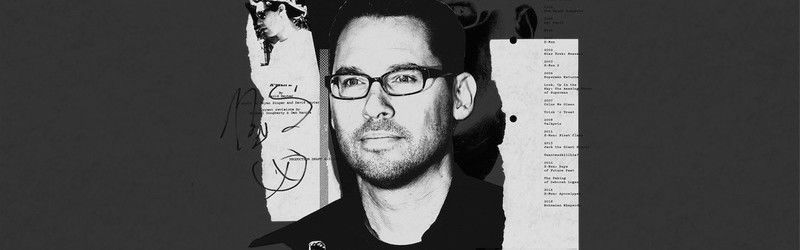
Alex French and Maximillian Potter chased the story of a Hollywood pedophile ring only to have Esquire cancel it without explanation. It eventually landed at The Atlantic.
Data is the lifeblood of a functioning government. Over the past four years, the Trump administration has destroyed, disappeared, or distorted vast swaths of the information the state needs to protect the vulnerable, safeguard our health, and alert us to emerging crises.
“In journalism just one fact that is false prejudices the entire work. In contrast, in fiction one single fact that is true gives legitimacy to the entire work. That’s the only difference, and it lies in the commitment of the writer. A novelist can do anything he wants so long as he makes people believe in it.”
“If you’re a glass is half-full kind of person, you’d say they’re repurposing the abandoned coal mine” and using it to create jobs, says Wright. “And if you're a glass is half-empty kind of person, you'd say it's pretty unconscionable that you’re putting people in cages at gunpoint and putting them in toxic waste sites.”
The ascendant breed of grown-ups who are redefining adulthood.
This is an obituary for the generation gap. It is a story about 40-year-old men and women who look, talk, act, and dress like people who are 22 years old. It’s not about a fad but about a phenomenon that looks to be permanent.
The aforementioned “twist” is that while dinner is free for the black residents of the neighborhood, the prices for white visitors are listed on a pledge form at their seats: $100 for one piece of chicken; $1,000 for four pieces. For a whole bird, with sides, you must donate the deed to a property in North Nashville.
A commencement address to the graduates of Harvard Medical School on how their chosen profession is changing and what they’ll need to learn now that they’re out of school.
Audrey Elrod thought she had found the man of her dreams. Today she is in a West Virginia prison. She’s broke. And the court has ordered her to pay more than $400,000 to victims of the same man who conned her.
Madeleine Fullard is on a mission to locate the remains of apartheid’s murdered activists. She needs the help of Eugene de Kock, a former police squad leader known as “Prime Evil,” to do so.