Showing 25 articles matching iraq podcast.

Seth Wickersham is a senior writer for ESPN. His latest article is "For Kraft, Brady and Belichick, Is This the Beginning of the End?"

“You want to write about something real. I hate stories that are, the tension of the story is, talk radio perception versus the reality that I see when I’m with somebody. I can’t stand those stories because to me, you’re just writing about the ether versus a real person, and that’s not a real tension to me. The inner tensions are the best tensions. You can’t get to them with everybody, but you try.”

Thanks to MailChimp and Mubi for sponsoring this week's episode.
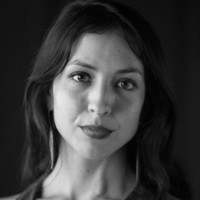
Liliana Segura writes for The Intercept.

"My form of advocacy against the death penalty, frankly, has always been to tell those stories that other people aren’t seeing. And to humanize the people—not just the people facing execution, but everyone around them."

Thanks to MailChimp, Mubi, and Tripping.com for sponsoring this week's episode.

Vinson Cunningham is a staff writer for The New Yorker.

“I think the job is just paying a bunch of attention. If you're a person like me, where thoughts and worries are intruding on your consciousness all the time, it is a great relief to have something to just over-describe and over-pay-attention to—and kind of just give all of your latent, usually anxious attention to this one thing. That, to me, is a great joy.”

Thanks to Mailchimp for sponsoring this week's episode.
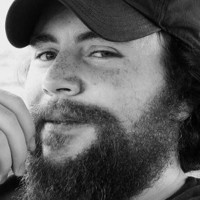
Margalit Fox is a senior obituary writer for The New York Times.

"You do get emotionally involved with people, even though as a journalist you're not supposed to. But as a human being, how can you not? Particularly people who had difficult, tragic, poignant lives. But there are also people that you just wish you had known. And, of course, the painful irony is that you're only getting to know them by virtue of the fact that it's too late."

Thanks to this week's sponsor, TinyLetter!

</blockquote>

Jeff Sharlet writes about politics and religion for Esquire, GQ, New York Times Magazine, and more.

“I like the stories with difficult people. I like the stories about people who are dismissed as monsters. I hate the term ‘monster.’ ‘Monster’ is a safe term for us, right? Trump’s a monster. Great, we don’t need to wrestle with, ‘Uh oh, he’s not a monster. He’s in this human family with us.’ I’m not normalizing him. I’m acknowledging the fact. Now, what’s wrong with us? If Trump is human, what’s wrong with you?”

Thanks to MailChimp, Squarespace, and Blue Apron for sponsoring this week's episode.

Michael J. Mooney is a staff writer at D Magazine and the author of The Life and Legend of Chris Kyle.

“There are some elements of crime stories that are so absurd that it’s funny, and so working on the “How Not to Get Away With Murder” story, it was actually really funny thinking about it for a long time. Until I met Nancy Howard, the woman who was shot in the face and has one eye now. This is her entire life, and it was destroyed. This is not a crime story to her, it’s her life.”

Thanks to MailChimp, </em>Feverborn</a>, Audible, and Squarespace for sponsoring this week's episode.</p>

Casey Cep has written for The New Yorker, The New York Times, and The New Republic. She is the author of Furious Hours: Murder, Fraud, and the Last Trial of Harper Lee.

“I want to meet all of these expectations. I want my book to be a page-turner. I want it to be a beautiful literary object. I want it to sell. I want it to do all of these things. But at the end of the day, I just want to feel like I’ve honored this commitment between writer and reader, and writer and source. And those are sometimes in conflict.”

Thanks to Mailchimp and Pitt Writers for sponsoring this week's episode.

Daisy Alioto is a journalist and the CEO of Dirt Media.

“I don't think I was ever super precious about my writing, but if I was, I'm zero percent precious about it now. Every time I write for Dirt, it saves the company money. ... Nothing will make you sit down and write 800 words in 20 minutes than just needing to get it done. And that is a change that I've seen in myself. I would encourage everyone to be less precious about their writing.”