Showing 25 articles matching fccoins26 Coinsnight.com FC 26 coins 30% OFF code: FC2026. The best place for game coins.28oS.

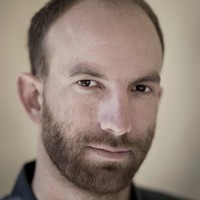
Nicholas Schmidle is a staff writer for The New Yorker. His latest article is "Virgin Galactic's Rocket Man."

“I think there’s a lot more pressure that I’ve put on myself to make sure that the next [article] is better than the last one. To make sure there are sourcing standards and expectations I have for myself now that I might not have had earlier. I’m putting even more priority on building long-term relationships in which I trust an individual. ... I feel like the pieces coming in are tighter in terms of sourcing, but story selection becomes a lot more difficult. You want to do a different story.”

Thanks to MailChimp, Skagen, and Pitt Writers for sponsoring this week's episode.

Noel Gallagher After Oasis

"At the end of the cycle of Morning Glory, I was hailed as the greatest songwriter since Lennon and McCartney," Gallagher recalls. "Now, I know that I'm not, and I knew I wasn't then. But the perception of everybody since that period has been, 'What the fuck happened to this guy? Wasn't he supposed to be the next fucking Beatles?' I never said that I was the greatest thing since Lennon and McCartney … well, actually, I'm lying. I probably did say that once or twice in interviews. But regardless, look at it this way: Let's say my career had gone backwards. Let say this new solo album had been my debut, and it was my last two records that sold 20 million copies instead of the first two records. Had this been the case, all the other albums leading up to those last two would be considered a fucking journey. They would be perceived as albums that represent the road to greatness. But just because it started off great doesn't make those other albums any less of a journey. I'll use an American football analogy since we're in America: Let's say you're behind with two minutes to go and you come back to tie the game. It almost feels like you've won. Right? But let's say you've been ahead the whole game and you allow the opponent to tie things up in the final two minutes. Then it feels like you've lost. But the fact of the matter is it's still a fucking tie. The only difference is perception. And the fact of the matter is that Oasis sold 55 million records. If people think we were never good after the '90s, that's irrelevant."

Mina Kimes is a senior writer at ESPN and host of the podcast ESPN Daily.

“What I’ve found, and this is something I did not know would be the case going into it, is that sports stories—and, at the risk of sounding a bit self-important, maybe someone like me writing sports stories or talking about it in particular—can have an impact in other ways that have revealed themselves to me over time.”

Thanks to Mailchimp, Pitt Writers, and Family Ghosts for sponsoring this week's episode.
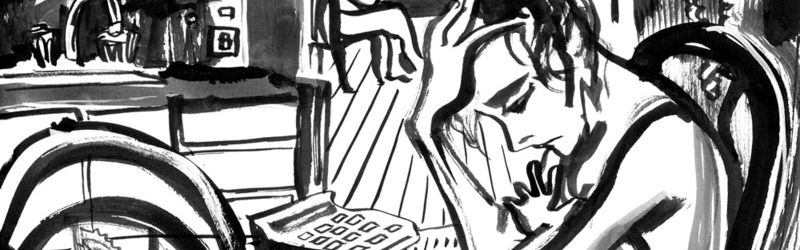
Emily Nussbaum is a television critic at The New Yorker.

"I actually feel this kind of crazy cause ... because TV is condescended to, has been put down and treated like it's junk, and TV deserves to have the kind of criticism that expects it to be great. To me it's a really engaging and satisfying cause, no matter whether I'm praising or criticizing something."</i>

Thanks to TinyLetter for sponsoring this week's episode!

</blockquote>

Charlie Warzel is a senior tech writer for BuzzFeed.

“Part of the big tech reckoning that we’re seeing since the election isn’t really about the election, it isn’t really about Trump or politics. It’s more about this idea that: Wow, these services have incredibly real consequences in our everyday lives. I think that realization is really profound and is going to shape how we try to figure out what it means to be online from here on out. To keep stories relevant, we have to keep that in mind and try to figure out how to speak to that audience and guide them through that reckoning.”

Thanks to MailChimp and Tripping.com for sponsoring this week's episode.

Jonathan Shainin is senior editor at The Caravan in Delhi.

"Working in an environment that's foreign, where you have to kind of think through a lot of things from the ground up ... I find it to be really stimulating to have to interrogate the assumptions that you have as an editor about what's interesting and what's not interesting, what's a good story and what's a bad story, what's the story that's been done a million times already. When you get out of a place that is your place, you have to kind of think through some things in a fresh way. And that can be really productive."

Thanks to this week's sponsor, TinyLetter!

</blockquote>

Adam Moss is the editor of New York Magazine.

“I think [change] is good for journalism—it’s what journalism is about. You can’t write about something static. News is about what is new. So there’s plenty of new right now. I’m not saying it’s good for the citizenry or anything like that, but, yeah, for journalists it’s an extremely interesting time. There’s no denying that.”

Thanks to MailChimp, BarkBox, Squarespace, and Sock Fancy for sponsoring this week's episode.

Lena Dunham, the creator and star of HBO's Girls, is the co-founder of Lenny and the author of Not That Kind of Girl. A special episode hosted by Longform Podcast editor Jenna Weiss-Berman.

“Writing across mediums can be a really healthy way to utilize your energy and stay productive while not feeling entrapped. But at the end of the day, the time when I feel like life is most just, like, flying by and I don't even know what's happening to me is when I'm writing prose. It's such an intimate relationship that you're having. When you're writing a script, you're making a blueprint for something that doesn't exist yet. But when you're writing prose, the thing exists immediately. And that's really satisfying. It's the best place to go for my deepest and most in-the-now concerns.”

Thanks to MailChimp, Prudential, Casper, and The Great Courses for sponsoring this week's episode.

Sarah Ellison is a special correspondent at Vanity Fair and the author of War at the Wall Street Journal.

“There’s no lack of stories. ... There’s always an element where you’re going to be parachuting into something that someone has likely written about, to some degree. You can’t shy away from going into something that’s a crowded field.”

Thanks to MailChimp, Quip, and BarkBox for sponsoring this week's episode.

Luke Mogelson is a journalist and fiction writer whose work has appeared in The New Yorker, The New York Times Magazine, and other publications. His latest feature is ”Among the Insurrectionists.”

“Get to the front and document as much as you can. ... I think my approach is much more similar to photographers than other writers. I spend a lot of time with photographers and ... I feel like I've gotten pretty good at getting myself into situations where there's few or maybe no other writers around, but there's always a bunch of photographers…. I try to get in right behind the first photographers.”

Thanks to Mailchimp for sponsoring this week's episode.
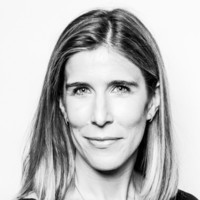
Reeves Wiedeman is a reporter at New York.

“I think the main reason I love the job is reporting. And the fact that you get to go out into situations that you wouldn’t otherwise as your job. I’m someone who gets antsy if I’m just on a vacation sitting around. I’d much rather go somewhere weird and kind of have a purpose. So, just feeling like you can kind of go anywhere and see anything and talk to anyone is a pretty cool way to live your day.”

Thanks to MailChimp, Pitt Writers, Thermacell, and Best Self for sponsoring this week's episode.