Desperately Seeking Sugar Daddies
The author wanted to give up her day job but keep her lifestyle. So she turned to Seeking Arrangement, a site that pairs rich, older men interested in “companionship” with 20-somethings interested in “gifts.”
Showing 25 articles matching best fc points to buy Buyfc26coins.com is FC 26 coins official site..KzUT.
The author wanted to give up her day job but keep her lifestyle. So she turned to Seeking Arrangement, a site that pairs rich, older men interested in “companionship” with 20-somethings interested in “gifts.”
“I never knew my father, a decorated World War II pilot who died before I was born. But a trek at age 67 to the site where his airplane crashed brought me closer to him than I’d ever dared hope.”
Jon Caramanica is a music critic at The New York Times.
“I like to interview people very early in their careers or very late in their careers. I think vulnerability and willingness to be vulnerable is at a peak in those two parts. Young enough not to know better, old enough not to give a damn. … The story I want to tell is—how are you this person, and then you became this? Then at the end, let’s look back on these things and let’s paint the art together. But in the middle when your primary obsession is how do I protect my role? How do I keep my spot? How do I keep the throne? I’m not as interested in that personally as a journalist or as a critic. ”
Thanks to MailChimp, Read This Summer, Google Play, and Pitt Writers for sponsoring this week's episode.
James Wood on Saul Bellow:
One realizes, with a shock, that Bellow has taught one how to see and how to hear, has opened the senses. Until this moment one had not really thought of the looseness of a lightbulb filament, one had not heard the saliva bubbling in the harmonica, one had not seen well enough the nose pitted with black pores, and the demolition ball’s slow, heavy selection of its victims. A dozen good writers–Updike, DeLillo, others–can render you the window of a fish shop, and do it very well; but it is Bellow’s genius to see the lobsters “crowded to the glass” and their “feelers bent” by that glass–to see the riot of life in the dead peace of things.
In 2009, 300 people perished in an earthquake in L’Aquila, Italy. Next week, six Italian scientists and one government official will stand trial for manslaughter.
A profile of Republican Eric Cantor: six-term congressman, new House majority leader, highest-ranking Jewish elected official in American history.
Sponsored

Our sponsor this week is the new Digg, which has been getting a lot of love lately. Why?
Digg delivers the most interesting and talked about stories on the Internet right now. There's a lot of great content out there, and Digg helps you discover, read, and share the very best of it. It’s simple and it's everywhere: visit Digg on the web, find it on your iPhone or iPad, or get the best of Digg delivered to your inbox with The Daily Digg.
If you walk into New York’s best restaurants without a reservation, what does it take to get a table?
Eric Lach is a staff writer at The New Yorker, where he covers New York. His latest article is “The Mayor and the Con Man.”
“I think about my own trajectory, my little generation of journalists—it was easier to get jobs reporting on national politics than to get a job reporting on something that you could see and go to and that is a really strange thing, the relief and the joy that I feel like when I can just take the subway twenty minutes to go see something interesting for a story or talk to somebody interesting or explore physically and not just feel like I’m making phone calls and Googling. It’s a very different kind of work, but it’s just not something that was super available.”
Amy Harmon, a Pulitzer Prize winner, covers the intersection of science and society for the New York Times.
"I'm not looking to expose science as problematic and I'm not looking to celebrate it. But it can be double edged. Genetic knowledge can certainly be double edged. Often the science outpaces where our culture is in terms of grappling with it, with the implications of it. Part of the reason for this widespread fear about GMOs is people don't understand what it is. I'm looking for an emotional way or a vehicle through which to get people to read about it. It's an excuse to talk about the science, not just explain it. … My contribution, what I can do, is try to tell a story that will engage people in the story and then they'll realize at the end that they learned a little bit about the science."
Thanks to TinyLetter and Squarespace for sponsoring this week's episode.
Andy Greenwald covers television for Grantland.
“People are enthusiastic about TV. People want to read about it. They want to talk about it. They want to know more. They want to extend its presence in their lives. People used to talk about the water cooler show, but the internet is that water cooler now and people want to be part of the conversation.”
Thanks to TinyLetter, Two5six Festival, The Great Courses, and Aspiration for sponsoring this week's episode.
Sponsored

Our sponsor this week is OZY, a new kind of media site. OZY doesn't just catch you up on the news, it vaults you ahead. Every day, OZY offers up short, thoughtful profiles of "the new and the next" — new people, places, things, trends and ideas that you won't be reading about anywhere else for months.
On top of that, every morning OZY sends out the Presidential Daily Brief, a great newsletter giving you a smart, sharp snapshot of the top 10 stories you absolutely need to know today. Curated by OZY's team of editors all around the world — and sometimes by luminaries such as Bill Gates and Tony Blair — the Presidential Daily Brief is a super easy way to find out what happened, why it matters, and what's next. Subscribe today.

How PTSD spreads from returning soldiers to their families.
Taking the measure of the president, with a view to history.

How a surgical innovation allowed Dallas Weins to find a new face.

The right to choose in Rapid City, South Dakota.

A Kickstarter for a Kevlar backpack goes awry leading to a federal investigation.
Terry Gross is the host and co-executive producer of Fresh Air.
“Part of my philosophy of life is that you have to live with a certain amount of delusion. And part of the delusion I live with is that maybe, from experience, I’m getting a little bit better. But then the other part of me, the more overpowering part of me, is the pessimistic part that says, ‘It’s going to be downhill from here.’ I try not to judge myself too much because I’m so self-judgmental that I don’t want to over-judge and get into too much of ‘Am I better than I was yesterday, or not?’”
Thanks to MailChimp, Squarespace, and Blue Apron for sponsoring this week's episode.
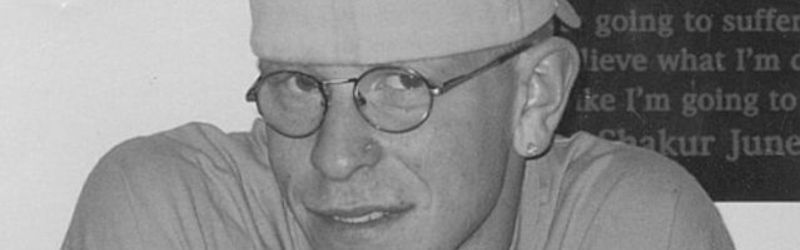
Army Spc. Erik Schei was shot in the head in Iraq. This is the story of his recovery.
Is a serial killer on the loose in Wellfleet? An investigation.

A profile of then-First Lady Barbara Bush, published just before the 1992 presidential election. The lede: “Even Barbara Bush’s stepmother is afraid of her.”
The W.N.B.A. is putting on some of the best pro basketball in America.

Malfunctions caused two deadly crashes. But an industry that puts unprepared pilots in the cockpit is just as guilty.
Adam Davidson is a staff writer at The New Yorker.
“I am as shocked this moment that Trump was elected as I was the moment he was elected. That fundamental state of shock. It’s like there’s a pile of putrid, rotting human feces on a table and like six of the people around the table are like, ‘That is disgusting.’ And four are like ‘Oh it’s so delicious. Oh, I love it. It’s delicious.’ And I keep saying, ‘Well, why do you like it?’ ... Trump is not a very interesting person in my mind. He’s a very simple, one of the most simple public figures ever. And his business is complex that in that it’s lots of people doing lots of things, but the fundamental nature of it is not that mysterious. So, it is a challenge to keep me engaged, but I’m engaged. And then as a citizen, I’ve never been more engaged.”
Thanks to MailChimp for sponsoring this week's episode.
Sponsored
Our sponsor this week is Little Failure, the new memoir by Gary Shteyngart. Already a New York Times bestseller, Little Failure tells the story of Shteyngart's American immigrant experience, moving back and forth through time and memory with self-deprecating humor, moving insights, and literary bravado. The result is a resonant story of family and belonging that feels epic and intimate and distinctly his own.
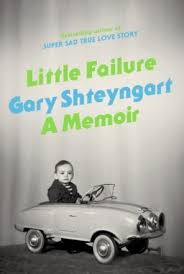 Mary Karr called Little Failure "a memoir for the ages." The Millions dubbed Shteyngart the "Chekhov-Roth-Apatow of Queens." And Nathan Eglander said the book is so honest "Dr. Freud would be proud."
Buy Little Failure today or read an exclusive excerpt on Longform.