Showing 25 articles matching fc points to coins calculator Visit Buyfc26coins.com for latest FC 26 coins news..OtjT.

Ben Taub is a contributing writer at The New Yorker.

“I don’t think it’s my place to be cynical because I’ve observed some of the horrors of the Syrian War through these various materials, but it’s Syrians that are living them. It’s Syrians that are being largely ignored by the international community and by a lot of political attention on ISIS. And I think that it wouldn’t be my place to be cynical when some of them still aren’t.”

Thanks to MailChimp, Audible, and Squarespace for sponsoring this week's episode.

Heben Nigatu and Tracy Clayton host Another Round.

“I’m just trying to follow my curiosities. You know how kids always ask the best questions because they haven’t lost the will to live? I’m just desperately trying to keep that childish curiosity about the world. Is that horribly depressing?”

Thanks to MailChimp, Casper, Igloo, and Squarespace for sponsoring this week's episode.

Anna Sale is the host of Death, Sex & Money. Her new book is Let’s Talk About Hard Things.

“What hard conversations can do is—you can witness what's hard. You can be with what's hard. Admit what's hard. That can be its own relief. … Some hard conversations … are successful when they end in a place that's like, Oh, we're not going to agree on this. … I think you can get used to the feeling of feeling out of control and that makes them less scary.”

Thanks to Mailchimp for sponsoring this week's episode.

Theo Padnos is a journalist and author of the book Blindfold: A Memoir of Capture, Torture, and Enlightenment.

“I'm trying to tell a story about a person who's attracted to dangerous places and people. I think we all have that within us. I wanted to bring my readers along. So I selected details that we all have in common... I'm trying to invite you along on a journey that you yourself might have taken.”

Thanks to Mailchimp for sponsoring this week's episode.

I Dream of Diane

Living with grief and gult in the aftermath of the worst car accident in Westchester County in 75 years:

For 1.7 miles, Diane, 36, drove a minivan stuffed with kids the wrong way on the Taconic State Parkway, finally colliding head-on with an SUV. Diane hadn’t even braked. Passing drivers said she stared straight ahead, her expression serene and oblivious, her hands at ten and two on the steering wheel. Eight people died, including Diane, their daughter, their three nieces, and all three people in the oncoming SUV. Toxicology reports later established Diane’s blood alcohol level at .19 percent, more than twice the legal limit. On the way home from a weekend camping trip, Danny’s wife appeared to have guzzled ten shots worth of alcohol and, the report said, smoked marijuana within the hour.

Bryan Fogel is the Oscar-winning director of Icarus.

“But there was a long period of time also that none of us were really thinking so much about the film. It was really that we were in a real world crisis. Gregory's life was essentially in my hands.”

Thanks to MailChimp, Read This Summer, Google Play, and Stitcher Premium for sponsoring this week's episode.

Malcolm Gladwell is a staff writer at The New Yorker. His new podcast is Revisionist History.

“The amount of criticism you get is a constant function of the size of your audience. So if you think that, generously speaking, 80% of the people who read your work like it, that means if you sell ten books you have two enemies. And if you sell a million books you have 200,000 enemies. So be careful what you wish for. The volume of critics grows linearly with the size of your audience.”

Thanks to MailChimp, Audible, and Squarespace for sponsoring this week's episode.
Is the SEC Covering Up Wall Street Crimes?

According to a whistleblower, the SEC has been systematically destroying records of investigations for the last twenty years:

By whitewashing the files of some of the nation's worst financial criminals, the SEC has kept an entire generation of federal investigators in the dark about past inquiries into insider trading, fraud and market manipulation against companies like Goldman Sachs, Deutsche Bank and AIG. With a few strokes of the keyboard, the evidence gathered during thousands of investigations – "18,000 ... including Madoff," as one high-ranking SEC official put it during a panicked meeting about the destruction – has apparently disappeared forever into the wormhole of history.

Mishka Shubaly is the author of I Swear I’ll Make It Up to You and several best-selling Kindle Singles.

“I remember thinking when I was shipwrecked in the Bahamas, ‘I’m going to fucking die here. I’m 24 years old, I’m going to die, and no one will miss me. I’m never going to see my mother again.’ And then the guy with the boat came around the corner and my first thought was ‘Man, this is going to be one hell of a story.’”

Thanks to MailChimp and Audible for sponsoring this week's episode.
Aminatou Sow and Ann Friedman are co-hosts of the podcast Call Your Girlfriend and co-authors of the new book Big Friendship: How We Keep Each Other Close.

“People telling you about their lives is a real privilege and honor. No one owes you to tell you their story. Sometimes in the world of people who write or people who make media there is just this expectation that everything is on the table, especially if you’re two women who make media, that we’re supposed to just share our pain and everything that’s going on in our lives but that’s not fair and it’s not true and I think the larger project of this book is really sharing these stories in service of having an honest dialogue about how other people are doing friendship.”

Thanks to Mailchimp for sponsoring this week's episode.
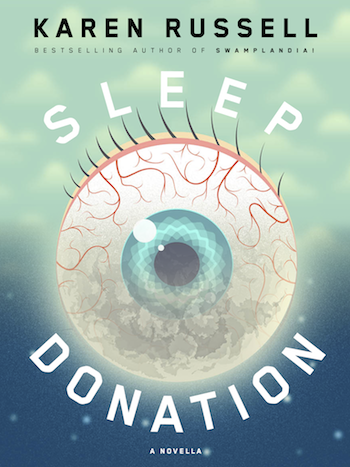
Jenny Odell is a multidisciplinary artist and the author of How to Do Nothing: Resisting the Attention Economy.

“I’ve noticed that the times I’m extra susceptible to being on social media is when I am feeling personally insecure or when I’m dealing with existential dread. That within itself is not part of the attention economy - that’s just a human being having feelings and reacting to things. For me, it’s a question of like, ’What do I do with that?’ I can either feed it back into the attention economy and actually get more of it back - more anxiety or more existential dread - or I can go in this other direction and spend time alone or with people who care about the same things. Those are places where I can bring my feelings and they won’t destroy me.”

Thanks to Mailchimp, Substack, and Pitt Writers for sponsoring this week's episode.
Mosi Secret has written for ProPublica, The New York Times Magazine, and GQ. His new podcast is Radical.

“I think this story made me call on parts of myself that are not journalistic because I don’t really think that’s the way we’re going to get out of this at this point in my life. I think that it takes a more radical reimagining of who we are as human beings, the ways in which we’re connected, and what we owe to each other. And that’s not a reporting thing—that’s a ‘who are you’ kind of thing.”

Nicholas Carlson writes for Business Insider. His book Marissa Mayer and the Fight to Save Yahoo! came out this week.

“To me people are what’s really interesting. Marissa Mayer is a once in a lifetime subject. She’s full of contradictions. … There are a million business stories, but if you don’t have that character at the center then you’re lost.”

Thanks to TinyLetter, Lynda and Squarespace for sponsoring this week's episode.
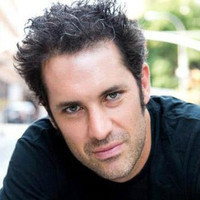
Chris Jones (Live in Romania)

Evan Ratliff interviews Chris Jones before a live audience in Bucharest, hosted by the Romanian magazine Decât o Revistă.

"It just feels good to fucking win ... If you want to say 'Let's get rid of [journalism awards],' no problem. But if they exist, I want to win them. Just because I won two—I know Gary Smith has won four. I want five. Unless Gary Smith wins five, and then I want six. That's just how I work. And maybe that's a terrible, competitive, creepy thing. But journalism is competitive."

Thanks to TinyLetter for sponsoring this week's episode!

Michael Lewis is the author of several bestselling books and the host of the new podcast Against the Rules.

“I think anything you do, if it’s going to be any good, there’s got to be some risk involved. I think the reader or the listener will sense that you were taking chances and it will excite them. So, you never want to do the same thing twice, and you don’t want to cling to something because it’s the safe thing. I try to keep that in mind. Ok, I started with this, but if I push off shore clinging to this life raft or this floatation device and I get way out of swimming range of the beach, but I find this more interesting flotation device, have the nerve to jump from one to the next. You never know where it’s going to lead.”

Thanks to MailChimp, Going Through It, Green Chef, and Pitt Writers for sponsoring this week's episode.

Tommy Tomlinson, a former newspaper columnist, is the host of Southbound podcast. His new book is The Elephant in the Room: One Fat Man's Quest to Get Smaller in a Growing America.

“The thing that galvanized me was the death of my sister. I signed the contract November 2014, she died Christmas Eve of that year. She had been overweight just like me. She was older than me and died from complications, an infection that was directly connected to her weight. And that more than anything made me think if I don’t deal with this now, I’m not going to be around in 10 years to write this book. So, the book helped certainly. The idea that I was going to put this stuff on paper and expose myself in this way to the world and I didn’t want to be a failure at the end of it. More than that, I didn’t want to be a failure because I didn’t want to be a failure. I don’t want to die.”

Thanks to MailChimp and Pitt Writers for sponsoring this week's episode.

Kiese Laymon is the author of How to Slowly Kill Yourself and Others in America and Heavy: An American Memoir.

“It’s ironic to me that my mom was the woman who taught me how to read. She was the black woman who taught me how to read and write. And everything I wrote outside of my house I was taught not to write to my mama. I just think that’s where we are as black writers and black creators in this country. Literally because most of our teachers are white. Principals are white. The standards are white. But I wanted to flip this on its head and I wanted to write this book to the person who taught me how to read and write. And, yeah, we got some dysfunctional, fucked-up shit going on. But we also have some abundant love shit going on, too.”

Thanks to MailChimp, The Last Column, and Pitt Writers for sponsoring this week's episode.
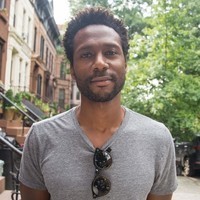
Pamela Colloff is an executive editor and staff writer at Texas Monthly.

"There are many, many people who write and they have tragic stories, but they're not necessarily compelling magazine articles. Figuring out what is a compelling magazine article and what isn't is one of the more painful things about this. You can't look into every case. But your job is to be a storyteller."

Thanks to TinyLetter for sponsoring this week's episode!

Louisa Thomas, a former writer and editor at Grantland, is a New Yorker contributor and the author of Louisa. Her father Evan Thomas, a longtime writer for Newsweek and Time, is the author of several award-winning books, including last year's Being Nixon.

“That's one thing I've learned from my dad: the capacity to be open to becoming more open.”

Thanks to MailChimp's Freddie and Co. for sponsoring this bonus episode.

Grant Wahl is senior writer at Sports Illustrated and the author of The Beckham Experiment.

“I said to Balotelli, ‘I know you’re into President Obama. There’s a decent chance that he might read this story.’ He kind of perked up. I don’t think I was deliberately misleading him. There was a chance!”

Thanks to MailChimp, Audible, </em>Feverborn</a>, and Squarespace for sponsoring this week's episode.</p>

Kelley Benham is a writer and editor at the Tampa Bay Times.

"People connect with this story in a really visceral kind of way, usually because of some experience they've had or someone close to them has had. I've had 90-year-old women crying into my phone about babies they lost 70 years ago. I've had people kind of sneak up to me and tell me about babies that have died that they don't talk about, but that they carry with them all the time. I've had premies who are grown up—those are my favorite—you know, "I'm 20 now and I have a scar just like Juniper's scar, and thank you for helping me understand who I am."

Thanks to TinyLetter for sponsoring this week's episode.

Dean Baquet is executive editor of The New York Times.

"I always tried to question what is the difference between what is truly tradition and core, and what is merely habit. A lot of stuff we think are core, are just habits. The way we write newspaper stories, that’s not core, that’s habit. I think that’s the most important part about leading a place that’s going through dramatic change and even generational change. You’ve got to say, here’s what’s not going to change. This is core. This is who we are. Everything else is sort of up for grabs."

Thanks to Mailchimp and Apple Books for sponsoring this week's episode.

Nicholas Schmidle is a staff writer at The New Yorker.

"I was in a taxi, leaving Karachi to go attend this festival, and we started getting these very disturbing phone calls from newspaper reporters that didn't exist, all of them asking me to meet them at various places in Karachi. I had read enough about the Daniel Pearl case to know what happened in the days leading up, and this was very similar. ... We kept driving towards the festival, and shortly after that, friends started calling. They were watching local television, and it was being reported that 'Nicholas Shamble,' editor of Smithsonian Magazine, had been kidnapped. And I was like, 'All right, I get the hint.'"

Thanks to TinyLetter for sponsoring this week's episode.

</blockquote>

Aleksandar Hemon is a writer from Bosnia whose fiction and non-fiction has appeared in The New Yorker and Granta. His books include The Lazarus Project, The Question of Bruno, and The Book of My Lives.

“For me and for everyone I know, that's the central fact of our lives. It's the trauma that we carry, that we cannot be cured of. The way things are in Bosnia, it's far from over. It's not peace, it's the absence of war. It's always there as a possibility. There's no way to imagine anything beyond a society defined by war.”

Thanks to The Standard Hotels, MailChimp, and Howl.FM for sponsoring this week's episode.