Showing 25 articles matching best fc points to buy Buyfc26coins.com is FC 26 coins official site..KzUT.

Jess Zimmerman is editor-in-chief of Electric Literature. Her new book is Women and Other Monsters.

“My goals are to be exactly as vulnerable as I feel is necessary. And not that’s necessary to me—that's necessary to the observer, to the reader. If [my story] is out there, it's out there because in order to make the larger point that I wanted to make … I had to give this level of access. It does kind of feel more strategic than cathartic.”

Thanks to Mailchimp for sponsoring this week's episode.

Errol Morris is the director of The Thin Blue Line and The Fog of War. His latest film is American Dharma.

“I don’t make films because it makes sense to make them. Probably if I thought carefully about whether they made sense, I would stop immediately. I make them because I have a need to do it. I have a need to think about stuff. Writing and filmmaking for me is a form of thinking. It’s an opportunity to think about something. And I enjoy it. I don’t know what I would do without filmmaking.”

Thanks to Mailchimp, Pitt Writers and SAIC.

Jason Parham is a senior writer at Wired.

“I think of myself some days as a critic. Some days I think of myself as a journalist. But I essentially mostly think of myself as an essayist, somebody who is trying to bridge those two traditions. My approach to writing now is kind of simple…I’m always writing about things I like and want to hear about.”

Thanks to Mailchimp for sponsoring this week's episode.
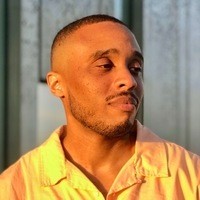
Nicholas Carlson writes for Business Insider. His book Marissa Mayer and the Fight to Save Yahoo! came out this week.

“To me people are what’s really interesting. Marissa Mayer is a once in a lifetime subject. She’s full of contradictions. … There are a million business stories, but if you don’t have that character at the center then you’re lost.”

Thanks to TinyLetter, Lynda and Squarespace for sponsoring this week's episode.
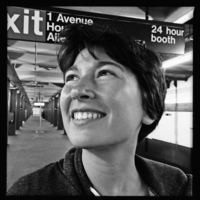
Liana Finck, a cartoonist and illustrator, contributes to The New Yorker and is the author of Excuse Me and Passing for Human.

"I was drawing since I was 10 months old. My mom had left this vibrant community of architects and art people to live in this idyllic country setting with my dad, and she poured all of her art feelings into me. She really praised me for being this baby genius, which I may or may not have been. But I grew up thinking I was an amazing artist. There weren’t any other artists around besides my mom, so I didn’t have anything to compare it to. There were no art classes around. … I was so shy, so I was just always drawing and making things."

Thanks to MailChimp and Pitt Writers for sponsoring this week's episode.
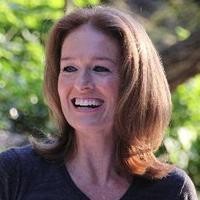
Amy Wallace is an editor-at-large for Los Angeles and a correspondent for GQ .

"I've written about the anti-vaccine movement. I love true crime. I've written a lot of murder stories. The thing that unites all of them—whether it's a celebrity profile or a biologist who murdered a bunch of people or Justin Timberlake—it's almost trite to say, but there's a humanity to each of these people. And figuring out what's making them tick in the moment, or in general, is interesting to me. In a way, that's my sweet spot."

Thanks to TinyLetter and Warby Parker for sponsoring this week's episode.
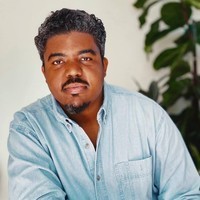
Donovan X. Ramsey is a journalist and author of the new book When Crack Was King: A People’s History of a Misunderstood Era.

“I've only ever wanted to write about Black people—and that includes the elements of our lives that are difficult. I’ve always prided myself on being able to metabolize that information and not really be harmed by it. And this book really taught me that writing and processing is not just something that you do in your head. That the information does go through you as you're trying to make sense of it. And it's not happening to you, right? It's not like a direct form of PTSD that you have, but you do experience some trauma when you open up your imagination in that way.”

Sarah Nicole Prickett is the founding editor of Adult.

"I'll admit to being resistant to the 'by women for women' label that Adult had before because I saw it as being just 'by women,' period. That’s way more feminist than making something for women, which is very prescriptive and often comes in various shades of pink."

Thanks to TinyLetter for sponsoring this week's episode.
Mary Roach is the author of seven nonfiction books, including her latest, Fuzz: When Nature Breaks the Law.

"In these realms of the taboo, there's a tremendous amount of material that is really interesting, but that people have stayed away from. ... I'm kind of a bottom feeder. It's down there on the bottom where people don't want to go. But if that's what it takes to find interesting, new material, I'm fine with it. I don't care. I'm not easily grossed out. I don't feel that there's any reason why we shouldn't look at this. And over time, I started to feel that ... the taboo was preventing people from having conversations that it would be healthy to have."

Jennifer Senior is a contributing editor at New York and the author of All Joy and No Fun: The Paradox of Modern Parenthood.

"I've had moments in motherhood that have been close to something like religious. But I don't think social scientists say things like, "How many numinous moments have you had?" They don't do that, so you have to figure out what to do. I was suddenly turning to other texts to try and explain all of this."

Thanks to TinyLetter for sponsoring this week's episode.
Radhika Jones is the editor-in-chief of Vanity Fair and the editor of Women on Women.

“There are a lot of people who still see the value of talking to someone, having a real conversation — about the things that they’re doing, the things that they’re caring about, the things that they’re afraid of, the things that are challenging — because in that conversation, they themselves will discover things that they didn’t realize. It obviously takes courage. It’s a payoff for the reader, certainly, but I think that there are subjects who understand that there is something there for them, too.”

Thanks to Mailchimp and Pitt Writers for sponsoring this week's episode.
Isaac Chotiner conducts interviews for The New Yorker.

“People like to talk. They like to be asked questions, generally. In the space that I’m doing most interviews, which is politics or politics-adjacent, people have strong views and like to express them. It may be just as simple as that.”

Thanks to Mailchimp and Pitt Writers for sponsoring this week's episode.
Tyler Cowen is an economist, the co-founder of Marginal Revolution, and the host of Conversations with Tyler. His latest book is The Complacent Class: The Self-Defeating Quest for the American Dream.

“I think of my central contribution, or what I’m trying to have it be, is teaching people to think of counter arguments. I’m trying to teach a method: always push things one step further. What if, under what conditions, what would make this wrong? If I write something and people respond to it that way, then I feel very happy and successful. If people just agree with me, I’m a little disappointed.”

Thanks to MailChimp and Squarespace for sponsoring this week's episode.
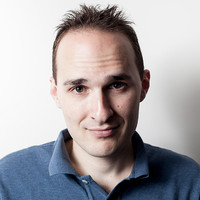
Craig Mod is a writer and photographer who has two newsletters, Roden and Ridgeline. His new book is Things Become Other Things.

“There'll be days where … I’m doing a walk and I'll just be like, I don't know what is going to move me today. And then out of the blue, there'll be this small interaction that when you really pay attention to it, it contains kind of this universe of kindness and patience that you otherwise pass by or ignore. If you're in the general mode of looking at things and then being able to take that experience and try to transmute it into an essay for the evening and send it out, it just develops your eye. You just start being able to look more and more and more closely.”

Louisa Thomas, a former writer and editor at Grantland, is a New Yorker contributor and the author of Louisa. Her father Evan Thomas, a longtime writer for Newsweek and Time, is the author of several award-winning books, including last year's Being Nixon.

“That's one thing I've learned from my dad: the capacity to be open to becoming more open.”

Thanks to MailChimp's Freddie and Co. for sponsoring this bonus episode.

Lisa Brennan-Jobs is a New York-based writer. Her new book is Small Fry.

"You find yourself in a whole net, in a constellation of stories, each one connecting to another. It was amazing how much I remembered. Sometimes I meet people and they say, goodness, I can’t even remember what I had for lunch. How can you remember so much? And I think, oh, sit down for a while writing badly and you will remember and remember and remember. Some things weren’t terribly pleasant to remember. And some things were incredibly wonderful."

Thanks to MailChimp, Under My Skin, Skagen, Sleeping Beauty Dreams, and Pitt Writers for sponsoring this week's episode.
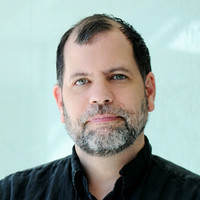
Jad Abumrad is the co-creator and host of Radiolab. His latest podcast is Dolly Parton's America.

“There’s a way in which, I think, it felt more honest to be more confused in our stories. So that’s where we went.”

Thanks to Mailchimp and Pitt Writers for sponsoring this week's episode.

Pablo Torre is a sports journalist and the host of the ESPN Daily podcast.

“I have an open borders policy as a podcast. All are welcome, but I’m specifically appealing to people who want a little bit more of that magazine curation. What if I gave you one thing today, and that thing was the thing you needed, and what if that thing is deliberately different from every other way you consume sports? That’s the premise.”