Showing 25 articles matching best fc points to buy Buyfc26coins.com is FC 26 coins official site..KzUT.

Heather Havrilesky writes the Ask Polly and Ask Molly newsletters. Her latest book is Foreverland: On the Divine Tedium of Marriage.

“It’s not a good story when you're bullshitting people. I didn't want this book to feel like bullshit…. I wanted to show enough that you could feel reassured that it's normal to feel conflicted about your life and the people in it. It's normal to feel anxious about how much people love you. And it's normal to feel avoidant about how much people love you. It's normal to feel like a failure in the face of trying to stay with someone over the course of your entire life.”
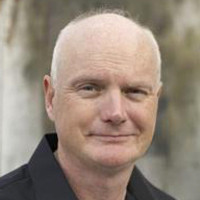

Patrick Symmes is a foreign correspondent and contributor to Outside and Harper's.

"They rolled us up like a cheap carpet. We were locked in a room for 14 hours. And for the first six hours that was okay. Everything was nice; there was coffee. But then the nightshift came on. You could hear gunshots in the street, and these guys were scared. And they were thugs. And they were thugs with a mission: to get rid of every foreigner who might witness what was happening."</i>

Thanks to TinyLetter for sponsoring this week's episode!

</blockquote>

Michael J. Mooney is a staff writer at D Magazine and the author of The Life and Legend of Chris Kyle.

“There are some elements of crime stories that are so absurd that it’s funny, and so working on the “How Not to Get Away With Murder” story, it was actually really funny thinking about it for a long time. Until I met Nancy Howard, the woman who was shot in the face and has one eye now. This is her entire life, and it was destroyed. This is not a crime story to her, it’s her life.”

Thanks to MailChimp, </em>Feverborn</a>, Audible, and Squarespace for sponsoring this week's episode.</p>

Ta-Nehisi Coates is the author of The Beautiful Struggle, We Were Eight Years in Power, and Between the World and Me. His new novel is The Water Dancer. Chris Jackson is Coates's editor, and the publisher and editor-in-chief of One World.

“I don’t think an essay works unless I can pin a story to it. You don’t want people to just say, ‘Oh that was a cool argument.’ You want people to say, ‘I could not stop thinking about this.’ You want them to nudge their wives and husbands and say, ‘You have to read this.’ You want them to be bothered by it.”

Thanks to MailChimp, Squarespace, Vistaprint, and Pitt Writers for sponsoring this week's episode.

Gabriel Snyder is the editor-in-chief of The New Republic.

“I had a new job, I was new to the place, and I came to it with a great deal of respect but didn’t feel like I had any special claim to it. But in that moment I realized that there were all of these people who wanted to see the place die. And that the only way The New Republic was going to continue was by someone wanting to see it continue, and I realized I was one of those people now.”

Thanks to MailChimp, Bombas, Harry's, and Trunk Club for sponsoring this week's episode.

Ben Taub is a staff writer at The New Yorker.

“I don’t think it’s my place to be cynical because I’ve observed some of the horrors of the Syrian War through these various materials, but it’s Syrians that are living them. It’s Syrians that are being largely ignored by the international community and by a lot of political attention on ISIS. And I think that it wouldn’t be my place to be cynical when some of them still aren’t.”

Thanks to MailChimp and Tripping for sponsoring this week's episode.

Josh Levin is the national editor at Slate. He is the host of the podcast Hang Up and Listen and the author of The Queen: The Forgotten Life Behind an American Myth.

“I think it’s a strength to make a thing, one that people might have thought was familiar, feel strange. And reminding people - in general, in life - that you don’t really know as much as you think you know. I think that carries over into any kind of storytelling.”

Thanks to Mailchimp, Squarespace and Pitt Writers for sponsoring this week's episode.

Doug McGray is the co-founder and editor-in-chief of California Sunday and Pop-Up.

“Your life ends up being made up of the things you remember. You forget most of it, but the things that you remember become your life. And if you can make something that someone remembers, then you’re participating in their life. There’s something really meaningful about that. It feels like something worth trying to do.”

Thanks to MailChimp, Smart People Podcast, Howl, and CreativeLive for sponsoring this week's episode.

Bath Salts: Deep in the Heart of America's New Drug Nightmare

Perpetually reinvented through experimental chemistry, manufactured in Asian mills, packaged in foil with names like White Slut Concentrated and Charley Sheene for use as “hookah cleaner,” distributed in college town head shops, snorted and injected by hardened addicts and high school thrill seekers alike, bath salts may be the strangest and most volatile American drug craze since crack. And they’re (quasi) legal.

Nancy Jo Sales writes for Vanity Fair and is the author of The Bling Ring.

"I'm a mom now, so my life's a little different. I can't do certain things that I used to do, and I won't, because they're dangerous or ridiculous or keep me out till five in the morning or whatever. But back in those days, I didn't even have a pet. This was everything I did. This was my whole life, this passion to find out these things, and do these things, and see these things, and have these adventures and be able to report about this street life that rarely gets talked about. I just didn't really have a lot of boundaries in those days. I don't think I had any, really. And if you really throw yourself into something, you can get a great story. You can also not have a life of your own."

Thanks to TinyLetter and Squarespace for sponsoring this week's episode.

Maggie Haberman covers the White House for The New York Times.

“If I start thinking about it, then I’m not going to be able to just keep doing my job. I'm being as honest as I can — I try not to think about it. If you’re flying a plane and you think about the fact that if the plane blows up in midair you’re gonna die, do you feel like you can really focus as well? So, I’m not thinking about [the stakes]. This is just my job. This is what we do. Ask me another question.”

Thanks to MailChimp, Bombfell, Babbel, and HelloFresh for sponsoring this week's episode.

Maggie Haberman covers the Trump Administration for The New York Times.

“If I start thinking about it, then I’m not going to be able to just keep doing my job. I'm being as honest as I can — I try not to think about it. If you’re flying a plane and you think about the fact that if the plane blows up in midair you’re gonna die, do you feel like you can really focus as well? So, I’m not thinking about [the stakes]. This is just my job. This is what we do. Ask me another question.”

Thanks to MailChimp for sponsoring this week's episode.

Evan Ratliff, a co-host of the Longform Podcast, is the author of The Mastermind: Drugs. Empire. Murder. Betrayal.

“We’re all less moral than we think we are, including myself. I’m interested in the justifications people provide for themselves to get deep into something that starts as one thing and ends up as a murderous criminal cartel. Paul Le Roux, sure—but also doctors and pharmacists. It’s interesting to think about where the pressures in our lives create moral ambiguity that we didn't think was there, and why we do things that we’ve said we'll never do. We look at someone else and think that they’re really bad or evil, but then we’ve never experienced those pressures. That cauldron of factors is something I’m very interested in because I think it applies to everyone.”

Thanks to MailChimp and Pitt Writers for sponsoring this week's episode.

Mirin Fader is a staff writer for The Ringer.

“Nobody ever makes it makes it, right? You make it, and every day, you have to keep making it. That’s how I feel. Would I be the reporter I am if I wasn’t like that? I’m afraid to see what happens if I’m not. I’m afraid what type of reporter or writer I’ll be if I take my foot off the gas.”

Thanks to Mailchimp for sponsoring this week's episode.

Derek Thompson is a staff writer for The Atlantic and host of the podcast Plain English.

“I am an inveterate dilettante. I lose interest in subjects all the time. Because what I find interesting about my job is the invitation to solve mysteries. And once you solve one, two, three mysteries in a space, then the meta-mystery of that space begins to dim. And all these other subjects—that's the new unlit space that needs the flashlight. And that's the part of the job that I love the most: that there are so many dark corners in the world. And I've just got this flashlight, and I can just shine it wherever the hell I want.”

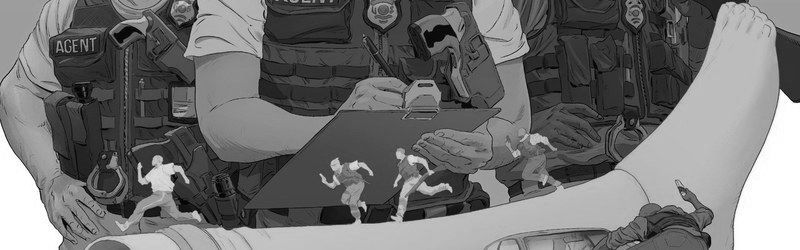
My Time as a Bounty Hunter

Within the world of law enforcement, bounty hunting is something of an aberration. An accident arising from the combination of common law, frontier justice, chattel slavery, and capitalism. No other job is more American. Bounty hunting’s legality is a mishmash of confusing requirements, regulations, and certifications that vary widely by state.