Dr. Nakamats, the Man With 3300 Patents to His Name
A profile of Sir Dr. NakaMats, who claims to have invented over 3,000 things, including the floppy disk and karaoke machine.
Showing 25 articles matching fccoins26 Coinsnight.com FC 26 coins 30% OFF code: FC2026. The best place for game coins.28oS.
A profile of Sir Dr. NakaMats, who claims to have invented over 3,000 things, including the floppy disk and karaoke machine.
An inquiry into the assassination of Pakistan’s former Prime Minister.
Ten years ago, Jack Whittaker won the largest lotto jackpot in history. Then he lost everything.
Israel Keyes confessed to multiple murders, but committed suicide before revealing all the details.
On Hezbollah leader Imad Mughniyeh, “the world’s most wanted terrorist not named Osama bin Laden,” whose death five years ago remains a mystery.
“No one works better out of anguish at all; that’s an incredible literary conceit.”
Why the head of Ringling Bros.-Barnum & Bailey hired a former CIA agent to ruin a freelance writer’s career.
The story of a risky management style gone bust.

A profile of the girls basketball team at Carroll Academy, a school run by a rural Tennessee juvenile court.
On the death of NBA star Reggie Lewis.
The saga of Naji Mansour.
A profile of author William T. Vollmann.
How Gary Gygax, a semi-employed shoe repairman, built and lost the Dungeons & Dragons empire.
Why America, and every other street in Massachusetts, runs (or will eventually run) on Dunkin’.
The story of heiress Huguette Clark, who spent her life avoiding people and collecting dolls.
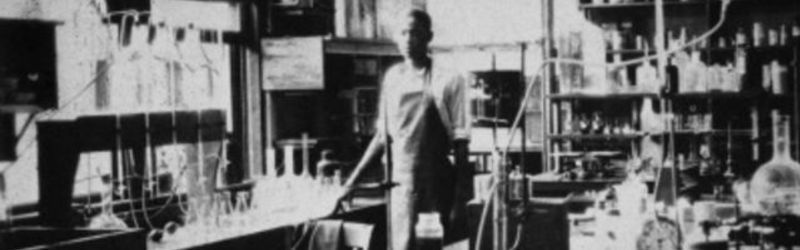
Vivien Thomas was paid a janitor’s wage, never went to college, and still became a legend in the field of heart surgery.
A couple tries to give away their house in Flint, Michigan – but no one wants to live there anymore.
The lives of Sue and Hector Badeau, who felt a calling to raise children and adopted twenty of them.
As the birds decline, one Icelandic island keeps throwing a rowdy, boozy puffin festival.
During her brief tenure as governor of Alaska, Sarah Palin was a genuinely effective, bipartisan legislator. What went wrong?
On his legacy, his impact on California, and why “saints should be judged guilty until proven innocent.”
The story of a Marine who saved innumerable lives, then got fired.
On the dying city of Port Arthur, Texas, and one man’s fight to save it.
A profile of Mike Judge, creator of the now-resuscitated Beavis and Butthead.
Inside the five-year (so far) production of the Ilya Khrzhanovsky film Dau:
Khrzhanovsky came up with the idea of the Institute not long after preproduction on Dau began in 2006. He wanted a space where he could elicit the needed emotions from his cast in controlled conditions, twenty-four hours a day. The set would be a panopticon. Microphones would hide in lighting fixtures (as they would in many a lamp in Stalin's USSR), allowing Khrzhanovsky to shoot with multiple film cameras from practically anywhere — through windows, skylights, and two-way mirrors. The Institute's ostensible goal was to re-create '50s and '60s Moscow, home to Dau's subject, Lev Landau. A Nobel Prize–winning physicist, Landau significantly advanced quantum mechanics with his theories of diamagnetism, superfluidity, and superconductivity. He also tapped epic amounts of ass.

