Showing 25 articles matching fccoins26 Coinsnight.com FC 26 coins 30% OFF code: FC2026. The best place for game coins.28oS.

Kyle Chayka is a freelance writer who writes for Businessweek, The Verge, Racked, The New Yorker, and more.

“I love that idea of form and content being the same. I want to write about lifestyle in a lifestyle magazine. I want to critique technology in the form of technology, and kind of have the piece be this infiltrating force that explodes from within or whatever. You want something that gets into the space, and sneaks in, and then blows up.”

Thanks to MailChimp, Audible, and Texture for sponsoring this week's episode.

Dana Goodyear is a staff writer for The New Yorker and host of the new podcast Lost Hills.

“I do find people who take risks—artistic and physical or even intellectual risks—really interesting. ... There are so many people that I have written about who take a really long time with their projects, whether years or decades, and they might or might not work out. ... They just don't go along with what's received, and they—at a great personal cost—often do things that are very different. And then those things are the things in our world that are the most fascinating or feel the most human.”

Thanks to Mailchimp and CaseFleet for sponsoring this week's episode.

Ralph Ellison in Tivoli

When Saul Bellow and Ralph Ellison were roommates.

He and I had our differences. I am not inclined to be sentimental about those Arcadian or Utopian days. He didn't approve of my way of running the place. I had complained also that his dog relieved himself in my herb garden. I asked, "Can't you arrange to have him do his shitting elsewhere?"

Theo Padnos is a journalist and author of the book Blindfold: A Memoir of Capture, Torture, and Enlightenment.

“I'm trying to tell a story about a person who's attracted to dangerous places and people. I think we all have that within us. I wanted to bring my readers along. So I selected details that we all have in common... I'm trying to invite you along on a journey that you yourself might have taken.”

Thanks to Mailchimp for sponsoring this week's episode.

Rachel Aviv is a staff writer at The New Yorker.

"If I'm writing about the criminal justice system, I wish I were a lawyer. If I'm writing about psychiatry, I wish I were a psychiatrist. I have often filled out half my application to get a Ph.D in clinical psychology. That is one area where I am constantly on the verge of jumping the fence. But even when I wrote about religion, I thought I wanted to be a priest."

Thanks to TinyLetter and HostGator for sponsoring this week's episode.

Krista Tippett is the host of On Being and the author of Becoming Wise: An Inquiry into the Mystery and Art of Living.

“Good journalists in newsrooms hold themselves to primitive standards when they’re covering religious ideas and people. They’re sloppy and simplistic in a way that they would never be with a political or economic person or idea. I mean they get facts wrong. They generalize. Because they don’t take it seriously, and they don’t know how to take it seriously.”

Thanks to MailChimp, Winc, and Squarespace for sponsoring this week's episode.

Clint Smith is a poet and a staff writer for The Atlantic. His most recent book is How the Word Is Passed: A Reckoning with the History of Slavery Across America and his latest feature is “Monuments to the Unthinkable.”

“I've been to a lot of places that carry a history of death and slaughter and murder. I've been on plantations. I've been in execution chambers. I've sat on electric chairs. I've been on death row. But I have never experienced anything like what I experienced walking through the gas chamber in Dachau. I mean, there's reading books about the Holocaust, and then there's that. And that is something that I hope to continue doing for the rest of my life: putting my body where these things happen. Because it completely transforms your understanding of what it was like.”

A Major-League Divorce

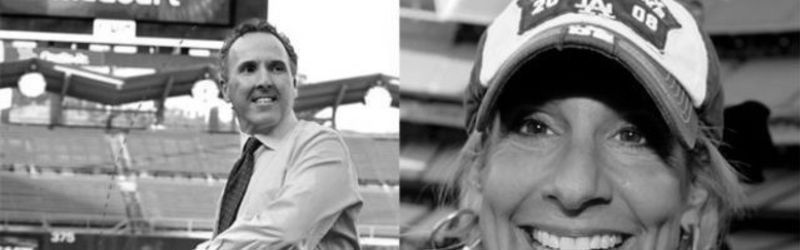
How Frank and Jamie McCourt bought the Dodgers for “for less than the price of an oceanfront home in Southampton” and eventually became entangled in one of the most expensive divorces in California history, which laid bare their finances and confirmed what many already knew: they had bankrupted one of the most storied franchises in baseball.

In all, the McCourts reportedly took $108 million out of the team in personal distributions over five years—a sum that Molly Knight, a reporter with ESPN who has extensively covered the story, notes is eerily similar to the cash payment that she says Frank McCourt has claimed he made for the team.

Gabriel Snyder is the editor-in-chief of The New Republic.

“I had a new job, I was new to the place, and I came to it with a great deal of respect but didn’t feel like I had any special claim to it. But in that moment I realized that there were all of these people who wanted to see the place die. And that the only way The New Republic was going to continue was by someone wanting to see it continue, and I realized I was one of those people now.”

Thanks to MailChimp, Bombas, Harry's, and Trunk Club for sponsoring this week's episode.

Tim Ferriss is the author of The Four-Hour Workweek and The Four-Hour Body.

“If you have a fitness magazine, you can’t just write one issue, ‘Here are the rules!’ ... My job, conversely, is to make myself obsolete. The last thing I want to be is a guru, someone people come to for answers. I want to be the person people come to for better questions.”

Thanks to TinyLetter and The Great Courses for sponsoring this week's episode.

Charlie Warzel is a writer-at-large for The New York Times opinion page.

“I’m relying on my morals more than I normally do, but less on my gut. The stakes are just so high.”

Thanks to Mailchimp and Pitt Writers for sponsoring this week's episode.

Elizabeth Kolbert, author of Field Notes from a Catastrophe: Man, Nature, and Climate Change and The Sixth Extinction: An Unnatural History, is a staff writer at The New Yorker.

“I still nurse the idea in my heart of hearts that something you write, that there’s some key to this all. We’re all looking for the skeleton key that’s going to unlock it, and people will go, ‘Oh, that’s why we have to do something!’ I don’t want to say that I completely dispensed with that. I think that’s what motivates most journalists—this information is going to somehow make a difference. On the other hand, I have dispensed a lot of that. Now we’re so deep into all of this. The more you know about climate change and the numbers involved and the scale involved of what we need to do to really mitigate this problem, you know that we’re moving in absolutely the wrong direction. It’s not like we’re moving slowly, we’re moving in the wrong direction. It’s very hard to say anything I write is going to turn this battleship around.”

Thanks to MailChimp, Skagen, Squarespace, and Pitt Writers for sponsoring this week's episode.

Ashlee Vance covers technology for Bloomberg Businessweek and is the author of of Elon Musk: Tesla, SpaceX, and the Quest for a Fantastic Future.

“To be totally clear, I don’t cover them (apps). I like people who try to solve big problems. Wherever I go, I try to run away from the consumer stuff. I love writing about giant manufacturing plants that make stuff and employ tens of thousands of people.”

Thanks to this week's sponsors: TinyLetter, Trunk Club, QuickBooks, and The School of Continuing Education at Columbia University.

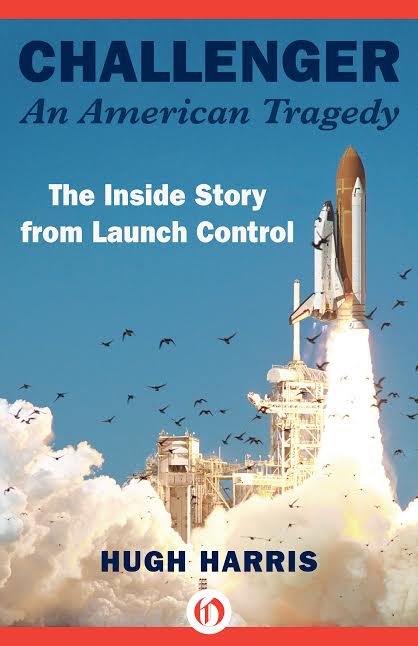
Sponsor: "Challenger: An American Tragedy" by Hugh Harris

Twenty-eight years ago, the space shuttle Challenger launched from the Kennedy Space Center in Florida. Seventy-three seconds later, a stunned nation watched as flames engulfed the craft, killing all seven crewmembers on board. It was Hugh Harris, “the voice of launch control,” whom audiences across the country heard counting down to lift-off on that fateful day. In Challenger: An American Tragedy, Harris presents the story of the tragedy as only an insider can, with a by-the-second account of the launch and a comprehensive overview of the ensuing investigation.

Buy a copy today just $4.99 or read an excerpt.


Thanks to Open Road Integrated Media for sponsoring Longform this week. If you're interested in sponsoring the site, get in touch.

David Haskell is the editor-in-chief of New York Magazine.

“Fingers crossed, knock on wood, we've got time here. You can't ever take that for granted, but I think it's fair to indulge a long-term perspective. More than fair, actually — I think it's part of the job, for me at least, to be plotting and dreaming years out. And to be fashioning the magazine toward that long-term vision as gingerly as I can without it breaking.”

Thanks to Mailchimp, Pitt Writers, Squarespace, and Literati for sponsoring this week's episode.

Al Baker is a crime reporter at The New York Times, where he writes the series “Murder in the 4-0.”

“When there’s a murder in a public housing high rise, there’s a body on the floor. Jessica White in a playground, on a hot summer night. Her children saw it. Her body fell by a bench by a slide. You look up and there’s hundreds of windows, representing potentially thousands of eyes, looking down on that like a fishbowl. …They’re seeing it through the window and they can see that there’s a scarcity of response. And then they measure that against the police shooting that happened in February when there were three helicopters in the air and spotlights shining down on them all night and hundreds of officers with heavy armor going door to door to door to find out who shot a police officer. They can see the difference between a civilian death and an officer death.”

Thanks to MailChimp and Squarespace for sponsoring this week's episode.

Mara Shalhoup was until recently the editor-in-chief of LA Weekly. She is the author of BMF: The Rise and Fall of Big Meech and the Black Mafia Family.

“I’m so fearful about what it will look like for cities without an outlet for [alt-weekly] stories. And for young writers, who need and deserve the hands-on editing these kind of editors can give them and help really launch careers … it’s a tragedy for journalism. It’s a tragedy for young people, people of color. It’s a tragedy for the subjects of stories that won’t get written now. That’s just the reality.”

Thanks to Mail Chimp, Mubi, and Skillshare for sponsoring this week's episode.
Army of Altruists

This is the piece of writing that inspired me to make the turn from fiction and corporate research into journalism. It’s the best reframing of American society that I’ve ever read. And kudos to Harper’s for running it. It’s not often you see anarchist anthropologists making highly visible contributions to public discourse.

-A. Madrigal

A Classic Pick from Longform and Open Road

Our sponsor this week is Open Road Integrated Media, a digital publisher with a soft spot for the kind of classic writing we highlight every day on Longform.

In addition to new work, Open Road has published ebooks by legendary authors including William Styron, Gloria Steinem and David Halberstam. And starting today, we'll be making a monthly pick from their archives, a favorite book of ours that Open Road will make make available to Longform readers at a deep discount.

Up first: Rachel Carson's 1951 bible of the enviornmental movement, The Sea Around Us. Buy it today for 66% off or read an excerpt.

Albert Samaha is an investigative journalist and the deputy inequality editor at BuzzFeed News. His book Concepcion: An Immigrant Family's Fortunes comes out in October.

“I don’t think any child of the recession will ever not feel precarious. And being in journalism makes that even more so. ... At this point I’ve embraced the precarity of working in this industry. I’m sure at some point it’s going to be grating for people to hear me talk about how precarious and insecure I feel. … But I’ve got too many friends who are way too talented, who can’t use that talent in the ways that they are passionate about, for me to ever feel like my place in this industry is fully cemented.”

Thanks to Mailchimp and CaseFleet for sponsoring this week's episode.