How I Helped My Dad Die
His body wrecked by ALS, the author’s father insisted that his death, like his life, was his to control.
Showing 25 articles matching fccoins26 Coinsnight.com FC 26 coins 30% OFF code: FC2026. The best place for game coins.28oS.
His body wrecked by ALS, the author’s father insisted that his death, like his life, was his to control.

On the moral responsibility to break unjust laws.
“There comes a time when the cup of endurance runs over, and men are no longer willing to be plunged into the abyss of despair. I hope, sirs, you can understand our legitimate and unavoidable impatience. You express a great deal of anxiety over our willingness to break laws. This is certainly a legitimate concern. Since we so diligently urge people to obey the Supreme Court's decision of 1954 outlawing segregation in the public schools, at first glance it may seem rather paradoxical for us consciously to break laws. One may well ask: "How can you advocate breaking some laws and obeying others?" The answer lies in the fact that there are two types of laws: just and unjust. I would be the first to advocate obeying just laws. One has not only a legal but a moral responsibility to obey just laws. Conversely, one has a moral responsibility to disobey unjust laws. I would agree with St. Augustine that ‘an unjust law is no law at all.’”
Thomas Morton is a writer and former correspondent for HBO's Vice News. He was at Vice from 2004-2019 and is a major character in Jill Abramson's Merchants of Truth.
“You have to go with your gut and I feel like that’s one of the most essential qualities in doing anything of the nature of what we did. Of making documentaries or reporting news or current events, you really have to have a good sense of intuition for who you’re dealing with, what they’re telling you, what you’re telling them, how you’re behaving. It’s all human interaction, you can’t govern that with hard and fast rules or with extremely set rules. Beyond the extreme ones there are always going to be murky areas. You have to be willing to accept that and work with those.”
Thanks to MailChimp and Pitt Writers for sponsoring this week's episode.
Patricia Bosworth is a journalist and biographer. Her latest book is The Men in My Life.
“The [acting] rejections are hellish and ghastly. At least they were to me. And I got tired of being rejected so much and also tired of not being able to control my life. And as soon as I became a writer, I had this control, I felt more active, more energized. But it was a decision that took a long time coming.”
Thanks to MailChimp, Squarespace, and Heaven's Gate for sponsoring this week's episode.
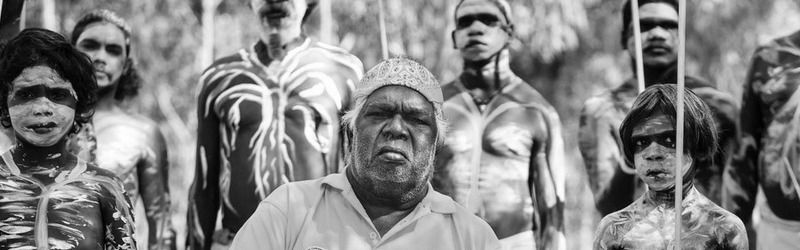
An indigenous leader reflects on a lifetime following the law of the land in Australia.
“What Aboriginal people ask is that the modern world now makes the sacrifices necessary to give us a real future. To relax its grip on us. To let us breathe, to let us be free of the determined control exerted on us to make us like you. And you should take that a step further and recognise us for who we are, and not who you want us to be. Let us be who we are – Aboriginal people in a modern world – and be proud of us. Acknowledge that we have survived the worst that the past had thrown at us, and we are here with our songs, our ceremonies, our land, our language and our people – our full identity. What a gift this is that we can give you, if you choose to accept us in a meaningful way.”
Molly Crabapple is an artist and writer. She is a columnist for VICE and her work has appeared in The New York Times, The Paris Review and Vanity Fair.
“As long as the marginalized communities I’m writing about don’t think I’m full of shit, that’s success to me.”
Thanks to TinyLetter, Squarespace and Lynda for sponsoring this week's episode. If you would like to support the show, please leave a review on iTunes.
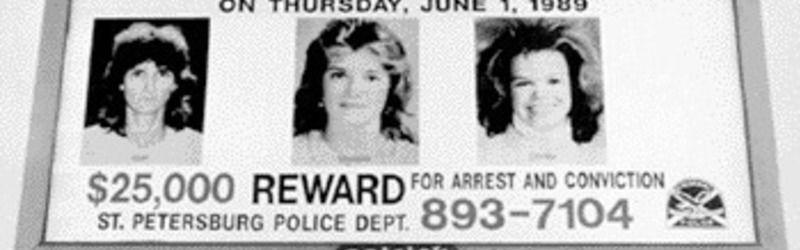
On June 4, 1989, the bodies of Jo, Michelle, and Christe were found floating in Tampa Bay. This is the story of the murders, their aftermath, and the handful of people who kept faith amid the unthinkable.
Sponsored

Our sponsor this week is Weirder Web, a blog dedicated to the underreported underbelly of the internet. Weirder Web publishes new, in-depth articles throughout the week on the strange and fascinating citizens of cyberspace: drug dealers, kid hackers, child pornographers, amibitious money launderers, blogging serial killers and everyday people.
To get started with Weirder Web, check out a collection of their best longform articles. Or just dive into one of our favorites, a history of the internet's largest hidden service and drug marketplace.
July and August sponsorships are now available. Email sponsor@longform.org for details.
Tina Brown, the former editor of Vanity Fair and The New Yorker, is the founder of Women in the World. Her latest book is The Vanity Fair Diaries.
“I believed that my bravado had no limit, if you know what I mean. I see limits now, let’s put it that way. I do see limits. But you know, I’m still pretty reckless when I want something. That’s why I don’t tweet much. I’ll say something that will just cause me too much trouble.”
Thanks to MailChimp and Squarespace for sponsoring this week's episode.
Adrian Chen is a freelance journalist who has written for The New Yorker, The New York Times Magazine, and Wired. His latest article is "Unfollow," about a former member of the Westboro Baptist Church.
“Twitter and social media get such a bad rep for being full of hate and trolls. And, you know, a lot of the stories I’ve written have probably bolstered that stereotype. I think a lot of people have a lot of anxiety and ambivalence about social media even though they love it—they’re on it all the time—and they’re kind of thinking of it as a vice, as something they should be ashamed of, as bad. But this is a very clear win. It's not some abstract thing you could never measure. No, it’s like, [social media] really did cause her to leave the church.”
Thanks to MailChimp, Casper, Squarespace, Mack Weldon, and Howl.fm for sponsoring this week's episode.
Shari Redstone sits atop a $30 billion media empire.
Sarah A. Topol is a writer-at-large for The New York Times Magazine. Her latest feature is ”Is Taiwan Next?”
”I think you never actually ask people head-on about what they've been through. You always ask people to just tell you what they want to tell you about anything that has happened to them…. This event that happened to you, it doesn't define you. It’s not why I'm here necessarily. Like, tell me about your childhood. Tell me about your life. Tell me about the things you think are important in your community. And by the time we get to the traumatic part, I hope they've seen enough of who I am and how I interview to feel comfortable telling me that they don't want to talk about certain things.”
Sabrina Rubin Erdely, a contributing editor at Rolling Stone, has also written for GQ, Philadelphia and SELF.
"I think that people are, by their nature, good and want to act rightly. So I'm very interested in why people do these things that result in really bad actions. My lack of outrage actually is one of the things that probably helps me in my reporting because I really am propelled by this pure curiosity. ... I just want to know, 'Where did that come from?'"
Thanks to TinyLetter and PillPack for sponsoring this week's episode.
In order to keep running, Tom White cut off his own leg.
How Chief Justice John Roberts pulled off Citizens United.
During my first weeks in Rogers Park, I was surprised by how often I heard the word “pioneer”. I heard it first from the white owner of an antiques shop with signs in the windows that read: “Warning, you are being watched and recorded.” When I stopped off in his shop, he welcomed me to the neighbourhood warmly and delivered an introductory speech dense with code. This neighbourhood, he told me, needs “more people like you”. He and other “people like us” were gradually “lifting it up”.
Excerpted from Notes From No Man’s Land
Rob Copeland is a finance reporter for The New York Times. His recent book is The Fund: Ray Dalio, Bridgewater Associates, and the Unraveling of a Wall Street Legend.
“If I stab you, I'm going to stab you in the chest, not the back. You're going to see it coming. ... But if you're going to tell me something's wrong, you have to keep talking. I'm not going to take your word for it. I have a reason for why I believe my reporting to be true, and I'm going to present it to you as best I can. But just because you say something's wrong doesn't make it so.”
The writer on his father’s religious devotion to personal style. Among the maxims: “the turtleneck is the most flattering thing a man can wear”; “there is nothing like a fresh burn”; and “always wear white to the face.”
How Raj Rajaratnam and a McKinsey chairman made millions off a maid.
How Mandela’s political heirs grow rich off corruption.
Seyward Darby is the editor-in-chief of The Atavist Magazine and the author of Sisters in Hate: American Women on the Front Lines of White Nationalism.
“The most enlightening thing I learned in working on this book ultimately was that when we think of hate we think of animosity. Hate means I do not like someone or I do not like something. I deplore it. I despise it. But hate as a movement is actually a lot more like any social movement where it’s providing something to its supporters, members, acolytes that they were seeking but didn’t necessarily know where they were going to find it. So it could be camaraderie, it could be power, it could be purpose, in some cases it could be money. There’s something terrifyingly mundane about that.”
Thanks to Mailchimp for sponsoring this week's episode.
Joe Hagan is a correspondent at Vanity Fair and the author of Sticky Fingers: The Life and Times of Jann Wenner and Rolling Stone Magazine.
“It’s the story that begins with John Lennon on the cover of Rolling Stone in 1967 and ends with Donald Trump in the White House. In many ways the book takes you there, I wanted it to. It takes you through the culture as it metastasizes into what it is now. It had a lot to do with a sense of the age of narcissism. The worship of celebrity. Jann was very into celebrity, and worshipful of it and glorifying it and turning it into a thing and eventually celebrity displaces a lot of the ideas they originally started with in my estimation. That was a narrative thread that I began to pull in the book.”
Thanks to MailChimp, Skagen, Screen Dive podcast, Stoner podcast, and Pitt Writers for sponsoring this week's episode.
Kiese Laymon is the author of How to Slowly Kill Yourself and Others in America and Heavy: An American Memoir.
“It’s ironic to me that my mom was the woman who taught me how to read. She was the black woman who taught me how to read and write. And everything I wrote outside of my house I was taught not to write to my mama. I just think that’s where we are as black writers and black creators in this country. Literally because most of our teachers are white. Principals are white. The standards are white. But I wanted to flip this on its head and I wanted to write this book to the person who taught me how to read and write. And, yeah, we got some dysfunctional, fucked-up shit going on. But we also have some abundant love shit going on, too.”
Thanks to MailChimp, The Last Column, and Pitt Writers for sponsoring this week's episode.

Riding along on the Lunch Express.
Explaining a radical shift in the way some of New York’s best restaurants do business.