Showing 25 articles matching iraq podcast.

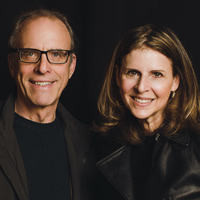
Kirby Dick and Amy Ziering are documentary filmmakers. Their latest miniseries is Allen v. Farrow.

”We're constantly looking for those moments that happen before the story is ever told. Or those moments where someone is deciding to tell a story or is going through a process that they think is private. … We think there's something about getting the moment before the first moment that people normally see.”


Yudhijit Bhattacharjee is a contributing writer for National Geographic and the New York Times Magazine. His new podcast is Chameleon: Scam Likely.

“I want a crumpled piece of paper where there are enough ridges and valleys and lines for me to be able to navigate, and they have to be authentic. And then of course the best stories among them will have surprise and intrigue, and things that are completely unexpected happen somewhere along the way. But it's hard to anticipate all of that. You still have to have a little bit of faith.”

Hua Hsu is a staff writer for The New Yorker. His book Stay True won the 2023 Pulitzer Prize for memoir.

“I've worked as a journalist … for quite a while. … But this [book] was the thing that was always in the back of my mind. Like, this was the thing that a lot of that was in service of. Just becoming better at describing a song or describing the look of someone's face—these were all things that I implicitly understood as skills I needed to acquire. ... It is sort of an origin story for why I got so obsessive about writing.”

Rachel Kaadzi Ghansah is an essayist. Her 2017 GQ piece “A Most American Terrorist: The Making of Dylann Roof” won the National Magazine Award and the Pulitzer Prize.

“I remember feeling like ‘you’re playing chess with evil, and you gotta win.’ Because this is the most terrible thing I’d ever seen. And I was so mad. I still get so mad. Words aren’t enough. I’m angry about it. I can’t do anything to Dylann Roof, physically, so this is what I could do.”

Thanks to MailChimp, Read This Summer, and Netflix for sponsoring this week's episode.

Malcolm Gladwell is a staff writer at The New Yorker. His new podcast is Revisionist History.

“The amount of criticism you get is a constant function of the size of your audience. So if you think that, generously speaking, 80% of the people who read your work like it, that means if you sell ten books you have two enemies. And if you sell a million books you have 200,000 enemies. So be careful what you wish for. The volume of critics grows linearly with the size of your audience.”

Thanks to MailChimp, Audible, and Squarespace for sponsoring this week's episode.

Derek Thompson is a staff writer for The Atlantic and host of the podcast Plain English.

“I am an inveterate dilettante. I lose interest in subjects all the time. Because what I find interesting about my job is the invitation to solve mysteries. And once you solve one, two, three mysteries in a space, then the meta-mystery of that space begins to dim. And all these other subjects—that's the new unlit space that needs the flashlight. And that's the part of the job that I love the most: that there are so many dark corners in the world. And I've just got this flashlight, and I can just shine it wherever the hell I want.”

A.J. Daulerio is the former editor-in-chief of Gawker.

“The choices they’ve given me are take back everything that you loved about Nick [Denton], Gawker, and your job, and we’ll give you your $1,000 back or your ability to make money. You can walk away from this, but you just can’t talk about it ever again. I don’t see there’s any question for me. I definitely thought long and hard about it, and I’ve talked to a lot of people about it. It’s just not in me. Some days I absolutely wish I could say, ‘Is there a phone call I could make to make this all go away?’ Because I want my life back. That’s happened. But for the most part I just think I would regret doing that.”

Thanks to MailChimp, EA SPORTS FIFA 17, School of the Arts Institute of Chicago, Casper, and Texture for sponsoring this week's episode.

Jenna Wortham is a staff writer at The New York Times Magazine and a co-host of Still Processing.

“I feel like I’m still writing to let my 10-year-old self know it’s okay to be you. It’s okay to be a chubby androgynous weirdo. You know what I mean? Like this weird black kid. It’s okay. There are others like you.”

Thanks to MailChimp, Mubi, "Food: A Cultural Culinary History," and "Tales" for sponsoring this week's episode.

Baxter Holmes is a senior writer for ESPN. He won the James Beard Award for his 2017 article, “The NBA's Secret Addiction.”

“If there’s anything I’m really fighting for it’s people’s memory. I love the notion of trying to write a story that sticks with people. And that requires really compelling characters. It requires in-depth reporting — you have to take people on a journey. It needs to be so rich and something they didn’t know. I look for a story that I can tell well enough that it will hold up, that it will earn someone’s memory.”

Thanks to Mailchimp, Substack, and Pitt Writers for sponsoring this week's episode.

Jason Parham is a senior writer at Wired.

“I think of myself some days as a critic. Some days I think of myself as a journalist. But I essentially mostly think of myself as an essayist, somebody who is trying to bridge those two traditions. My approach to writing now is kind of simple…I’m always writing about things I like and want to hear about.”

Thanks to Mailchimp for sponsoring this week's episode.

Dr. Jelani Cobb is a New Yorker staff writer and the author of three books, including The Substance of Hope: Barack Obama and the Paradox of Progress. He teaches journalism at Columbia University.

“Ralph Wiley — the sports writer, late Ralph Wiley — told me something when I was 25 or so, and he was so right. He said I should never fall in love with anything I’ve written. … The second thing he told me was, ‘You won’t get there overnight, and believe me, you don’t want to.’ I’m embarrassed to say that I didn’t get it when he told me that. I was like — why would I not want to get there overnight? Now I’m like: Thank God I didn’t get there overnight. Because there’s so much writing I would have to explain.”

Thanks to MailChimp, Quip, and Audible for sponsoring this week's episode.

Mina Kimes is a senior writer at ESPN and host of the podcast ESPN Daily.

“What I’ve found, and this is something I did not know would be the case going into it, is that sports stories—and, at the risk of sounding a bit self-important, maybe someone like me writing sports stories or talking about it in particular—can have an impact in other ways that have revealed themselves to me over time.”

Thanks to Mailchimp, Pitt Writers, and Family Ghosts for sponsoring this week's episode.

David Haskell is the editor-in-chief of New York Magazine.

“Fingers crossed, knock on wood, we've got time here. You can't ever take that for granted, but I think it's fair to indulge a long-term perspective. More than fair, actually — I think it's part of the job, for me at least, to be plotting and dreaming years out. And to be fashioning the magazine toward that long-term vision as gingerly as I can without it breaking.”

Thanks to Mailchimp, Pitt Writers, Squarespace, and Literati for sponsoring this week's episode.

Jessica Pressler writes for New York, Elle and GQ.

“I really like hustlers, stories about someone who comes out of nowhere and tries to do it for themselves. Those people are just easy to like. Even when they're sort of terrible, they're easy to like.”

Thanks to TinyLetter and Warby Parker for sponsoring this week's episode.

Lena Dunham, the creator and star of HBO's Girls, is the co-founder of Lenny and the author of Not That Kind of Girl. A special episode hosted by Longform Podcast editor Jenna Weiss-Berman.

“Writing across mediums can be a really healthy way to utilize your energy and stay productive while not feeling entrapped. But at the end of the day, the time when I feel like life is most just, like, flying by and I don't even know what's happening to me is when I'm writing prose. It's such an intimate relationship that you're having. When you're writing a script, you're making a blueprint for something that doesn't exist yet. But when you're writing prose, the thing exists immediately. And that's really satisfying. It's the best place to go for my deepest and most in-the-now concerns.”

Thanks to MailChimp, Prudential, Casper, and The Great Courses for sponsoring this week's episode.

Masha Gessen has written for The New York Times, The London Review of Books, Vanity Fair, and others. Her book about Tamerlan and Dzhokhar Tsarnaev, The Brothers: The Road to an American Tragedy, came out in April.

“The moment she said it, it was obvious that I'd been created to write this story. I'd covered both wars in Chechnya. I'd covered a lot of terrorism. I'd studied terrorism. And I'd been a Russian-speaking immigrant in Boston, which actually is the most important qualification for writing this book. It didn't give me special knowledge, but it gave me a lot of questions that I knew to ask that other people wouldn't.”

Thanks to TinyLetter, Trunk Club, and Casper, for sponsoring this week's episode.

T. Christian Miller, senior investigative reporter at ProPublica, and Ken Armstrong, staff writer at The Marshall Project, co-wrote the Pulitzer-winning story, “An Unbelievable Story of Rape.”

“I won’t forget this: when T. and I talked on the phone and agreed that we were going to work on [“An Unbelievable Story of Rape”] together, T. created a Google Drive site, and we decided we’d both dump all our documents in it. And I remember seeing all the records that T. had gathered in Colorado, and then I dumped all the records that I had gathered in Washington, and it was like each of us had half of a phenomenal story. And in one day, by dumping our notes into a common file, we suddenly had a whole story.”

Thanks to MailChimp, Squarespace, and Trunk Club for sponsoring this week's episode.

Brooke Gladstone is the host of On the Media.

“I’ve learned so much about how easy it is to redefine reality in this era of billions of filter bubbles. How easy it is to cast doubt on what is undeniably true. And I think that that’s what frightens me the most. I actually think that’s what frightens most people the most. How do we make sure that we all live in the same world? Or do we?”

Thanks to MailChimp, Texture, and School of the Art Institute of Chicago for sponsoring this week's episode.

Hillary Frank is the creator of The Longest Shortest Time podcast and the author of Weird Parenting Wins.

“I think motherhood is not valued in our culture. We don’t value the work of mothers both at home and then at work. Mothers are the most discriminated against people at work. They’re discriminated more against than fathers or people without children. Mothers are promoted less, hired less, and paid less. People are forced out of their jobs after they announce that they’re pregnant, they’re passed over for promotions, and they get horrible, discriminatory comments like, ‘Oh, don’t you really think you want to be at home? Do you really want to come back?‘ And American work culture is not set up for people to be parents and mothers.”

Thanks to MailChimp, The Great Courses Plus, and Pitt Writers for sponsoring this week's episode.

Leslie Jamison is the author of The Empathy Exams, The Recovering, and the novel The Gin Closet. Her new essay collection is Make It Scream, Make It Burn.

“My writing is always basically asking: what does it feel like to be alive, and how do we ever try to understand what it feels like for anybody else to be alive? In that sense, on the intellectual level, I’m always going to keep chasing the same unanswerable things.”

Thanks to Mailchimp, Pitt Writers, Mythology for sponsoring this week's episode.

Lawrence Wright is an author, screenwriter, playwright, and a staff writer for The New Yorker.

”There’s nothing more important about a person than their story. In a way, that’s who we are. And yet, memories fade and people die. So those stories disappear and the job of the journalist is to go out before that happens and accumulate the kinds of stories that are going to help us understand who we are, why we are, where we are right now in time, and try to thread those stories into a coherent narrative. In a way, you give it a kind of immortality. And that’s a big job. It’s a great privilege.”

Andy Kroll is an investigative reporter for ProPublica. His new book is A Death on W Street: The Murder of Seth Rich and the Age of Conspiracy.

“I think a book has ruined me for writing hot takes and spicy Twitter dunks and all of these other one- and two-dimensional bits of ephemera. I wasn't really a big fan of it in the first place, but I can't do it anymore. A book forces you to look at the world in a much more fine grained, humane, empathetic way, and there's no going back from that.”

Rachel Aviv is a staff writer for The New Yorker. Her new book is Strangers to Ourselves: Unsettled Minds and the Stories That Make Us.

“I used to feel that if I knew everything, that was a good sign. And I've become more aware that if you know everything you want to argue, that's not such a good sign…. Do I have a genuine question? Is there something I’m trying to figure out? Then the story is worth telling. But if I don’t really have a question or if my question is already answered, then maybe that should give you pause.”

Rob Copeland is a finance reporter for The New York Times. His recent book is The Fund: Ray Dalio, Bridgewater Associates, and the Unraveling of a Wall Street Legend.

“If I stab you, I'm going to stab you in the chest, not the back. You're going to see it coming. ... But if you're going to tell me something's wrong, you have to keep talking. I'm not going to take your word for it. I have a reason for why I believe my reporting to be true, and I'm going to present it to you as best I can. But just because you say something's wrong doesn't make it so.”

Anna Holmes, the founding editor of Jezebel, writes for The New York Times and is the editorial director of Fusion.

“I think that Jezebel contributed to what I now call ‘outrage culture,’ but outrage culture has no sense of humor. We had a hell of a sense of humor, that's where it splits off. ... The fact that people who are incredibly intelligent and have interesting things to say aren't given the room to work out their arguments or thoughts because someone will take offense is depressing to me.”

Thanks to TinyLetter and Squarespace for sponsoring this week's episode.