Showing 25 articles matching fc points to coins calculator Visit Buyfc26coins.com for latest FC 26 coins news..OtjT.

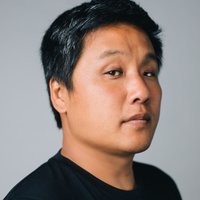
Jay Caspian Kang is a staff writer for The New Yorker and a co-host of Time to Say Goodbye.

“At some point, you have to kick it out the door, and it’s never finished to the degree that you would finish a magazine piece. But it, in some ways, is more interesting because it is produced in a short amount of time, and it’s read as something that is not supposed to be complete. It’s just meant to provoke or to provide thought or whatever, to provide some sort of context on a certain issue or not. And I actually like that a lot better than the magazine writing. I respect the magazine writers—obviously, I was one—but for my disposition now, in my lifestyle, I actually enjoy having to produce this thing every week.”

Have a question for the mailbag? Email the show or leave a voicemail at (929) 333-2908.
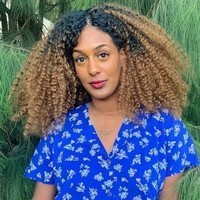
Hannah Giorgis is a staff writer at The Atlantic. Her latest feature is "Most Hollywood Writers’ Rooms Look Nothing Like America.”

”In general, when we talk about representation, we talk about what we see on our screens. We're talking about actors, we're talking about who are the lead characters, what are the storylines that they're getting. And I'm always interested in that. But I'm really, really interested in power ... how it operates, and process.”

Lawrence Wright is an author, screenwriter, playwright, and a staff writer for The New Yorker.

”There’s nothing more important about a person than their story. In a way, that’s who we are. And yet, memories fade and people die. So those stories disappear and the job of the journalist is to go out before that happens and accumulate the kinds of stories that are going to help us understand who we are, why we are, where we are right now in time, and try to thread those stories into a coherent narrative. In a way, you give it a kind of immortality. And that’s a big job. It’s a great privilege.”

Adam Moss is the editor of New York Magazine.

“I think [change] is good for journalism—it’s what journalism is about. You can’t write about something static. News is about what is new. So there’s plenty of new right now. I’m not saying it’s good for the citizenry or anything like that, but, yeah, for journalists it’s an extremely interesting time. There’s no denying that.”

Thanks to MailChimp, BarkBox, Squarespace, and Sock Fancy for sponsoring this week's episode.

Nathan Thornburgh is the co-founder and co-publisher of Roads & Kingdoms.

"You have to remain committed to the kind of irrational act of producing journalism for an uncaring world. You have to want to do that so bad, that you will never not be doing that. There’s so many ways to die in this business."

Thanks to MailChimp, Mubi, and Rise and Grind for sponsoring this week's episode.

Sponsor: OZY

Our sponsor this week is OZY, a new kind of media site. OZY doesn't just catch you up on the news, it vaults you ahead. Every day, OZY offers up short, thoughtful profiles of "the new and the next" — new people, places, things, trends and ideas that you won't be reading about anywhere else for months.

On top of that, every morning OZY sends out the Presidential Daily Brief, a great newsletter giving you a smart, sharp snapshot of the top 10 stories you absolutely need to know today. Curated by OZY's team of editors all around the world — and sometimes by luminaries such as Bill Gates and Tony Blair — the Presidential Daily Brief is a super easy way to find out what happened, why it matters, and what's next. Subscribe today.

Joe Hagan is a correspondent at Vanity Fair and the author of Sticky Fingers: The Life and Times of Jann Wenner and Rolling Stone Magazine.

“It’s the story that begins with John Lennon on the cover of Rolling Stone in 1967 and ends with Donald Trump in the White House. In many ways the book takes you there, I wanted it to. It takes you through the culture as it metastasizes into what it is now. It had a lot to do with a sense of the age of narcissism. The worship of celebrity. Jann was very into celebrity, and worshipful of it and glorifying it and turning it into a thing and eventually celebrity displaces a lot of the ideas they originally started with in my estimation. That was a narrative thread that I began to pull in the book.”

Thanks to MailChimp, Skagen, Screen Dive podcast, Stoner podcast, and Pitt Writers for sponsoring this week's episode.

Rachel Khong is a journalist and author whose latest novel is Real Americans.

“It's about the ways in which we miss each other as human beings and can't fully communicate what it is like to be ourselves. … And I think that's what makes it so interesting to me, to work on a novel and to spend so much time trying to get down on the page what it feels like to be a human being who's alive. … I think the effort itself is what human relationships are.”

Tristan Ahtone is the former Indigenous Affairs editor at High Country News and is currently the editor-in-chief at The Texas Observer. His High Country News article “Land-Grab Universities,” co-authored with Robert Lee, won the 2021 George Polk Award for Education Reporting.

This is the first in a week-long series of conversations with winners of this year's George Polk Awards in Journalism.

Amy Wallace is an editor-at-large for Los Angeles and a correspondent for GQ .

"I've written about the anti-vaccine movement. I love true crime. I've written a lot of murder stories. The thing that unites all of them—whether it's a celebrity profile or a biologist who murdered a bunch of people or Justin Timberlake—it's almost trite to say, but there's a humanity to each of these people. And figuring out what's making them tick in the moment, or in general, is interesting to me. In a way, that's my sweet spot."

Thanks to TinyLetter and Warby Parker for sponsoring this week's episode.

Maggie Haberman covers the White House for The New York Times.

“If I start thinking about it, then I’m not going to be able to just keep doing my job. I'm being as honest as I can — I try not to think about it. If you’re flying a plane and you think about the fact that if the plane blows up in midair you’re gonna die, do you feel like you can really focus as well? So, I’m not thinking about [the stakes]. This is just my job. This is what we do. Ask me another question.”

Thanks to MailChimp, Bombfell, Babbel, and HelloFresh for sponsoring this week's episode.

Maggie Haberman covers the Trump Administration for The New York Times.

“If I start thinking about it, then I’m not going to be able to just keep doing my job. I'm being as honest as I can — I try not to think about it. If you’re flying a plane and you think about the fact that if the plane blows up in midair you’re gonna die, do you feel like you can really focus as well? So, I’m not thinking about [the stakes]. This is just my job. This is what we do. Ask me another question.”

Thanks to MailChimp for sponsoring this week's episode.

Jason Fagone, a contributing editor at Wired and a writer-at-large for Philadelphia, is the author of Ingenious.

"It seemed like all the big guys in American society had let us down, all the elites. And here was a contest that was explicitly looking to the little guy and saying, 'We don't care what you've done before or how much money you have in your pocket. If you solve this problem, you win the money.' There was something so optimistic and hopeful and cool about that to me."

Thanks to TinyLetter and Squarespace for sponsoring this week's episode.

Hanif Abdurraqib is a poet, essayist, and critic whose work has appeared in The New Yorker, The New York Times Magazine and many other publications. His new book is A Little Devil in America: In Praise of Black Performance.

“I learn from hearing my elders tell stories. There’s an inherent knowing of yourself as a vessel for narration who also has to—is required to—hold the attention of others at all costs. And that’s essentially what I’m trying to do. The broader project of my writing is almost a constant pleading of: Don’t leave yet. Stay here with me for just a little bit longer.