Showing 25 articles matching fc points to coins calculator Visit Buyfc26coins.com for latest FC 26 coins news..OtjT.

Janet Reitman is a Rolling Stone contributing editor and author of Inside Scientology.

"I'm very open about the fact that I know nothing ... Every reporter should admit you know nothing, and when you do, there will be people that will take pity on you, and try to teach you. And then you have to be shrewd enough to know who's spinning you, and who is being genuine."

Sponsor: BuzzFeed

BuzzFeed, a new kind of media company for the social world, is hiring a Longform Editor:

We're looking for an experienced editor who can assign, edit and occasionally write reported narrative features — and who wants to help us figure out how to make long, reported articles work on the social web. This job is based in our NYC offices and offers a competitive compensation with stock options.

Apply here.

Jon Stewart and the Burden of History

A profile of the comedian who’s “not so funny anymore”:

Jon Stewart has made a career of avoiding "Whooo" humor. He has flattered the prejudices of his audience, but he has always been funny, and he has always made them laugh. At the Juan Williams taping, however, at least half of Stewart's jokes elicited the sound of Whooo! instead of the sound of laughter. He's been able to concentrate his comedy into a kind of shorthand — a pause, or a raised eyebrow, is often all that is necessary now — but a stranger not cued to laugh could be forgiven for not laughing, indeed for thinking that what was going on in front of him was not comedy at all but rather high-toned journalism with a sense of humor. Which might be how Jon Stewart wants it by now.

It Knows

On the Google conundrum:

It’s clearly wrong for all the information in all the world’s books to be in the sole possession of a single company. It’s clearly not ideal that only one company in the world can, with increasing accuracy, translate text between 506 different pairs of languages. On the other hand, if Google doesn’t do these things, who will?

The New Negro

“Missy (Misdemeanor) Elliott, the twenty-five-year-old hip-hop performer who is energetically redefining the boundaries of rap music, is a singer, a songwriter, an arranger, a producer, and a talent scout. Six months ago, few people outside the music industry had heard of her; six months from now, it will be necessary to pretend that you’ve known about Missy Elliott for years.”

Attack on Skull Island

After the blockbuster success of Kong: Skull Island, director Jordan Vogt-Roberts fled Hollywood to live the expat dream life in Vietnam. Then, one night at a Saigon club, he was brutally beaten by a mysterious mob of gangsters. Who were these monsters? Soon, he began directing something entirely different—an international hunt for the men who nearly killed him.

The Hustlers at Scores

They were an organized group of ex-strippers, plus a few role players recruited from Craigslist. They fished for marks in strip clubs, Wall Street cocktail bars, and even TGI Fridays, and then lured them to strip clubs. The marks woke up with little memory of the night before and their credit cards maxed out.

Read more

The article that became Hustlers

The Good Seed

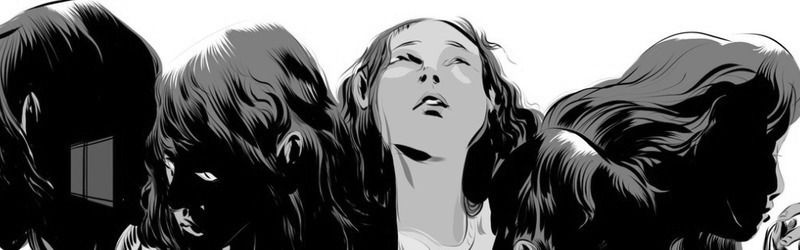
A 21-year-old falls into a coma from which he’ll never emerge. His mother, desperate to grant his wish of becoming a father, has his sperm preserved. Two years later, after a fruitless search for other alternatives, she finds a willing doctor and tries one last option: carrying her son’s child herself.

The Mother Courage of Rock

On Patti Smith.

It was easy for lazy journalists to caricature her as a stringbean who looked like Keith Richards, emitted Dylanish word salads, and dropped names—a high-concept tribute act of some sort, very wet behind the ears. But then her first album, Horses, came out in November 1975, and silenced most of the scoffers.

The Last Days of MF Global

“Jon Corzine had never had anything to do with the futures business, had never run a public company, and hadn’t worked on Wall Street for a decade. His time there had ended badly. But by any reasonable standard, the former Goldman chief seemed almost embarrassingly overqualified. Says Flowers: ‘It seemed like we had more CEO than company.’”

The Robot Caravan

How can you know if you’re about to get replaced by an invading algorithm or an augmented immigrant? “If your job can be easily explained, it can be automated,” Anders Sandberg, of Oxford’s Future of Humanity Institute, tells Oppenheimer. “If it can’t, it won’t.” (Rotten luck for people whose job description is “Predict the future.”)

'The Cursed Platoon'

Clint Lorance had been in charge of his platoon for only three days when he ordered his men to kill three Afghans stopped on a dirt road. A second-degree murder conviction and pardon followed. Today, Lorance is hailed as a hero by President Trump. His troops have suffered a very different fate.

Meet the Shaggs

From 1968-1973, the three teenage Wiggin sisters, guided by a domineering father, played their strange music at New Hampshire ballrooms and recorded a single album. The Philosophy of the World LP goes for over $500 today, but the intervening decades have not been kind to the Wiggins.

Casey Newton covers technology for The Verge and writes The Interface newsletter.

“I remember one time a Facebook employee told me when I wrote something critical and I said something like, ‘Yeah, I know that one was a little harder on you.’ I remember he said to me, ‘Please understand that this helps to make the case internally for changes we want to make.’ When this type of criticism get published when we know that this is the conversation, we can push for these kinds of changes on the inside. If you believe that these platforms are going to be around and that they aren’t going to be shut down and all the executives put into jail, I think what you actually want is to see them get better at things.”

Thanks to MailChimp, The Great Courses Plus, and Pitt Writers for sponsoring this week's episode.

Lulu Garcia-Navarro is a former war correspondent and host of NPR’s Weekend Edition. Her new podcast, for the New York Times, is First Person.

“I would always say that if you go cover a story and you already know what people are going to say, and you already have it in your head what the outcome is, and there's no surprise there, then that's a story that you shouldn't be working on. You have to allow the opportunity for there to be a journey. And for there to be something at the end of it, that is gonna be like, Wow. I really never thought that. I didn't think that I was coming here to report on that, but I guess that's what I'm here to report on.”

Robert McKee is an author and screenwriting lecturer. His new book is Character: The Art of Role and Cast Design for Page, Stage, and Screen.

”When I'm in conversation with others, I'm always aware—or sensitive, at least—to what they're really thinking and feeling. And writers must have that. They can't possibly create excellent nonfiction or fiction if they're not aware of what is going on inside of other people, really, even subconsciously, while they go about saying whatever they do consciously in the world. Because if you just recorded the surface, if you were just paying attention to the surface, you'd be missing the whole show.”

Thanks to Mailchimp for sponsoring this week's episode.

Lizzie Johnson covers wildfires for the San Francisco Chronicle.

“It’s kind of like when you’re a beginning journalist and you have to write an obituary—calling the family of the person who died seems like this insurmountable, very invasive task and you really don’t want to do it. That’s kind of how I felt about interviewing fire victims at first. I felt like I was somehow intruding on their grief and their pain. But somewhere along the way I realized there’s healing power in talking about what you’ve been through. Saying it out loud and being able to claim ownership to it. I found that time after time these people are very grateful because they need to talk. They have something to say in the aftermath of this big, massive thing that just came and wiped out everything they knew. They really do just need someone to listen to them. I have never had someone tell me, ‘Go away, we don’t want to talk to you.’ And I’m completely bowled over by that every single time.”

Thanks to MailChimp and Pitt Writers for sponsoring this week's episode.

Madeleine Baran is an investigative reporter for APM Reports and the host and lead reporter of the podcast In the Dark.

“We’re always thinking about first not so much the narrative, but first what did we find out and how is it important? And how can we construct a story that’s going to take people along on that and they’re going to care about it and be able to follow it. That’s a challenge in any kind of serialized podcast or film where you have one narrative arc from start to finish in a season, but you also have all these individual episodes with narrative arcs. And because we’re not novelists, we don’t get to change the facts, sometimes there are these facts you do not like cause they’re really confusing and you wish they were not that way. We spend a lot of time in storyboarding and edits and group edits and sound edits. We bring in people who don’t know what we’re doing and have them listen for mostly for clarity and confusion.”

Thanks to MailChimp, Screen Dive podcast, Skagen, Squarespace, and Pitt Writers for sponsoring this week's episode.