The Mystery of Mountain Lions
Despite decades of research, myth and fear still surround the animals.
Showing 25 articles matching fc points to coins calculator Visit Buyfc26coins.com for latest FC 26 coins news..OtjT.
Despite decades of research, myth and fear still surround the animals.
Expropriated Indigenous land is the foundation of the land-grant university system.
Tim Ferriss is the author of The Four-Hour Workweek and The Four-Hour Body.
“If you have a fitness magazine, you can’t just write one issue, ‘Here are the rules!’ ... My job, conversely, is to make myself obsolete. The last thing I want to be is a guru, someone people come to for answers. I want to be the person people come to for better questions.”
Thanks to TinyLetter and The Great Courses for sponsoring this week's episode.
“If I’m writing a thing based on something that happened, it often starts to become fun for me when I see there’s an opportunity to make myself look even more of a jerk than I am in real life.”
From the Longform archive: George Orwell, Maya Angelou, Haruki Murakami and 25 more writers on writing.

Ten years ago, a man moved to Marsing, Idaho. He had a strange accent and didn't know much about cattle. The folks in Marsing were a little skeptical at first, but when he built a house and started a family, he earned his neighbors' acceptance. Last February, while buying hay, he was cornered by federal agents and arrested for violent crimes tied to the Boston Mob. And the town wondered: Who the hell is Jay Shaw?
On office chairs.
In the 1950s and '60s, the distinctions between rank found blunt expression in chair design, naming and price point; Knoll, for example, produced "Executive," "Advanced Management," and "Basic Operational" chairs in the late 1970s. Recall the archetypal scenes where the boss, back to the door, protected by an exaggerated, double-spine headrest, slowly swivels around to meet the eyes of his waiting subordinate, impotent in a stationary four-legger.
THEY SAY YOU never hear the one that hits you. That's true of bullets, because, if you hear them, they are already past. But your correspondent heard the last shell that hit this hotel. He heard it start from the battery, then come with a whistling incommg roar like a subway train to crash against the cornice and shower the room with broken glass and plaster. And while the glass still tinkled down and you listened for the next one to start, you realized that now finally you were back in Madrid.
Sex, lies and fraud alleged at West Virginia University.
What American towns named Paris can tell us about the French.
A tale of cannabis boom and bust.
Twenty-five years later, the BBC investigates its own reporter.
Andy Greenberg is a senior writer for Wired. His new book is Sandworm.
“I kind of knew I was never going to get access to Sandworm, which is the title of the book - so it was all about drawing a picture around this invisible monster.”
Thanks to Mailchimp, Pitt Writers, and Family Ghosts for sponsoring this week's episode.
"The kind of stories I've gotten to do have involved fulfilling my childhood fantasies of having an adventurous life. Even though I don't make a ton of money doing it, I've never felt like I was missing out on something."
Matthew Power, a freelance journalist and friend, died on assignment in Uganda on Monday.
Above is Matt's Longform Podcast, recorded in February 2013. Some of our favorite stories from his archive:
Confessions of a Drone Warrior (GQ • Oct 2013)
During his nearly six years in the Air Force, Airman First Class Brandon Bryant flew hundreds of missions and logged almost 6,000 hours of flight time. He killed or helped kill 1,626 people. And he never left Nevada.
Mississippi Drift (Harper's • Mar 2008)
An ill-fated trip down the river with a group of anarchists.
Excuse Us While We Kiss The Sky (GQ • Mar 2013)
Navigating the sewers of London and summiting the peaks of Paris with a group of urban explorers.
Blood in the Sand (Outside • Jan 2014)
Investigating the murder of a Costa Rican conservationist.
One More Martyr in a Dirty War (VQR • Jun 2007)
The life and death of Brad Will.
Lost in the Amazon (Men's Journal • Jun 2009)
One man's absurd quest to become the first person to walk the entire length of the Amazon River—floods, electric eels, and machete-wielding natives be damned.
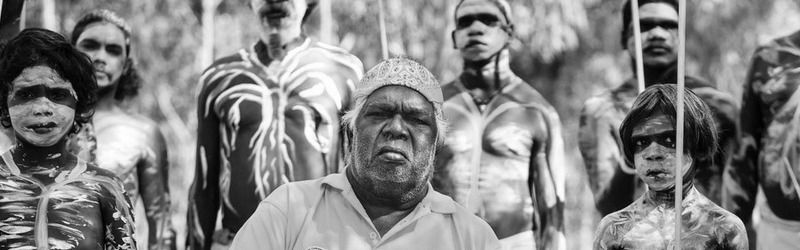
An indigenous leader reflects on a lifetime following the law of the land in Australia.
“What Aboriginal people ask is that the modern world now makes the sacrifices necessary to give us a real future. To relax its grip on us. To let us breathe, to let us be free of the determined control exerted on us to make us like you. And you should take that a step further and recognise us for who we are, and not who you want us to be. Let us be who we are – Aboriginal people in a modern world – and be proud of us. Acknowledge that we have survived the worst that the past had thrown at us, and we are here with our songs, our ceremonies, our land, our language and our people – our full identity. What a gift this is that we can give you, if you choose to accept us in a meaningful way.”
As the head of the CBF, Ricardo Teixera rules Brazilian futebol from the top down, controlling everything from the value of championships to broadcast rights. He needs the pull off a flawless 2014 World Cup in order to set the stage for being elected FIFA’s president, but there’s one hitch; the trail of bribes and scandals he has left in his wake.
Whenever you want him to go on the record, Teixeira shushes you and raises a finger to his lips. He addresses men and women alike as “meu amor,” with an exaggerated Rio accent. “Meu amor, it’s all been said about me – that I smuggled goods in the Brazilian national team’s airplane, that there’s been dirty dealing in the World Cup, all those investigations into Nike and the CBF."
Translated from the original Portugese.
Sponsored

Our sponsor this week is Trunk Club, a new way to shop. Trunk Club takes the pain out of finding great men's clothing: instead of having to go the store, you'll get a personal stylist who will find the best clothes to fit your style and budget, then send them right to your door. Keep what you like, give back what you don't free of charge.
There are no hidden fees, no subscriptions, no waiting in line. Just fantastic clothes handpicked for you. Try Trunk Club today.
Charlie Warzel is a writer-at-large for The New York Times opinion page.
“I’m relying on my morals more than I normally do, but less on my gut. The stakes are just so high.”
Thanks to Mailchimp and Pitt Writers for sponsoring this week's episode.
Sponsored

Distance is a quarterly journal with long essays about design and technology, making this the most well-targeted advertisement ever.
Our second issue is out now, with essays from: Cassie McDaniel, about how designers can change the world in far-flung industries; Sharlene King, about homework’s role in our daily work; and Francisco Inchauste, about how to build more meaningful businesses.
Single copies and subscriptions are available at distance.cc. Thanks for reading.
For information about sponsoring Longform, click here.
A look at Chicago’s DJ culture in the ’90s.
One day in 1997, Sneak promised his friend and fellow Chicago DJ Derrick Carter a new 12-inch for Carter's label Classic, then spent hours fruitlessly laboring over a basic, bustling four-four beat. Finally, Sneak gave in and smoked the J he'd had stashed for later in the day. When he came back inside, he carelessly dropped the needle onto a Teddy Pendergrass LP, heard the word "Well . . . ," and realized, "That's the sample, right there." He threaded Pendergrass's 20-year-old disco hit "You Can't Hide From Yourself" through a low-pass filter to give it the effect of going in and out of aural focus, creating one of the definitive Chicago house singles.
Theo Baker is the investigations editor at The Stanford Daily. The first college student ever to win a George Polk Award, Baker received a special recognition for uncovering allegations that pioneering research co-authored by Stanford President Marc Tessier-Lavigne, a renowned neuroscientist, was supported in part by manipulated imagery.
“It’s useful to intellectualize it because when you actually get going, this is something that keeps me up at night. … It’s the last thing I think about when I go to sleep, and the first thing on my mind when I wake up.”
This is the first in a week-long series of conversations with winners of this year's George Polk Awards in Journalism.

Best Article Science Tech World
On the development of South Korea’s New Songdo and Cisco’s plans to build smart cities which will “offer cities as a service, bundling urban necessities – water, power, traffic, telephony – into a single, Internet-enabled utility, taking a little extra off the top of every resident’s bill.” The demand for such cities is enormous:
China doesn't need cool, green, smart cities. It needs cities, period -- 500 New Songdos at the very least. One hundred of those will each house a million or more transplanted peasants. In fact, while humanity has been building cities for 9,000 years, that was apparently just a warm-up for the next 40. As of now, we're officially an urban species. More than half of us -- 3.3 billion people -- live in a city. Our numbers are projected to nearly double by 2050, adding roughly a New Songdo a day; the United Nations predicts the vast majority will flood smaller cities in Africa and Asia.
Sponsored
This week, Longform.org’s RSS feed is sponsored by forlue.com, a community news website about business.
An autopsy of the San Jose Mercury News.
A survey of the 20th century’s greatest horror writer’s afterlife of influence.
What happens when U.S. border patrol kills—in Mexico?