Showing 25 articles matching best fc points to buy Buyfc26coins.com is FC 26 coins official site..KzUT.

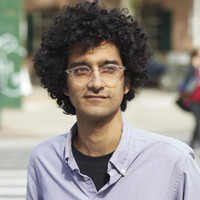
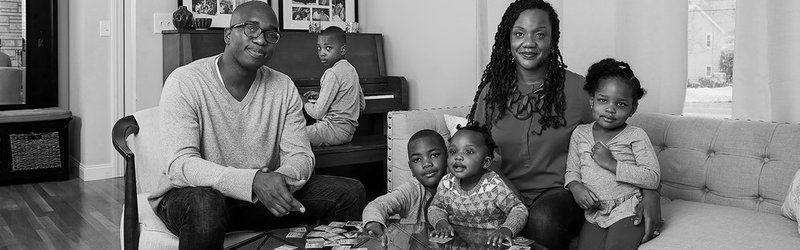
Brian Reed and Hamza Syed are co-hosts of the new podcast The Trojan Horse Affair.

“I had lost all faith in the reporting that already happened on the subject matter. And that was my mentality with each source and each interviewer. I wanted the debate ended in the room because I didn't want commentary beyond it. I didn't want any kind of interpretation beyond it. I wanted the situation to be resolved there and then…. And without certain answers, I thought we weren't going to be able to speak about this matter in the way that I wanted to speak about it.” —Syed

“I both desperately wanted to know the answer of who wrote the letter, but kind of understood that we probably weren't going to get it beyond a shadow of a doubt. And I thought that I had transmitted that to Hamza and that he understood that. But as time went on, I realized that he had not accepted that as the likely outcome. And this is what was actually so energizing to work with you, Hamza. You never let your hope and desire and hunger to get that answer ever get dimmed. Like, ever.” —Reed
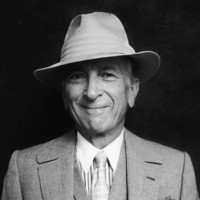
Gay Talese, who wrote for Esquire in the 1960s and currently contributes to The New Yorker, is the author of several books. His latest is A Writer's Life.

"I want to know how people did what they did. And I want to know how that compares with how I did what I did. That's my whole life. It's not really a life. It's a life of inquiry. It's a life of getting off your ass, knocking on a door, walking a few steps or a great distance to pursue a story. That's all it is: a life of boundless curiosity in which you indulge yourself and never miss an opportunity to talk to someone at length."

Thanks to TinyLetter and Warby Parker for sponsoring this week's episode.

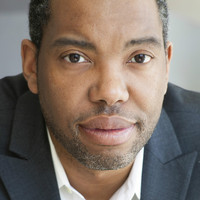
Ta-Nehisi Coates is a national correspondent for The Atlantic. His latest book, Between the World and Me, just won the National Book Award.

“When I first came to New York, I couldn't see any of this. I felt like a complete washout. I was in my little apartment, eating donuts and playing video games. The only thing I was doing good with my life was being a father and a husband. That was it. David [Carr] was a big shot. And he would call me in, just out of the blue, to have lunch. I was so low at that point. ... He said, ​I think you're a great bet. ... He was remembering people who had invested in him when he was low. That more than anything is why I'm sad he's not here for all of this. Because it's for him. It's to say to him, ​you were right​.

Please become a Longform Supporter. Make your contribution here.

Thanks to MailChimp, Casper, Squarespace, MasterClass, and "The Message" for sponsoring this week's episode.

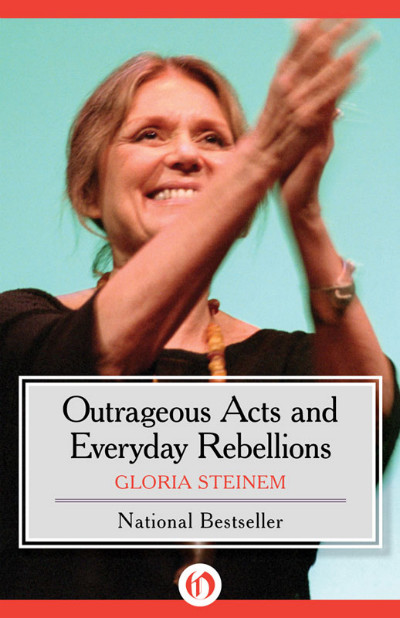
The Essays That Made Gloria Steinem an Icon

Posing as a Playboy bunny. Deconstructing porn. Examining the myth of Jackie Kennedy Onassis. Gloria Steinem, who turned 80 in March, has always been a fearless writer. And nowhere is that more clear than in her timeless essay collection, Outrageous Acts and Everyday Rebellions.

The book is our second pick in our partnership with Open Road Media, a program dedicated to bringing you classic nonfiction works at a special price. Outrageous Acts and Everyday Rebellions spans decades of Steinem's work and features her some all-time greatest pieces, including our favorite, "If Men Could Menstruate," which you can read in full on Longform. It perfectly demonstrates the wry wit that makes Steinem's incisive writing all the more enjoyable.

Download Outrageous Acts and Everyday Rebellions between now and May 12 for the special Longform price of $4.99 at Amazon, Apple or Barnes & Noble.

Roxanna Asgarian is the law and courts reporter for the Texas Tribune. Her new book is We Were Once a Family: A Story of Love, Death, and Child Removal in America.

“Every once in a while, I'll have someone just freak out at me. And it keeps you honest, in a way, because they don't owe you anything. People don't owe you anything as a journalist. ... But everyone reacts to trauma differently and some people really do want to talk about it. And I think the families in this book really wanted to talk about it and it felt like no one was even paying attention to them.”

Zoe Chace is a reporter and producer at This American Life.

“Radio is a movie in your head. It’s a very visual thing. It’s a transporting thing—when it’s done well. And it’s louder than your thoughts. It is both of those things. It would just take me out of the place that I was, where I was lost and couldn’t figure things out. ... They had a very personal way of telling the story to you, so that you kind of felt like you’re there with them. Like it’s less lonely, it’s literally less lonely to have them there. And that felt really good.”

Thanks to MailChimp, Mubi, Squarespace, and Casper for sponsoring this week's episode.

Molly Young is a freelance writer for GQ and New York.

"Writing a celebrity profile puts you in a position that no human being wants to be in: you are speaking with somebody, you know that they're lying to you, and you know that they know that they're lying to you. That's just the most humiliating position—it violates any human instinct for maintaining dignity."

Thanks to TinyLetter for sponsoring this week's episode!

The George Saunders Interview

"For example, I remember reading Hemingway and loving his work so much—but then at some point, realizing that my then-current life (or parts of it) would not be representable via his prose style. Living in Amarillo, Texas, working as a groundsman at an apartment complex, with strippers for pals around the complex, goofball drunks recently laid off from the nuclear plant accosting me at night when I played in our comical country band, a certain quality of West Texas lunatic-speak I was hearing, full of way off-base dreams and aspirations—I just couldn’t hear that American in Hem-speak. And that kind of moment is gold for a young writer: the door starts to open, just a crack."
  1. Part 1

  2. Part 2

Blowback in Somalia

The notorious Somali paramilitary warlord who goes by the nom de guerre Indha Adde, or White Eyes, walks alongside trenches on the outskirts of Mogadishu’s Bakara Market once occupied by fighters from the Shabab, the Islamic militant group that has pledged allegiance to Al Qaeda. In one of the trenches, the foot of a corpse pokes out from a makeshift grave consisting of some sand dumped loosely over the body. One of Indha Adde’s militiamen says the body is that of a foreigner who fought alongside the Shabab. “We bury their dead, and we also capture them alive,” says Indha Adde in a low, raspy voice. “We take care of them if they are Somali, but if we capture a foreigner we execute them so that others will see we have no mercy.”

Mara Hvistendahl is a freelance reporter and was a Pulitzer Prize finalist for her first book, Unnatural Selection. Her new book is The Scientist and the Spy: A True Story of China, the FBI, and Industrial Espionage.

“In times of tension, Cold War historians believe that there’s this mirroring that goes on, that we start to behave like the enemy, and that that is the big risk. And I feel like that’s the moment we’re in now.”

Thanks to Mailchimp and Pitt Writers for sponsoring this week's episode.

Meghan Daum's latest book of essays is The Unspeakable.

“As writers we think, well there has to be closure, there has to be a beginning middle end, the character has to go through a change. And then in life we're supposed to have some sort of arc or aha moment, as if the experience isn't legitimate unless we get something out of it. That's so culturally constructed, as they say. It's so artificial.”

Thanks to TinyLetter, Scribd, and Oscar for sponsoring this week's episode.

Latif Nasser co-hosts Radiolab. He also hosted The Other Latif and the Netflix documentary series Connected.

“It’s so easy to hate everything and be cynical. There’s a kind of ease to that. It takes a lot more courage to go up in front of everybody and be like, This is awesome. I love this. That takes a lot of guts, I think.”

Thanks to Mailchimp for sponsoring this week's episode.

Joshua Topolsky is editor-in-chief of The Verge.

"Sometimes you tell stories that people don't know they need to read yet. You have to keep telling those kinds of stories, and eventually people will wake up to them. Of course we look at traffic. But the main thing is, are we doing good work? At the end of the week or the end of the day, do I think, that was awesome, I'm really glad we wrote that?"

Thanks to TinyLetter for sponsoring this week's episode!

</blockquote>

Stephen J. Dubner is the co-author, with Steven D. Levitt, of Freakonomics. Their latest book, When to Rob a Bank, came out last week.

“I’ve abandoned more books than I’ve written, which I’m happy about. I’m very pro-quitting. We get preached this idea that if you quit something, if you don’t see something through to completion then you’re a loser, you’re a failure. I just think that’s a crazy way to look at things. But it’s also easy to overlook opportunity costs. Like, what could I be doing instead?”

Thanks to this week's sponsors: TinyLetter, HP Matter, The Great Courses, and Aspiration.

Liana Finck writes for The New Yorker. Her new book is Passing for Human: A Graphic Memoir.

"I was drawing since I was 10 months old. My mom had left this vibrant community of architects and art people to live in this idyllic country setting with my dad, and she poured all of her art feelings into me. She really praised me for being this baby genius, which I may or may not have been. But I grew up thinking I was an amazing artist. There weren’t any other artists around besides my mom, so I didn’t have anything to compare it to. There were no art classes around. … I was so shy, so I was just always drawing and making things."

Thanks to MailChimp, Lean In podcast, Under My Skin, Skagen, Squarespace, Sleeping Beauty Dreams, and Pitt Writers for sponsoring this week's episode.