Showing 25 articles matching 高仿gucci皮带价格网站【A货微信10086082】批发购买出售定制高仿精仿,一比一A货,复刻顶级原单《微信10086082》价格最优手表,包包,皮带,饰品,衣服,鞋子】tz.

Fiction Pick of the Week: "The Time I Spent On A Commercial Whaling Ship Totally Changed My Perspective On The World"

“Call me Ishmael. Some years ago—never mind how long precisely—having little or no money in my purse, and nothing particular to interest me on shore, I thought I would sail about a little and see the watery part of the world.”

Read more

For a daily short story recommendation from our editors, try Longform Fiction or follow @longformfiction on Twitter.

My Accidental Career as a Russian Screenwriter

“In this scene, set at a government dacha, they are joined by their American counterparts at the State Department for a daylong picnic that grows increasingly informal, involving drinks, flirtation, a guitar jam and (spoiler) contact between two spies. At times in my new job, I feel like a spy myself, and one with a shaky cover. I don’t have a good answer for how I got here.”

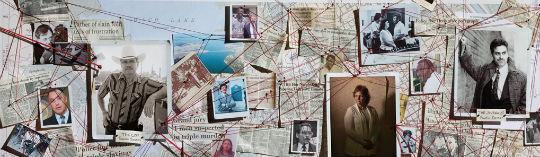
Sponsor: Texas Monthly's New, Epic Examination of a Haunting 31-Year-Old Murder Case

Our sponsor this week is Texas Monthly, which has just published a truly incredible piece of journalism. Michael Hall, whose work has appeared on Longform many times, spent a year investigating one of the most confounding criminal cases in Texas history. In the summer of 1982, three Waco teenagers were savagely murdered for no apparent reason. Four men were ultimately charged with the crime. One was executed, two others were given life sentences, and a fourth was sent to death row only to be released after six years. They all may have been innocent.

Over the next two weeks, Texas Monthly will serialize Hall's 25,000-word piece, "The Murder at the Lake," which looks at the case from five distinct perspectives. Part One is available now; you should read it.

Elif Batuman is a novelist and a staff writer at The New Yorker. Her latest article is “Japan’s Rent-a-Family Industry.”

“I hear novelists say things sometimes like the character does something they don’t expect. It’s like talking to people who have done ayahuasca or belong to some cult. That’s how I felt about it until extremely recently. All of these people have drunk some kind of Kool Aid where they’re like, ‘I’m in this trippy zone where characters are doing things.’ And I would think to myself, if they were men—Wow, this person has devised this really ingenious way to avoid self-knowledge. If they were women, I would think—Wow, this woman has found an ingenious way to become complicit in her own bullying and silencing. It’s only kind of recently—and with a lot of therapy actually—that I’ve come to see that there is a mode of fiction that I can imagine participating in where, once I’ve freed myself of a certain amount of stuff I feel like I have to write about, which has gotten quite large by this point, it would be fun to make things up and play around.”

Thanks to MailChimp, Google Play, and Pitt Writers for sponsoring this week's episode.

Sarah A. Topol is a writer-at-large for The New York Times Magazine. Her latest feature is ”Is Taiwan Next?”

”I think you never actually ask people head-on about what they've been through. You always ask people to just tell you what they want to tell you about anything that has happened to them…. This event that happened to you, it doesn't define you. It’s not why I'm here necessarily. Like, tell me about your childhood. Tell me about your life. Tell me about the things you think are important in your community. And by the time we get to the traumatic part, I hope they've seen enough of who I am and how I interview to feel comfortable telling me that they don't want to talk about certain things.”

Rachel Kaadzi Ghansah is an essayist. Her 2017 GQ piece “A Most American Terrorist: The Making of Dylann Roof” won the National Magazine Award and the Pulitzer Prize.

“I remember feeling like ‘you’re playing chess with evil, and you gotta win.’ Because this is the most terrible thing I’d ever seen. And I was so mad. I still get so mad. Words aren’t enough. I’m angry about it. I can’t do anything to Dylann Roof, physically, so this is what I could do.”

Thanks to MailChimp, Read This Summer, and Netflix for sponsoring this week's episode.

I Bought a Bed

I felt, in some substantive yet elusive way, that I had had a hand in killing my mother. And so the search for a bed became a search for sanctuary, which is to say that the search for a bed became the search for a place; and of course by place I mean space, the sort of approximate, indeterminate space one might refer to when one says to another person, "I need some space"; and the fact that space in this context generally consists of feelings did not prevent me from imagining that the space-considered, against all reason, as a viable location; namely, my bedroom-could be filled, pretty much perfectly, by a luxury queen-size bed draped in gray-and-white-striped, masculine-looking sheets, with maybe a slightly and appropriately feminine ruffled bed skirt stretched about the box spring (all from Bellora in SoHo).

Lex Luger Can Write a Hit Rap Song in the Time It Takes to Read This

A few years ago, before anyone knew his name, before rap artists from all over the country started hitting him up for music, the rap producer Lex Luger, born Lexus Lewis, now age 20, sat down in his dad’s kitchen in Suffolk, Va., opened a sound-mixing program called Fruity Loops on his laptop and created a new track... Months later, Luger — who says he was “broke as a joke” by that point, about to become a father for the second time and seriously considering taking a job stocking boxes in a warehouse — heard that same beat on the radio, transformed into a Waka song called “Hard in da Paint.” Before long, he couldn’t get away from it.

Notes from a wedding: In the age of digital music and the relative bargain of a single DJ, wedding singer Kenney Holmes is determined to keep it real

A profile.

Because business ebbs and flows with the seasons and the economy, Holmes, who lives in Upper Marlboro, has always kept a variety of sidelines, including a job driving a limousine for nine years to put his oldest daughter through a private high school and college. These days, at gigs, he hands out a stack of million-dollar "bills" printed with his image and his current enterprises: bandleader, commercial mortgage broker, hard money lender (slogan: "Hard Money with a Soft Touch").

A Classic Pick from Longform and Open Road

Our sponsor this week is Open Road Integrated Media, a digital publisher with a soft spot for the kind of classic writing we highlight every day on Longform.

In addition to new work, Open Road has published ebooks by legendary authors including William Styron, Gloria Steinem and David Halberstam. And starting today, we'll be making a monthly pick from their archives, a favorite book of ours that Open Road will make make available to Longform readers at a deep discount.

Up first: Rachel Carson's 1951 bible of the enviornmental movement, The Sea Around Us. Buy it today for 66% off or read an excerpt.

My obsession with a New York cup of coffee and a doughnut

When a writer’s daily routine gets out of control.

One morning, as I gobbled my doughnut and slurped my coffee, thinking to myself, "What a fantastic doughnut, what an amazing coffee," I realised that I had not just thought this but was actually saying aloud, "What a fantastic doughnut! What a totally fantastic experience!", and that this was attracting the attention of the other customers, one of whom turned to me and said, "You like the doughnuts, huh?"

Late Abortion: A Love Story

Everything seemed routine. The technician finished up and left the room. The soundtrack of our baby’s heartbeat played an upbeat tempo in the background. A few minutes went by and the technician came back, letting us know she would take a few more pictures of his head for a clearer look. That sounded reasonable. She left again, this time for longer, and when she returned a doctor wearing a white lab coat walked in behind her looking very serious and shut the door.