Showing 25 articles matching iraq podcast.

Hannah Dreier is a reporter at The Washington Post and the winner of the 2019 Pulitzer Prize for Feature Writing.

“You can’t come up with a good story idea in the office. I’ve never had a good idea that I just came up with out of thin air. It always comes from being on the ground.”

Thanks to Mailchimp and Pitt Writers for sponsoring this week's episode.

Megha Rajagopalan is a senior correspondent for Buzzfeed News. She won a Pulitzer for her coverage of the Xinjiang detention camps.

“It’s not so much that I talk to [the Chinese government] to get information. It’s more that I talk to them to see how they think about things and what’s important to them and what’s their view of the world. … There are so many journalists that have been thrown out of China, so there’s very few people that are able to actually have those conversations. And in the U.S., there are these seismic decisions being made about China policy, and if you don’t talk to the people that run the country, it’s a problem.”

Thanks to Mailchimp for sponsoring this week's episode.

Max Chafkin is a features editor and reporter for Bloomberg Businessweek. His new book is The Contrarian: Peter Thiel and Silicon Valley’s Pursuit of Power.

“I think there's like a really good way to come up with story ideas where you basically just look for people who have given TED Talks and figure out what they're lying about. And there's also a tendency in the press to pump up these startups based on those stories. ... It's worth taking a critical look at these stars of the moment. Because often there's not as much there as we think. And if you’re talking about Theranos or something, there's some potential to do harm—but also it means that maybe more worthwhile efforts are not getting the attention they deserve.”

Abe Streep is a journalist and contributing editor for Outside. His new book is Brothers on Three: A True Story of Family, Resistance, and Hope on a Reservation in Montana.

”The way journalists talk about, ‘Did you get the story?’—that's not how I see this. That would be extractive in this setting, I think. If someone shares something personal with me, that is a serious matter. It's a gift and you’ve got to treat it with great respect.”

Matt Levine is a finance columnist for Bloomberg Opinion . His newsletter is Money Stuff.

”I write a lot about people who have gotten in trouble with the SEC or the Justice Department. And a surprising subset of them will email me. And often I will have made fun of them, and they'll be like, ‘That was pretty fair.’”

Graciela Mochkofsky is a writer for The New Yorker and dean of CUNY's Newmark Graduate School of Journalism. She has written six nonfiction books in Spanish. Her new book, her first in English, is The Prophet of the Andes.

“It connects with me as a journalist, actually — it’s this idea of just seeking truth and how elusive that is. So this is a person who thinks he can get to the true meaning of God and of how he needs to live. And he thinks that by asking the right questions, and by reading, and reading, and reading, and by discussing collectively, he can get to the truth. And he can’t.”

Ryan O’Hanlon is a soccer writer for ESPN. His new book is Net Gains: Inside the Beautiful Game’s Analytics Revolution.

“It wasn’t just that I was burned out from two years at The Ringer, it was being burned out from nine years of just freakin’ bobbing up and down to keep my head above water, and changing the water every year.”

Azam Ahmed is an international investigative correspondent for The New York Times. His new book is Fear Is Just a Word: A Missing Daughter, a Violent Cartel, and a Mother's Quest for Vengeance.

“I think the fundamental question I always ask when I go into a new place, whether I’m covering currencies, or hedge funds, or geopolitics in Afghanistan, or the war—it’s what does this mean to the world right now? What does the world need to know and how does it fit into that space?”

Zeke Faux is an investigative reporter for Bloomberg. His new book is Number Go Up: Inside Crypto’s Wild Rise and Staggering Fall.

“I have a rule of thumb, which is that if somebody did one scam, they probably did another scam. If they did one scam in the past and now they have a new thing, odds are good it’s also a scam. That’s not always true, but that was definitely borne out sometimes in crypto-world.”

Adam Grant is an organizational psychologist, author, and host of the podcasts Work Life and Re: Thinking. His new book is Hidden Potential: The Science of Achieving Greater Things.

“If you only focus on your own interest, you tend to develop novel ideas, but not necessarily useful ideas. And so for me, the audience is a filter. … I might have 30 ideas for a book. Let me hone in on the four or five that also might be relevant to other people. The goal there is to make a contribution.”

Lauren Markham is the author of The Far Away Brothers: Two Young Migrants and the Making of an American Life and has written for The New York Times Magazine, The Guardian, and VQR. Her new book is A Map of Future Ruins: On Borders and Belonging.

“It took me a while to figure out that this is actually a book about storytelling, about journalistic storytelling, about the kind of myths we spin culturally and politically, about history, about current events, and the role of journalism within all of that, and my role as a journalist.”

Margo Jefferson, a Pulitzer Prize winner, has written for The New York Times, Newsweek, and Harper's. Her latest book is Negroland: A Memoir.

“One of the problems with—burdens of—‘race conversations’ in this country is certain ideological, political, sociological narratives keep getting imposed. This is where the conversation should go, these are the roles we need. In a way, this is the comfort level of my discomfort. ... Maybe we’re all somewhat addicted—I think we are—to certain racial conversations, with their limitations and their conventions.”

Thanks to MailChimp and Casper for sponsoring this week's episode.

Elizabeth Kolbert, author of Field Notes from a Catastrophe: Man, Nature, and Climate Change and The Sixth Extinction: An Unnatural History, is a staff writer at The New Yorker.

“I still nurse the idea in my heart of hearts that something you write, that there’s some key to this all. We’re all looking for the skeleton key that’s going to unlock it, and people will go, ‘Oh, that’s why we have to do something!’ I don’t want to say that I completely dispensed with that. I think that’s what motivates most journalists—this information is going to somehow make a difference. On the other hand, I have dispensed a lot of that. Now we’re so deep into all of this. The more you know about climate change and the numbers involved and the scale involved of what we need to do to really mitigate this problem, you know that we’re moving in absolutely the wrong direction. It’s not like we’re moving slowly, we’re moving in the wrong direction. It’s very hard to say anything I write is going to turn this battleship around.”

Thanks to MailChimp, Skagen, Squarespace, and Pitt Writers for sponsoring this week's episode.
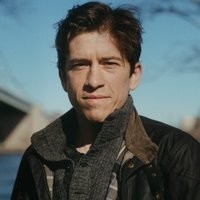
David Wallace-Wells is the deputy editor of New York and the author of The Uninhabitable Earth: Life After Warming.

“Between 1.5 degrees and 2 degrees of warming, just that extra half degree of warming, is going to kill 150 million people from air pollution alone. That’s 25 times the death toll of the Holocaust. And when I say that to people, their eyes open. They’re like oh my god, this is suffering on such an unconscionable scale. And it is. But 9 million people are dying already every year from air pollution. That’s a Holocaust every year, right now. And our lives aren’t meaningfully oriented around those people and those deaths. And very few people we know have their lives meaningfully oriented around those people and those deaths. And I think it’s quite likely that, going forward, those impulses of compartmentalization and denial and narcissism will continue to govern our response to this crisis. Which is tragic.”

Thanks to MailChimp, The Great Courses Plus, The Primary Ride Home Podcast, and Pitt Writers for sponsoring this week's episode.
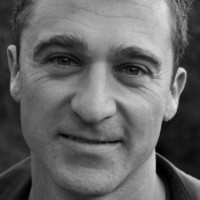
Ben Austen is a journalist and the author of High-Risers: Cabrini-Green and the Fate of American Public Housing. Khalil Gibran Muhammad is the Ford Foundation Professor of History, Race and Public Policy at Harvard Kennedy School and the author of The Condemnation of Blackness: Race, Crime, and the Making of Modern Urban America. Together they host the podcast Some of My Best Friends Are.

”We're not pretending to have all the answers, but we are attempting to say, ‘this is a real issue and it can't be covered up by simply ignoring it.’ And if you can see it for what it is and all of its full dimensions, you have a better shot at bringing people along to get the work done to fix it.”

Willa Paskin, a former TV critic, is the host of the podcast Decoder Ring.

“I want it to feel like a trap door. When you push on a trap door, there’s like a little spring. If it’s the right idea, you start to look into it, and you’re like, Oh, it’s giving a little.

Leon Neyfakh is a writer and the host of Slow Burn.

“We didn’t want to be coy about why we were doing the show. We wanted to be up front. We’re interested in this era because it seems like the last time in our nation’s history where things were this wild and the news was this rapid fire and the outcome was this uncertain. That was the main parallel we were thinking about when we started. It was only when we started learning the story and identified the turning points we kept running into these obvious parallels. We mostly didn’t lean into them. We didn’t chase them. There wasn’t a quota of parallels per episode.”

Thanks to MailChimp, MUBI, and Thermacell for sponsoring this week's episode. Also: Longform Podcast t-shirts are now available for a limited time only!

Ben Smith is the media columnist for The New York Times. He was the founding editor-in-chief of BuzzFeed News.

“I do think there's some kind of personality flaw deep in there of wanting to like, you know, find stuff out and tell people.... I'm not sure that's a totally sane or healthy personality trait, but it is definitely, for me, a personality trait…. I think that in political reporting, certainly, there's a kind of reporter who thinks that their job is basically to pull the masks off of these monsters. And I generally tend to think all these people—with some exceptions—are weird and complicated and often doing really awful things. But they aren't necessarily irredeemable or impossible to understand. They're interesting.”

Brittany Luse is the host of NPR’s It’s Been a Minute.

“One of the things I love about this job is everything is practice. I love it. It's like if a show is great and everyone loves it, you gotta put on another one. You just gotta do it again. And if the show didn't quite do what you'd hoped or set out to do in your mind and in your heart, you gotta do another one. I just love it. You can never feel too good and you can never feel too bad.”

Mark Bowden is a journalist and the author of 13 books, including Black Hawk Down and his latest, Hue 1968: A Turning Point of the American War in Vietnam.

“My goal is never to condemn someone that I’m writing about. It’s always to understand them. And that, to me, is far more interesting than passing judgment on them. I want you to read about Che Thi Mung, an 18-year-old village girl, who was selling hats on corners in Hue in the daytime and going home and sharpening spikes to go into booby traps to try and kill American soldiers and ARVN soldiers in the evening. I want to understand why she would do that, why she would be so motivated to do that. And I think I did.”

Thanks to MailChimp, LeVar Burton Reads, Babbel, and HelloFresh for sponsoring this week's episode.
Patrick Radden Keefe is a New Yorker staff writer. His latest book is Say Nothing: A True Story of Murder and Memory in Northern Ireland.

“What was strange for me was that it was before I was born, almost a half-century ago. I went to Belfast and asked people about it and you could see the fear on people’s faces. So this notion that this event that’s older than I am still felt so radioactive in the present day was challenging from a reporting point of view, but it also, at every step along the way, made me feel as though it was good that I was doing this project. That this was not a kind of inert, stale history story I was telling. It was something that was vivid and palpable and menacing even now.”

Thanks to MailChimp, Squarespace, and Pitt Writers for sponsoring this week's episode.

David Remnick is the editor of The New Yorker.

“I think it’s important — not just for me, but for the readers — that this thing exists at the highest possible level in 2016, in 2017, and on. That there’s a continuity to it. I know, because I’m not entirely stupid, that these institutions, no matter how good they are, all institutions are innately fragile. Innately fragile.”

Thanks to MailChimp, Audible, EveryLibrary, and Igloo for sponsoring this week's episode.

Amanda Hess, a staff writer at Slate, has also written for Pacific Standard, GOOD, and ESPN the Magazine.

"I ended up not loving the fact that I was getting a bunch of calls from MSNBC and CNN, who mostly wanted to talk about people threatening to rape and kill me and only a tiny bit about the story I'd written. ... It was tiring, and it seemed dismissive of me as a person. It's a strange thing to become somebody else's story, especially when the story is: You're a victim of an insane online harasser. That's who you are."

Thanks to this week's sponsors, TinyLetter and Oyster Books.

Michael Lewis has written for The New Republic, Vanity Fair and The New York Times Magazine. His latest book is Flash Boys.

“When you're telling a story, you're essentially playing the cards you're dealt. ... Sometimes the hand is very easy to play. Sometimes the hand is difficult to play. At the end, I just try to think, ‘Is there anything I would have done differently?‘ ‘Is there any trick I missed?’ If I don't have the feeling that I missed something big, I feel happy about the book.”

Thanks to TinyLetter and Audible for sponsoring this week's episode.

Adam Higginbotham has written for Businessweek, Wired and The New Yorker. His latest story is A Thousand Pounds of Dynamite, for The Atavist.

"There's always a narrative in a crime story. Something has always gone wrong. These guys are always in prison, because they all fucked something up or trusted the wrong person. They always get caught in the end. Because if they hadn't, you wouldn't be reading about it."

Thanks to TinyLetter for sponsoring this week's episode.