Inequality’s Deadly Toll
A century of research has demonstrated how poverty and discrimination drive disease. Can COVID push science to finally address the issue?
Showing 25 articles matching fc points to coins calculator Visit Buyfc26coins.com for latest FC 26 coins news..OtjT.
A century of research has demonstrated how poverty and discrimination drive disease. Can COVID push science to finally address the issue?
When things go horribly wrong during a stay, the company’s secretive safety team jumps in to soothe guests and hosts, help families—and prevent PR disasters.
In 1955, just past daybreak, a Chevrolet truck pulled up to an unmarked building. A 14-year-old child was in the back.
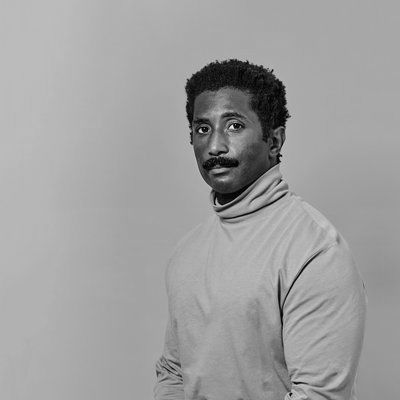
“A quarantine facial-hair experiment led me to a deep consideration of my Blackness.”
Faced with fragility and uncertainty, gig workers around the world are connecting across borders to challenge platforms’ power and policies.
The constant discomfort of a genital injury creates a covenant of pain. It is impossible to think about anything else.
“Before I came to Hollywood, I was confidently queer. Years of mixed messages in the industry changed that.”
“The first point he makes several times is that his new album will appeal to everyone; the second is that he is a changed man who’s grown up and calmed down. All I can say with certainty is that Brown is a stranger to the concepts of modesty and consistency.”
Returning to Forth Worth after two and a half defection years in the Soviet Union, Lee Harvey Oswald became friends with a Russian emigre family with a son of his age. After Kennedy was shot, they would be called on to translate the Secret Service interrogation of his young Russian wife.
Best Article Crime World Religion
Twenty-five years ago, a guru from India showed up in rural Oregon with 2,000 followers. Here’s what happened next: they legally turned their multi-million dollar ranch into an incorporated city, imported homeless people to swing local votes, poisoned hundreds and attempted to assassinate the state’s U.S. attorney.
In the past the only people who wrote autobiographies or memoirs were very important, those who had a crucial role in the history of their own country—Napoleon, Goethe—or were witness to major events or people who had singular, adventurous lives. Otherwise, it is ridiculous to write your autobiography.
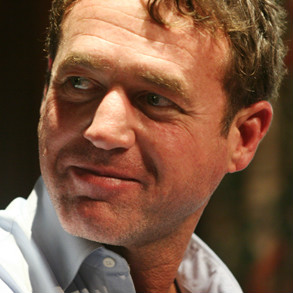
From shipbreakers in India to a sniper in Afghanistan, organized crime in Naples to pirates in the Gulf of Aden — browse our complete archive of more than 20 articles by William Langewiesche.

From Joe Paterno to coal miners, the rodeo to fruit pickers, our story picks by the GQ correspondent.
Laskas on Longform.
The International Criminal Court embodied the hope of bringing warlords and demagogues to justice. Then Luis Moreno-Ocampo took on the heir to Kenya’s most powerful political dynasty.
Nobody noticed Connie Converse when she was trying to get a record deal in New York in the 1950s. Nobody stopped her when she left her life in Michigan in 1974, never to be seen again. Today, her music is heard by tens of thousands.
On the nature of violence.
When my brother was twelve, I found six mice nailed to the wall of the abandoned tree house in the woods near our apartment. He spent a lot of time there. It seemed to me the little mouse faces were frozen in agony. As though they’d been alive when he’d hammered the nails through them.
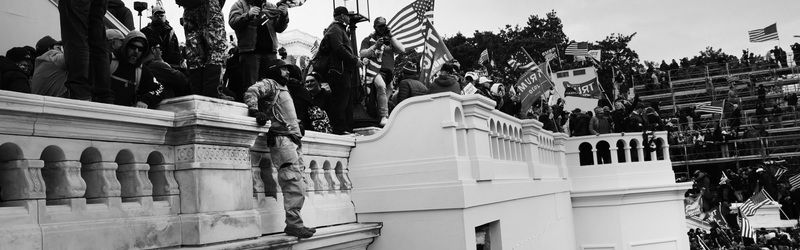
The stories that sprung up around if not quite about Trump were as brutal and lazy as the man himself; they teased themselves endlessly from one episode to the next, building toward a brutal grand finale in which America’s heroes would murder its villains, on TV, at some time to-be-determined.
Brian Reed and Hamza Syed are co-hosts of the new podcast The Trojan Horse Affair.
“I had lost all faith in the reporting that already happened on the subject matter. And that was my mentality with each source and each interviewer. I wanted the debate ended in the room because I didn't want commentary beyond it. I didn't want any kind of interpretation beyond it. I wanted the situation to be resolved there and then…. And without certain answers, I thought we weren't going to be able to speak about this matter in the way that I wanted to speak about it.” —Syed
“I both desperately wanted to know the answer of who wrote the letter, but kind of understood that we probably weren't going to get it beyond a shadow of a doubt. And I thought that I had transmitted that to Hamza and that he understood that. But as time went on, I realized that he had not accepted that as the likely outcome. And this is what was actually so energizing to work with you, Hamza. You never let your hope and desire and hunger to get that answer ever get dimmed. Like, ever.” —Reed
In this special episode with Stephen Rodrick, contributing writer at the New York Times Magazine and contributing editor at Men's Journal, Rodrick discusses his recent story "Here Is What Happens When You Cast Lindsay Lohan in Your Movie."
"Publicists don't want to give you access because they're afraid of what you're going to see. But if you spend enough time with anybody, short of Mussolini or Ghengis Khan, they're going to humanize themselves. Because they're human beings, like you are. And they have whatever demented battles they're fighting, their version of crazy, but if you get to spend some time with them as flesh and blood, they're going to come across as flesh and blood in the story."
Pete Dexter, profiled.
"I'm sick and tired of the story," says Dexter, though he knows it is a signature moment of his trajectory from newsman to writing some of the most original and important novels in American literature, including the National Book Award–winning Paris Trout (1988), a riveting tale of an unrepentant racist who brutally murders a 14-year-old black girl in a small Georgia town in the late 1940s. Settling deep into a dark-green leather chair near a patio window that offers a commanding view of ferries chugging across the cold blue waters, Dexter begins: "It was not a good column. I was trying to write something I didn't feel." Dexter is referring to the column that almost got him killed.
Enlightened is probably the sharpest satire of modern white-collar work since the original British version of The Office, and its skewering of this world intertwines with its portrait of individual personalities so deftly that you can’t separate them. Creator Mike White captures the unsettling blandness of office protocol, politics and jargon, from the chill that workers feel when Human Resources calls them out of the blue to the impressive-sounding word salad labels that the company gives to its departments and projects. (The experimental department to which the newly demoted Amy is assigned is called “Cogentiva.”)
An investigation into slavery in Mauritania:
An estimated 10% to 20% of Mauritania’s 3.4 million people are enslaved — in “real slavery,” according to the United Nations’ special rapporteur on contemporary forms of slavery, Gulnara Shahinian. If that’s not unbelievable enough, consider that Mauritania was the last country in the world to abolish slavery. That happened in 1981, nearly 120 years after Abraham Lincoln issued the Emancipation Proclamation in the United States. It wasn’t until five years ago, in 2007, that Mauritania passed a law that criminalized the act of owning another person. So far, only one case has been successfully prosecuted.
The creator of the California-based food chain kills his mother, sister and, finally, himself.
From Hollywood to Anaheim, he had opened a chain of fast-food rotisserie chicken restaurants that dazzled the food critics and turned customers into a cult. Poets wrote about his Zankou chicken. Musicians sang about his Zankou chicken. Now that he was dying, his dream of building an empire, 100 Zankous across the land, a Zankou in every major city, would be his four sons’ to pursue. In the days before, he had pulled them aside one by one -- Dikran, Steve, Ara, Vartkes -- and told them he had no regrets. He was 56 years old, that was true, but life had not cheated him. He did not tell them he had just one more piece of business left to do.
Even within a single apartment building, neighbors experience different temporalities. In one unit, we have a single extrovert experiencing the acute trauma of being forced to work alone from home. Next door, we have parents suddenly juggling childcare and work. At the end of the hall is an immigrant using WhatsApp to track the fate of family members on the other side of the globe who are suddenly physically unreachable due to travel bans. Even members of a single household experience pandemic time differently.
The aftermath of a revolution:
Amid all the chaos of Libya’s transition from war to peace, one remarkable theme stood out: the relative absence of revenge. Despite the atrocities carried out by Qaddafi’s forces in the final months and even days, I heard very few reports of retaliatory killings. Once, as I watched a wounded Qaddafi soldier being brought into a hospital on a gurney, a rebel walked past and smacked him on the head. Instantly, the rebel standing next to me apologized. My Libyan fixer told me in late August that he had found the man who tortured him in prison a few weeks earlier. The torturer was now himself in a rebel prison. “I gave him a coffee and a cigarette,” he said. “We have all seen what happened in Iraq.” That restraint was easy to admire.