Death Is Real
A day in the life of Mount Eerie’s Phil Elverum, in the wake of the sudden death of his wife when their daughter was four months old.
Showing 25 articles matching fccoins26 Coinsnight.com FC 26 coins 30% OFF code: FC2026. The best place for game coins.28oS.
A day in the life of Mount Eerie’s Phil Elverum, in the wake of the sudden death of his wife when their daughter was four months old.
David Grann is a staff writer for the New Yorker. His new book is The White Darkness.
“I do think in life, and in reporting, that reckoning with failure is a part of the process. And reckoning with your own limitations. I think that’s probably the arc and change I have made as I get older. Just as O’Shea doesn’t get the squid, failure is such an integral part of life and what you make of it. Too often we’re always focused on the success side, and I don’t always think the successes teach us as much as the journey and having things elude us. ... I'm being completely honest, I look at every story I've ever written as a failure. Because I always have some model, some perfect ideal, that I want to try to reach.”
Thanks to MailChimp and Pitt Writers for sponsoring this week's episode.
Reagan’s would-be assassin, 30 years later.

The rise and fall and rise of Hill flack Kurt Bardella, and what it says about D.C. culture.
The coldest of cases: During 1884-85, seven women and one man were brutally murdered in Austin, Texas.
April Savino, a teenage homeless runaway, lived in Grand Central Terminal from 1984 until 1987 when she committed suicide on the steps of a nearby church.
A trip to the Famous Poets Society convention/contest in Reno.
On Sam Cooke, theme parties, and the importance of McDonald’s-related jingles when street performing.
David Remnick is the editor of The New Yorker.
“I think it’s important — not just for me, but for the readers — that this thing exists at the highest possible level in 2016, in 2017, and on. That there’s a continuity to it. I know, because I’m not entirely stupid, that these institutions, no matter how good they are, all institutions are innately fragile. Innately fragile.”
Thanks to MailChimp, Audible, EveryLibrary, and Igloo for sponsoring this week's episode.
When the best three months of your life are “called three of the uglier months in the recent history of the National Football League.”
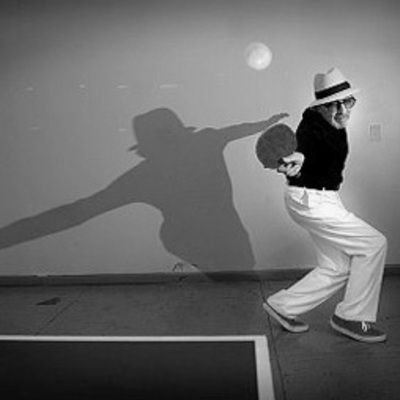
The comeback of Marty Reisman, the most flamboyant figure in the history of table tennis, and the self-proclaimed greatest hardbat player ever.
Inside the minds of two people, one with the world’s best memory and one with the world’s worst.
An interview with the ‘media ecologist’ on corporations, feudalism, the Dark Ages, the birth of currency, debt, how PR was invented, and why—
"...Any man that has a mortgage to pay is not going to be a revolutionary. With that amount to pay back, he’s got a stake in the system. True, he’s on the short end of the stick of the interest economy, but in 30 years he could own his own home."
Sponsored
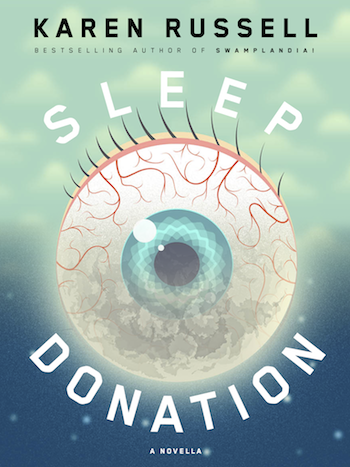
Atavist Books launches today with Sleep Donation, a new novella by the great Karen Russell, author of Swampandia!
Sleep Donation has already received praise from Slate, which declares "Yes, Karen Russell is a genius” and calls her language "acrid, luminous, and deft." It’s also an Amazon Best Book of the Month and a New Yorker Book to Watch Out For.
Ross Andersen is the deputy editor of Aeon Magazine.
“One of the things that’s been really refreshing in dealing with scientists—as opposed to say politicians or most business people—is that scientists are wonderfully candid, they’ll talk shit on their colleagues. They’re just firing on all cylinders all the time because they traffic in ideas, and that’s what’s important to them.”
Thanks to TinyLetter and Alarm Grid for sponsoring this week's episode.
Willa Paskin, a former TV critic, is the host of the podcast Decoder Ring.
“I want it to feel like a trap door. When you push on a trap door, there’s like a little spring. If it’s the right idea, you start to look into it, and you’re like, Oh, it’s giving a little.”
An oral history.
Tom Freston: We knew we needed a real signature piece that would look different from everything else on TV. We also knew that we had no money. So we went to NASA and got the man-on-the-moon footage, which is public domain. We put our logo on the flag and some music under it. We thought that was sort of a rock ’n’ roll attitude: “Let’s take man’s greatest moment technologically, and rip it off.”
Jeanne Marie Laskas writes for GQ and the New York Times Magazine. Her latest book is To Obama: With Love, Joy, Anger, and Hope.
“I hate saying this out loud, but it’s true: I’m really shy. Fundamentally, I'm 100% scared most of the time. I’m scared and wondering how I can not be noticed because I don’t know what to say and I’m shy. If you say I’m a good listener, that's why … I become more invisible so I’m more comfortable.”
Thanks to MailChimp, Techmeme Ride Home Podcast, and Pitt Writers for sponsoring this week's episode.
Exploring the vast underground world of New York City with three of the people who know it best.
A trip to the Russian baths helps author start to see the good in his terrible eyesight.

“Seeing a partial eclipse bears the same relation to seeing a total eclipse as kissing a man does to marrying him.”
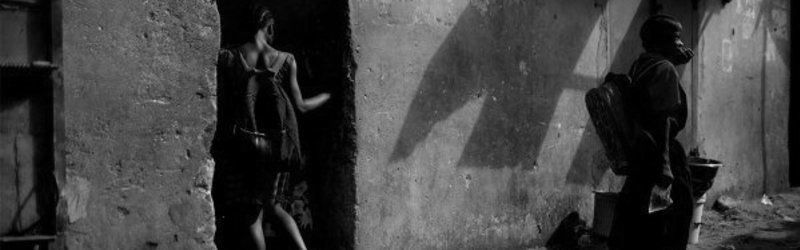
An acclaimed American charity said it was saving some of the world’s most vulnerable girls from sexual exploitation. But from the very beginning, girls were being raped.
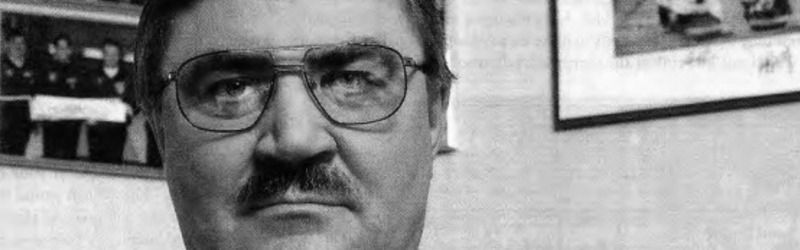
Wealthy businessman Merv Bodnarchuk put together the dream team of curling. Then he put himself in the lineup.

Each year, California’s child protective services agencies remove thousands of kids from their homes. The story of how some parents decided to fight back.

The story of a young man on the run in the slum he dreams of escaping.