Showing 25 articles matching fk33.cc_What is the price of magnesium sulfate pentahydrate in China.

Claudia Rankine is a poet, essayist, and playwright. She is the author of the new book, Just Us: An American Conversation.

“I began to wonder, why am I maintaining civility around things that are actually very important to me? This might be the only chance I get to stand up for myself. As Claudia. As a Black person. As a Black woman. As an American citizen. So what am I waiting for? What am I preserving when the thing I am supposedly preserving is also the thing that is on some level killing me?”

Thanks to Mailchimp for sponsoring this week's episode.
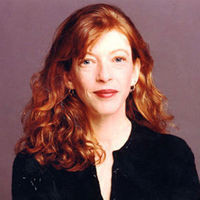
Susan Orlean is a staff writer at The New Yorker.

"There's always the fear, which comes with having done it for a long time, that you're repeating yourself. That's actually a genuine concern—you worry that you're becoming an imitiation of yourself ... The funny thing is that you spend the first half of your career wanting desperately to have a voice that's distinctive and recognizable, then you go to the other side of that and think oh my god, all my stories sound the same."

Thanks to TinyLetter and Digg for sponsoring this week's episode!

Jessica Hopper is editor-in-chief of the Pitchfork Review and the author of The First Collection of Criticism by a Living Female Rock Critic.

“I have an agenda. You can’t read my writing and not know that I have a staunch fucking agenda at all times.”

Thanks to MailChimp, Blue Apron, and Fracture for sponsoring this week's episode.

Emma Carmichael, a former editor at Deadspin and The Hairpin, is the editor in chief of Jezebel.

"Online feminism has more and more rules lately. There are only so many things you can say. And while our opinions are getting more constrained online, personal feminism and face-to-face conversations are looser and more complicated and don't go by any rules. ... The ideal with Jezebel is getting to a point where you can say, 'This is what I think, so who gives a fuck.'"

Thanks to TinyLetter for sponsoring this week's episode.

David Grann is a staff writer at The New Yorker. His new book is Killers of the Flower Moon: The Osage Murders and the Birth of the FBI.

“The more stories I reported over time, the more I just realized there are parts of the story I can’t always get to. You know, unless this is a reality show and there’s 18 cameras in every room, and people [talk] before they sleep, and maybe you have some mind-bug in their brain for their unconscious, there are just parts you’re just not gonna know. You get as close as you can. And so the struggle to me is to get as close as I can, to peel it back as close as I can, but understanding that there will be elements, there will be pieces, that will remain lingering doubts.”

Thanks to Stamps.com, Squarespace, and MailChimp for sponsoring this week's episode.
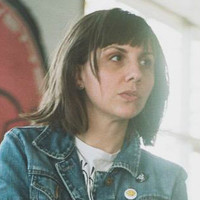
Reeves Wiedeman is a reporter at New York.

“I think the main reason I love the job is reporting. And the fact that you get to go out into situations that you wouldn’t otherwise as your job. I’m someone who gets antsy if I’m just on a vacation sitting around. I’d much rather go somewhere weird and kind of have a purpose. So, just feeling like you can kind of go anywhere and see anything and talk to anyone is a pretty cool way to live your day.”

Thanks to MailChimp, Pitt Writers, Thermacell, and Best Self for sponsoring this week's episode.

Zach Baron is a staff writer for GQ.

“People love to put celebrity stuff or culture stuff lower on the hierarchy than, say, a serial killer story. I think they're all the same story. If you crack the human, you crack the human.”

Thanks to TinyLetter and Squarespace for sponsoring this week’s episode.

Kevin Roose, a writer at New York, has contributed to The New York Times, GQ and Esquire. His latest book is Young Money: Inside the Hidden World of Wall Street's Post-Crash Recruits.

"Google will give you away. I feel like one undercover book is all you get these days before the jig is up. ... Unless, like Barbara Ehrenreich, you legally change your name. I was not quite prepared to go that far."

Thanks to TinyLetter for sponsoring this week's episode.

David Gessner is the author of ten books. His latest is Ultimate Glory: Frisbee, Obsession, and My Wild Youth.

“The ambition got in my way at first. Because I wanted my stuff to be great, and it froze me up. But later on it was really helpful. I’m startled by the way people don’t, you know, admit [they care] … it seems unlikely people wouldn’t want to be immortal.”

Thanks to Casper, Squarespace, and MailChimp for sponsoring this week's episode.

Connie Walker is an investigative reporter and podcast host. Her new show is Stolen: The Search for Jermain.

“For so long, there has been this kind of history of journalists coming in and taking stories from Indigenous communities. And that kind of extractive, transactional kind of journalism really causes a lot of harm. And so much of our work is trying to undo and address that. There is a way to be a storyteller and help amplify and give people agency in their stories.”

Thanks to Mailchimp for sponsoring this week's episode.
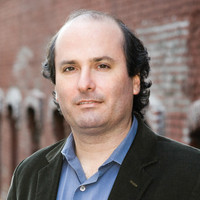
Starlee Kine is a contributor to This American Life and the New York Times Magazine.

"There's a fearlessness I had when I was younger that I don't have now ... It threw me into a crisis, the Internet in general. You're more cautious about what you kind of have out there. There's that, that I just don't want people to know every single thing anymore, but there's [also] an inner fear that did not exist before, an inner censoring that was not there."

Thanks to TinyLetter for sponsoring this week's episode!

Irin Carmon is a senior correspondent at New York, a contributor at CNN, and the co-author of Notorious RBG: The Life and Times of Ruth Bader Ginsburg.

“The fact that we were part of this entire wave of reporting was actually exhilarating. Even when it was competitive. For me, my desire to do this comes out of a broader set of commitments to the world. I’m a feminist and I’m a journalist. The ability to do feminist investigative journalism felt like a gift. And it also felt like, wow, this thing I’d been working on for a long time is something that institutions—the most prestigious and well-resourced institutions—wanted to put resources to. … I think that that kind of commitment is significant in our culture because it is validating it as a point of inquiry.”

Thanks to MailChimp, Skagen, TBD with Tina Brown, Screen Dive, and Pitt Writers for sponsoring this week's episode.
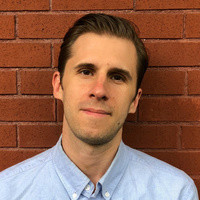
Tyler Cowen is an economist, the co-founder of Marginal Revolution, and the host of Conversations with Tyler. His latest book is The Complacent Class: The Self-Defeating Quest for the American Dream.

“I think of my central contribution, or what I’m trying to have it be, is teaching people to think of counter arguments. I’m trying to teach a method: always push things one step further. What if, under what conditions, what would make this wrong? If I write something and people respond to it that way, then I feel very happy and successful. If people just agree with me, I’m a little disappointed.”

Thanks to MailChimp and Squarespace for sponsoring this week's episode.
Bradley Hope and Tom Wright are former journalists at The Wall Street Journal, the co-founders of journalism studio Project Brazen, and the co-authors of the book Billion Dollar Whale.

Their new podcast is Corinna and The King. Hope’s new book is “The Rebel and the Kingdom.”

“We’re a little bit skeptical of just jumping into the big story of the day with something that doesn’t feel differentiated. It needs to have character, storytelling—it can’t just be a great topic, or an important topic, even.”

Naomi Zeichner is editor-in-chief of The Fader.

“Right now in rap there’s kind of a huge tired idea that kids are trying to kill their idols, and kids have no respect for history, and kids are making bastardized crazy music, and how dare they? I just don’t even know why we still care about this false dichotomy. Kids are coming from where they come from, they’re going where they’re going. And it’s like, do you want to try to learn about where they’re coming from and where they’re going, or do you not?”

Thanks to MailChimp, Club W, and Squarespace for sponsoring this week's episode.

Sloane Crosley is the author of I Was Told There’d Be Cake and How Did You Get This Number. Her latest essay collection is Look Alive Out There.

“The more extreme things get in reality, the more extreme escapism has to be. It’s like Game of Thrones or bust. But in reality, I think that part of what I’m trying to do with this book — or in anything I write — is to give permission to be mad about little things. Just because there’s all of this, someone still slid their hand down a subway pole and touched you. Or somebody bumped into you. There are still these minor indignities and infractions that occur consistently. And I think there’s some sort of robbing if you tell yourself, Well, I’m not going to be mad about this because of the political landscape that we’re in.

Thanks to MailChimp, Squarespace, The Great Courses Plus, and Pitt Writers for sponsoring this week's episode.