Showing 25 articles matching fccoins26 Coinsnight.com FC 26 coins 30% OFF code: FC2026. The best place for game coins.28oS.

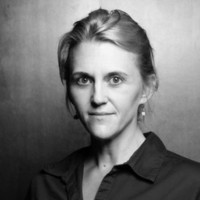
Tracy Kidder is the author of eleven books, including The Soul of a New Machine and Mountains Beyond Mountains. His latest is Rough Sleepers.

“I do think it’s an interesting challenge to try to write about virtue, with all that’s always mixed with it. Some writers have said it’s virtually impossible … but it’s not impossible. … People who are really trying, struggling against the odds, I think they’re worth writing about.”

Erika Hayasaki has written for The New York Times Magazine, Wired, and The Atlantic. Her new book is Somewhere Sisters: A Story of Adoption, Identity, and the Meaning of Family.

“I don’t subscribe to the belief that it’s our story because we’re the journalist that wrote it — especially when people are sharing these really intimate, deep, painful moments. That is not my story. That’s their story that they've collaborated in a way with me to share through these interviews.”

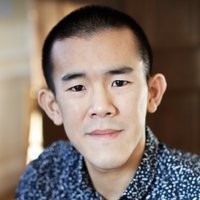
Ed Yong is the author of I Contain Multitudes and a science writer at The Atlantic. His most recent article is "How the Pandemic Will End."

“Normally when I write things that are about a pressing societal issue, those pieces feel like they’re about things that need to get solved in timeframes of, say, months or years. ... But now I’m writing pieces that are affecting people’s choices and lives, and hopefully the direction of the entire country, on an hourly basis. The changes I hope to see, I hope to see immediately. Like right now. And that does create a massive sense of urgency, a sense of pressing, incredibly high stakes. And it’s a burden.”

Thanks to Mailchimp and Pitt Writers for sponsoring this week's episode.

Jen Percy is the author of Demon Camp: A Soldier's Exorcism.

"As is the nature of obsession, you just start gathering materials, hoarding documents and taking notes in a way that’s totally chaotic and overwhelming. You don’t even care yet because you’re so excited by what you’re gathering. If you start trying to make a narrative out of it too soon it will be false or fall apart."

Thanks to TinyLetter and Dear Thief, the new novel by Samantha Harvey, for sponsoring this week's episode.

Meghan Daum's latest book of essays is The Unspeakable.

“As writers we think, well there has to be closure, there has to be a beginning middle end, the character has to go through a change. And then in life we're supposed to have some sort of arc or aha moment, as if the experience isn't legitimate unless we get something out of it. That's so culturally constructed, as they say. It's so artificial.”

Thanks to TinyLetter, Scribd, and Oscar for sponsoring this week's episode.

Latif Nasser co-hosts Radiolab. He also hosted The Other Latif and the Netflix documentary series Connected.

“It’s so easy to hate everything and be cynical. There’s a kind of ease to that. It takes a lot more courage to go up in front of everybody and be like, This is awesome. I love this. That takes a lot of guts, I think.”

Thanks to Mailchimp for sponsoring this week's episode.

Lauren Hilgers is a journalist and the author of Patriot Number One: American Dreams in Chinatown.

“You just need to spend a lot of time with people. And it’s awkward. I read something when I was first starting out as a journalist in China, ‘Make a discipline out of being uncomfortable.’ I think that’s very helpful. You’re going to feel uncomfortable a lot of the time, and just decide to be okay with it and just keep going with it.”

Thanks to MailChimp, Substack, and Skillshare for sponsoring this week's episode.

Lissa Soep is an audio producer, editor and author whose latest book is Other People’s Words: Friendship, Loss, and the Conversations That Never End.

“I am so keenly aware of how much my own voice is a product of editing relationships and co-producing relationships with other people's words. … I will forever feel indebted to those then-young people who are now writers and educators and therapists. … I feel like my voice is sort of a product of that time.”

Mosi Secret has written for ProPublica, The New York Times Magazine, and GQ. His new podcast is Radical.

“I think this story made me call on parts of myself that are not journalistic because I don’t really think that’s the way we’re going to get out of this at this point in my life. I think that it takes a more radical reimagining of who we are as human beings, the ways in which we’re connected, and what we owe to each other. And that’s not a reporting thing—that’s a ‘who are you’ kind of thing.”

Renegade Miami Football Booster Spells Out Illicit Benefits to Players

An 11-month investigation ends with a booster, now in prison for a Ponzi scheme, going public with details of how he spent millions on college athletes from 2002 to 2010.

[Shapiro] said his benefits to athletes included but were not limited to cash, prostitutes, entertainment in his multimillion-dollar homes and yacht, paid trips to high-end restaurants and nightclubs, jewelry, bounties for on-field play including bounties for injuring opposing players, travel and, on one occasion, an abortion.

Lulu Miller is a former producer at Radiolab and a co-founder of Invisibilia. Her new book is Why Fish Don't Exist: A Story of Loss, Love, and the Hidden Order of Life.

“I think almost every radio story I’ve ever done comes down to the question of me trying to ask a person how they get through this life thing. How they get through this breakup. How they get through being disabled in a family that's crushing them. How they get through having a head that's poisonous. Every story is just, Oh, what's your trick?

Thanks to Mailchimp, Literati, and Pitt Writers for sponsoring this week's episode.

Jessica Hopper is editor-in-chief of the Pitchfork Review and the author of The First Collection of Criticism by a Living Female Rock Critic.

“I have an agenda. You can’t read my writing and not know that I have a staunch fucking agenda at all times.”

Thanks to MailChimp, Blue Apron, and Fracture for sponsoring this week's episode.

Katy Vine is an executive editor for Texas Monthly.

“This is a huge state. There’s so much, and it’s different everywhere you look. You just go to Houston and there’s worlds within worlds within worlds just within the one city. You go to San Antonio and you’re in a different country, and you go to Dallas, you’re in a totally different country. … It’s wild to me. It’s endlessly fascinating.”

David Samuels is a contributing editor at Harper's and contributor to The New Yorker and The Atlantic.

"You start by doing the thing you want to do, at whatever level you can. There's this idea that you work your way up by writing captions, and then capsule film reviews or whatever, and I don't think it works that way. I think you learn to master a form, and you start by doing the thing you want to do. At first you're not going to do it as well as you wish you could, and then you learn. At the same time, I think, there's so much dreck, and there's so many people who don't care about doing the thing well, that when that kid walks in your door and they want to do the thing, you say 'Sure,' because it doesn't cost you anything, you look at it, and there's actually some energy on the page, like, yeah, it's bad, but it's bad in a different way. It's bad in the way of someone who might eventually be good."

Thanks to TinyLetter for sponsoring this week's episode!

Tommy Tomlinson, a former newspaper columnist, is the host of Southbound podcast. His new book is The Elephant in the Room: One Fat Man's Quest to Get Smaller in a Growing America.

“The thing that galvanized me was the death of my sister. I signed the contract November 2014, she died Christmas Eve of that year. She had been overweight just like me. She was older than me and died from complications, an infection that was directly connected to her weight. And that more than anything made me think if I don’t deal with this now, I’m not going to be around in 10 years to write this book. So, the book helped certainly. The idea that I was going to put this stuff on paper and expose myself in this way to the world and I didn’t want to be a failure at the end of it. More than that, I didn’t want to be a failure because I didn’t want to be a failure. I don’t want to die.”

Thanks to MailChimp and Pitt Writers for sponsoring this week's episode.