Showing 25 articles matching fc points to coins calculator Visit Buyfc26coins.com for latest FC 26 coins news..OtjT.

Jake Halpern has written for The New Yorker and The New York Times Magazine and is a contributor to This American Life. His latest book is Bad Paper: Chasing Debt from Wall Street to the Underworld.

"I test out my stories on my kids. You should be able to tell any story, now matter how complicated, to a seven-year-old in a way that they understand. If you can't, that probably means that either a) you're telling the story wrong or b) it's not really a story."

Thanks to TinyLetter and Bonobos for sponsoring this week's episode.
Susan Dominus is a staff writer at the New York Times Magazine.

"A lot of reporting is really just hanging around and not going home until something interesting happens."

Thanks to TinyLetter for sponsoring this week's episode.

Kate Fagan is a columnist and feature writer for ESPN. Her latest book is What Made Maddy Run: The Secret Struggles and Tragic Death of an All-American Teen.

“When I was professionally closeted, I was kind of bitter. I didn’t have a ton of empathy. And I don’t think I always asked the right question, because I wouldn’t ask people questions that I wouldn’t want to be asked…I had walls up. I wouldn’t even allow myself to be vulnerable in my writing. Because the whole point of my existence at that time was to circumvent any moment that could create vulnerability in a way that would frighten me. And I think you could that see in my writing.”

Thanks to MailChimp and HelloFresh for sponsoring this week's episode.

My Life as an Undocumented Immigrant

There are believed to be 11 million undocumented immigrants in the United States. We’re not always who you think we are. Some pick your strawberries or care for your children. Some are in high school or college. And some, it turns out, write news articles you might read. I grew up here. This is my home. Yet even though I think of myself as an American and consider America my country, my country doesn’t think of me as one of its own.

Michelle García has written for The New York Times, The Washington Post and Oxford American. She directed the PBS film, Against Mexico: The Making of Heroes and Enemies.

“We have to see that within difficult stories there is a very important message of humanity triumphing over despair. If you don’t focus on joy, humanity is squashed. If all you see and all you narrate is pain, then you extinguish the possibility of joy and the important part of holding onto humanity.”

Thanks to MailChimp and Pitt Writers for sponsoring this week's episode.

Sheila Heti is the author of seven books. Her latest is Motherhood: A Novel.

“[My parents] were afraid for me. As anybody who has a kid who wants to be a writer. I think they understood it was a hard life. It was a life in which you wouldn’t necessarily make enough money. It was a life in which you might be setting yourself up for a great amount of disappointment. My dad’s father was a painter, so there was in him this idea that it wasn’t so crazy to him. It wasn’t so outside his understanding. And, yeah, my mom thought it was a bad idea. And it probably is a bad idea in a lot of ways, but my dad was supportive but also cautioning. I think the book really moved [my mom] and really had an effect on her, so maybe you understand that it’s not necessarily a frivolous thing to be doing. Maybe it’s not just playing. I think my mom always had this idea that writing is playing, and it is playing, but it’s a serious kind of playing.”

Thanks to MailChimp, MUBI, and Tripping.com for sponsoring this week's episode.
Vanessa Grigoriadis is a contributing editor at Vanity Fair and New York.

On the art of the celebrity interview: "People are smart. Particularly these people. They're sitting there thinking, 'When is she going to drop that question?' They know what you're doing. So the way I think about it is: let's have an actual, genuine, human, interesting conversation. ... [Journalists] have all sorts of schemes of what they think works for them. My scheme is no scheme."

Thanks to this week's sponsors, TinyLetter and Audible!

</blockquote>

Dan Rather is a journalist, author, and the former anchor of CBS Evening News.

”I knew that being named to succeed Walter Cronkite would put me in a position of inhaling—every day—a kind of NASA-grade rocket fuel for the ego. And that could be dangerous…. In the end, when the red light goes on, it's just you. You're by yourself.… And the longer you're in that role, the more difficult it is to stay true to yourself and to remember who you are and who you want to be.”

Thanks to Mailchimp for sponsoring this week's episode.
Björk’s Big Bang

The artist discusses her latest record, Biophilia, science and music education. 

Up until she developed a vocal-cord nodule a few years ago, Björk made a point of not investigating how that instrument worked. “With arrangements and lyrics,” she says, squinting over her coffee, “I work more with the left side of my brain. But my voice has always been very right brain. I didn’t try to analyze it at all. I didn’t even know until I started all this voice work, two years ago, what my range was. I didn’t want to let the academic side into that—I worried the mystery would go.”

Hillary Clinton is the former Democratic nominee for president. Her new book is What Happened.

“I hugged a lot of people after [my concession speech] was over. A lot of people cried … and then it was done. So Bill and I went out and got in the back of the van that we drive around in, and I just felt like all of the adrenaline was drained. I mean there was nothing left. It was like somebody had pulled the plug on a bathtub and everything just drained out. I just slumped over. Sat there. … And then we got home, and it was just us as it has been for so many years—in our little house, with our dogs. It was a really painful, exhausting time.”

Thanks to MailChimp, Audible, and Casper for sponsoring this week's episode.
Terry Gross is the host and co-executive producer of Fresh Air.

“Part of my philosophy of life is that you have to live with a certain amount of delusion. And part of the delusion I live with is that maybe, from experience, I’m getting a little bit better. But then the other part of me, the more overpowering part of me, is the pessimistic part that says, ‘It’s going to be downhill from here.’ I try not to judge myself too much because I’m so self-judgmental that I don’t want to over-judge and get into too much of ‘Am I better than I was yesterday, or not?’”

Thanks to MailChimp, Squarespace, and Blue Apron for sponsoring this week's episode.
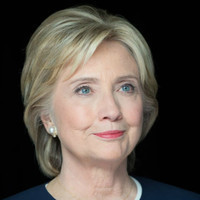
Julie K. Brown is an investigative reporter for the Miami Herald. Her new book is Perversion of Justice: The Jeffrey Epstein Story.

“No reporter wants to be a part of the story. ... But the one thing I know is that the authorities weren't going to do anything about this unless it stayed in the news and there was pressure. And I thought the only way to do pressure was to continue to write stories and to be in their face by going on TV. So I took advantage of the fact that I am sort of a part of this story in the hope that it would pressure authorities to do something about it.”

Jon Caramanica is a music critic at The New York Times.

“I like to interview people very early in their careers or very late in their careers. I think vulnerability and willingness to be vulnerable is at a peak in those two parts. Young enough not to know better, old enough not to give a damn. … The story I want to tell is—how are you this person, and then you became this? Then at the end, let’s look back on these things and let’s paint the art together. But in the middle when your primary obsession is how do I protect my role? How do I keep my spot? How do I keep the throne? I’m not as interested in that personally as a journalist or as a critic. ”

Thanks to MailChimp, Read This Summer, Google Play, and Pitt Writers for sponsoring this week's episode.
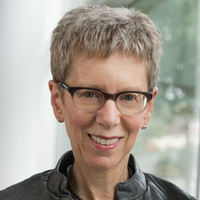
Mina Kimes is a senior writer at ESPN and host of the podcast ESPN Daily.

“What I’ve found, and this is something I did not know would be the case going into it, is that sports stories—and, at the risk of sounding a bit self-important, maybe someone like me writing sports stories or talking about it in particular—can have an impact in other ways that have revealed themselves to me over time.”

Thanks to Mailchimp, Pitt Writers, and Family Ghosts for sponsoring this week's episode.

Inside Match.com

A look at the dating site's new algorithm.
Codenamed “Synapse”, the Match algorithm uses a variety of factors to suggest possible mates. While taking into account a user’s stated ­preferences, such as desired age range, hair colour and body type, it also learns from their actions on the site. So, if a woman says she doesn’t want to date anyone older than 26, but often looks at ­profiles of thirty-somethings, Match will know she is in fact open to meeting older men. Synapse also uses “triangulation”. That is, the algorithm looks at the behaviour of similar users and factors in that ­information, too.

Window Shopping

Dreaming of the perfect apartment.

Should anyone ever choose to remake and bastardize Breakfast at Tiffany’s, I propose an opening sequence re-imagined to reflect more contemporary preoccupations. The revised opening scene should be filmed against the backdrop of an early evening in Brooklyn. The throngs of suits coming home from their nine to five grinds in Manhattan would be emerging from the subway stairwells like ants from an anthill, rushing off down various streets towards their various homes and families and dinners. All except for the would-be protagonist who, as the crowd rushes past her, makes her way to the closed-for-the-night real-estate storefront opposite the subway station. Somewhere, “Moon River” might still be playing, as if it had never stopped. Disheveled, lugging her purse and gym bag, she pauses for a number of minutes to read listings she has already read, and which she committed to memory weeks ago: a studio on Pineapple Street; a loft on Gold Street; a townhouse on Argyle Street; a two-bedroom coop on First Place; a one-bedroom condo on Carlton Avenue; a brownstone on Henry Street. It’s fall and the leaves blow in eddies on the sidewalk. She gets cold and turns away from the window to walk off down the street just as dusk begins to arrive in earnest. The occasional “For Sale” sign swings on its hinges, and the story of the day ends only to begin again in the morning.

Errol Morris is the director of The Thin Blue Line and The Fog of War. His latest film is American Dharma.

“I don’t make films because it makes sense to make them. Probably if I thought carefully about whether they made sense, I would stop immediately. I make them because I have a need to do it. I have a need to think about stuff. Writing and filmmaking for me is a form of thinking. It’s an opportunity to think about something. And I enjoy it. I don’t know what I would do without filmmaking.”

Thanks to Mailchimp, Pitt Writers and SAIC.

Alzo Slade is a correspondent for VICE News and host of the podcast Cheat.

“Human beings, we are the same, right? Like when you come out of the womb, you need to eat, you need to sleep, you need to pee, you need to shit, and when it comes to emotional needs, you need to feel loved. You need to feel there's compassion, you know? You need to feel significant and of value. And when it comes to like the feeling of significance and feeling valued, I think that's where we start to get into trouble because the same things that you hold of value, I may not in the same way. […] And so if I can engage you and recognize the perspective from which you come, and at least give you an entry level or a human level of respect from the beginning, then the departure point for our engagement is a proper one, as opposed to an antagonistic one.”

Nicholson Baker is the author of 18 books of fiction and nonfiction. He has written for The New Yorker, Harper’s, and many other publications. His latest book is Baseless: My Search for Secrets in the Ruins of the Freedom of Information Act.

"In the end, I don’t care how famous you get, how widely read you are during your lifetime. You’re going to be forgotten. And you’re going to have five or six fans in the end. It’s going to be your grandchildren or your great-grandchildren are going to say, Oh, yeah, he was big. … So I think the key is, write what you actually care about. Because in the end, you’re only doing this for yourself. … So maybe do your best stuff for yourself and for the three, four, five people who know in the coming century that you ever existed. That’s all you need to do."

Thanks to Mailchimp for sponsoring this week's episode.

Matthew Cole is an investigative reporter at The Intercept, where he recently published “The Crimes of Seal Team 6.”

“I’ve gotten very polite and very impolite versions of ‘go fuck yourself.’ I used to have a little sheet of paper where I wrote down those responses just as the vernacular that was given to me: ‘You’re a shitty reporter, and I don’t talk to shitty reporters.’ You know, I’ve had some very polite ones, [but] I’ve had people threaten me with their dogs. Some of it is absolutely cold.”

Thanks to Squarespace, Blue Apron, and MailChimp for sponsoring this week's episode.

For the first time, Janet Reitman discusses her Rolling Stone cover story on accused Boston Marathon bomber Dzhokhar Tsarnaev.

"My editors, myself, a lot of people who work for the magazine — we lived through an act of terrorism. We know what it feels like. There have been accusations to me personally of being insensitive, and I can tell you that I'm far from insensitive, not only to the political realities of terrorism but to the personal realities of terrorism. I breathed it in, literally. … The cover elicited an emotional response from people; that is not always what magazine covers do. I think it's great on a certain level, because terrorism is emotional, it's real, it affects us. It is not something that happens just overseas or just to people who are somehow "Other." If you talk to terrorism experts around the world, what they will all say is that the vast majority of people who are involved in these violent, extremist acts are what we would consider otherwise to be very normal people. One of us. Part of our community. That's a reality, and it's a very emotional thing and it makes people very uncomfortable. I totally understand that. But that was the point of my story."

Thanks to this week's sponor, Squarespace.

40 Years After Watergate, Nixon Was Far Worse than We Thought

The Watergate reporters look back.

In the course of his five-and-a-half-year presidency, beginning in 1969, Nixon launched and managed five successive and overlapping wars — against the anti-Vietnam War movement, the news media, the Democrats, the justice system and, finally, against history itself. All reflected a mind-set and a pattern of behavior that were uniquely and pervasively Nixon’s: a willingness to disregard the law for political advantage, and a quest for dirt and secrets about his opponents as an organizing principle of his presidency.

Ronan Farrow is a Pulitzer-winning investigative reporter for The New Yorker. He is the author of Catch and Kill: Lies, Spies, and a Conspiracy to Protect Predators and hosts The Catch and Kill Podcast.

“It was the opposite of anything I would’ve expected, breaking a story like that. It wasn’t a moment of celebration. I was immensely relieved, and immensely grateful for the sources … and I was so grateful for those people at the New Yorker who had worked so hard. But it was a strange, numb time for me that ended, at the end of that day, with me bursting into tears.”

Thanks to Mailchimp and Pitt Writers for sponsoring this week's episode.

The Larry Davis Show

In the weeks after Davis shot the six cops, faked out the costly, nationwide manhunt for 17 days, and held a major portion of the NYPD to a standoff in the Twin Parks Houses near Fordham Road, huge black-and-white mug shot-like photos of a starry-eyed, baby-faced killer adorned the front pages of the tabloids under headlines like “They Won’t Take Me Alive” and the local news anchors excitedly invoked his name at the top of every show.

Jeanne Marie Laskas is the author of the new book Hidden America and a correspondent for GQ.

"I'm just a writer going into [people's lives], you know? What do you do with that kind of intensity of a relationship when you're job is to invoke it on the page? It's a huge ... not just privilege but responsibility. Because, you know, it's just for a story. And I tell them that: 'I'm asking you trust me, but at the same time don't trust me. I'm kind of like a vulture in this relationship—we're not friends.'"

image