Can Rob Kalin Scale Etsy?
A site for handcrafts flirts with an IPO.
Showing 25 articles matching best fc points to buy Buyfc26coins.com is FC 26 coins official site..KzUT.
A site for handcrafts flirts with an IPO.
The autopsy of a once-dominant site.
From a Tokyo smash-and-grab to driving a car through the window of a Dubai jewelry shop, how a ragtag band of Balkan thieves set a new bar for audacious heists.
A member of the Pink Panthers, Milan Poparic, escaped from prison yesterday.

September 11, 2001:
“I felt like I was intruding on a sacrament,” said one firefighter, Maureen McArdle-Schulman. “They were choosing to die and I was watching them and shouldn’t have been, so me and another guy turned away and looked at the wall, and we could still hear them hit.”
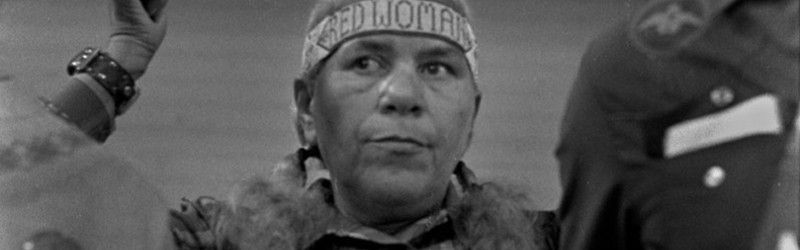
He was a Georgetown-educated Native-American lawyer who’d left behind a career in D.C. to advocate on behalf of poor and minority populations in rural North Carolina. At the time of his 1988 murder, he was investigating ties between police and the local cocaine trade.
The author spent nearly 30 years looking into what really happened.

A trip to Scotland and an investigation of enduring belief.
“I remember reading about the deathbed confession, and how strangely sad it made me, even though I had not, at that point, believed in the monster for years. How much sadder, I wondered, would it make those who still believed in the existence of a monster in Loch Ness?”

For the past 16 months, he had worked as a mole, posing as a militant jihadist in the Islamic State while passing critical information to a secret branch of Iraq’s national intelligence agency. His record was stunning: He had foiled 30 planned vehicle-bomb attacks and 18 suicide bombers, according to Abu Ali al-Basri, the agency’s director. Captain Sudani also gave the agency a direct line to some of the Islamic State’s senior commanders in Mosul.
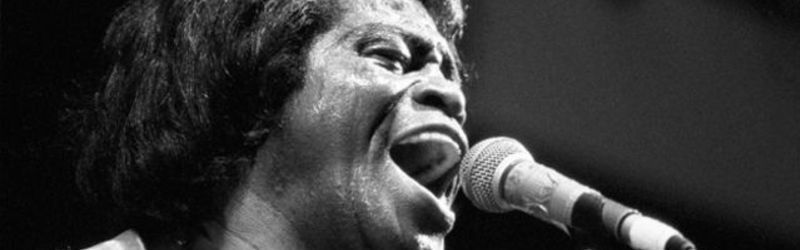
When James Brown died on Christmas Day 2006, he left behind a fortune worth tens, maybe hundreds, of millions of dollars. The problem is, he also left behind fourteen children, sixteen grandchildren, eight mothers of his children, several mistresses, thirty lawyers, a former manager, an aging dancer, a longtime valet, and a sister who’s really not a sister but calls herself the Godsister of Soul anyway.
“In the past, when he has spoken, he has sometimes replied to questions by protesting that he is boring. Maybe he believes that this is the case, or just believes there is no point in allowing himself to seem interesting in the way interviewers usually want people to be. Still, he has told himself that tonight he will be truthful. He’s feeling calmer these days. He has not had one of these conversations for a while, and he intends it to be a long time before he has another.”
Christine Kenneally has written for The New Yorker, The New York Times, and The Monthly. Her 2018 Buzzfeed article, “The Ghosts of the Orphanage,” was nominated for a National Magazine Award.
"I understood that the abuse was a big part of the story. But the thing that really hooked me and disturbed me and I wouldn’t forget was the depersonalization that went on in these places. It wasn’t just that the records had been lost along the way. It became really clear that the information was intentionally withheld, and it was all part of just this extraordinary depersonalization that happened to these kids.”
Thanks to MailChimp and Pitt Writers for sponsoring this week's episode.
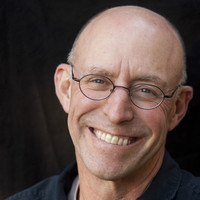
Michael Pollan writes for The New York Times Magazine and The New Yorker and is the author of nine books. His latest is How to Change Your Mind: What the New Science of Psychedelics Teaches Us About Consciousness, Dying, Addiction, Depression, and Transcendence.
“I don’t like writing as an expert. I’m fine doing public speeches as an expert. Or writing op-ed pieces as an expert. But as a writer, it’s a killer. Nobody likes an expert. Nobody likes to be lectured at. And if you’ve read anything I’ve written, I’m kind of an idiot on page one. I am the naïve fish out of water. I’m learning though. The narrative that we always have as writers is our own education on the topic. We can recreate the process of learning that's behind the book.”
Thanks to Mailchimp and Pitt Writers for sponsoring this week's episode.
There’s no telling how many guns there are in America—and when one gets used in a crime, no way for the cops to connect it to its owner. The only place the police can turn for help is a Kafkaesque agency in West Virginia, where, thanks to the gun lobby, computers are illegal and detective work is absurdly antiquated. On purpose.
Next is "culture training," in which trainees memorize colloquialisms and state capitals, study clips of Seinfeld and photos of Walmarts, and eat in cafeterias serving paneer burgers and pizza topped with lamb pepperoni. Trainers aim to impart something they call "international culture"—which is, of course, no culture at all, but a garbled hybrid of Indian and Western signifiers designed to be recognizable to everyone and familiar to no one. The result is a comically botched translation—a multibillion dollar game of telephone. "The most marketable skill in India today," the Guardian wrote in 2003, "is the ability to abandon your identity and slip into someone else's."
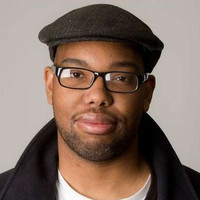
Ta-Nehisi Coates is a senior editor at The Atlantic. His latest cover story is "The Case for Reparations."
"The writer hopes for change, but writers can't assume that their work is going to cause change."
Thanks to TinyLetter and I Am Zlatan, the international bestseller published by Random House, for sponsoring this week's episode.
“Modern writing at its worst does not consist in picking out words for the sake of their meaning and inventing images in order to make the meaning clearer. It consists in gumming together long strips of words which have already been set in order by someone else, and making the results presentable by sheer humbug.”
He was the father of Neuro-Linguistic Programming (a school of therapy that some would liken to scientific brainwashing), a guzzler of cocaine, and a highly paid lecturer with fabricated credentials. He was present when a young woman shot herself in Santa Cruz—but did he pull the trigger? A “parable for the New Age.”
Lance Butterfield was the captain of the football team, had a 4.0 GPA and a girl he loved. It wasn’t enough for his dad. And then his dad became too much for him.
Part of our guide to Skip Hollandsworth’s true crime writing at Slate.
Paul Wayment made a profound mistake, left his 2-year-old son alone in his truck as he tracked deer in the wilderness. The boy was gone when he returned. The story of a collective struggle to find a just punishment.
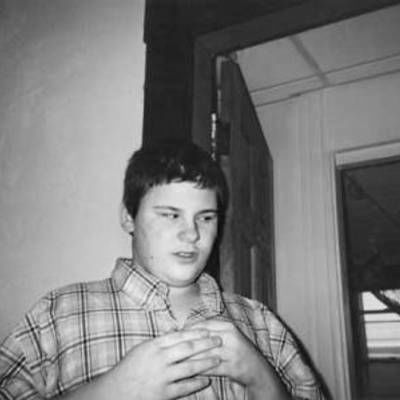
Matthew Weigman was blind, overweight, 14, and alone. He could also do anything he wanted with a phone. Sometimes that meant calling Lindsay Lohan. Other times it meant sending a SWAT team to an enemy’s door.

At 25, Stephen Glass was the most sought-after young reporter in the nation’s capital, producing knockout articles for magazines ranging from The New Republic to Rolling Stone. Trouble was, he made things up—sources, quotes, whole stories—in a breathtaking web of deception that emerged as the most sustained fraud in modern journalism.

In October 2006, a four-year-old from Corpus Christi named Andrew Burd died mysteriously of salt poisoning. His foster mother, Hannah Overton, was charged with capital murder, vilified from all quarters, and sent to prison for life. But was this churchgoing young woman a vicious child killer? Or had the tragedy claimed its second victim?
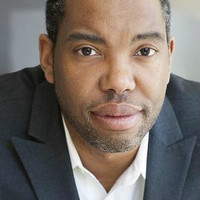
Ta-Nehisi Coates is the author of Between the World and Me and a national correspondent for The Atlantic. His latest cover story is “My President Was Black."
“[People] have come to see me as somebody with answers, but I don’t actually have answers. I’ve never had answers. The questions are the enthralling thing for me. Not necessarily at the end of the thing getting somewhere that’s complete—it’s the asking and repeated asking. I don’t know how that happened, but I felt like after a while it got to the point where I was seen as having unique answers, and I just didn’t. I really, really didn’t.”
Thanks to MailChimp, Casper, and Audible for sponsoring this week's episode.
“There is only one given: On the afternoon of August 16, a 22-year-old from Australia named Christopher Lane, who had come to America to go to college and play baseball, went out running and, without warning or knowing why, was shot to death in Duncan.”
Searching for the truth about a site known for busting myths.
Lessons from the death of a venture-backed, Facebook-dependent, millennial-focused news site.