In Plain Sight
The search for Syrian war criminals in Europe.
Showing 25 articles matching fc points to coins calculator Visit Buyfc26coins.com for latest FC 26 coins news..OtjT.
The search for Syrian war criminals in Europe.

The case for paying college athletes.
The search for Guns N’ Roses’ elusive guitarist.
David Remnick is the editor of The New Yorker.
“I think it’s important — not just for me, but for the readers — that this thing exists at the highest possible level in 2016, in 2017, and on. That there’s a continuity to it. I know, because I’m not entirely stupid, that these institutions, no matter how good they are, all institutions are innately fragile. Innately fragile.”
Thanks to MailChimp, Audible, EveryLibrary, and Igloo for sponsoring this week's episode.
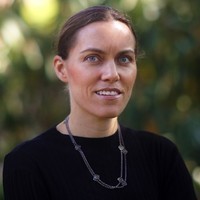
Emily Oster is an economist, professor, and author. Her new book is The Family Firm.
”[COVID] has been 18 months of being a person who is slightly more public, who is saying things that are somewhat more controversial, where people yell at me a lot. ... I do much less reading of the comments than I did early on because I found that eventually I just got mad and that's not a productive way to interact. And it affects how I think about what I write, and I would like what I write to be the things that I think are true, not the things I think will avoid people being angry.”
Ben Smith is the editor-in-chief of BuzzFeed.
“I do think as a reporter in general, most of what we deal in is ephemera. And I love that. I mean that’s the business, and I don’t think there’s anything wrong with that. In fact, I think that’s a plus and something that shapes how you succeed at the job because you realize that this thing you’re writing is about this moment and right now, and about its place in the conversation. It’s not some piece of art to hang on the wall.”
Thanks to MailChimp, Harry's, and Reveal, and Home Chef for sponsoring this week's episode.
“What it means — for the reporting we do, for the brands we represent, and for our own mental health — that we don’t stop being black people when we’re working as black reporters. That we quite literally have skin in the game.”
For years, rural Guatemalans traveled thousands of miles for jobs in Mount Pleasant, Iowa. A series of immigration raids is creating havoc in a town desperate for workers.
David Marchese is the interviewer for New York's "In Conversation" series.
"The thing I like about doing long interviews with people is that each one feels like a totally unique experience to me. It’s not like I go into an interview and already know the arc of the story I’m going to tell, and I’m going to just fill that in the best I can. I have ideas of what to talk about and what the conversation might entail, but it does feel like I’m starting at zero and the conversation can go anywhere.”
Thanks to MailChimp, Read This Summer, Google Play, and Pitt Writers for sponsoring this week's episode.
Rachel Monroe is a freelance writer based in Texas.
“I will totally go emotionally deep with people. If I can find a subject who is into that then it will probably be a good story. Whether that person is a victim of a crime, or a committer of a crime, or a woman who spends a lot of time on the internet looking for hoaxes, or whatever it may be—I guess I just think people are interesting. Particularly when those people have gone through some sort of extreme situation.”
Thanks to MailChimp, Club W, and Igloo for sponsoring this week's episode.
Roger Bennett is a co-host of Men In Blazers and the author of (Re)born in the USA: An Englishman's Love Letter to His Chosen Home.
“So much of my work is about human tenacity. That value of perseverance, of driving onwards. I believe life is about darkness and happiness. I believe that nothing is given, you fight for everything. And how you operate in moments of doubt and darkness ultimately define you. So I talk a lot as a professional about tenacity. What I've never linked that to before was my own biography. What did surprise me when I read the book as not being about me, but just read it as a book, was how bloody tenacious I was in fleeting moments of real awfulness.”
Venkatesh Rao is the founder of Ribbonfarm and the author of Breaking Smart.
“I would say I was blind and deaf and did not know anything about how the world worked until I was about 25. It took until almost 35 before I actually cut loose from the script. The script is a very, very powerful thing. The script wasn’t working for me.”
Thanks to MailChimp and CreativeLive for sponsoring this week's episode.
Sponsored
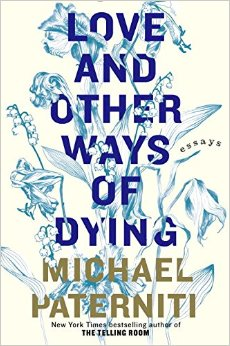
Our sponsor this week is Random House, which has just released a fantastic new collection of stories by Longform regular Michael Paterniti, Love and Other Ways of Dying.
In the remote Ukranian countryside, Paterniti picks apples (and faces mortality) with a real-life giant; in Nanjing, China, he confronts a distraught jumper on a suicide bridge; in Dodge City, Kansas, he takes up residence at a roadside hotel and sees, firsthand, the ways in which the racial divide turns neighbor against neighbor. (You can hear Paterniti talking about many of these pieces on Longform Podcast #93.)
George Saunders has described Paterniti's writing as “expansive and joyful” and Dave Eggers has called him “one of the best living practitioners of the art of literary journalism.” Needless to say, everyone here at Longform is a huge fan.
Buy the Book:</a></em>
Amazon • Barnes & Noble • Powell's • Kindle • iBooks
Helen Rosner is a food correspondent at The New Yorker.
“I believe the things that are really important to me are structure over all and—forgive me, I’ve said this on other podcasts before—if I were going to get a tattoo this is what I would get a tattoo of is that it doesn’t matter what you say, it only matters what they hear. It’s my job to make sure the gulf between those two things is as narrow as possible and there’s as little ambiguity between what I say and what you hear. It’s never easy, but it’s certainly easier in the realm of arguable objectivity. To create emotion in a reader requires a huge amount of really thoughtful work on the part of the writer in a way that forces you as a writer to remove yourself from the emotion you’re creating in the reader. If I to set you up for sadness, I have to create emotional stakes. I have to create investment in whoever I’m talking about or whatever the story’s about. The craft of making stakes and setting up a potential downfall, a potential loss, whatever it may be I think is not something you can do well if you’re feeling the feeling you’re trying to create in the reader.”
Thanks to MailChimp, Read This Summer, and You Can't Make This Up for sponsoring this week's episode. Also: very rare, very exclusive Longform Podcast t-shirts are still available!
Alex Goldman is the co-host of Reply All.
“I am not the authority on the internet. I’m not an expert on particularly anything, except stuff that I like.”
Thanks to MailChimp, Squarespace, and Blinkist for sponsoring this week's episode.
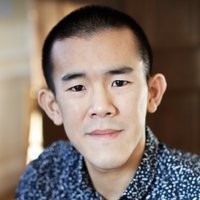
Ed Yong is the author of I Contain Multitudes and a science writer at The Atlantic. His most recent article is "How the Pandemic Will End."
“Normally when I write things that are about a pressing societal issue, those pieces feel like they’re about things that need to get solved in timeframes of, say, months or years. ... But now I’m writing pieces that are affecting people’s choices and lives, and hopefully the direction of the entire country, on an hourly basis. The changes I hope to see, I hope to see immediately. Like right now. And that does create a massive sense of urgency, a sense of pressing, incredibly high stakes. And it’s a burden.”
Thanks to Mailchimp and Pitt Writers for sponsoring this week's episode.
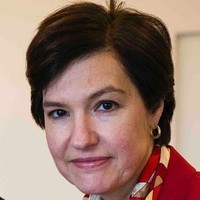
Susan Glasser, the former editor of Politico and Foreign Policy, writes the "Letter from Washington" column for the The New Yorker. Her most recent book, written with Peter Baker, is The Divider: Trump in the White House, 2017-2021.
“There’s a great benefit to leaving Washington and then coming back, or frankly leaving anywhere and then coming back. I think you have much wider open eyes. Washington, like a lot of company towns, takes on a logic of its own, and things that can seem crazy to the rest of the country, to the rest of the world, somehow end up making more sense than they should when you’re just doing that all day long, every day.”
James Fallows, a national correspondent for The Atlantic, and Deborah Fallows, a linguist and writer, are the co-authors of Our Towns: A 100,000-Mile Journey into the Heart of America.
“The credo of reporting—you know, what you don’t know till you show it—that’s my 'this-I-believe.' That’s the reason I’ve stayed in this line of work for this many decades because there’s nothing more fascinating that you can do but to serially satisfy your curiosity about things. What’s it like on an aircraft carrier? What’s it like in a Chinese coalmine? What’s it like in a giant data center in Wyoming? What is it like in all of these things? And journalism gives you a structural excuse to go do those.”
Thanks to MailChimp, MUBI, Best Self Journal, and Thermacell for sponsoring this week's episode. Also: Longform Podcast t-shirts are now available!
Kelefa Sanneh is a staff writer at The New Yorker. His book is Major Labels: A History of Popular Music in Seven Genres.
“I’m always thinking about how to not be that person at a party who corners you and tells you about their favorite thing and you’re trying to get away. It’s got to feel light and fun. And what that means in practice is writing about music for readers who don’t care about music, while at the same time writing something that the connoisseurs don’t roll their eyes too hard at.”
Emily Nussbaum is a television critic at The New Yorker.
"I actually feel this kind of crazy cause ... because TV is condescended to, has been put down and treated like it's junk, and TV deserves to have the kind of criticism that expects it to be great. To me it's a really engaging and satisfying cause, no matter whether I'm praising or criticizing something."</i>
Thanks to TinyLetter for sponsoring this week's episode!
</blockquote>
A technical, thrilling account of how Pinboard, a tiny bookmarking service, dealt with the fire hose of new users after news leaked that Yahoo would discontinue Pinboard’s massive rival, Delicious.
Sponsored
This week, Longform.org’s RSS feed is sponsored by forlue.com, a community news website about business.

Two days after the Japanese tsunami, after the waves had left their destruction, as rescue workers searched the ruins, news came of an almost surreal survival: Miles out at sea, a man was found, alone, riding on nothing but the roof of his house.
How one of the most maligned cast members in SNL history ended up a talking head on Fox News.
A profile of Steve Bannon — former naval officer and Goldman Sachs banker, executive chairman of Breitbart News, founding chairman of the Government Accountability Institute, and, as of yesterday, Donald Trump’s chief White House strategist.