The Golden Bough
In 1997, a logger-turned-activist named Grant Hadwin cut down a very special tree. Then he bought a kayak and disappeared.
Showing 25 articles matching best fc points to buy Buyfc26coins.com is FC 26 coins official site..KzUT.
In 1997, a logger-turned-activist named Grant Hadwin cut down a very special tree. Then he bought a kayak and disappeared.
A journey through a quixotic New Hampshire town teeming with libertarians, fake news, guns, and—possibly—furry invaders.
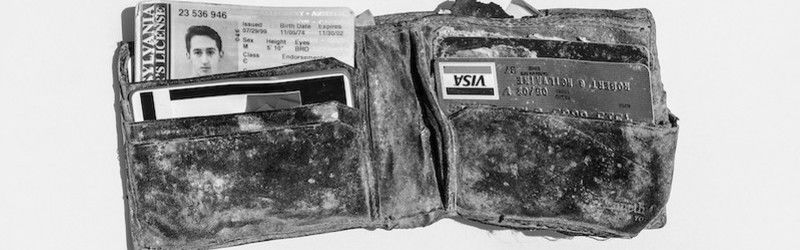
Grief, conspiracy theories, and one family’s search for meaning in the two decades since 9/11.
On the origin of the essay.
An interview:
Watkins: And then, all of a sudden, you notice that it appears that he is falling asleep and gasping for air—like he is snoring, basically. You could classify it as snoring or as gasping for air. You see his chest moving, and then I guess very quickly—maybe two minutes in—his chest stops moving. And we stand there, I guess, for another 10 minutes, and everybody is just kind of standing there. D Magazine: In total silence? Watkins: No one’s talking. No one’s saying anything. And then you notice that the condemned, he starts to turn this bluish color. So I guess that’s when all his functions have stopped. And then a doctor walks in and takes his vital signs and announces that the person is—he looks at the clock and announces, “The person died at 6:22.” And then they open the door and we all walk out.
A critical look at the contemporary art marketplace.
The trouble is that a business model has come to drive the entire art world, and like the corporate executive who regards the launch of each new product as a challenge to the success of the last one, because you must keep growing or you will die, the arts community finds itself in a state of permanent anxiety. There always has to be a new artist whom the media will embrace as enthusiastically as they embraced Warhol; there always has to be a show that will top the excitement generated by the last blockbuster at the Modern or the Met.
Brooke Jarvis is a contributing writer for The New York Times Magazine.
“Obsession is inherently interesting. We want to know why somebody would care so much about something that it could direct their whole life. ... When people care about something a lot, what can be more interesting than that to understand what drives those powerful emotions? ... Part of why I do this work is that I am able to get temporarily obsessed with a lot of different things and then move on to the next thing that I'm temporarily obsessed with. ... There's always a new question that I want to follow.”
Thanks to Mailchimp for sponsoring this week's episode.
Roger Bennett is a co-host of Men In Blazers and the author of (Re)born in the USA: An Englishman's Love Letter to His Chosen Home.
“So much of my work is about human tenacity. That value of perseverance, of driving onwards. I believe life is about darkness and happiness. I believe that nothing is given, you fight for everything. And how you operate in moments of doubt and darkness ultimately define you. So I talk a lot as a professional about tenacity. What I've never linked that to before was my own biography. What did surprise me when I read the book as not being about me, but just read it as a book, was how bloody tenacious I was in fleeting moments of real awfulness.”
Jacqueline Charles is the Caribbean correspondent at the Miami Herald.
Guest host Patrice Peck is a freelance journalist and writes the Coronavirus News for Black Folks newsletter.
"There are things that you see that if you start taking it in, you’re never going to stop and you’re not going to be able to do your job…I have family in all of these countries and when disaster strikes, you can’t help everyone. But what you hope is that with your pen, with your voice, with your recording of history…somebody somewhere will feel compelled to do something. So that’s what keeps me going."
Thanks to Mailchimp for sponsoring this week's episode.
Emma Carmichael, a former editor at Deadspin and The Hairpin, is the editor in chief of Jezebel.
"Online feminism has more and more rules lately. There are only so many things you can say. And while our opinions are getting more constrained online, personal feminism and face-to-face conversations are looser and more complicated and don't go by any rules. ... The ideal with Jezebel is getting to a point where you can say, 'This is what I think, so who gives a fuck.'"
Thanks to TinyLetter for sponsoring this week's episode.
Sponsored

Do you want to build a website, but don't know how? Try Squarespace.
Squarespace is the all-in-one platform that makes it fast and easy to create your own professional website or online portfolio. If you value beauitful design, simplicity, 24/7 customer support and the ability to sell merchandise, try Squarespace free for 14 days, no credit card required.
Thanks to Squarespace for sponsoring Longform this week.
Recently discharged, an undocumented immigrant discusses his treatment.
In a city with a large immigrant population, it is not rare for hospitals to have one or more patients who, for reasons unrelated to their medical condition, do not seem to leave. At Downtown, where a bed costs the hospital more than $2,000 a day, there are currently three long-term patients who no longer need acute care but cannot be discharged because they have nowhere to go. The hospital pays nearly all costs for these patients’ treatment. One man left recently after a stay of more than five years.
Audie Cornish is a journalist and the former host of NPR’s All Things Considered. Her new CNN Audio podcast is The Assignment.
“I think there is journalism inherent in an interview. Like the interview itself should be considered a piece of journalism. It isn't always. Sometimes the vibe is that it’s a little window dressing or that it's personality driven and I don't subscribe to that. I think that it has its own journalism. It's my journalism.”
Sponsored

Distance is a quarterly journal with long essays about design and technology, making this the most well-targeted advertisement ever.
Our second issue is out now, with essays from: Cassie McDaniel, about how designers can change the world in far-flung industries; Sharlene King, about homework’s role in our daily work; and Francisco Inchauste, about how to build more meaningful businesses.
Single copies and subscriptions are available at distance.cc. Thanks for reading.
For information about sponsoring Longform, click here.
Clint Smith is a poet and a staff writer for The Atlantic. His most recent book is How the Word Is Passed: A Reckoning with the History of Slavery Across America and his latest feature is “Monuments to the Unthinkable.”
“I've been to a lot of places that carry a history of death and slaughter and murder. I've been on plantations. I've been in execution chambers. I've sat on electric chairs. I've been on death row. But I have never experienced anything like what I experienced walking through the gas chamber in Dachau. I mean, there's reading books about the Holocaust, and then there's that. And that is something that I hope to continue doing for the rest of my life: putting my body where these things happen. Because it completely transforms your understanding of what it was like.”
Megha Rajagopalan is a senior correspondent for Buzzfeed News. She won a Pulitzer for her coverage of the Xinjiang detention camps.
“It’s not so much that I talk to [the Chinese government] to get information. It’s more that I talk to them to see how they think about things and what’s important to them and what’s their view of the world. … There are so many journalists that have been thrown out of China, so there’s very few people that are able to actually have those conversations. And in the U.S., there are these seismic decisions being made about China policy, and if you don’t talk to the people that run the country, it’s a problem.”
Thanks to Mailchimp for sponsoring this week's episode.
On Jonny Greenwood:
Greenwood is an anomaly: a musician who made his name with a rock band and who is now embraced by the modern-music establishment as an actual, serious composer. The night before the Alvernia session, he was onstage in an aircraft-hangar-size room at a steel plant in Krakow, performing the minimalist composer Steve Reich’s “Electric Counterpoint” for an audience that included Reich himself, as part of a weeklong new-music festival, Sacrum Profanum. (Reich is a fan; he praises Greenwood’s decision to have the string section play with guitar picks on “Popcorn Superhet” as “the first new approach to pizzicato since Bartok.”) He wasn’t the only performer at Sacrum Profanum with pop-music credentials — the bill also included the techno provocateur Aphex Twin and Adrian Utley, from the trip-hop band Portishead. But he was the only guy from a superfamous rock band whose singer has appeared on the cover of Rolling Stone.
Sponsored
This week’s sponsor is Pitt Writers, the fantastic, digitally focused MFA program at the University of Pittsburgh. A longtime partner of ours, Pitt Writers is now accepting applications for 2014. Here’s what you’ll get during your three years:
• World-class instruction and individual attention from award-winning writers of poetry, fiction, and nonfiction, including Jeanne Marie Laskas of GQ
• Opportunity to pitch book and story ideas to literary agents and editors in New York
• Classes in digital media
• A chance to intern with Longform
• Funding packages of up to $16,700 available
Get yourself in the mix: Apply by December 10th and follow Pitt Writers on Twitter and Facebook.
Katy Vine is an executive editor for Texas Monthly.
“This is a huge state. There’s so much, and it’s different everywhere you look. You just go to Houston and there’s worlds within worlds within worlds just within the one city. You go to San Antonio and you’re in a different country, and you go to Dallas, you’re in a totally different country. … It’s wild to me. It’s endlessly fascinating.”
Brian Howey is a freelance journalist who won the Polk Award for Justice Reporting after exposing a deceptive police tactic widely used in California. He began the project, which was eventually published by the Los Angeles Times and Reveal, as a graduate student in the UC Berkeley Graduate School of Journalism.
“It’s one thing to hear about this tactic and hear about parents being questioned in this way. It’s another thing entirely to hear the change in a parent’s voice when they realize for the past 20 minutes they’ve been speaking ill of a relative who’s actually been dead the entire time, and to hear that wave of grief and sometimes that feeling of betrayal that cropped up in their voice and how the way that they spoke to the officers afterwards changed.”
This is the fourth in a week-long series of conversations with winners of this year's George Polk Awards in Journalism.
Claudia Rankine is a poet, essayist, and playwright. She is the author of the new book, Just Us: An American Conversation.
“I began to wonder, why am I maintaining civility around things that are actually very important to me? This might be the only chance I get to stand up for myself. As Claudia. As a Black person. As a Black woman. As an American citizen. So what am I waiting for? What am I preserving when the thing I am supposedly preserving is also the thing that is on some level killing me?”
Thanks to Mailchimp for sponsoring this week's episode.
Michael Lewis has written for The New Republic, Vanity Fair and The New York Times Magazine. His latest book is Flash Boys.
“When you're telling a story, you're essentially playing the cards you're dealt. ... Sometimes the hand is very easy to play. Sometimes the hand is difficult to play. At the end, I just try to think, ‘Is there anything I would have done differently?‘ ‘Is there any trick I missed?’ If I don't have the feeling that I missed something big, I feel happy about the book.”
Thanks to TinyLetter and Audible for sponsoring this week's episode.
Wesley Morris is a critic at large for The New York Times, a staff writer for The New York Times Magazine, and the co-host of Still Processing. His latest article is "Last Taboo: Why Pop Culture Just Can’t Deal With Black Male Sexuality."
“You learn a lot of things about your sexuality at an early age. You know, I learned that your penis is a problem for white people, that you can’t be too openly sexual in general because that could get you in trouble because someone could misconstrue what you’re doing, and, in my case, I also knew I was gay. So I had to deal with, ‘Ok so my dick is a problem in general, and I’m not even interested in putting my penis where it’s supposed to go. This is going to be bad.’”
Thanks to Audible, Casper, Squarespace, and MailChimp for sponsoring this week's episode.
Taylor Lorenz just announced she is leaving her job covering internet culture for The Atlantic to join The New York Times.
“With technology and internet culture, I am more of an optimist than a lot of other people who cover those topics. It’s more ambiguous for me. It's more like, ‘This is the world we live in now and here are the pros and here are the cons. There are a lot of cons, but there are also these pros.’ I like how things shift and change under me. I like to see how things are constantly evolving.”
Thanks to MailChimp and Pitt Writers for sponsoring this week's episode.
David Haskell is the editor-in-chief of New York Magazine.
“Fingers crossed, knock on wood, we've got time here. You can't ever take that for granted, but I think it's fair to indulge a long-term perspective. More than fair, actually — I think it's part of the job, for me at least, to be plotting and dreaming years out. And to be fashioning the magazine toward that long-term vision as gingerly as I can without it breaking.”
Thanks to Mailchimp, Pitt Writers, Squarespace, and Literati for sponsoring this week's episode.