Showing 25 articles matching iraq podcast.

Sheera Frenkel and Cecilia Kang are reporters for the New York Times. They are coauthors of An Ugly Truth: Inside Facebook's Battle for Domination.

“There are two types of reporters. There are reporters who date and reporters who marry. I think both Cecilia and I are reporters who marry our sources and by that I mean they are lifelong sources. It’s not a relationship that you build quickly. It’s one where you have to really let them get to know you as a journalist, show them that you are always going to be honest and do what you say and protect their anonymity and that you’re not biased. I think some reporters make mistakes in that they try to curry favor with sources by writing things they think the sources will like and I think sources actually respect you more when you show them: no I am accurate and I am honest and I am objective and I’m actually going to check what you tell me so that I know it’s true and you know I am doing my homework on everything.”
Erika Hayasaki has written for The New York Times Magazine, Wired, and The Atlantic. Her new book is Somewhere Sisters: A Story of Adoption, Identity, and the Meaning of Family.

“I don’t subscribe to the belief that it’s our story because we’re the journalist that wrote it — especially when people are sharing these really intimate, deep, painful moments. That is not my story. That’s their story that they've collaborated in a way with me to share through these interviews.”

Javier Zamora is the author of Unaccompanied, a poetry collection, and Solito, a memoir.

“There was something that I felt eating away at me, which made me a very angry and volatile teenager. And I think I was an angry teenager because I had this trauma that nobody around me could talk about, and that I didn't have the right therapist to help me unpack. So the cheapest thing that I had was poetry.”

Robert Kolker is the author of Lost Girls and a contributing editor at New York.

"For better or for worse, my heart's not in the mystery. I want [the killer] to be caught—he's obviously a predator and he's unstable. But they all are. They're all messed up people who victimize other people and they all look normal. The art and science of catching serial killers has become more than slightly overblown in our society. And you know, I love Silence of the Lambs … but I'm not entirely sure that our obsession with who the serial killer is and why a serial killer does it is in proportion with how interesting they end up being."

Thanks to TinyLetter for sponsoring this week's episode.

</blockquote>

Evan Wright, a two-time National Magazine Award winner, is the author of Generation Kill.

"When people were killed, civilians especially, I realized I was the only person there who would write it down. I was frantic about getting names, and in the book there are a few Arabic names, some of the victims. Not that anyone cares. But I thought, 'At least somewhere there's a record of this.'"

Thanks to this week’s sponsors: TinyLetter and HostGator.

Josh Dean has written for GQ, Fast Company, New York, and more. His latest piece, "The Life and Times of the Stopwatch Gang," was just published by The Atavist.

“I sort of reject the whole idea of something being beneath me. There are obviously some stories I wouldn’t do or that I have no interest in, but this job is fun and should be fun. And I wouldn’t turn something down that seems like a fun thing for me to do just because maybe the story is not something that 10,000 people are going to tweet about. I don’t give a shit.”

Thanks to TinyLetter, Squarespace, Lynda and HP Matter for sponsoring this week's episode. If you would like to support the show, please leave a review on iTunes.

Alexey Kovalev is a Moscow-based journalist and the author of the recent article, “A Message to My Doomed Colleagues in the American Media."

“It’s really disheartening to see how little it takes for people to start believing in something that directly contradicts the empirical facts that they are directly confronting. The Russian TV channel tells you that the pill is red, but the pill in front of you is blue. It completely alters the perception of reality. You don’t know what’s real anymore.”

Thanks to MailChimp and Penn State World Campus.

Chip Kidd is a book designer and author. His most recent book is Only What's Necessary: Charles M. Schulz and the Art of Peanuts.

“The curious thing about doing a book cover is that you're creating a piece of art, but it is in service to a greater piece of art that is dictating what you're going to do. I may think I've come up with the greatest design in the world, but if the author doesn't like it, they win. And I have to start over.”

Thanks to The Standard Hotels, MailChimp, Mack Weldon, Prudential, The Great Courses Plus, and "The Message" for sponsoring this week's episode.

David Grann is a staff writer at The New Yorker. His new book is Killers of the Flower Moon: The Osage Murders and the Birth of the FBI.

“The more stories I reported over time, the more I just realized there are parts of the story I can’t always get to. You know, unless this is a reality show and there’s 18 cameras in every room, and people [talk] before they sleep, and maybe you have some mind-bug in their brain for their unconscious, there are just parts you’re just not gonna know. You get as close as you can. And so the struggle to me is to get as close as I can, to peel it back as close as I can, but understanding that there will be elements, there will be pieces, that will remain lingering doubts.”

Thanks to Stamps.com, Squarespace, and MailChimp for sponsoring this week's episode.

Patricia Lockwood is a poet and essayist. Her new book is Priestdaddy: A Memoir.

“[Prose writing is] strange to me as a poet. I’m like, ‘Well I guess I’ll tell you just what happened then.’ But the humor has to be there as well. Because in my family household…the absurdity or the surrealism that we have is in reaction to the craziness of the household. So something like your underwear-clad father with his hand in a vat of pickles, sitting in a room full of $10,000 guitars and telling you that he can’t afford to send you to college—that’s bad. That’s a sad scene. But it’s also totally a lunatic scene. It’s, just the very fact of it, all these accoutrements, all the elements of the scene—they are funny.”

Thanks to Audible and MailChimp for sponsoring this week's episode.

Zoe Chace is a reporter and producer at This American Life.

“Radio is a movie in your head. It’s a very visual thing. It’s a transporting thing—when it’s done well. And it’s louder than your thoughts. It is both of those things. It would just take me out of the place that I was, where I was lost and couldn’t figure things out. ... They had a very personal way of telling the story to you, so that you kind of felt like you’re there with them. Like it’s less lonely, it’s literally less lonely to have them there. And that felt really good.”

Thanks to MailChimp, Mubi, Squarespace, and Casper for sponsoring this week's episode.

Charlie Warzel is a senior tech writer for BuzzFeed.

“Part of the big tech reckoning that we’re seeing since the election isn’t really about the election, it isn’t really about Trump or politics. It’s more about this idea that: Wow, these services have incredibly real consequences in our everyday lives. I think that realization is really profound and is going to shape how we try to figure out what it means to be online from here on out. To keep stories relevant, we have to keep that in mind and try to figure out how to speak to that audience and guide them through that reckoning.”

Thanks to MailChimp and Tripping.com for sponsoring this week's episode.

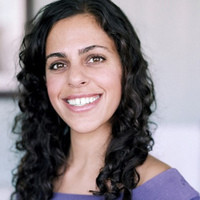
Samin Nosrat is a food writer, educator, and chef. She is the author of Salt, Fat, Acid, Heat and hosts a series by the same name on Netflix.

“I kind of couldn’t exist as just a cook or a writer. I kind of need to be both. Because they fulfill these two totally different parts of myself and my brain. Cooking is really social, it’s very physical, and also you don’t have any time to become attached to your product. You hand it off and somebody eats it, and literally tomorrow it’s shit. … Whereas with writing, it’s the exact opposite. It’s super solitary. It’s super cerebral. And you have all the time in the world to get attached to your thing and freak out about it.”

Thanks to MailChimp, and Pitt Writers for sponsoring this episode.

Cord Jefferson is a journalist turned television writer whose credits include Succession, The Good Place, and Watchmen.

“I’m a fearful person. I’m afraid of a lot of things. I’m afraid of how people perceive me, I’m afraid of hurting myself, I’m afraid of heights. I’m afraid of a lot. Bravery does not come naturally to me. But the moments when I feel like I’ve done the best in my life and been the proudest of myself are when I’ve overcome that fear to do something that scares me.”

Thanks to Mailchimp, Pitt Writers, and Squarespace for sponsoring this week's episode.

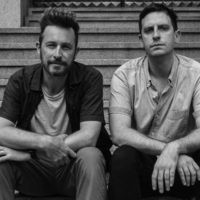
Baynard Woods and Brandon Soderberg are the co-authors of the new book I Got A Monster: The Rise and Fall of America's Most Corrupt Police Squad.

“We really wanted to create some kind of leftist, anti-racist true crime story that we really haven’t seen. The conventions of the thriller often smuggle in all of this really right-wing, pro-police propaganda that all of our cops were raised on—the story of cops having to crash cars and break rules in order to get the bad guys. We wanted to take that and subvert it, using its methods to blow it up from the inside while also being rigorously reported.”

Thanks to Mailchimp and The Jordan Harbinger Show for sponsoring this week's episode.

Ben Smith is the editor-in-chief of BuzzFeed.

“I do think as a reporter in general, most of what we deal in is ephemera. And I love that. I mean that’s the business, and I don’t think there’s anything wrong with that. In fact, I think that’s a plus and something that shapes how you succeed at the job because you realize that this thing you’re writing is about this moment and right now, and about its place in the conversation. It’s not some piece of art to hang on the wall.”

Thanks to MailChimp, Harry's, and Reveal, and Home Chef for sponsoring this week's episode.

Gabriel Sherman is the national affairs editor at New York and the author of the New York Times best-seller The Loudest Voice in the Room: How the Brilliant, Bombastic Roger Ailes Built Fox News—and Divided a Country.

“There was a time when we got death threats at home. Some crank called and said, ‘We’re gonna come after you. You’re coming after the right, we’re gonna get you.’ That was scary because, again, you don’t know if it’s just a crank when you have right wing websites that are turning you into a target. You know, it’s one thing if they do it with a politician. They have security or handlers—I don’t have any of that.”

Thanks to MailChimp and Audible for sponsoring this week's episode.

Nicholson Baker is the author of 18 books of fiction and nonfiction. He has written for The New Yorker, Harper’s, and many other publications. His latest book is Baseless: My Search for Secrets in the Ruins of the Freedom of Information Act.

"In the end, I don’t care how famous you get, how widely read you are during your lifetime. You’re going to be forgotten. And you’re going to have five or six fans in the end. It’s going to be your grandchildren or your great-grandchildren are going to say, Oh, yeah, he was big. … So I think the key is, write what you actually care about. Because in the end, you’re only doing this for yourself. … So maybe do your best stuff for yourself and for the three, four, five people who know in the coming century that you ever existed. That’s all you need to do."

Thanks to Mailchimp for sponsoring this week's episode.

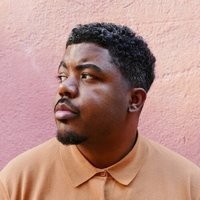
Donovan X. Ramsey is a staff writer for the Los Angeles Times. His work has appeared in GQ, WSJ Magazine, The Atlantic, and many other publications.

“I actually got into writing about criminal justice ... because I was curious about Black life. But that meant the only way I was able to do that was I had to kind of do this really often depressing slice of Black life. And there’s so much more. And there’s so much beauty in the lived experiences of Black people. … There are so many stories that just never get told about Black life. One, I have a connection to being a Black person, but then being a Black person who has the benefit of a really good education, and I’ve been given some shots here and there… it feels like a duty. If I’m not going to tell these stories, then who?”

Thanks to Mailchimp for sponsoring this week's episode.

Vanessa Grigoriadis is a contributing editor at Vanity Fair and New York.

On the art of the celebrity interview: "People are smart. Particularly these people. They're sitting there thinking, 'When is she going to drop that question?' They know what you're doing. So the way I think about it is: let's have an actual, genuine, human, interesting conversation. ... [Journalists] have all sorts of schemes of what they think works for them. My scheme is no scheme."

Thanks to this week's sponsors, TinyLetter and Audible!

</blockquote>

Lewis Lapham, formerly the editor of Harper's, is the founder of Lapham's Quarterly.

"The best part of my job was to come across a manuscript. You never knew what would show up. ... I always had the sense of opening a present, hoping to be both delighted and surprised. Often I was disappointed. But when I wasn't, it was a lot of fun. And word got around that I was that kind of an editor, that I was willing to try anything if you could make it interesting."

Thanks to TinyLetter and GoDaddy for sponsoring this week's episode.

Adrian Chen is a staff writer at Gawker and editor at The New Inquiry.

"I've never written a magazine feature. [My writing is] similar, in that I try to bring in the bigger issues, and not just, you know, be funny or tell a sensational story. But I think it's also kind of rough and sketchy in the way that blog posts are. Longform blog writing is like, I don't spend a long time editing or looking it over. It's like, just type as fast as you can and try to cram all of your research in, and then it goes up."

Thanks to TinyLetter for sponsoring this week's episode!

Jonah Weiner, contributing editor at Rolling Stone, pop critic at Slate, and contributor to The New York Times Magazine and The New Yorker.

"The thing that I've found useful is really actually to delete everything that I've written and go at it fresh, and re-envision it again: this is going to be my new lede now. That's really the best way to do it, because if there are these vestigial sentences, and vestigial sequences or paragraphs that are in the draft, for me, that's just going to snap me back to where my head was at, in an unproductive way ... Often, I'll find that that is just this great cure-all. Just delete it all, go for a walk or whatever, and then sit down and start writing an entirely different feature about the exact same subject."

Thanks to TinyLetter for sponsoring this week's episode!

Jon Mooallem is a contributing writer at the New York Times Magazine and author of an upcoming book on people and wild animals.

"If I just kind of assume it's going to work out one way or another, it can be a real fun adventure to find the path from here to there. You know, hopefully just as you do more, that excitement starts to outweigh the horror of messing up."

Monika Bauerlein and Clara Jeffery are the co-editors of Mother Jones.

"We probably pay more attention to our fact-checking and our research than almost everybody in our industry. By the time we publish stuff, we make sure it's unimpeachable because people would like to impeach it."

Thanks to TinyLetter and HostGator for sponsoring this week's episode.