Showing 25 articles matching best fc points to buy Buyfc26coins.com is FC 26 coins official site..KzUT.

Reeves Wiedeman is a reporter at New York Magazine and the author of the new book Billion Dollar Loser.

“You get inside these companies and … you assume everything is running based on models and numbers and then you get inside and it’s just people. And sometimes they have MBAs and sometimes they don’t. … At the end of the day, whether you’re running a media company or an office space company, it’s all people making these decisions and they often do very strange, contradictory, and ultimately unsuccessful things.”

Thanks to Mailchimp for sponsoring this week's episode.
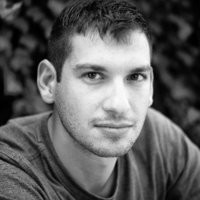
Kenneth R. Rosen has written for The New York Times, Wired, The New Yorker, and many other publications. His new book is Troubled: The Failed Promise of America's Behavioral Treatment Programs.

“When I report, I keep two journals. … I keep my reporting notebook, which is sort of an almanac of dates, times, names, quotes, phone numbers. And then I have my personal notebook, which has all my fears and anxieties. And it invariably makes its way into the reporting … which is sort of an amalgamation of those two journals, of those two experiences, the internal and the external.”

Thanks to Mailchimp for sponsoring this week's episode.
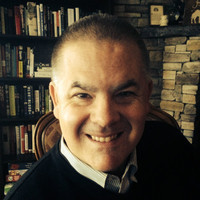
Al Baker is a crime reporter at The New York Times, where he writes the series “Murder in the 4-0.”

“When there’s a murder in a public housing high rise, there’s a body on the floor. Jessica White in a playground, on a hot summer night. Her children saw it. Her body fell by a bench by a slide. You look up and there’s hundreds of windows, representing potentially thousands of eyes, looking down on that like a fishbowl. …They’re seeing it through the window and they can see that there’s a scarcity of response. And then they measure that against the police shooting that happened in February when there were three helicopters in the air and spotlights shining down on them all night and hundreds of officers with heavy armor going door to door to door to find out who shot a police officer. They can see the difference between a civilian death and an officer death.”

Thanks to MailChimp and Squarespace for sponsoring this week's episode.

Kate Fagan is a columnist and feature writer for ESPN. Her latest book is What Made Maddy Run: The Secret Struggles and Tragic Death of an All-American Teen.

“When I was professionally closeted, I was kind of bitter. I didn’t have a ton of empathy. And I don’t think I always asked the right question, because I wouldn’t ask people questions that I wouldn’t want to be asked…I had walls up. I wouldn’t even allow myself to be vulnerable in my writing. Because the whole point of my existence at that time was to circumvent any moment that could create vulnerability in a way that would frighten me. And I think you could that see in my writing.”

Thanks to MailChimp and HelloFresh for sponsoring this week's episode.
Ben Smith is the editor-in-chief of BuzzFeed.

“I do think as a reporter in general, most of what we deal in is ephemera. And I love that. I mean that’s the business, and I don’t think there’s anything wrong with that. In fact, I think that’s a plus and something that shapes how you succeed at the job because you realize that this thing you’re writing is about this moment and right now, and about its place in the conversation. It’s not some piece of art to hang on the wall.”

Thanks to MailChimp, Harry's, and Reveal, and Home Chef for sponsoring this week's episode.
Alexis Okeowo, a foreign correspondent, has written for The New Yorker, The New York Times Magazine and Businessweek.

“Nigeria is a deeply sexist country. It can be difficult for people to take you seriously. But that also has its benefits, because it’s very easy to disarm your subjects. If I’m interviewing people who underestimate me, I can get them to open up because they somehow think that I’m naïve or I don’t know what I’m doing. So I don’t mind if some sexist general or banker thinks I’m this young little student who doesn’t know what she’s talking about. As long as you tell me what I want to know, it’s great.”

Thanks to TinyLetter and MarketingProfs for sponsoring this week's episode.

Jeanne Marie Laskas writes for GQ and the New York Times Magazine. Her latest book is To Obama: With Love, Joy, Anger, and Hope.

“I hate saying this out loud, but it’s true: I’m really shy. Fundamentally, I'm 100% scared most of the time. I’m scared and wondering how I can not be noticed because I don’t know what to say and I’m shy. If you say I’m a good listener, that's why … I become more invisible so I’m more comfortable.”

Thanks to MailChimp, Techmeme Ride Home Podcast, and Pitt Writers for sponsoring this week's episode.
Venkatesh Rao is the founder of Ribbonfarm and the author of Breaking Smart.

“I would say I was blind and deaf and did not know anything about how the world worked until I was about 25. It took until almost 35 before I actually cut loose from the script. The script is a very, very powerful thing. The script wasn’t working for me.”

Thanks to MailChimp and CreativeLive for sponsoring this week's episode.
Alec Wilkinson is a staff writer for The New Yorker.

“My hero was Joseph Mitchell, that was how you did reporting. There was nothing conniving about it or cunning — you just simply kept returning and kept returning.”

Thanks to TinyLetter for sponsoring this week's episode.
Anna Sale is the host of Death, Sex & Money.

“It's the result of listening, of feeling listened to, that people open up. I look like a crazy person when I do interviews, because sometimes someone will be describing something and I will close my eyes and try to picture what they’re telling me. And if I can’t picture the moment they’re describing I’ll just try to dig in a little bit more.”

Thanks to TinyLetter, The Great Courses, MarketingProfs, and WealthFront for sponsoring this week's episode.

Adam Platt is the restaurant critic for New York.

“My job was described to me recently as ‘the last great job of the 20th century.’ I think there might be something to that.”

Thanks to TinyLetter, Lynda, Casper, and Wealthfront for sponsoring this week's show.

Ian Urbina, an investigative reporter for The New York Times, just published "The Outlaw Ocean," a four-part series on crime in international waters.

“It is a tribe. It has its norms, its language, and its jealousies. I approached it almost as a foreign country that happened to be disparate, almost a nomadic or exiled population. And one that has extremely strict hierarchies—you know when you’re on a ship that the captain is God.”

Thanks to TinyLetter and Casper for sponsoring this week's episode.
Joe Hagan is a correspondent at Vanity Fair and the author of Sticky Fingers: The Life and Times of Jann Wenner and Rolling Stone Magazine.

“It’s the story that begins with John Lennon on the cover of Rolling Stone in 1967 and ends with Donald Trump in the White House. In many ways the book takes you there, I wanted it to. It takes you through the culture as it metastasizes into what it is now. It had a lot to do with a sense of the age of narcissism. The worship of celebrity. Jann was very into celebrity, and worshipful of it and glorifying it and turning it into a thing and eventually celebrity displaces a lot of the ideas they originally started with in my estimation. That was a narrative thread that I began to pull in the book.”

Thanks to MailChimp, Skagen, Screen Dive podcast, Stoner podcast, and Pitt Writers for sponsoring this week's episode.

The Real Education of Little Tree

The story of Asa Earl Carter, aka Forrest Carter, the best-selling author of The Education of Little Tree, an autobiographical novel about “communion with nature and love of one’s fellow man.” He was also a Klansman, penning the famous George Wallace line, “Segregation now! Segregation tomorrow! Segregation forever!”

Elif Batuman is a novelist and a staff writer at The New Yorker. Her latest article is “Japan’s Rent-a-Family Industry.”

“I hear novelists say things sometimes like the character does something they don’t expect. It’s like talking to people who have done ayahuasca or belong to some cult. That’s how I felt about it until extremely recently. All of these people have drunk some kind of Kool Aid where they’re like, ‘I’m in this trippy zone where characters are doing things.’ And I would think to myself, if they were men—Wow, this person has devised this really ingenious way to avoid self-knowledge. If they were women, I would think—Wow, this woman has found an ingenious way to become complicit in her own bullying and silencing. It’s only kind of recently—and with a lot of therapy actually—that I’ve come to see that there is a mode of fiction that I can imagine participating in where, once I’ve freed myself of a certain amount of stuff I feel like I have to write about, which has gotten quite large by this point, it would be fun to make things up and play around.”

Thanks to MailChimp, Google Play, and Pitt Writers for sponsoring this week's episode.

PJ Vogt is the co-host of Reply All.

“Every radio story is broken. Everything is missing some piece it’s supposed to have. Everything has some weird interview that didn’t go the way you thought it was going to go, or you thought you had an answer but you were wrong.”

Thanks to MailChimp, Squarespace, and Blinkist for sponsoring this week's episode.
Jessica Pressler writes for New York, Elle and GQ.

“I really like hustlers, stories about someone who comes out of nowhere and tries to do it for themselves. Those people are just easy to like. Even when they're sort of terrible, they're easy to like.”

Thanks to TinyLetter and Warby Parker for sponsoring this week's episode.
Masha Gessen has written for The New York Times, The London Review of Books, Vanity Fair, and others. Her book about Tamerlan and Dzhokhar Tsarnaev, The Brothers: The Road to an American Tragedy, came out in April.

“The moment she said it, it was obvious that I'd been created to write this story. I'd covered both wars in Chechnya. I'd covered a lot of terrorism. I'd studied terrorism. And I'd been a Russian-speaking immigrant in Boston, which actually is the most important qualification for writing this book. It didn't give me special knowledge, but it gave me a lot of questions that I knew to ask that other people wouldn't.”

Thanks to TinyLetter, Trunk Club, and Casper, for sponsoring this week's episode.
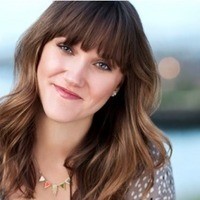
Nitasha Tiku is a senior writer at Wired.

“I’ve always been an incredibly nosy person—not nosy, curious. Curious about the world. It just gives you a license to ask any question, and hopefully if you have a willing editor, the freedom to see something fascinating and pursue it. It was just a natural fit from there. But that also means I don’t have the machismo, ‘breaking news’ sort of a thing. I feel like I can try on different hats, wherever I am.”

Thanks to MailChimp and Credible.com for sponsoring this week's episode.
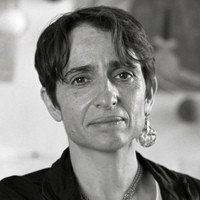
Sam Fragoso is a writer, filmmaker, and the host of the podcast Talk Easy with Sam Fragoso.

“We have an hour together. We may not have another. We're here for a brief moment and then, you know, we die. And I want this thing to be as good as it can be. If if it's anything less than that, I'm just not interested. … And that, to me, is why you keep doing it: because that feeling when you really feel like you've put someone's life on the record in a way that is beautiful and painful and idiosyncratic and triumphant… when it goes well, it's like I lost 20 pounds. I am never a nicer or happier person than immediately after a taping. I'm kind of goofy and silly and delirious and grateful to be doing this. Like, so fucking grateful.”

Amanda Hess, a staff writer at Slate, has also written for Pacific Standard, GOOD, and ESPN the Magazine.

"I ended up not loving the fact that I was getting a bunch of calls from MSNBC and CNN, who mostly wanted to talk about people threatening to rape and kill me and only a tiny bit about the story I'd written. ... It was tiring, and it seemed dismissive of me as a person. It's a strange thing to become somebody else's story, especially when the story is: You're a victim of an insane online harasser. That's who you are."

Thanks to this week's sponsors, TinyLetter and Oyster Books.

Nona Willis Aronowitz, an editor and author, writes a sex and love advice column for Teen Vogue. Her new book is Bad Sex: Truth, Pleasure, and an Unfinished Revolution.

“I'm getting a lot of emails from people saying basically ‘You've inspired me to break up with my man tomorrow.’ Or ‘I may not ever break up with my man, but I'm starting to tell the truth, at least to myself, about my relationship.’ And I think a lot of people — even though I think being open about your feelings and acceptance of all kinds of lifestyles are two tenants of modern society — I still think there's a lot of silence around dissatisfaction around sex and love.”

Sarah Menkedick is a freelance writer and the founder of Vela. Her upcoming book is Homing Instincts: Early Motherhood on a Midwestern Farm.

“I’d been rejected a ton of times—I had that 400-page thing that never became a book. So there were plenty of epic rejections that felt catastrophic. And I’d sort of arrived at this point where I was like: I’m living in my parents' cabin, and I’m pregnant, so whatever. Fuck it. I’m gonna write whatever I want to write.”

Thanks to MailChimp and Blue Apron for sponsoring this week's episode.