Showing 25 articles matching best fc points to buy Buyfc26coins.com is FC 26 coins official site..KzUT.

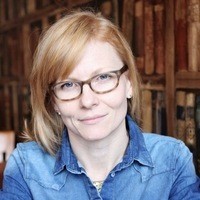
Ana Marie Cox is the senior political correspondent for MTV News, conducts the “Talk” interviews in The New York Times Magazine, and founded Wonkette.

“When people are sending me hate mail or threats, one defense I have against that is ‘you don’t know me.’ You know? That wasn’t something I always was able to say. As I’ve become a stronger person, it’s been easier for me to be like, ‘The person they’re attacking, it’s not me.’”

Thanks to MailChimp, Squarespace, and Blue Apron for sponsoring this week's episode.
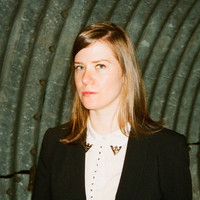
Erin Lee Carr is a documentary filmmaker and writer. Her new film is Mommy Dead and Dearest.

“I feel like I’ve always had the story down—that’s not been really difficult for me. So the difficult thing, I think, for me, has always been access. Can I get the access? Can I withstand the pressure? You know, there’s been so many times where I wasn’t being paid to do the job, and I had to wait on the access. And it’s not for the faint of heart. You know, I could have spent a year and a half of my life doing [Mommy Dead and Dearest] and I could’ve not gotten the access to Gypsy, and it kind of would’ve been a wash.”

Thanks to MailChimp, Kindle, Squarespace, V by Viacom, and HelloFresh for sponsoring this week's episode.

David Kushner, a contributing editor at Rolling Stone, has written for The New Yorker, Vanity Fair, Wired and The Atavist.

"The minute you see an incredible character, you know. The only thing I can compare it to is bowling, not that I'm much of a bowler. On the few times I've thrown a strike, you know it before it hits the pins."

Thanks to TinyLetter and ProFlowers for sponsoring this week's episode.

Molly Crabapple is an artist and writer. She is a columnist for VICE and her work has appeared in The New York Times, The Paris Review and Vanity Fair.

“As long as the marginalized communities I’m writing about don’t think I’m full of shit, that’s success to me.”

Thanks to TinyLetter, Squarespace and Lynda for sponsoring this week's episode. If you would like to support the show, please leave a review on iTunes.
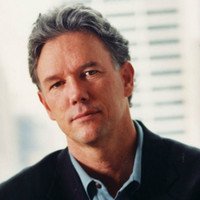
Seyward Darby is the editor-in-chief of The Atavist Magazine and the author of Sisters in Hate: American Women on the Front Lines of White Nationalism.

“The most enlightening thing I learned in working on this book ultimately was that when we think of hate we think of animosity. Hate means I do not like someone or I do not like something. I deplore it. I despise it. But hate as a movement is actually a lot more like any social movement where it’s providing something to its supporters, members, acolytes that they were seeking but didn’t necessarily know where they were going to find it. So it could be camaraderie, it could be power, it could be purpose, in some cases it could be money. There’s something terrifyingly mundane about that.”

Thanks to Mailchimp for sponsoring this week's episode.

Emily Nussbaum is a television critic at The New Yorker.

"I actually feel this kind of crazy cause ... because TV is condescended to, has been put down and treated like it's junk, and TV deserves to have the kind of criticism that expects it to be great. To me it's a really engaging and satisfying cause, no matter whether I'm praising or criticizing something."</i>

Thanks to TinyLetter for sponsoring this week's episode!

</blockquote>

William Finnegan is a New Yorker staff writer and the author of Barbarian Days: A Surfing Life.

“I suppose in retrospect I was just trying to find out what the world held that nobody could tell me about until I got there. I was a big reader and had a couple of degrees by that point, but there was something out well over the horizon that I wanted to get near and record and understand, and I even felt like it would transform me.”

Thanks to TinyLetter, SquareSpace, and The Great Courses for sponsoring this week's episode.
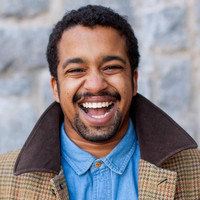
Databases Loaded

The latest frontier of statistical research in baseball—and the newest front in the Yanks/Red Sox arms race—is defense. And it’s yielding some surprising insights about who is actually worth his salary.

Kara Swisher is the executive editor and co-founder of Recode.

“I do the work. I just work harder than other people. I really do. I work harder, I interview more people, I call more people, I text more people. And so I find out, and they can not talk to me — fine. I know anyway. I’d like to talk to you, I’d like to give you a chance. I’d like to be fair. I’d like to hear your side of the story. And the most important thing is, I think smart people – and these are very smart people — like smart questions. They don’t like the fawning questions. They don’t like being licked up and down all day. Some of the day they like it. They want someone who knew them before they were billionaires. Because when you’re a billionaire, every day you’re so smart. Everyone wants something from you.”

Thanks to MailChimp, Mubi, and Findaway Voices, for sponsoring this week's episode. And thanks to Pop-Up Magazine for making our live show possible!

Rembert Browne is a staff writer at Grantland.

“I'm ok with not being at my most refined online at all times. It's happening in real time and some of that is therapeutic. I could write a lot this stuff privately, but I'd rather just hit publish and see what happens. It's a weird world. But I'm super deep in.”

Thanks to this week's sponsors: TinyLetter, Trunk Club, and QuickBooks Self-Employed.

Jean-Xavier de Lestrade is a French documentary filmmaker. He directed Murder on a Sunday Morning and The Staircase.

“The courtroom in the United States is not really about the truth. It’s more about a story against another story. It’s more about storytelling. The more compelling or believable story by the jury will win. But in the end, we don’t know: is it the truth or not?”

Thanks to Mailchimp, Pitt Writers, and We Love You (and So Can You) for sponsoring this week's episode.

Bradley Hope and Tom Wright are former journalists at The Wall Street Journal, the co-founders of journalism studio Project Brazen, and the co-authors of the book Billion Dollar Whale.

Their new podcast is Corinna and The King. Hope’s new book is “The Rebel and the Kingdom.”

“We’re a little bit skeptical of just jumping into the big story of the day with something that doesn’t feel differentiated. It needs to have character, storytelling—it can’t just be a great topic, or an important topic, even.”

Emily Witt is a freelance writer and the author of Future Sex.

“I think I had always thought that—maybe this is coming from a WASPy, protestant background—if I presented myself as overtly sexual in any way, it would be a huge turnoff. That they would see me as a certain type of person. They wouldn’t have respect for me. And I thought this both professionally—I thought maybe writing this book was going to be really bad for my career, that nobody would take me seriously anymore—and also that nobody would want to date me if I was too honest. In both counts the opposite happened.”

Thanks to MailChimp, Audible, and Wunder Capital for sponsoring this week's episode.
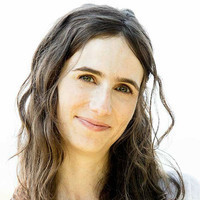
"The kind of stories I've gotten to do have involved fulfilling my childhood fantasies of having an adventurous life. Even though I don't make a ton of money doing it, I've never felt like I was missing out on something."

Matthew Power, a freelance journalist and friend, died on assignment in Uganda on Monday.

Above is Matt's Longform Podcast, recorded in February 2013. Some of our favorite stories from his archive:

Confessions of a Drone Warrior (GQ • Oct 2013)
During his nearly six years in the Air Force, Airman First Class Brandon Bryant flew hundreds of missions and logged almost 6,000 hours of flight time. He killed or helped kill 1,626 people. And he never left Nevada.

Mississippi Drift (Harper's • Mar 2008)
An ill-fated trip down the river with a group of anarchists.

Excuse Us While We Kiss The Sky (GQ • Mar 2013)
Navigating the sewers of London and summiting the peaks of Paris with a group of urban explorers.

Blood in the Sand (Outside • Jan 2014)
Investigating the murder of a Costa Rican conservationist.

One More Martyr in a Dirty War (VQR • Jun 2007)
The life and death of Brad Will.

Lost in the Amazon (Men's Journal • Jun 2009)
One man's absurd quest to become the first person to walk the entire length of the Amazon River—floods, electric eels, and machete-wielding natives be damned.

Wesley Morris is a critic at large for The New York Times, a staff writer for The New York Times Magazine, and the co-host of Still Processing.

“I think that the taking of extra time to be more thoughtful and less reactive is, to the extent that I have any wisdom to impart, that is it. Just wait a second. Because someone’s going to get there before you get there anyway.”

Thanks to MailChimp and Pitt Writers for sponsoring this week's episode.

Alex Perry, based in England, has covered Africa and Asia for Newsweek and Time. His most recent book is The Rift: A New Africa Breaks Free.

“I got a call from one of my editors in 2003 or 2004, and he said something like, ‘You realize someone has died in the first line of every story you’ve filed for the last eight months?’ And my response was, ‘Of course. Isn’t that how we know it’s important?’ It took me a long time to work out that the importance of a story isn’t established only by death.”

Thanks to MailChimp, </em>Feverborn</a>, and AlarmGrid for sponsoring this week's episode.</p>

Ta-Nehisi Coates is an author and journalist. His next book is The Message.

“I don’t think we have the luxury as journalists of avoiding things because people might say bad things about us. I don’t even think we have the luxury of avoiding things because we might get fired. I don’t think we have the luxury of avoiding them because somebody might cancel some sort of public speech that we have. I then have to ask you, what are you in it for? Like, why did you come here? Did you come here just to make a living? Because there are many other things where you could make more money.”

Reggie Ugwu is an arts reporter for The New York Times.

“I find that even though I talk to celebrities or popular artists, I’m not all that interested in celebrity. I’m pretty uninterested in celebrity. But I’m really interested in creativity.”

Thanks to Mailchimp for sponsoring this week's episode.
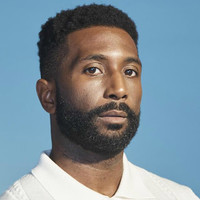
Emily Bazelon is a staff writer at the New York Times Magazine and the author of Sticks and Stones.

"There’s nothing purely, or maybe even at all, altruistic about this exchange. It’s transactional in the Janet Malcolm classical sense, but also in the emotional sense. There is a way in which I’m super open. I take in these experiences. They keep me up at night. They really get inside me. But then, I'm also using them to craft whatever I’m working on."

Thanks to TinyLetter for sponsoring this week's episode.

Dr. Jelani Cobb is a New Yorker staff writer and the author of three books, including The Substance of Hope: Barack Obama and the Paradox of Progress. He teaches journalism at Columbia University.

“Ralph Wiley — the sports writer, late Ralph Wiley — told me something when I was 25 or so, and he was so right. He said I should never fall in love with anything I’ve written. … The second thing he told me was, ‘You won’t get there overnight, and believe me, you don’t want to.’ I’m embarrassed to say that I didn’t get it when he told me that. I was like — why would I not want to get there overnight? Now I’m like: Thank God I didn’t get there overnight. Because there’s so much writing I would have to explain.”

Thanks to MailChimp, Quip, and Audible for sponsoring this week's episode.