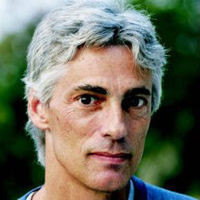
Showing 25 articles matching iraq podcast.

Alec Wilkinson is a staff writer for The New Yorker.

“My hero was Joseph Mitchell, that was how you did reporting. There was nothing conniving about it or cunning — you just simply kept returning and kept returning.”

Thanks to TinyLetter for sponsoring this week's episode.
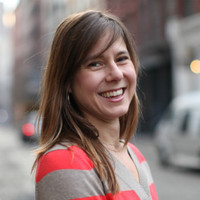
Anna Sale is the host of Death, Sex & Money.

“It's the result of listening, of feeling listened to, that people open up. I look like a crazy person when I do interviews, because sometimes someone will be describing something and I will close my eyes and try to picture what they’re telling me. And if I can’t picture the moment they’re describing I’ll just try to dig in a little bit more.”

Thanks to TinyLetter, The Great Courses, MarketingProfs, and WealthFront for sponsoring this week's episode.

Susie Cagle is a journalist and illustrator.

“I don’t really know what it was that made me not quit. I still kind of wonder that. There have been many times over the last couple of years even, as things are taking off in my career, things are going well, I’m writing about wonderful things that are interesting to me, and I still wonder—should I be doing this? What the hell is next year gonna look like?”

Thanks to MailChimp, FreshBooks, and AlarmGrid for sponsoring this week's episode.

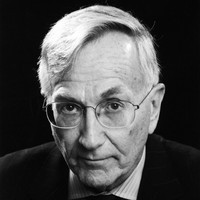
Seymour Hersh is a Pulitzer Prize-winning journalist and the author of The Killing of Osama Bin Laden.

“The government had denied everything we said. We just asked them and they said, ‘Oh no, not true, not true.’ That’s just—it’s all pro forma. You ask them to get their lie and you write their lie. I’m sorry to be so cynical about it, but that’s basically what it comes to.”

Thanks to MailChimp, Johnson & Johnson, Freshbooks, Trunk Club, and Squarespace for sponsoring this week's episode.

Nikole Hannah-Jones covers civil rights for The New York Times Magazine.

“I don’t think there’s any beat you can cover in America that race is not intertwined with—environment, politics, business, housing, you name it. So, whatever beat you put me on, this is what I was going to cover because I think it’s just intrinsic. If you’re not being blind to what’s on your beat, then it’s part of the beat.”

Thanks to MailChimp's Freddie and Co., Audible, and Trunk Club for sponsoring this week's episode.

Krista Tippett is the host of On Being and the author of Becoming Wise: An Inquiry into the Mystery and Art of Living.

“Good journalists in newsrooms hold themselves to primitive standards when they’re covering religious ideas and people. They’re sloppy and simplistic in a way that they would never be with a political or economic person or idea. I mean they get facts wrong. They generalize. Because they don’t take it seriously, and they don’t know how to take it seriously.”

Thanks to MailChimp, Winc, and Squarespace for sponsoring this week's episode.

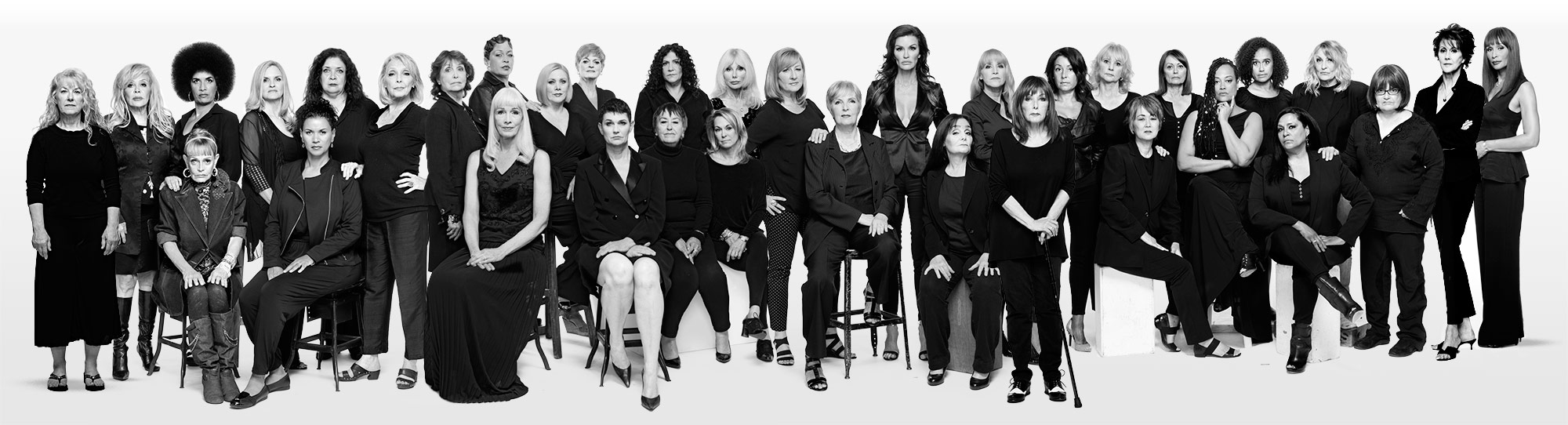
Noreen Malone wrote "Cosby: The Women — An Unwanted Sisterhood," this week's cover story in New York.

“We interviewed them all separately, and that was what was so striking: they all kept saying the same thing, down to the details of what they say Cosby did and how they processed it. Those echoes were what helped us know how to shape the story.”

Thanks to our sponsor, TinyLetter.

Naomi Klein is a senior correspondent at The Intercept and the author of The Shock Doctrine and No Logo. Her most recent book is On Fire: The (Burning) Case for a Green New Deal.

“I have no idea whether we will do this. All I know is there is a slim chance, a very slim chance, that we could make things a lot better than if we do nothing and just let it burn. The stakes of that are so high that I’m not going to spend my time trying to figure out whether our chances are good or not. I’m just gonna try to enlarge those chances.”

Thanks to Mailchimp, Literati, and Pitt Writers for sponsoring this week's episode.

Jiayang Fan is a staff writer for The New Yorker. Her latest article is a "How My Mother and I Became Chinese Propaganda."

"I think considering the unusual shape of our lives—the lives of my mother and I—from bare subsistence to one of the richest enclaves in America … it made me think about what the value of existence is. ... It made me wonder, What should a person be? And how should a person be? And being a writer has been a lifelong quest to answer those questions."

Thanks to Mailchimp for sponsoring this week's episode.

Latria Graham is a writer living in South Carolina. Her work has appeared in Outside, Garden & Gun, The Guardian, and The New York Times. Her latest essay is "Out There, Nobody Can Hear You Scream."

“My goal as a person—not just as a writer—is to be the adult that I needed when I was younger. That’s why I go and talk to college classes. That’s why I write some of these vulnerable things, to let people that are struggling know that they’re not on their own. … I have to be unmerciful to myself, I think, in order to do it. I really do try to dissect myself and my mistakes. And just kind of say, Here’s the full deck of my life. Take from it what you need. But I’m not holding out on you.

Thanks to Mailchimp for sponsoring this week's episode.

Stephanie Clifford is an investigative journalist and novelist who has written for The New York Times, The New Yorker, The Atlantic, and many other publications. Her most recent article is "The Journalist and the Pharma Bro."

“I think your job as a journalist—particularly with people who are in vulnerable situations or people who are not used to press—is to explain what the fallout might be."

Thanks to Mailchimp for sponsoring this week's episode.

Barrett Swanson is a contributing editor at Harper’s and the author of Lost in Summerland.

“You just have to sit there for a long time. That lesson was indisputably crucial for me. Just being willing to talk to someone, even if the first half-hour or hour is unutterably boring, or it doesn’t seem pertinent. These little things, the deeper things, take a while to get at and they kind of burble to the surface at moments when you’re not totally expecting it to happen. So for me, it’s just making myself available for that moment to occur.”

Thanks to Mailchimp for sponsoring this week's episode.

Mary Roach is the author of seven nonfiction books, including her latest, Fuzz: When Nature Breaks the Law.

"In these realms of the taboo, there's a tremendous amount of material that is really interesting, but that people have stayed away from. ... I'm kind of a bottom feeder. It's down there on the bottom where people don't want to go. But if that's what it takes to find interesting, new material, I'm fine with it. I don't care. I'm not easily grossed out. I don't feel that there's any reason why we shouldn't look at this. And over time, I started to feel that ... the taboo was preventing people from having conversations that it would be healthy to have."

Kelefa Sanneh is a staff writer at The New Yorker. His book is Major Labels: A History of Popular Music in Seven Genres.

“I’m always thinking about how to not be that person at a party who corners you and tells you about their favorite thing and you’re trying to get away. It’s got to feel light and fun. And what that means in practice is writing about music for readers who don’t care about music, while at the same time writing something that the connoisseurs don’t roll their eyes too hard at.”

Michael Schulman is a staff writer for The New Yorker. He recently profiled Jeremy Strong of Succession.

”There's an interesting moment that's part of this job where you’ve spent a lot of time with someone and it often feels very personal and very intimate. And then when you go to write the piece, you have to sort of take a breath and say to yourself, Okay, I'm not writing this for this person. I'm writing this for the reader.

Vauhini Vara is a contributing writer at Wired and author of the novel The Immortal King Rao.

“With a magazine story, it might be like six months or a year or two, if it's something that took you a long time. With this [novel], it was 13 years for me, but the sort of emotional arc felt similar, where there were these periods of despair and a sense that like, this wasn't going anywhere, and then these periods where like, I'm a genius and this is going to be the best book ever written. You go back and forth, as we do with our journalism. But then with every draft of it, I always felt like, all right, this is better than the last draft at least. I don't know what the next one is going to look like, but this is definitely an improvement. And I feel like that's what kept me feeling like I was at least moving in the right direction.”

Hannah Goldfield is the food critic at The New Yorker.

“There are just only so many ways to say ‘crunchy.’ There's ‘crunchy,’ there's ‘crisp,’ there's ‘crispy,’ you can say something ‘crackles,’ and that's kind of it. It's really, really hard. And a lot of things are crunchy. It's a really specific sensation that needs to be described. But I've had moments where I'm like, I can't say crunchy again in a sentence. What am I going to do? How do I get this across?

Robert Samuels and Toluse Olorunnipa are reporters for The Washington Post and co-authors of the new book His Name Is George Floyd: One Man’s Life and the Struggle for Racial Justice.

“Looking at George Floyd's family history, looking at the poverty that he grew up in, looking at the schools that he attended, which were segregated, looking at the opportunities that were denied to him and the struggles he had in the criminal justice system—it's an extraordinary American experience, in part because it's so outside of the norm of what we think of when we think of the American dream…. And so we wanted to be able to showcase that that kind of extraordinary American experience is ordinary for so many people.”

Abraham Josephine Riesman is a journalist who writes often for New York and is the author of True Believer: The Rise and Fall of Stan Lee. Her second book, Ringmaster: Vince McMahon and the Unmaking of America, will be published in March.

“You’re sure that there’s a level of unreality, but you’re not sure that it’s all fake. There’s stuff there that seems either plausible or sometimes you go ‘there’s no way you could fake that.’ And sometimes you’re right, and a lot of times you’re somewhere in the middle. It’s not as easily distinguished as saying this is fact and this is fiction, this was scripted and this was improvised, whatever. You can’t make those distinctions easily, and one of the things I sort of hope comes out of the book—if it has any impact at all—is to try to get us past this false binary of true and false.”

Zach Harris is a journalist whose latest article for Rolling Stone is "Meet the Gen Z Hothead Burning Up Pro Bowling."

“I'm not like a staff writer who has … status and access. But if I come up with something fun that you've never heard of that might connect to the larger culture, then it kind of hits a nerve and a sweet spot for me. Someone like a pro skateboarder or a pro bowler, you guys have never heard of. And so being able to present a person and a culture and a world to a wider audience, I think suits me well and has been really a fun way to do profiles.”

Erin Lee Carr is a documentary filmmaker and writer. Her new film is Mommy Dead and Dearest.

“I feel like I’ve always had the story down—that’s not been really difficult for me. So the difficult thing, I think, for me, has always been access. Can I get the access? Can I withstand the pressure? You know, there’s been so many times where I wasn’t being paid to do the job, and I had to wait on the access. And it’s not for the faint of heart. You know, I could have spent a year and a half of my life doing [Mommy Dead and Dearest] and I could’ve not gotten the access to Gypsy, and it kind of would’ve been a wash.”

Thanks to MailChimp, Kindle, Squarespace, V by Viacom, and HelloFresh for sponsoring this week's episode.

Vanessa Grigoriadis writes for Vanity Fair, Rolling Stone, and The New York Times Magazine. Her new book is Blurred Lines: Rethinking Sex, Power, and Consent on Campus.

“I’m a controversial writer. I’ve never shied away from controversy. I’ve only really courted it because I realized a lot earlier than a lot of other people who are involved in this whole depressing business that clicks are the way to go, right? Or eyeballs, as we used to call them, or readership. I come out of a Tom Wolfe-like, Hunter S. Thompson kind of tradition. You don’t mince any words, you just go for the jugular and you say as many things that can stir people up as possible.”

Thanks to MailChimp, Squarespace, and Casper for sponsoring this week's episode.
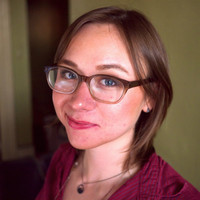
Taffy Brodesser-Akner is a staff writer at the New York Times and the author of Fleishman Is in Trouble: A Novel.

“As a profile writer, the skill I have is getting in the room and staying in the room until someone is like, ‘Why is this bitch still in the room? Get her out of there!’ It’s a journalistic skill that is not a fluffy skill. There are people who are always actively trying to prevent your story, prevent you from seeing it, from seeing the things that would be good to see. There’s a lot of convincing, comforting and listening going on. And there’s a lot of dealing with the fact that somebody in the middle of talking to you can suddenly decide that you are the worst. Those things are very tense and it’s a specific skill that I have that can defray all those things. Or it lets me stay.”

Thanks to MailChimp, Netflix, and Pitt Writers for sponsoring this week's episode.
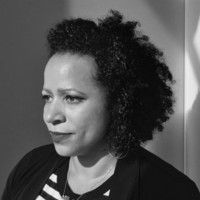
Jess Zimmerman is editor-in-chief of Electric Literature. Her new book is Women and Other Monsters.

“My goals are to be exactly as vulnerable as I feel is necessary. And not that’s necessary to me—that's necessary to the observer, to the reader. If [my story] is out there, it's out there because in order to make the larger point that I wanted to make … I had to give this level of access. It does kind of feel more strategic than cathartic.”

Thanks to Mailchimp for sponsoring this week's episode.
Carl Zimmer, a columnist for the New York Times and a national correspondent at STAT, writes about science.

“[Criticism] doesn’t change the truth. You know? Global warming is still happening. Vaccines still work. Evolution is still true. No matter what someone on Twitter or someone in an administration is going to say, it’s still true. So, we science writers have to still be letting people know about what science has discovered, what we with our minds have discovered about the world—to the best of our abilities. That’s our duty as science writers, and we can’t let these things scare us off.”

Thanks to MailChimp, Audible, and Squarespace for sponsoring this week's episode.