Showing 25 articles matching fk33.cc_where to buy magnesium sulfate heptahydrate large granules.

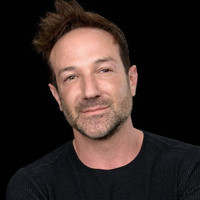
Bryan Fogel is the Oscar-winning director of Icarus.

“But there was a long period of time also that none of us were really thinking so much about the film. It was really that we were in a real world crisis. Gregory's life was essentially in my hands.”

Thanks to MailChimp, Read This Summer, Google Play, and Stitcher Premium for sponsoring this week's episode.
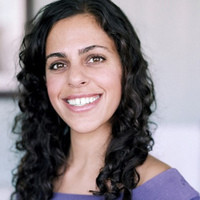

Vanessa Grigoriadis is a contributing editor at Vanity Fair and New York.

On the art of the celebrity interview: "People are smart. Particularly these people. They're sitting there thinking, 'When is she going to drop that question?' They know what you're doing. So the way I think about it is: let's have an actual, genuine, human, interesting conversation. ... [Journalists] have all sorts of schemes of what they think works for them. My scheme is no scheme."

Thanks to this week's sponsors, TinyLetter and Audible!

</blockquote>

Nicholas Quah founded and writes Hot Pod, a newsletter about the podcasting industry, and reviews podcasts for Vulture.

“I think to some extent I’m in love with the concept of momentum. Sheer velocity. It’s painful. It’s punishing. Physically, I’m worse off for it. But I feel like if I stop moving, something will fall. Something will break. And I’m over. It’s a horrible feeling.”

Thanks to Mailchimp, Pitt Writers, Audm, and Bayer for sponsoring this week's episode.
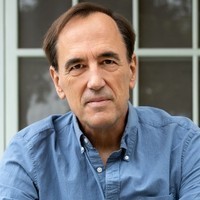
David Wolman is the author of six books and a magazine features writer who has written for Wired, Outside, and The New York Times. His latest article is ”Vanished in the Pacific.”

“I feel like conversations about characters, character development, strong characters gets a little nauseating in my field sometimes because it’s like, of course — you need that like you need periods at the ends of sentences. Do we really have to keep saying it? But in this conversation it’s worth saying, because there are great ideas out there where the sources or the characters just really weren't there and then you’re tucking your tail in between your legs to look for the next one.”

Jeff Goodell is a climate change writer for Rolling Stone and the author of seven books. His new book is The Heat Will Kill You First: Life and Death on a Scorched Planet.

“I would not have said this even five years ago, but I have really come to see this now as a crime story. This is a kind of looting of the atmosphere of the earth, siphoning off resources and grossly profiting off of that at the expense of many other people—billions of people—on this planet. And I understand that’s a big thing to say, but I think it’s just pretty obviously true. … I don’t mean that personally that each one of them personally is a criminal. We are all complicit in this.”

Luke Dittrich is a contributing editor at Esquire. His new book is Patient H.M.: A Story of Memory, Madness, and Family Secrets.

“As soon as I told [my mom] that I got my first book deal for this story about Patient H.M., her first words were, ‘Oh no.’ That was sort of her gut reaction to it because, I think, she knew at a certain level that I was going to be dredging up very painful stories. And I think at that point even she didn’t know the depth of the pain that some of the stories that I was going to find were going to lay out there.”

Thanks to MailChimp, EA SPORTS FIFA 17, Squarespace, Wunder, and Audible for sponsoring this week's episode.
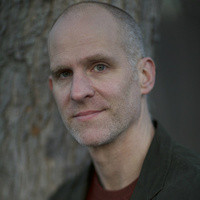
Vanessa Grigoriadis writes for Vanity Fair, Rolling Stone, and The New York Times Magazine. Her new book is Blurred Lines: Rethinking Sex, Power, and Consent on Campus.

“I’m a controversial writer. I’ve never shied away from controversy. I’ve only really courted it because I realized a lot earlier than a lot of other people who are involved in this whole depressing business that clicks are the way to go, right? Or eyeballs, as we used to call them, or readership. I come out of a Tom Wolfe-like, Hunter S. Thompson kind of tradition. You don’t mince any words, you just go for the jugular and you say as many things that can stir people up as possible.”

Thanks to MailChimp, Squarespace, and Casper for sponsoring this week's episode.

Rafe Bartholomew is the former features editor at Grantland and the author of Two and Two: McSorley’s, My Dad, and Me.

“I never saw it as something negative because [my dad] comes out, to me, at the end, extremely heroic. … He becomes this dad who I idolized as a bartender, a guy who would hang out with me and make me laugh, a guy I just adored almost every step of the way. I mean, of course, everybody gets into fights. But to me it was always so obvious that he had overcome the problems in his childhood, he’d overcome his own drinking problem, he’d done all these things, and by the time I was older, he’d even found a way to get back into writing and self-publish a couple of books of poems about the bar. So he’s sort of managed to tick off all those goals, just maybe not on the same schedule, maybe not in the most normal way.”

Thanks to MailChimp, V by Viacom, and 2U for sponsoring this week's episode.
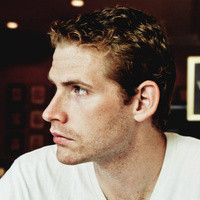
Susan Casey is the former editor of O and the author of three New York Times bestselling books. Her latest is Voices in the Ocean: A Journey into the Wild and Haunting World of Dolphins.

“The funny thing is people often say, ‘You must be fearless.’ I’m always afraid of whatever it is. But for whatever reason—I think it’s partly naïvety, partly just overwhelming curiosity—I am also not going to let fear stop me from doing things even if I feel it. Unless it’s that pure…you do have to listen to your body sometimes if it tells you not to do something that could result in you really never coming up from falling on that 70-foot wave.”

Thanks to MailChimp, HelloFresh, and Squarespace, and for sponsoring this week's episode.

Michael Barbaro is the host of The Daily.

“I don’t think The Daily should ever be my therapy session. That’s not what it’s meant to be, but I’m a human being. I arrive at work on a random Tuesday, and I do an interview with a guy like that, and it just punched me right in the stomach.”

Thanks to MailChimp, School of the Art Institute of Chicago, and Blinkist for sponsoring this week's episode.

Michael Pollan writes for The New York Times Magazine and The New Yorker and is the author of nine books. His latest is How to Change Your Mind: What the New Science of Psychedelics Teaches Us About Consciousness, Dying, Addiction, Depression, and Transcendence.

“I don’t like writing as an expert. I’m fine doing public speeches as an expert. Or writing op-ed pieces as an expert. But as a writer, it’s a killer. Nobody likes an expert. Nobody likes to be lectured at. And if you’ve read anything I’ve written, I’m kind of an idiot on page one. I am the naïve fish out of water. I’m learning though. The narrative that we always have as writers is our own education on the topic. We can recreate the process of learning that's behind the book.”

Thanks to Mailchimp and Pitt Writers for sponsoring this week's episode.
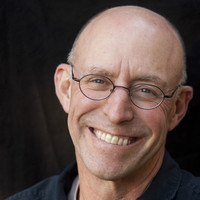
Ben Smith is the editor-in-chief of BuzzFeed.

“I do think as a reporter in general, most of what we deal in is ephemera. And I love that. I mean that’s the business, and I don’t think there’s anything wrong with that. In fact, I think that’s a plus and something that shapes how you succeed at the job because you realize that this thing you’re writing is about this moment and right now, and about its place in the conversation. It’s not some piece of art to hang on the wall.”

Thanks to MailChimp, Harry's, and Reveal, and Home Chef for sponsoring this week's episode.

Donovan X. Ramsey is a staff writer for the Los Angeles Times. His work has appeared in GQ, WSJ Magazine, The Atlantic, and many other publications.

“I actually got into writing about criminal justice ... because I was curious about Black life. But that meant the only way I was able to do that was I had to kind of do this really often depressing slice of Black life. And there’s so much more. And there’s so much beauty in the lived experiences of Black people. … There are so many stories that just never get told about Black life. One, I have a connection to being a Black person, but then being a Black person who has the benefit of a really good education, and I’ve been given some shots here and there… it feels like a duty. If I’m not going to tell these stories, then who?”

Thanks to Mailchimp for sponsoring this week's episode.

Margo Jefferson, a Pulitzer Prize winner, has written for The New York Times, Newsweek, and Harper's. Her latest book is Negroland: A Memoir.

“One of the problems with—burdens of—‘race conversations’ in this country is certain ideological, political, sociological narratives keep getting imposed. This is where the conversation should go, these are the roles we need. In a way, this is the comfort level of my discomfort. ... Maybe we’re all somewhat addicted—I think we are—to certain racial conversations, with their limitations and their conventions.”

Thanks to MailChimp and Casper for sponsoring this week's episode.
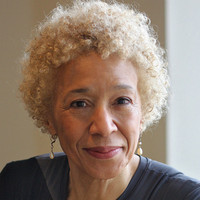
Emily Witt is a freelance writer and the author of Future Sex.

“I think I had always thought that—maybe this is coming from a WASPy, protestant background—if I presented myself as overtly sexual in any way, it would be a huge turnoff. That they would see me as a certain type of person. They wouldn’t have respect for me. And I thought this both professionally—I thought maybe writing this book was going to be really bad for my career, that nobody would take me seriously anymore—and also that nobody would want to date me if I was too honest. In both counts the opposite happened.”

Thanks to MailChimp, Audible, and Wunder Capital for sponsoring this week's episode.
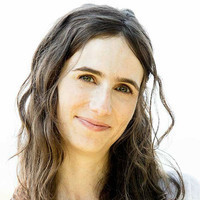
Steven Levy covers technology for Wired, where he is the editor of Backchannel.

“It’s about people. Travis Kalanick’s foibles aren’t because he’s a technology executive. It’s because he’s Travis Kalanick. That’s the way he is. There is a certain strain in Silicon Valley, which rewards totally driven people, but that is humanity. And advanced technology is no guarantee—and as a matter of fact I don’t think it’ll do anything—from stopping ill-intentioned people from doing ill-intentioned things.”

Thanks to MailChimp, Audm, Rover, and Babbel for sponsoring this week's episode.

PJ Vogt is the co-host of Reply All.

“Every radio story is broken. Everything is missing some piece it’s supposed to have. Everything has some weird interview that didn’t go the way you thought it was going to go, or you thought you had an answer but you were wrong.”

Thanks to MailChimp, Squarespace, and Blinkist for sponsoring this week's episode.
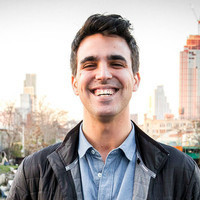
Paige Williams is a New Yorker staff writer and the author of The Dinosaur Artist: Obsession, Betrayal, and the Quest for Earth's Ultimate Trophy.

“I was just sitting in a coffee shop and saw this thing about a Montana dinosaur thief, and thought, oh that’s really interesting, I don’t know anything about that. And I knew nothing about natural history, nothing about natural history museums. I was born and raised in Mississippi. We didn’t talk about that kind of stuff. I grew up in the Baptist church. It certainly wasn’t mentioned there. … It just was a world completely alien to me, which I love. I love going into worlds that I know nothing about, and I like to take them apart and put them back together again.”

Thanks to MailChimp, Skagen, Squarespace, and Pitt Writers for sponsoring this week's episode.
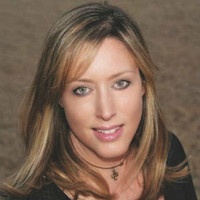
Maria Streshinsky is the executive editor at Wired.

“Sometimes a story comes in and it’s really lovely and well done. And you think if you just got on the phone with this person and pointed out the structure is wrong here and the chronology is wrong here, ask them to change that and send them what is known at Wired as the ‘praise sandwich letter’: how wonderful something is, how much work it will need, how wonderful it will be. … It’s not the kiss of death, it’s ‘we have a lot of work to do.’ … There are lots of pieces that come in that you’ve assigned because it’s the person with the right information with the right access, and they’re a good reporter, but maybe not a terrific wordsmith. So, you do more rewriting. Then there’s the other person that’s a really lovely, lovely writer that doesn’t have the structure and the reporting so you push on that. It’s sort of a three or four-pronged thing—it depends on the piece. I will say, somewhat controversially, there aren’t that many pieces that come in pretty clean.”

Thanks to MailChimp, Skagen, and Pitt Writers for sponsoring this week's episode.
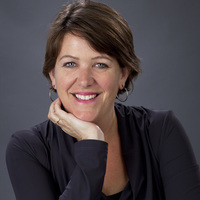
David Kushner, a contributing editor at Rolling Stone, has written for The New Yorker, Vanity Fair, Wired and The Atavist.

"The minute you see an incredible character, you know. The only thing I can compare it to is bowling, not that I'm much of a bowler. On the few times I've thrown a strike, you know it before it hits the pins."

Thanks to TinyLetter and ProFlowers for sponsoring this week's episode.
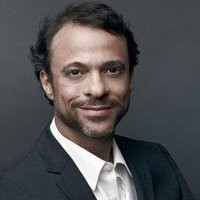
Molly Crabapple is an artist and writer. She is a columnist for VICE and her work has appeared in The New York Times, The Paris Review and Vanity Fair.

“As long as the marginalized communities I’m writing about don’t think I’m full of shit, that’s success to me.”

Thanks to TinyLetter, Squarespace and Lynda for sponsoring this week's episode. If you would like to support the show, please leave a review on iTunes.

Seyward Darby is the editor-in-chief of The Atavist Magazine and the author of Sisters in Hate: American Women on the Front Lines of White Nationalism.

“The most enlightening thing I learned in working on this book ultimately was that when we think of hate we think of animosity. Hate means I do not like someone or I do not like something. I deplore it. I despise it. But hate as a movement is actually a lot more like any social movement where it’s providing something to its supporters, members, acolytes that they were seeking but didn’t necessarily know where they were going to find it. So it could be camaraderie, it could be power, it could be purpose, in some cases it could be money. There’s something terrifyingly mundane about that.”

Thanks to Mailchimp for sponsoring this week's episode.
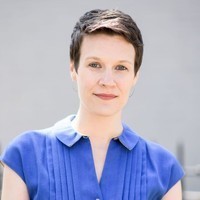
Emily Oster is an economist, professor, and author. Her new book is The Family Firm.

”[COVID] has been 18 months of being a person who is slightly more public, who is saying things that are somewhat more controversial, where people yell at me a lot. ... I do much less reading of the comments than I did early on because I found that eventually I just got mad and that's not a productive way to interact. And it affects how I think about what I write, and I would like what I write to be the things that I think are true, not the things I think will avoid people being angry.”

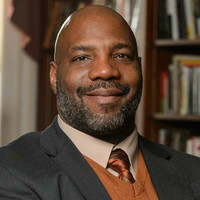
Dr. Jelani Cobb is a New Yorker staff writer and the author of three books, including The Substance of Hope: Barack Obama and the Paradox of Progress. He teaches journalism at Columbia University.

“Ralph Wiley — the sports writer, late Ralph Wiley — told me something when I was 25 or so, and he was so right. He said I should never fall in love with anything I’ve written. … The second thing he told me was, ‘You won’t get there overnight, and believe me, you don’t want to.’ I’m embarrassed to say that I didn’t get it when he told me that. I was like — why would I not want to get there overnight? Now I’m like: Thank God I didn’t get there overnight. Because there’s so much writing I would have to explain.”

Thanks to MailChimp, Quip, and Audible for sponsoring this week's episode.
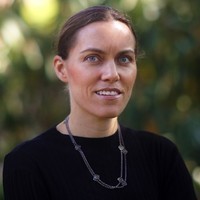
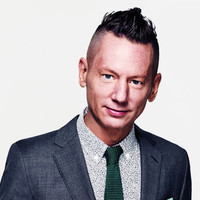
Jim Nelson is the editor-in-chief of GQ.

“One of the things that was initially a challenge was we would all think of ‘the print side’ and ‘the digital side.’ Now what we all think about is, ‘Okay, stop saying GQ.com and GQ the print edition. It’s just GQ!’ And once you cross that line, you don’t ever want to go back to it. I can’t imagine. The job has changed so much, even in the last three years, that when I look back, I think, ‘God, I was just such a quaint little fucker.’”

Thanks to MailChimp and Squarespace for sponsoring this week's episode.