Syria’s Last Bastion of Freedom
Amid the brutal civil war, a town fought off the regime and the fundamentalists—and dared to hold an election. Can its experiment in democracy survive?
Showing 25 articles matching fccoins26 Coinsnight.com FC 26 coins 30% OFF code: FC2026. The best place for game coins.28oS.
Amid the brutal civil war, a town fought off the regime and the fundamentalists—and dared to hold an election. Can its experiment in democracy survive?
On the best Super Bowl halftime show.
On caring for a bipolar parent amidst a broken mental health care system.
Sam Biddle writes for Valleywag.
"It's a lot of overgrown, entitled manchildren pulling price tags out of the ether and passing them around. Considering Silicon Valley worthy of contempt is the first premise that we work from."
Thanks to TinyLetter for sponsoring this week's episode.

On the insanity of America’s gun laws.
GQ: Your relationship with your biological father seems complicated. Lil Wayne: He don't give a shit about me. And I don't give a shit about him. I know his friends be like, "Damn, nigga. That is not your son. Stop lying. Nigga, you could be living in a motherfucking ranch right now, nigga." You know, whatever your father's into, if you're rich, you're gonna get him that shit. I would've got that nigga all kinda harnesses, ranches—you know what I mean? I saw the nigga recently—I had a show in New Orleans. And I ain't afraid to put this out there, 'cause this is just how much I don't give a fuck about a nigga, and I want people to see how you're not supposed to be. I was parked at the hotel, and I saw him walking outside the hotel. Just walking back and forth. I'm like, "Look at this nigga! You gotta be looking for me." If Lil Wayne got a show in New Orleans, the whole of New Orleans knows. Basically, you're not there for nothing else but me. So I call my man on the bus. I'm like, "Nigga, that's my daddy." He's like, "Word? Oh shit. That nigga looks just like you!" So I tell my man, "Go see what's up." So my man goes to holla at him. He tells my man, "Oh. I didn't know y'all was here. I'm here waiting for this little ho to get o¬ff. Get off¬ work from the hotel." For real? That's when I was like, "Typical Dwayne Carter." So that's what's up with me and my real father. I don't want to look like his ass, but I do.
Emily Witt is a freelance writer and the author of Future Sex.
“I think I had always thought that—maybe this is coming from a WASPy, protestant background—if I presented myself as overtly sexual in any way, it would be a huge turnoff. That they would see me as a certain type of person. They wouldn’t have respect for me. And I thought this both professionally—I thought maybe writing this book was going to be really bad for my career, that nobody would take me seriously anymore—and also that nobody would want to date me if I was too honest. In both counts the opposite happened.”
Thanks to MailChimp, Audible, and Wunder Capital for sponsoring this week's episode.
Jay Caspian Kang is a staff writer for The New Yorker and a co-host of Time to Say Goodbye.
“At some point, you have to kick it out the door, and it’s never finished to the degree that you would finish a magazine piece. But it, in some ways, is more interesting because it is produced in a short amount of time, and it’s read as something that is not supposed to be complete. It’s just meant to provoke or to provide thought or whatever, to provide some sort of context on a certain issue or not. And I actually like that a lot better than the magazine writing. I respect the magazine writers—obviously, I was one—but for my disposition now, in my lifestyle, I actually enjoy having to produce this thing every week.”
Have a question for the mailbag? Email the show or leave a voicemail at (929) 333-2908.
Sponsored

Our sponsor this week is OZY, a news and culture site focused on the new and the next. OZY brings you up to speed on what happened in the last 24 hours and then vaults you ahead by telling you about new people, places, ideas and trends. It's the place to go to get a little smarter, a little sooner.
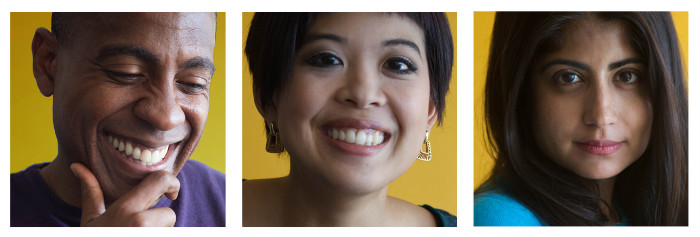
Here are three OZY favorites that give you an idea of who and what you'll find:
Carlos interviews David Drummond, Google's Chief Legal Officer and head of Google Ventures, who tells the little-known story of how Google almost went bankrupt.
Melissa covers how scientists are unlocking the secrets of cancer's ancient past by studying the archaeological record.
Pooja reminds us that John F. Kennedy's book A Nation of Immigrants is as relevant today as it was a half century ago.
Want more? Sign up for OZY emails and get stories like these every day that will help you see more, be more and do more.

George Lois never actually worked at Esquire, he simply designed the most iconic magazine covers of the 60s as a moonlighting gig while revolutionizing (and, generally pissing off) the advertising industry by day.
Hua Hsu is a staff writer for The New Yorker. His book Stay True won the 2023 Pulitzer Prize for memoir.
“I've worked as a journalist … for quite a while. … But this [book] was the thing that was always in the back of my mind. Like, this was the thing that a lot of that was in service of. Just becoming better at describing a song or describing the look of someone's face—these were all things that I implicitly understood as skills I needed to acquire. ... It is sort of an origin story for why I got so obsessive about writing.”
Not long ago, Rand Paul, opthalmologist and son of Ron, would have been written off as a wacky extremist. Thanks to his Dad and the Tea Partiers, he’s poised to become the most radical member of the U.S Senate.
Barton Gellman is a staff writer for The Atlantic and was previously a Pulitzer-winning reporter at The Washington Post. His latest book is Dark Mirror: Edward Snowden and the American Surveillance State and his latest essay is "The Election That Could Break America."
“I have found that I have a talent for accidentally pissing people off. ... I’m interested most in accountability and the use and abuse of power. So naturally it’s going to annoy people sometimes. And sometimes they take it like grown-ups and sometimes less so.”
Thanks to Mailchimp for sponsoring this week's episode.
Azam Ahmed is an international investigative correspondent for The New York Times. His new book is Fear Is Just a Word: A Missing Daughter, a Violent Cartel, and a Mother's Quest for Vengeance.
“I think the fundamental question I always ask when I go into a new place, whether I’m covering currencies, or hedge funds, or geopolitics in Afghanistan, or the war—it’s what does this mean to the world right now? What does the world need to know and how does it fit into that space?”
Isaac Chotiner conducts interviews for The New Yorker.
“People like to talk. They like to be asked questions, generally. In the space that I’m doing most interviews, which is politics or politics-adjacent, people have strong views and like to express them. It may be just as simple as that.”
Thanks to Mailchimp and Pitt Writers for sponsoring this week's episode.
Visiting a lost friend.
The last days of Spalding Gray.
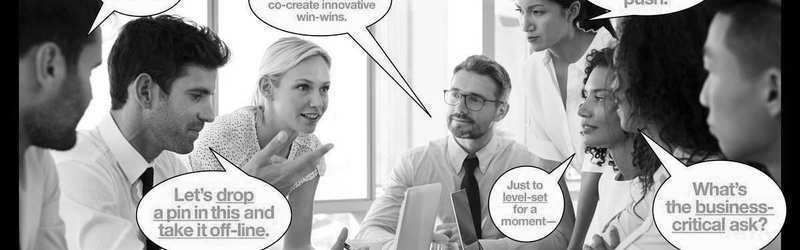
Why do corporations speak the way they do?

Ten years ago, a man moved to Marsing, Idaho. He had a strange accent and didn't know much about cattle. The folks in Marsing were a little skeptical at first, but when he built a house and started a family, he earned his neighbors' acceptance. Last February, while buying hay, he was cornered by federal agents and arrested for violent crimes tied to the Boston Mob. And the town wondered: Who the hell is Jay Shaw?
THEY SAY YOU never hear the one that hits you. That's true of bullets, because, if you hear them, they are already past. But your correspondent heard the last shell that hit this hotel. He heard it start from the battery, then come with a whistling incommg roar like a subway train to crash against the cornice and shower the room with broken glass and plaster. And while the glass still tinkled down and you listened for the next one to start, you realized that now finally you were back in Madrid.
 From the Longform archive, more than 30 picks on Charles Manson, the Son of Sam, Ted Bundy and more.</p>
Wesley Lowery is a national reporter at the Washington Post, where he worked on the Pulitzer-winning project, "Fatal Force." His new book is They Can’t Kill Us All: Ferguson, Baltimore, and a New Era in America’s Racial Justice Movement.
“I think that we decided at some point that either you are a journalist or you are an activist. And I identify as a journalist, to be clear, but one of the reasons I often don’t engage in that conversation—when someone throws that back at me I kind of deflect a little bit—is that I think there’s some real fallacy in there. I think that every journalist should be an activist for transparency, for accountability—certainly amongst our government, for first amendment rights. There are things that by our nature of what we do we should be extremely activist.”
Thanks to MailChimp, Harry’s, Casper, and School of the Arts Institute of Chicago for sponsoring this week's episode.
Rumor had it that a teenager had cut off a man’s penis, and the cops happened to have a murder victim that answered that description. Nothing else lined up.
Michelle García has written for The New York Times, The Washington Post and Oxford American. She directed the PBS film, Against Mexico: The Making of Heroes and Enemies.
“We have to see that within difficult stories there is a very important message of humanity triumphing over despair. If you don’t focus on joy, humanity is squashed. If all you see and all you narrate is pain, then you extinguish the possibility of joy and the important part of holding onto humanity.”
Thanks to MailChimp and Pitt Writers for sponsoring this week's episode.
Zach Harris is a journalist whose latest article for Rolling Stone is "Meet the Gen Z Hothead Burning Up Pro Bowling."
“I'm not like a staff writer who has … status and access. But if I come up with something fun that you've never heard of that might connect to the larger culture, then it kind of hits a nerve and a sweet spot for me. Someone like a pro skateboarder or a pro bowler, you guys have never heard of. And so being able to present a person and a culture and a world to a wider audience, I think suits me well and has been really a fun way to do profiles.”